

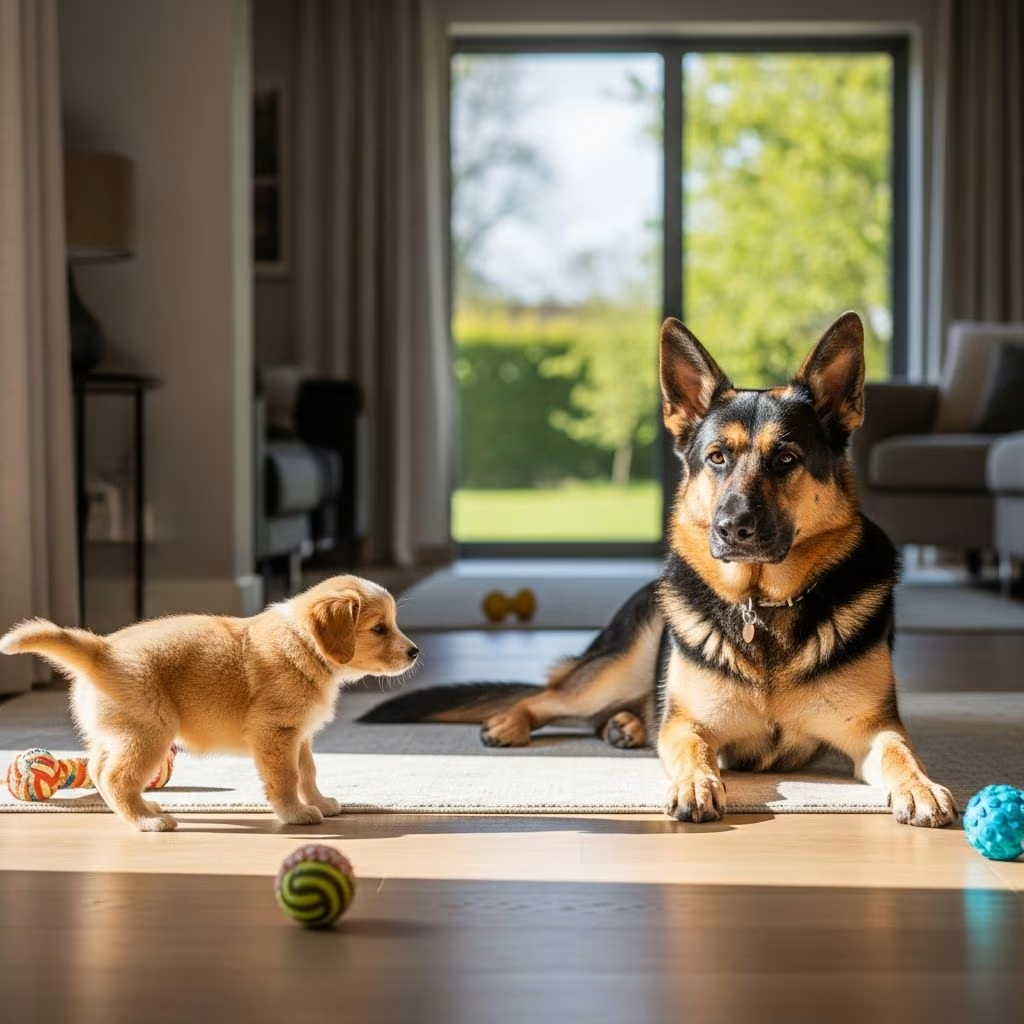
How to Introduce a Puppy to a Dominant Dog
Bringing a new puppy into a home with a confident, sometimes pushy, resident dog can feel intimidating, but with careful planning, structure, and patience, you can help both dogs feel safe and build a respectful relationship over time. Well-managed introductions reduce stress, lower the risk of conflict, and support better long-term behavior for both animals.
Understanding Dominant or Confident Adult Dogs
Many pet parents describe their existing dog as “dominant” when what they see is a mix of confidence, strong preferences, and sometimes poor social skills with other dogs. True, consistent social dominance is complex and context-dependent, not just about who is “alpha”. What matters most when introducing a puppy is how your adult dog typically behaves around other dogs and resources.
Common traits you may notice in a confident or pushy adult dog include:
- Guarding resources such as food bowls, beds, or favorite people.
- Controlling space, like blocking doorways or pushing other dogs away from you.
- Stiff body language when greeting unfamiliar dogs, with tense posture or a hard stare.
- Correcting other dogs quickly with growls or snaps if they feel pestered or crowded.
A confident adult dog is not automatically dangerous to a puppy, but they will need support, structure, and fair boundaries to adjust to sharing their space.
Why Careful Introductions Matter
Puppies explore with their mouths, bounce into personal space, and ignore subtle signals from adult dogs because their social skills are still developing. Without guidance, this can trigger frustration from a resident dog, especially one used to controlling the environment.
Thoughtful planning helps because it:
- Protects the physical safety of both dogs.
- Prevents early negative associations between the dogs and the home.
- Reduces stress and supports better adaptation to the new situation.
- Gives you time to teach the puppy appropriate interaction and to reward calm behavior from the adult dog.
Preparing Your Home Before the Puppy Arrives
Before the first face-to-face meeting, set up your home so that both dogs can feel secure and have ways to get distance from each other when needed.
- Create separate safe zones using crates, exercise pens, or baby gates so each dog has a place to rest without being disturbed.
- Provide individual resources (beds, water bowls, resting spots) to reduce competition and resource guarding.
- Remove or manage high-value items such as special chews, toys, and food bowls during the early days to prevent conflict.
- Plan supervision and breaks so there is always an adult available to monitor, separate, or redirect the dogs as needed.
Step 1: Start with Scent and Visual Introduction
Dogs learn a great deal about one another through scent and subtle body language. Let them process each other gradually instead of rushing into close contact.
- Scent swapping: Exchange blankets, toys, or bedding between the dogs so each can sniff the other’s scent in a low-pressure way.
- Barrier introductions: Use a baby gate, pen, or crate to let them see and smell each other from a safe distance while you reward calm behavior with treats or gentle praise.
- Short, frequent sessions: Keep early exposures brief and positive, ending them before either dog becomes overly excited or tense.
During these early stages, your goal is simple: both dogs learn that the other’s presence predicts good things (like treats, play with you, or relaxation) and not conflict.
Step 2: Neutral Ground, Leashed Greetings
Once both dogs can see and smell each other calmly through a barrier, the next step is a controlled, on-leash introduction—ideally in a neutral area like a quiet sidewalk, yard, or park where your resident dog is less likely to feel territorial.
- Give each dog their own handler to manage the leash and reward good behavior.
- Start by walking parallel with some distance between the dogs, rewarding them for focusing on their handler and staying relaxed.
- Gradually decrease the distance if both dogs remain loose and curious, not stiff or overly aroused.
- Allow brief sniffing if both dogs look comfortable, then calmly guide them apart again to prevent tension from building.
If you see tight mouths, stiff bodies, or hard stares, increase the distance again and focus on calm walking and attention to handlers before trying another short greeting.
Step 3: First Indoor Meetings with Structure
When the dogs have met successfully outside several times, you can bring them into the house together, still with structure and supervision. Your home is often where a dominant dog feels the strongest attachment, so move slowly.
| Aspect | What to Do |
|---|---|
| Space | Keep leashes on or use house lines so you can gently guide dogs apart if needed. |
| Resources | Remove food bowls, high-value toys, and chews from shared spaces at first. |
| Duration | Begin with short sessions and end on a calm note rather than waiting for tension to appear. |
| Supervision | Have at least one adult focused solely on watching body language and intervening early. |
Allow the puppy to explore at their own pace while the adult dog observes. Reward the adult dog generously for choosing to stay relaxed, look away, or move to another space instead of confronting the puppy.
Reading and Respecting Canine Body Language
To protect both dogs, learn to recognize early signs of discomfort and intervene before conflict escalates.
- Early stress signals: yawning, lip licking, turning the head away, avoiding eye contact, sudden sniffing of the ground.
- Escalating discomfort: body stiffening, tail held high and rigid, hard stare, growling, baring teeth.
- Over-arousal in puppies: constant jumping, mouthing, chasing the adult dog, ignoring repeated signals to stop.
A growl from the adult dog is not always a “bad” behavior; it is often a clear communication that the puppy has crossed a boundary. You should not punish this warning, but you should step in to give the puppy a gentle break and support the adult dog’s need for space.
Managing Resources and Preventing Guarding
Dominant or confident dogs may already guard food, toys, resting spots, or people. A new puppy can trigger or intensify this behavior if you do not manage resources carefully.
- Feed separately in different rooms or behind barriers to prevent competition and food aggression.
- Store high-value items (chews, bones, stuffed toys) and offer them only when the dogs are separated.
- Provide multiple resting spots so the adult dog does not feel they must defend a single bed or couch.
- Supervise interactions around you and family members, as some dogs guard people as a resource.
If you notice stiffening, hovering, or snapping when another dog approaches food or toys, seek guidance from a qualified behavior professional, as resource guarding can escalate without appropriate management and training.
Teaching the Puppy Respectful Behavior
Puppies are learning how to be dogs. They need guidance not only from adult dogs but also from you. Your role is to help the puppy understand when to back off and give the resident dog space.
- Interrupt persistent pestering: If the puppy repeatedly jumps on, chases, or mouths the adult despite clear signals, calmly remove the puppy for a short break.
- Use simple cues such as “that’s enough” or “leave it” followed by guiding the puppy away, then rewarding calm behavior when they stay away from the adult dog.
- Reward good choices: When the puppy chooses to ignore the adult dog, play with a toy instead, or respond to your cue, reward with praise, treats, or play.
- Build self-control through basic training like sit, stay, come, and settling on a mat, which can later help manage dog-to-dog interactions.
Over time, the puppy learns that respecting the adult dog’s boundaries leads to more freedom and positive experiences, while ignoring signals results in brief, calm time-outs away from the other dog.
Supporting the Resident Dog’s Needs
It is easy to focus entirely on the new puppy and accidentally neglect the resident dog, especially one that already likes to feel in control. However, making sure the adult dog still feels secure and valued is critical.
- Preserve routines such as regular walks, feeding times, and sleep spots as much as possible to reduce stress.
- Give one-on-one time to the adult dog without the puppy present so they continue to receive attention and enrichment.
- Offer breaks throughout the day by separating the dogs, giving the adult dog quiet time away from puppy energy.
- Reinforce calm behavior by rewarding the adult dog when they tolerate the puppy’s presence, look away, or choose to walk away rather than correct harshly.
When to Seek Professional Help
If you see intense guarding, repeated lunging, or attempts to bite, or if either dog appears extremely fearful or shut down, contact a qualified, reward-based trainer or veterinary behaviorist. Professionals who use modern, science-based methods can help you interpret the dogs’ behavior and build a customized plan.
Involving an expert early is especially important if your resident dog has a history of aggression or if you feel unsure about reading canine body language. Early intervention can prevent serious incidents and support better welfare for both dogs.
Long-Term Harmony in a Multi-Dog Household
Successful introductions are just the beginning. Maintaining peace between a dominant dog and a growing puppy requires ongoing management, training, and respect for each dog’s needs.
- Continue to supervise interactions until you are confident both dogs can manage themselves calmly in common situations.
- Keep separate safe spaces available long-term so either dog can have alone time when needed.
- Review and adjust management of resources as the puppy matures, since adolescent dogs often test boundaries.
- Provide mental and physical exercise for both dogs, such as walks, sniffing games, and training sessions, to reduce boredom and tension.
Frequently Asked Questions (FAQs)
Q: How long does it take for a dominant dog to accept a new puppy?
A: There is no single timeline. Some dogs relax within a few days, while others need weeks or even months of structured management and positive experiences. Consistency, supervision, and gradual exposure are more important than speed.
Q: Should I let my older dog growl at the puppy?
A: Controlled, non-contact growling is often a normal way for an adult dog to set boundaries and communicate discomfort. You should not punish the warning, but you should step in to give the puppy a break, redirect their behavior, and support the adult dog with space and reassurance.
Q: Can the dogs share toys and food eventually?
A: Many households eventually allow shared access to some toys, but it is safest to manage high-value chews and all feeding times separately, especially with a dominant or resource-guarding dog. If both dogs remain relaxed and show no signs of guarding over time, you can cautiously test sharing under close supervision.
Q: What if my adult dog snaps at the puppy?
A: A quick, inhibited snap that does not injure the puppy can be a warning that boundaries were crossed. Calmly separate the dogs, give them both time to relax, and later allow briefer, more supervised interactions. If snapping is frequent or intense, or if there is any injury, consult a qualified trainer or behaviorist promptly.
Q: Is it easier to introduce a puppy or another adult dog?
A: In many cases, adult dogs find puppies less threatening than another mature dog because puppies naturally defer and are more likely to back down when corrected. However, very persistent or high-energy puppies can still overwhelm a dominant dog, so careful management is still essential.
References
- Introducing a New Puppy to Your Dog — American Kennel Club. 2020-08-18. https://www.akc.org/expert-advice/training/how-to-introduce-dogs/
- Introducing your new dog or puppy to your current dog — Dogs Trust. 2022-05-10. https://www.dogstrust.org.uk/dog-advice/life-with-your-dog/at-home/introducing-new-puppy
- What to Expect When You Bring Home a New Dog from a Shelter — Kinship. 2021-04-15. https://www.kinship.com/dog-behavior/bring-home-shelter-dog-behavior-tips
- Introducing the New Puppy to the Resident Dogs — Show Dog Prep School. 2018-06-01. https://showdogprepschool.com/introducing-the-new-puppy-to-the-resident-dogs/



