

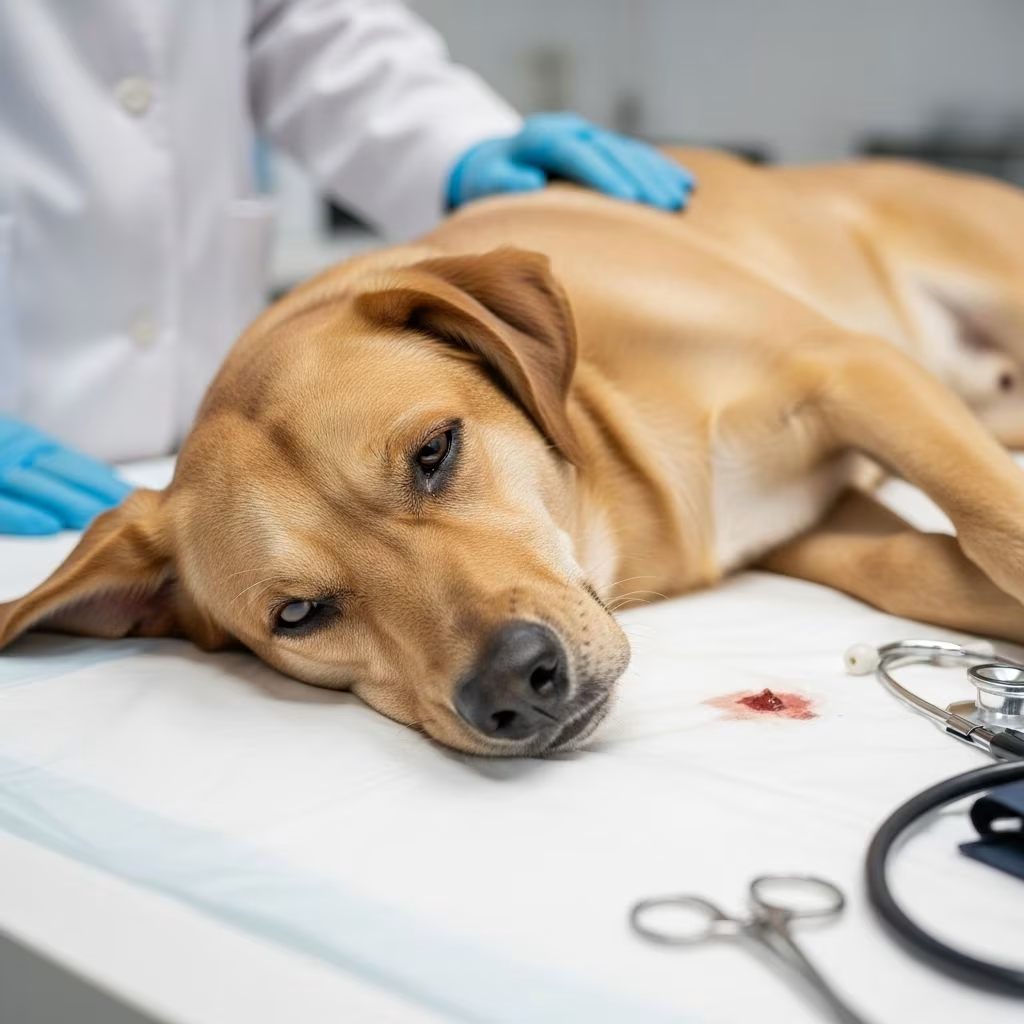
Internal bleeding, medically termed hemoabdomen when it accumulates in the abdominal cavity, poses a severe threat to dogs’ lives due to its rapid progression and subtle initial signs. This condition arises when blood leaks into body cavities or tissues from damaged vessels or organs, often without visible external wounds, demanding immediate veterinary attention to prevent fatal outcomes.
Understanding the Mechanisms of Internal Hemorrhage
Hemoabdomen occurs primarily in the abdomen but can affect other areas like the chest. Blood pools from ruptured vessels, leading to hypovolemic shock as the body loses circulating volume. The spleen and liver, rich in blood supply, are frequent sites, with bleeding compressing organs and impairing function.
Primary Triggers Behind Internal Bleeding
Dogs face internal bleeding from diverse origins, categorized into traumatic, neoplastic, coagulopathic, and iatrogenic causes. Each requires tailored diagnostic and therapeutic strategies.
Trauma as a Leading Culprit
Blunt force impacts, such as vehicular collisions, high falls, or altercations with other animals, frequently lacerate abdominal organs without skin breaches. Penetrating injuries from bites or impalements exacerbate vessel damage. These events can destabilize a dog suddenly, even if initially appearing stable.
Oncologic Origins: Tumors and Ruptures
Masses in the spleen or liver, particularly hemangiosarcoma—a highly malignant cancer prevalent in older large breeds—often rupture spontaneously, causing massive hemorrhage. Benign tumors can also bleed, but malignancy dominates non-traumatic cases, necessitating surgical exploration for confirmation.
Clotting Failures and Toxins
Anticoagulant rodenticides like brodifacoum disrupt vitamin K-dependent clotting factors, leading to widespread bleeding. Liver dysfunction, disseminated intravascular coagulation (DIC) from sepsis or cancer, and immune-mediated thrombocytopenia further impair hemostasis.
Other Contributors
- Post-surgical complications: Vessel leakage after procedures.
- Infectious or inflammatory processes: Eroding tissues.
- Wildlife encounters: Hidden punctures from bites.
Critical Symptoms Demanding Immediate Action
Owners must recognize subtle cues, as external blood is absent. Progression from mild discomfort to collapse occurs swiftly.
| Symptom | Description | Urgency Indicator |
|---|---|---|
| Pale or white gums | Capillary refill time exceeds 2 seconds | High – Indicates shock |
| Abdominal distension | Swollen, fluid-filled belly | High – Hemoabdomen hallmark |
| Weakness or collapse | Lethargy, reluctance to move | Critical |
| Rapid/shallow breathing | Tachypnea from pain or anemia | Moderate to high |
| Cool extremities | Cold legs, ears, tail | High – Poor perfusion |
Additional signs include vomiting blood, dark tarry stools (melena), abdominal pain on palpation, and tachycardia. Breeds like German Shepherds and Golden Retrievers show higher hemangiosarcoma susceptibility.
Veterinary Diagnostic Protocols
Upon presentation, triage prioritizes stabilization: IV fluids for volume resuscitation, oxygen for hypoxia, and pain control. Diagnostics follow swiftly.
- Physical exam: Assess mentation, mucous membranes, abdominal contour.
- Hematology: Anemia (PCV drop), thrombocytopenia, inflammation markers.
- Biochemistry: Electrolytes, liver/kidney panels, clotting times (PT/PTT).
- Coagulation panel: Detect rodenticide effects or DIC.
- Urinalysis: Hematuria, renal function.
- Imaging: Focused abdominal ultrasound (FAST) identifies free fluid; radiographs detect masses; CT for precision.
Abdominocentesis confirms hemorrhagic effusion if fluid appears unclotted and red.
Treatment Strategies: From Supportive to Surgical
Management hinges on cause, stability, and bleeding rate. Goals: Hemostasis, volume restoration, source elimination.
Initial Stabilization
Crystalloids, colloids, or hypertonic saline expand volume. Blood or plasma transfusions correct anemia/coagulopathy. Belly wraps tamponade mild traumatic bleeds temporarily.
Cause-Specific Interventions
- Trauma: Conservative for self-limiting bleeds; exploratory laparotomy for ongoing hemorrhage, organ repair/splenectomy.
- Tumors: Emergency splenectomy; biopsy for histopathology guides adjunct chemo/radiation.
- Coagulopathy: Vitamin K1 for rodenticides (3-week course); plasma for acute reversal; immunosuppressants for immune issues.
Post-Treatment Care
Monitor PCV serially, restrict activity 2 weeks, prevent incision licking with e-collars. Recheck imaging assesses resolution.
Prognosis Factors and Long-Term Outlook
Survival hinges on cause: Trauma yields 70-90% success with prompt care; hemangiosarcoma drops to 10-20% long-term despite surgery, due to metastasis. Early intervention boosts odds dramatically.
Prevention: Proactive Steps for Owners
- Secure rodenticides; use pet-safe alternatives.
- Supervise outdoor time to avoid trauma.
- Annual senior wellness for at-risk breeds, screening abdominal masses.
- Maintain leash laws, avoiding high-risk play.
Frequently Asked Questions
Can internal bleeding resolve without surgery?
Yes, minor traumatic cases may self-resolve with supportive care as the body reabsorbs blood, but monitoring is essential.
How quickly does hemoabdomen progress?
Ruptures can cause collapse within hours; stable dogs may decompensate suddenly.
Is hemangiosarcoma preventable?
No, but early detection via ultrasound improves outcomes.
What if I suspect bleeding at home?
Do not delay: Transport calmly, keep warm, avoid feeding; call vet en route.
Which dogs are at highest risk?
Older large breeds (e.g., Labs, Goldens) for tumors; active dogs for trauma.
References
- Hemoabdomen in Dogs (Internal Abdominal Bleeding) – PetMD — PetMD. 2023. https://www.petmd.com/dog/conditions/traumatic/hemoabdomen-dogs-internal-abdominal-bleeding
- Hemoabdomen in Dogs: Signs, Causes, Diagnosis, and Treatment — MedVet. 2023. https://www.medvet.com/hemoabdomen-in-dogs/
- Pet Internal Bleeding Midvale | Emergency Vet Signs & Symptoms — BluePearl Vet. 2023. https://bluepearlvet.com/hospital/midvale-ut/specialties-services/emergency-medicine/signs-nternal-bleeding-pets-visit-midvale-er/
- First Aid for Bleeding in Dogs — VCA Animal Hospitals. 2023. https://vcahospitals.com/know-your-pet/first-aid-for-bleeding-in-dogs
- Recognizing Internal Injuries in Pets After Trauma — Alpine Animal Hospital. 2023. https://alpineanimal.net/recognizing-internal-injuries-in-pets-after-trauma/



