

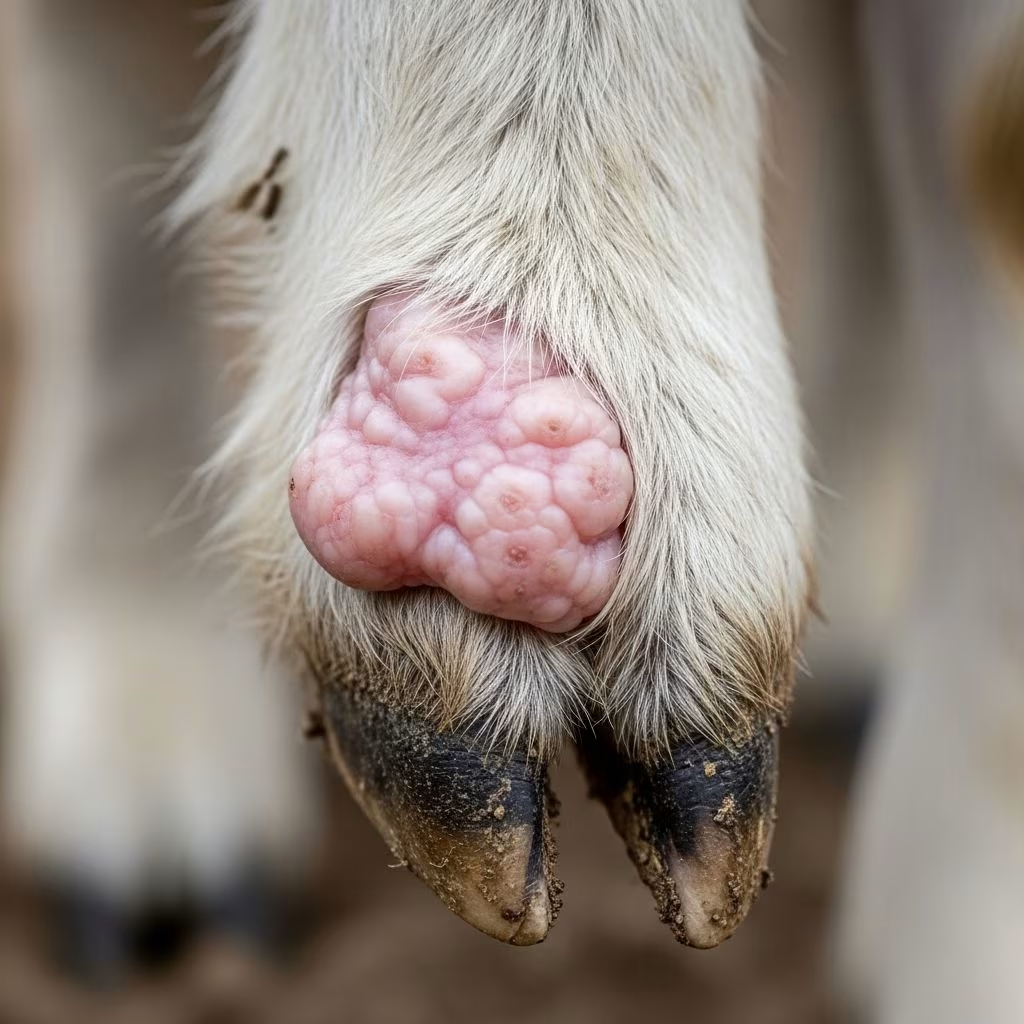
Fibrous tissue overgrowths between the toes, known as interdigital fibromas, represent a less common yet significant cause of lameness in ovine populations. These benign proliferations can trap debris, foster secondary infections, and lead to chronic discomfort if unmanaged.
Defining the Condition
Interdigital fibroma manifests as a fold of hyperplastic skin and fibrous tissue emerging from the skin-horn junction into the space between digits. In sheep, it typically develops in mature animals, protruding dorsally from the coronary band area. This growth alters foot conformation, potentially stretching ligaments and promoting uneven weight distribution.
Unlike more prevalent issues like footrot, fibromas occur in under 1% of cases in monitored flocks, such as Swedish slaughter lambs. Their slow progression distinguishes them from acute inflammatory diseases, though they share risk factors like damp environments.
Origins and Risk Elements
The etiology involves a mix of genetic predisposition and environmental triggers. Heritable traits may explain familial clustering, advising against breeding affected rams to curb propagation. Mechanical stresses, including digit overspreading due to weak interdigital ligaments, contribute substantially. Breeds like certain heavy-framed types show higher susceptibility, mirroring patterns in cattle.
- Genetic factors: Inherited ligament laxity leads to chronic irritation and hyperplasia.
- Environmental influences: Wet, muddy pastures exacerbate tissue trauma.
- Nutritional aspects: Obesity strains foot structures, accelerating growth.
- Conformational issues: Abnormal hoof shapes trap foreign matter.
Bacterial colonization often complicates matters. Treponema species, key in contagious ovine digital dermatitis (CODD), have been isolated from proliferative lesions atop fibromas. Fusobacterium necrophorum and Dichelobacter nodosus, agents of foot scald and footrot, frequently invade adjacent tissues.
Clinical Presentation and Progression
Early fibromas appear as subtle, hairless swellings between claws, progressing to firm, pedunculated masses. Ulceration occurs when the mass enlarges, exposing sensitive tissues to contaminants like grass seeds or mud. Affected sheep display mild to moderate lameness, scored as 1-2 on standard scales where 0 denotes soundness and 3 severe impairment.
Bilateral hindlimb involvement predominates, though forelimbs can be affected. Proliferative surfaces may exude, emit odors, and harbor debris, intensifying pain. Concurrent CODD presents as ulcerative coronitis, compounding the issue.
| Stage | Signs | Lameness Level |
|---|---|---|
| Early | Hairless dorsal swelling | Mild (score 1) |
| Moderate | Fibrous mass, debris entrapment | Moderate (score 2) |
| Advanced | Ulcerated, infected, proliferative | Severe (score 3) |
Chronic cases distort hoof architecture, fostering recurrent infections and welfare concerns. Sheep may avoid weight-bearing, leading to muscle atrophy and secondary issues.
Diagnostic Approaches
Veterinary assessment hinges on visual inspection and locomotion evaluation. Palpation reveals firm, non-fluctuant masses distinct from abscesses or granulomas. Lameness scoring per Angell protocols aids quantification.
Microbiological sampling via swabs or biopsies detects Treponema phylotypes (PT1), D. nodosus, and Porphyromonas levii through PCR and fluorescence in situ hybridization (FISH). Histopathology confirms parakeratotic hyperkeratosis and spirochetal invasion, absent in controls.
- Clinical scoring: IH+CODD for proliferative/ulcerative fibromas.
- Molecular tests: PCR for treponemes.
- Imaging: Rarely needed, but radiography rules out fractures.
Differential diagnoses include foot scald (moist, exudative interdigital dermatitis), virulent footrot (underrunning horn), and toe granulomas (friable, vascular growths).
Treatment Modalities
Conservative management suits small lesions: topical antiseptics, foot bathing in zinc/copper sulfate, and drying environments promote regression. Systemic antibiotics target secondary invaders, with penicillins effective against Fusobacterium.
Surgical excision is definitive for sizable fibromas. Under sedation, the pedicle is transected at the base, followed by hemostasis and bandaging. Recurrence risks persist if genetic factors dominate. Post-operative care includes clean bedding and monitoring for dehiscence.
In outbreaks, cull policy for chronic carriers prevents spread, especially alongside footrot vaccination programs.
Preventive Strategies for Flock Health
Proactive measures mitigate incidence:
- Breeding selection: Eliminate sires with fibroma history.
- Foot care routines: Regular trimming, inspection, and quarantine.
- Environmental control: Drainage improvements, straw bedding in wet seasons.
- Vaccination: Against D. nodosus serogroups.
- Nutrition: Balanced diets to avoid obesity.
Integrated lameness programs, inspecting 10% of flocks weekly, reduce prevalence by 50-90%.
Economic and Welfare Impacts
Fibromas contribute to production losses via reduced mobility, weight gain, and cull rates. In sheep, lameness accounts for 90% of welfare alerts, with fibromas amplifying costs through treatments and downtime. Early intervention preserves flock productivity.
Research Insights and Emerging Trends
Recent studies highlight Treponema’s role in ovine IH, paralleling bovine digital dermatitis. Phylogroup analysis links PT1 strains to ulcerative progression, urging surveillance. Genomic mapping may soon identify susceptibility loci for marker-assisted selection.
Frequently Asked Questions (FAQs)
What causes interdigital fibromas in sheep?
Genetic predisposition, ligament weakness, and environmental irritants like mud primarily drive development, often with bacterial superinfection.
Are fibromas contagious?
No, the fibroma itself is not, but associated bacteria like Treponema can spread via fomites or shared pastures.
How do I differentiate fibroma from footrot?
Fibromas form solid masses without horn separation; footrot shows underrunning and foul odor.
Can fibromas resolve without surgery?
Small ones may regress with hygiene and drying, but large masses typically require excision.
Should I cull sheep with fibromas?
Consider for breeders; meat animals can recover post-treatment.
Key Takeaways for Producers
- Prioritize foot inspections in wet conditions.
- Integrate genetic screening in breeding.
- Combine topical and systemic therapies for best outcomes.
References
- First description of interdigital hyperplasia associated with contagious ovine digital dermatitis (CODD) treponemes in sheep — Backhans A, et al. 2023-01-13. https://pmc.ncbi.nlm.nih.gov/articles/PMC9849560/
- Interdigital Dermatitis in Sheep — Merck Veterinary Manual. 2023. https://www.merckvetmanual.com/musculoskeletal-system/lameness-in-sheep/interdigital-dermatitis-in-sheep
- Interdigital hyperplasia – Large Animal Surgery – Supplemental Notes — University of Minnesota. 2022. https://open.lib.umn.edu/largeanimalsurgery/chapter/interdigital-fibromas/
- Lameness in Sheep – NADIS — Farm Advisory Service. 2023. https://www.fas.scot/downloads/lameness-sheep-nadis/
- Foot problems in sheep — SheepConnect SA. 2024. https://www.sheepconnectsa.com.au/stock-journal-articles/foot-problems-in-sheep



