

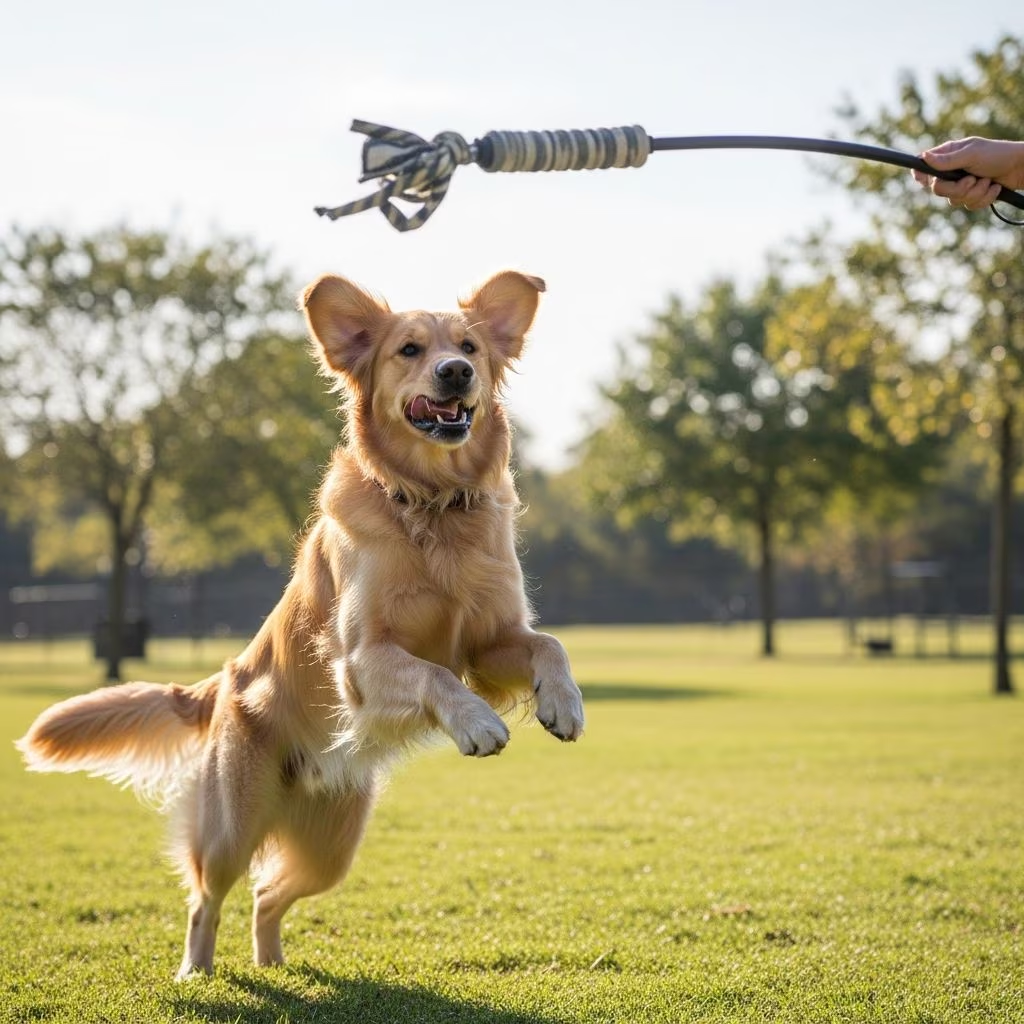
Interactive pole play has emerged as one of the most efficient and effective methods for providing comprehensive physical and mental stimulation to dogs of all sizes and energy levels. This dynamic training tool combines natural predatory instincts with structured behavioral reinforcement, making it an invaluable resource for dog owners seeking to optimize their pet’s overall well-being. Whether you have limited time, physical constraints, or a high-energy companion requiring intensive exercise, pole-based play offers a practical solution that delivers results in a fraction of the time traditional exercise methods require.
Understanding the Pole Play Tool
An interactive pole toy consists of a rigid or semi-rigid pole, typically ranging from four to six feet in length, with a rope or cord attached to its end. A toy, commonly resembling a small animal or lure, is secured to the rope’s terminus. The handler maintains control of the pole while manipulating the attached toy to simulate prey movement, encouraging the dog to chase, pounce, and engage in predatory play patterns. Unlike traditional fetch toys or tug tools, the pole design keeps the handler at an optimal distance while providing significant mechanical advantage for toy manipulation.
The length and construction of the pole are critical factors in tool effectiveness. For most dogs, a combined pole and rope extension of at least eight feet provides adequate reach and working distance. Smaller breeds or puppies may benefit from proportionally shorter poles, while larger or high-drive dogs often require longer configurations for optimal engagement. Many owners construct customized versions using readily available materials, such as attaching toys to lunge whips or extending poles with durable rope.
Primary Benefits of Pole-Based Play
Rapid Physical Conditioning
One of the most compelling advantages of interactive pole play is its capacity to exhaust dogs rapidly without requiring equivalent physical effort from the handler. Approximately ten minutes of focused pole play can produce the same physical tiredness as significantly longer traditional walks. This efficiency proves particularly valuable for owners managing injuries, physical limitations, health conditions, or demanding schedules that restrict extended outdoor activities. The high-intensity nature of prey chase stimulates multiple muscle groups simultaneously, providing comprehensive cardiovascular conditioning in condensed timeframes.
Mental Enrichment and Natural Behavior Expression
Interactive pole play taps directly into dogs’ inherent predatory instincts, fulfilling deep-rooted behavioral needs that standard exercise often leaves unaddressed. By simulating prey pursuit in a controlled environment, pole play allows dogs to express natural hunting behaviors safely while channeling physical energy productively. This mental stimulation complements physical exertion, addressing the complete spectrum of canine enrichment requirements. Dogs experiencing consistent opportunities to engage predatory play patterns often demonstrate improved focus, reduced destructive behaviors, and enhanced overall psychological well-being.
Impulse Control Development
Structured pole play serves as an exceptional training platform for building impulse control and behavioral responsiveness. The intense desire to chase the toy creates a powerful reinforcement opportunity. By requiring dogs to perform specific commands—such as sit, down, or wait—before releasing the toy for chasing, handlers can reinforce desired behaviors during peak emotional arousal. This practice is particularly beneficial for reactive dogs, young animals with excessive energy, or breeds prone to hyperexcitability. Teaching dogs to disengage from high-drive activities upon command builds critical self-regulation skills transferable to everyday situations.
Behavioral Modification Opportunities
Interactive pole play facilitates training for numerous behavioral challenges. The tool proves effective for addressing leash reactivity, excessive jumping, overexcitement, and impulse-control deficits. When structured properly with clear command-reward sequences, pole play becomes a controlled environment for practicing impulse restraint and response reliability. Dogs learn that maintaining composure and following directions result in access to highly rewarding activities, creating lasting behavioral patterns applicable beyond play sessions.
Safety Considerations and Proper Implementation
Surface Selection and Environmental Factors
Playing surface significantly impacts injury risk and overall safety. Hard surfaces such as concrete or asphalt should be avoided entirely, as they increase impact stress on joints and increase slipping hazards. Grass provides an appropriate surface but requires attention to environmental conditions. Wet grass, dew-covered lawns, frozen ground, or snow-covered terrain creates slip hazards that can lead to joint injuries, muscle strains, or ligament damage. Select well-maintained grass areas with firm, dry conditions for optimal safety. Indoor play on suitable flooring (such as rubber-backed rugs on wooden floors) offers a viable alternative for owners lacking outdoor space or facing unfavorable weather conditions.
Age-Appropriate Engagement
Puppies and young dogs still developing skeletal systems require modified play protocols. Excessive jumping or repeated high-impact movements can damage growth plates and soft tissues in young animals. For puppies and dogs under two years, keep the toy close to ground level, minimizing jumping requirements. Even with adult dogs, consciously limiting jumping height protects joint health and reduces injury risk. This modification maintains exercise benefits while protecting vulnerable anatomical structures.
Session Duration and Intensity Management
While pole play efficiently depletes energy, careful monitoring of session length prevents overexertion and related injuries. Approximately ten minutes represents a reasonable session duration for most dogs, delivering substantial physical conditioning without triggering exhaustion-related problems. Some dogs become obsessive about pole play, continuing beyond reasonable fatigue thresholds if allowed. Responsible handlers must recognize fatigue signs—such as heavy panting, reduced responsiveness, apparent discomfort, or difficulty breathing—and immediately conclude play sessions. Overexertion can result in heat stress, muscle damage, or joint injuries that might not manifest immediately but create long-term consequences.
Training Techniques and Behavioral Integration
Introduction and Confidence Building
Dogs encountering pole play for the first time may exhibit confusion, suspicion, or mild fear of the unusual apparatus. Rather than forcing immediate interaction, successful introduction involves gradual familiarization. Begin by walking the pole around the dog’s environment while the toy drags along the ground, allowing the dog to observe movement patterns without pressure to engage. Most dogs naturally respond to moving prey-like objects, developing interest in the dragging toy. Once interest emerges, gradually increase toy movement complexity, helping the dog build confidence in chasing and catching. This patient approach typically results in enthusiastic engagement within several sessions.
Command Integration and Reinforcement Sequencing
Effective behavioral training through pole play requires establishing stable command foundations before introducing the high-distraction environment of active play. Dogs must already comprehend commands like sit, down, wait, take it, and drop it in calm situations before transferring these behaviors to high-arousal contexts. Once foundational training exists, pole play becomes a powerful reinforcement tool. Typical sequences involve requesting a sit or wait before releasing the dog to chase, allowing a brief chase period (approximately one to two minutes), then requesting drop it or down, and immediately resuming chase as reward for compliance. This structured approach teaches dogs that impulse control directly enables access to highly desired activities.
Advanced Training Applications
Progressive handlers can incorporate increasingly complex behavioral sequences into pole play sessions. Examples include requesting sustained down stays while the pole toy moves nearby, practicing emergency stops during active chase, or conditioning reliable recall responses during peak excitement states. The intense reward value of pole play access makes these high-distraction training scenarios exceptionally effective for building reliable behavioral patterns. However, premature introduction of complex commands in pole play environments typically results in training failure; handlers should ensure absolute command reliability in neutral settings before expecting compliance during intense play.
Practical Toy Movement Strategies
Mimicking Realistic Prey Behavior
Natural prey animals don’t run predictably in straight lines toward predators; instead, they execute evasive movements with rapid direction changes to maximize escape probability. Handlers should replicate this unpredictable movement pattern by varying the toy’s trajectory, speed, and direction. Rather than waggling the toy in front of the dog’s face (which most prey would never do), move it laterally, backward, and in zig-zag patterns. This realistic predatory simulation maintains the dog’s engagement level and provides more authentic enrichment experiences. Unpredictable movement also prevents the dog from anticipating and intercepting the toy too easily, extending play duration and increasing engagement intensity.
Distance and Control Management
The pole’s length provides critical distance between handler and dog during intense play. This design feature creates several advantages: the handler maintains safer positioning away from teeth and claws, the dog develops understanding that the handler controls play access and timing, and the dog practices engagement with a moving target rather than static interaction with the handler directly. The mechanical advantage of the pole allows handlers to manipulate toys with relative ease despite the dog’s intensity and determination, preventing scenarios where dogs successfully capture or damage toys before play sessions conclude appropriately.
Comparative Advantages Over Alternative Exercise Methods
| Exercise Method | Time Required | Handler Physical Demand | Impulse Control Training | Mental Enrichment | Space Requirements |
|---|---|---|---|---|---|
| Traditional Walking | 30-60 minutes | High | Moderate | Moderate | Significant outdoor space |
| Fetch Play | 20-30 minutes | Moderate | Low | Moderate | Open field |
| Tug Games | 10-15 minutes | Moderate | Moderate | Low | Minimal |
| Interactive Pole Play | 8-12 minutes | Low | High | High | Small yard or indoor area |
Interactive pole play delivers superior time efficiency compared to traditional exercise methods while requiring less physical effort from the handler. The condensed session duration makes pole play accessible for individuals with mobility limitations, busy schedules, or health constraints restricting extended walking capability. For reactive dogs requiring environmental breaks from public spaces, pole play provides intensive exercise within controlled home environments.
Specific Applications for Breed Characteristics
High-Energy and High-Prey-Drive Breeds
Breeds exhibiting strong predatory instincts and elevated energy requirements—such as pit bulls, terriers, and herding breeds—particularly benefit from pole play’s predatory simulation. These dogs often possess genetic programming specifically aligned with chase and capture activities. Pole play directly satisfies these deep behavioral needs while channeling intense drive productively. For such breeds, fifteen minutes of pole play may provide more satisfying enrichment than extended passive walks that don’t engage predatory instincts. The tool becomes essential for owners of strong breeds seeking to provide appropriate behavioral outlets while maintaining reliable training and control.
Age-Specific Considerations
Young children (typically ages eight and older) can safely operate interactive pole toys when provided with appropriate supervision and instruction. The distance created by the pole design reduces injury risk compared to direct tug play or hand-fed treats. Children benefit from learning interactive play skills while maintaining safety through physical separation from the dog’s mouth and claws. This supervised play opportunity builds confidence in children while teaching respectful dog handling and behavioral boundaries.
Alternative Play Environments and Adaptations
Interactive pole play doesn’t require expansive outdoor spaces or specific facilities. Owners lacking yard access can construct downsized versions measuring approximately four feet combined length, suitable for indoor spaces with adequate clearance. Basement areas, large rooms, or covered porches provide viable play locations. This adaptability makes pole play accessible to apartment dwellers, urban residents, and owners with physical space limitations. The flexibility to practice pole play in diverse environments—including indoors during inclement weather—ensures consistent enrichment opportunities regardless of external circumstances.
Frequently Asked Questions
How often should I incorporate pole play into my dog’s exercise routine?
Most dogs benefit from pole play sessions two to four times weekly, complementing other exercise and enrichment activities. The intense physical conditioning of pole play should be balanced with varied exercise types to prevent overuse injuries and maintain comprehensive conditioning. Individual dogs may require different frequencies based on age, health status, energy level, and behavioral needs.
Can pole play replace traditional walks entirely?
While pole play provides efficient conditioning, completely eliminating walks may result in missed enrichment opportunities, such as environmental exploration, scent investigation, and social exposure. Ideally, pole play complements rather than entirely replaces walks, providing flexible options for managing time constraints or health limitations while maintaining comprehensive enrichment.
What signs indicate my dog is experiencing exhaustion during pole play?
Respiratory distress (excessive panting or difficulty breathing), reduced responsiveness to stimuli, apparent discomfort or limping, or simply stopping engagement with the toy all suggest fatigue requiring immediate session conclusion. Overexertion risks include heat stress and joint injuries, making fatigue monitoring essential safety practice.
Is pole play appropriate for senior dogs?
Modified pole play can benefit senior dogs when intensity and duration are substantially reduced and medical clearance is obtained. Shorter sessions with lower jumping requirements and slower toy movement may provide seniors with manageable enrichment without risking joint or cardiovascular stress. Individual health assessments should guide participation decisions.
Maximizing Long-Term Benefits
Interactive pole play represents more than a simple exercise tool; it’s a comprehensive enrichment and training platform offering lasting behavioral and physical benefits. Consistent practice builds reliable impulse control patterns, provides satisfying predatory expression, creates efficient physical conditioning, and strengthens handler-dog relationships through cooperative play. When implemented safely with appropriate monitoring and gradual introduction, pole play becomes an invaluable component of modern canine care, particularly for owners managing time constraints, physical limitations, or behavior modification challenges. The investment in learning proper pole play techniques yields returns across multiple dimensions of canine well-being and behavioral reliability.
References
- The Flirt Pole: Dog Toy or Life Changer? — Notes from a Dog Walker. 2012-04-24. https://notesfromadogwalker.com/2012/04/24/flirt-pole/
- Flirt Poles for Dogs: To Flirt or Not to Flirt? — Tug-E-Nuff. Accessed 2026. https://tug-e-nuff.com/blogs/news/flirt-poles-for-dogs
- How to Exercise a Dog Without Walking: Using a Flirt Pole — Khris Erickson. Accessed 2026. https://www.khriserickson.com/post/exercise-without-walking
- 6 Reasons Why the Flirt Pole Is the Best Dog Toy for Pit Bulls — Top Bullies. Video. https://www.youtube.com/watch?v=j2Dbw2Kr1ug
- What Is a Flirt Pole and How Do You Use It? — CattleDog Publishing. Accessed 2026. https://cattledogpublishing.com/blog/what-is-a-flirt-pole-and-how-do-you-use-it/



