

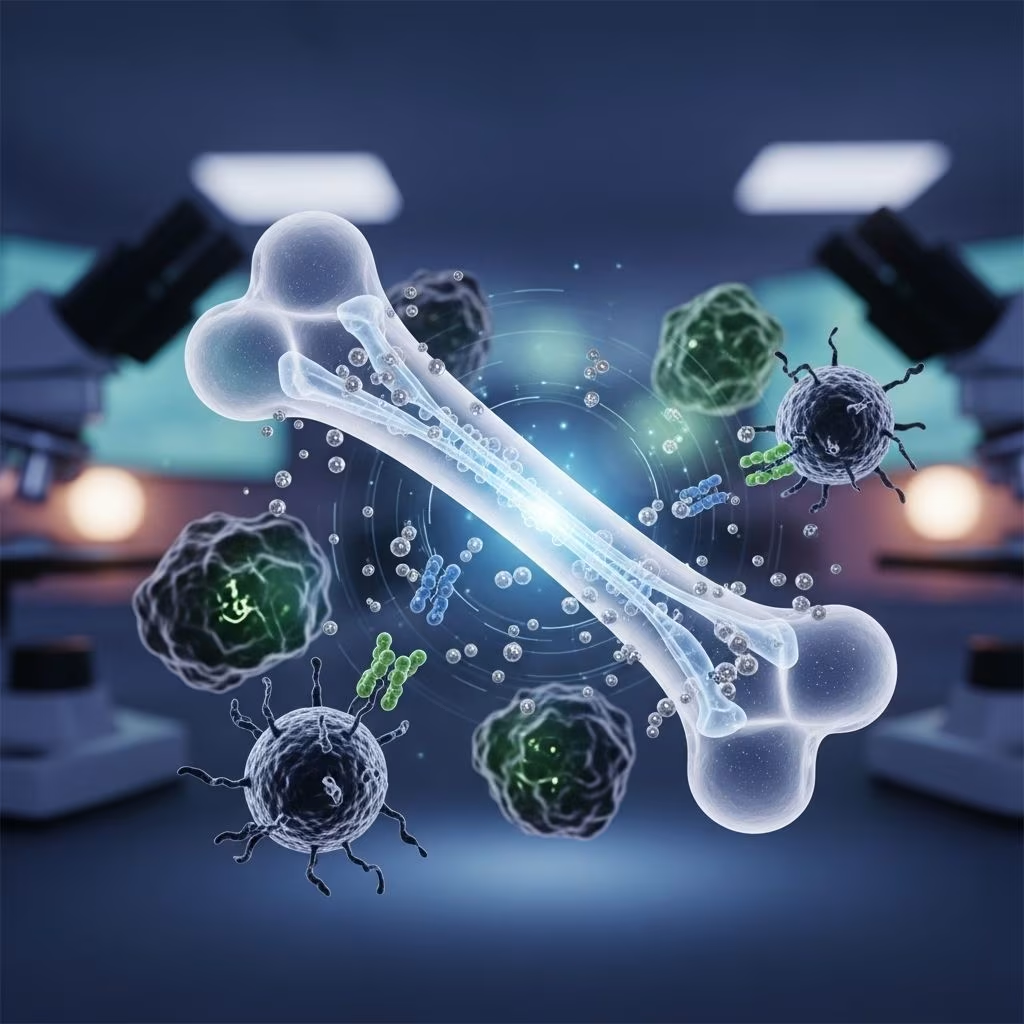
Canine osteosarcoma represents one of the most aggressive cancers affecting dogs, primarily targeting the bones of large and giant breeds. Recent developments in veterinary oncology introduce a novel vaccine designed to harness the dog’s immune system against this deadly disease, potentially extending life expectancy and improving quality of life when combined with established treatments.
Understanding Osteosarcoma in Dogs
Osteosarcoma is the most common primary bone tumor in dogs, accounting for up to 85% of all bone malignancies. It typically strikes the long bones of the limbs, such as the distal radius or proximal humerus, in middle-aged to older dogs, with breeds like Rottweilers, Great Danes, and Saint Bernards at higher risk. The cancer originates from osteoblasts, the cells responsible for bone formation, and is characterized by rapid growth, local bone destruction, and a high propensity for metastasis, especially to the lungs.
Early symptoms often include lameness that worsens over time, swelling around the affected bone, and severe pain that may cause the dog to limp or avoid bearing weight on the limb. Owners might notice their dog becoming reluctant to play, experiencing night pain, or developing a visible mass. Pathologic fractures can occur due to bone weakening, leading to sudden immobility. Diagnosis usually involves radiographs showing bone lysis and proliferation, confirmed by biopsy, with staging including chest X-rays to check for metastasis.
Standard Treatment Approaches for Bone Tumors
Traditional management of canine osteosarcoma focuses on local tumor control and slowing metastatic spread. Surgery remains the cornerstone, with limb amputation being the most straightforward and effective method to remove the primary tumor and alleviate pain. Contrary to owner concerns, most dogs adapt remarkably well to life on three legs, often regaining full mobility within weeks.
Amputation alone provides a median survival of 4-6 months, as microscopic metastases are already present at diagnosis in over 90% of cases. Adding chemotherapy significantly improves outcomes. Common protocols use platinum-based drugs like carboplatin or cisplatin, and anthracyclines such as doxorubicin (Adriamycin), administered intravenously every 2-3 weeks for 4-6 cycles post-surgery. This combination yields a median survival of 10-14 months, with many dogs maintaining good quality of life.
For dogs unsuitable for amputation, alternatives include limb-sparing surgery, where the tumor is excised and replaced with a metal endoprosthesis or bone graft, typically feasible for distal radius tumors. This requires strict post-operative care to prevent infection or implant failure. Radiation therapy options encompass palliative courses for pain relief (effective in 75% of cases for 2-4 months), stereotactic radiation (high-dose, precise targeting with 10-month median survival when paired with chemo), or as a bridge to other therapies.
Supportive and Palliative Care Options
When curative intent is not feasible, palliative strategies prioritize comfort. Bisphosphonates like zoledronate or pamidronate inhibit osteoclast activity, reducing bone resorption and pain; these are given intravenously every 3-4 weeks. Multimodal pain management combines NSAIDs, gabapentin, amantadine, and opioids, tailored to the dog’s response.
A comparison of key treatment paths highlights trade-offs:
| Treatment | Median Survival | Key Benefits | Approximate Cost |
|---|---|---|---|
| Amputation Alone | 4-6 months | Pain relief, quick recovery | $5,000-$8,000 |
| Amputation + Chemo | 12-14 months | Delays metastasis, good QoL | $8,000-$13,000 |
| Stereotactic Radiation + Chemo | 10 months | Limb preservation possible | $13,000-$15,000 |
| Palliative (Bisphosphonates + Pain Meds) | 3-6 months | Non-invasive, comfort-focused | $2,000-$5,000 |
Side effects from chemotherapy are mild in dogs compared to humans, with less than 20% experiencing vomiting or diarrhea, manageable with supportive care.
Breakthrough: The New Immunotherapy Vaccine
Emerging from clinical trials, a personalized tumor cell vaccine marks a paradigm shift in osteosarcoma management. This immunotherapy involves harvesting tumor cells from the amputated limb, culturing and irradiating them to create a lysate, then injecting it back into the dog to stimulate a targeted immune response. Unlike broad chemotherapy, it trains T-cells and antibodies to recognize and attack cancer-specific antigens, potentially addressing micrometastases more effectively.
Trials at institutions like the University of Illinois demonstrate promising results. Dogs receiving the vaccine post-amputation show extended survival, with some exceeding two years, and mild side effects like transient fever or swelling indicating immune activation. Combined with standard chemo or novel agents like losartan and toceranib, it enhances efficacy. Research also explores dendritic cell vaccines paired with stereotactic radiation and oral tumor vaccines targeting the MYC gene.
Ongoing Research and Clinical Trials
Veterinary researchers are aggressively pursuing multi-modal strategies. Morris Animal Foundation funds studies on chemotherapy combinations, immunotherapy, and biomarkers. The University of Minnesota’s Masonic Cancer Center investigates limb-salvage innovations. Clinical trials at NC State, Cornell, and CSU offer access to vaccines, targeted therapies, and pain management protocols without amputation. Eligibility often requires confirmed osteosarcoma diagnosis, with owners encouraged to contact oncology centers for enrollment.
- Personalized lysate vaccines: Post-surgical immune priming.
- Dendritic cell therapies: Enhance antigen presentation.
- Gene-targeted drugs: MYC inhibition.
- Drug combos: Losartan + toceranib.
Choosing the Right Path for Your Dog
Decisions hinge on tumor location, metastasis status, dog’s age, breed, and owner preferences. Consult a veterinary oncologist for imaging, biopsy, and personalized plans. Early intervention maximizes options, emphasizing quality over quantity of life. Many dogs thrive post-amputation, running and playing with vigor.
Frequently Asked Questions (FAQs)
What breeds are most prone to osteosarcoma?
Large and giant breeds like Great Danes, Rottweilers, Irish Wolfhounds, and Labrador Retrievers face higher risks, often between 7-10 years old.
Can my dog live a normal life after amputation?
Yes, most dogs adjust within 2-4 weeks, maintaining activity levels with proper rehab.
How effective is the new vaccine?
Early data shows prolonged survival beyond chemo alone, with ongoing trials refining protocols.
Is chemotherapy painful for dogs?
Rarely; side effects are mild and infrequent, far less severe than in humans[10].
Where can I find clinical trials?
Check university vet hospitals like Illinois, NC State, or Morris Animal Foundation resources.
Future Outlook for Canine Oncology
With immunotherapy vaccines leading the charge, canine osteosarcoma treatment is evolving from palliative to potentially curative. Collaborative efforts across vet schools promise further gains, offering hope for longer, happier lives for affected dogs. Owners play a crucial role by recognizing symptoms early and exploring all avenues with specialists.
References
- Canine Bone Tumors – NC State Veterinary Hospital — NC State University College of Veterinary Medicine. 2023. https://hospital.cvm.ncsu.edu/services/small-animals/cancer-oncology/oncology/bone-tumors/
- Osteosarcoma in Dogs: Symptoms, Treatment & Research Advances — Morris Animal Foundation. 2024. https://www.morrisanimalfoundation.org/article/osteosarcoma-in-dogs
- Osteosarcoma in Dogs: Symptoms & Treatment — VRA Veterinary. 2022-03-15. https://www.vravet.com/site/blog/2022/03/15/osteosarcoma-in-dogs-symptoms-and-treatment
- Osteosarcoma (Bone Cancer) in Dogs — PetMD. 2024. https://www.petmd.com/dog/conditions/musculoskeletal/c_multi_osteosarcoma
- Introduction to Chemotherapy – Bone Cancer Dogs — Bone Cancer Dogs. 2023. https://bonecancerdogs.org/chemotherapy/
- Osteosarcoma in dogs — Cornell University College of Veterinary Medicine. 2024. https://www.vet.cornell.edu/departments-centers-and-institutes/riney-canine-health-center/canine-health-topics/osteosarcoma-dogs
- More Than a Limp: Understanding Osteosarcoma in Dogs — University of Illinois College of Veterinary Medicine. 2024. https://vetmed.illinois.edu/pet-health-columns/osteosarcoma-dogs-clinical-trials-illinois/



