
Inner Ear Infection (Otitis Interna) in Cats
Understanding feline otitis interna: symptoms, diagnosis, and effective treatment options.
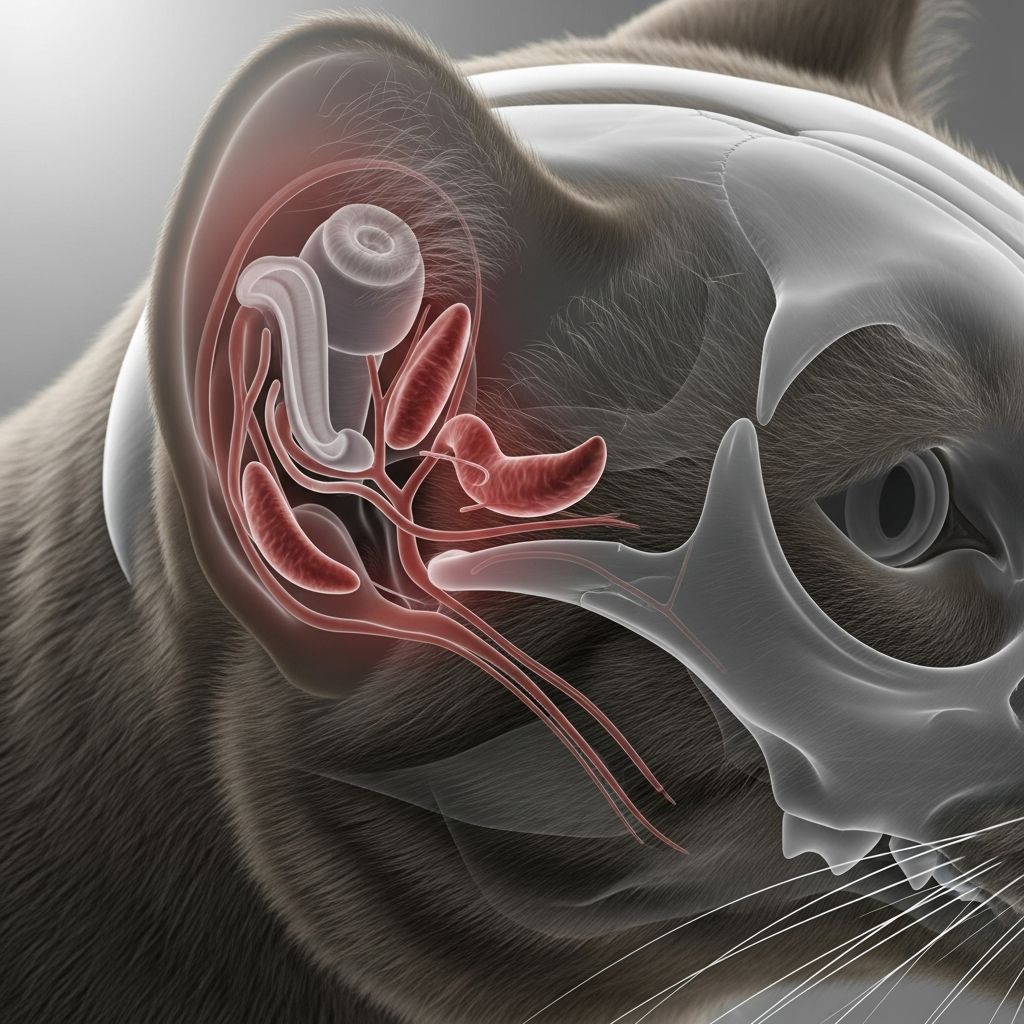
Understanding Inner Ear Infections in Cats
Inner ear infection, medically known as otitis interna, is a serious condition affecting the delicate structures within a cat’s ear. This infection occurs in the innermost part of the ear canal and can significantly impact your cat’s balance, hearing, and overall well-being. Understanding this condition is crucial for cat owners, as early recognition and treatment can prevent complications and improve outcomes. Otitis interna often develops as a progression from untreated middle ear infections or external ear conditions, making prevention and prompt veterinary care essential.
What is Otitis Interna?
Otitis interna involves inflammation and infection of the inner ear, also known as the labyrinth. The inner ear is responsible for maintaining balance and processing sound, making it a critical sensory organ. When bacteria, fungi, or other pathogens invade this delicate area, they trigger an inflammatory response that can cause severe discomfort and neurological symptoms. This condition is distinct from otitis media (middle ear infection) and otitis externa (external ear canal infection), though these conditions can occur simultaneously or progress into otitis interna if left untreated.
The inner ear contains the vestibular apparatus, which controls balance and spatial orientation. When infected, this apparatus becomes inflamed, leading to the characteristic clinical signs associated with otitis interna.
Common Causes of Otitis Interna in Cats
Several factors can lead to the development of otitis interna in cats. Understanding these causes helps cat owners recognize risk factors and seek preventive care.
Primary Causes
- Ascending infection from external ear canal: Untreated otitis externa can progress to involve the middle and inner ear structures
- Middle ear infection complications: Otitis media can rupture into the inner ear space, introducing infection
- Bacterial pathogens: Common bacteria including Pseudomonas, Staphylococcus, and Proteus species frequently cause these infections
- Fungal infections: Malassezia and Aspergillus can colonize the ear canal and lead to inner ear involvement
- Ear mite infestation: Otodectes cynotis can damage the ear canal and predispose to secondary bacterial or fungal infections
- Polyps or masses: Foreign growths can obstruct drainage and create environments conducive to infection
Predisposing Factors
Certain conditions make cats more susceptible to developing otitis interna. These include chronic allergies that cause inflammation of the ear canal, immunosuppressive conditions such as feline immunodeficiency virus (FIV) or feline leukemia virus (FeLV), and excessive ear cleaning that disrupts the protective flora and damages delicate tissues. Additionally, breed predispositions and individual anatomical variations can increase infection risk.
Clinical Signs and Symptoms
Recognizing the symptoms of otitis interna is vital for timely intervention. The clinical presentation can vary depending on infection severity and duration.
Neurological Manifestations
The most characteristic signs of otitis interna relate to vestibular dysfunction and include head tilt, which may be permanent or intermittent; loss of balance and coordination (ataxia); circling or rolling behavior; nystagmus (involuntary eye movement); and facial nerve involvement manifesting as drooping of the lip or inability to blink on the affected side.
General Symptoms
- Severe ear pain and sensitivity to ear touching
- Discharge from the affected ear (otorrhea)
- Odor emanating from the ear canal
- Hearing loss or deafness in the affected ear
- Nausea and vomiting
- Disorientation and confusion
- Reluctance to eat or drink due to nausea
- Behavioral changes including hiding or aggression
- Horner’s syndrome (constricted pupil, drooping eyelid, sunken eye)
In severe cases, cats may be unable to stand or walk normally, showing significant disorientation that affects their ability to navigate their environment safely.
Diagnosis of Otitis Interna
Accurate diagnosis requires a comprehensive veterinary evaluation combining multiple diagnostic approaches.
Physical Examination
Your veterinarian will begin with a thorough physical examination, paying special attention to neurological assessment and ear evaluation. They will assess your cat’s balance, coordination, and cranial nerve function.
Otoscopic Examination
Using an otoscope, the veterinarian examines the external ear canal and checks for signs of infection, discharge, inflammation, and eardrum integrity. However, otoscopy alone cannot definitively diagnose inner ear infection, as the inner ear structures are not directly visible.
Diagnostic Imaging
Advanced imaging is essential for confirming otitis interna diagnosis. CT (computed tomography) scans and MRI (magnetic resonance imaging) can visualize the inner ear structures and detect signs of inflammation, fluid accumulation, or bone involvement. These imaging modalities provide crucial information about infection extent and severity.
Bacterial Culture and Sensitivity
Samples obtained from ear discharge are cultured to identify the causative organism and determine appropriate antibiotic therapy. This allows for targeted antimicrobial treatment rather than broad-spectrum therapy.
Cytology
Microscopic examination of ear discharge samples helps identify bacteria, fungi, or parasites contributing to the infection.
Treatment Options for Otitis Interna
Treatment of otitis interna is comprehensive and often prolonged, requiring commitment from cat owners and close veterinary monitoring.
Medical Management
Most cases of otitis interna respond well to medical management when appropriately treated. Medical management typically includes:
- Antibiotic therapy: Oral antibiotics are the primary treatment for bacterial infections, typically administered for 2 to 4 months to prevent relapse. Selection is based on culture results when available
- Antifungal medications: If fungal infection is identified, appropriate antifungal agents are prescribed, administered either topically or systemically depending on the organism and infection severity
- Anti-inflammatory medications: Steroids and non-steroidal anti-inflammatory drugs (NSAIDs) reduce inflammation, pain, and swelling, potentially improving neurological signs
- Anti-nausea medications: These are essential for cats experiencing nausea and vomiting, allowing them to maintain adequate nutrition and hydration
- Ear cleaning: Thorough ear cleaning via endoscopy while the cat is sedated or anesthetized removes debris and exudate, promoting medication penetration and healing
Hospitalization and Supportive Care
If your cat is unable to eat or drink normally due to nausea or severe disorientation, hospitalization for intravenous fluid therapy is generally warranted. Maintaining hydration and controlling nausea are critical components of recovery. In some cases, temporary hand-feeding may be necessary, as reaching down into a dish can stimulate nausea in affected cats.
Activity Restriction
Cats with altered balance should have their activity restricted during treatment to prevent falling injuries and complications. These cats should not have access to stairs or elevated surfaces where they might tumble. Creating a safe, confined space allows them to recover without risk of trauma.
Surgical Intervention
Surgery may be necessary when medical management fails to resolve the infection or when complications develop. Surgical options include myringotomy and bulla lavage (minimally invasive drainage and flushing of the middle ear cavity) or, in severe cases, ventral bulla osteotomy (surgical opening of the middle ear structure). In the most severe cases involving both middle and inner ear infection with minimal response to treatment, the entire external ear canal may be removed.
Surgical outcomes are generally favorable, with approximately 71% of cats showing clinical recovery after a single procedure combined with oral steroids and systemic antibiotics.
Treatment Timeline and Duration
Treatment duration varies based on infection severity and response to therapy. Typically, antibiotic therapy continues for 4 to 8 weeks minimum, with many cases requiring 2 to 4 months of oral antibiotics to prevent relapse. Regular follow-up evaluations and cytologic assessments are essential to monitor treatment progress and adjust therapy as needed.
Prognosis and Long-term Outcomes
The prognosis for otitis interna depends on several factors including the underlying cause, infection duration before treatment initiation, and whether the infection has spread to bone or the brainstem. Most cats with otitis interna respond well to appropriate medical management when treatment is initiated promptly.
However, some permanent complications may persist even after successful infection clearance. These can include permanent hearing loss in the affected ear, persistent head tilt, ongoing balance problems, and Horner’s syndrome signs. While these neurological sequelae can be frustrating, most cats adapt well and maintain excellent quality of life.
The altered sense of balance that accompanies otitis interna typically improves significantly during the first few weeks of treatment, though complete resolution may take longer.
Prevention and Monitoring
Preventing otitis interna begins with appropriate management of external and middle ear conditions. Regular ear monitoring, prompt treatment of ear infections, and proper ear cleaning technique are essential. Avoiding excessive ear cleaning, which can disrupt protective flora and damage tissues, is important. Additionally, maintaining good overall health and managing conditions like allergies reduces infection risk.
After treatment completion, regular follow-up examinations help ensure infection does not recur and monitor for any persistent neurological signs that may require ongoing management.
Frequently Asked Questions
Q: Can otitis interna be contagious to other cats?
A: No, otitis interna itself is not contagious. However, if the underlying cause is a contagious condition like ear mites, those parasites can spread to other cats.
Q: How long does recovery take from otitis interna?
A: Recovery typically takes several weeks to months. Most cats show significant improvement within 2 to 4 weeks of treatment initiation, though complete resolution may require 2 to 4 months of antibiotic therapy.
Q: Will my cat become deaf from otitis interna?
A: Hearing loss in the affected ear is possible with otitis interna. However, cats have excellent directional hearing from their two ears, and most adapt well to single-ear hearing loss.
Q: Is surgery always necessary for otitis interna?
A: No, most cases respond well to medical management alone. Surgery is typically reserved for cases that do not respond to medication or when complications develop.
Q: Can I clean my cat’s ears at home if they have otitis interna?
A: Home ear cleaning should only be done as directed by your veterinarian. Improper cleaning can damage tissues and worsen the condition, so professional cleaning is typically recommended.
Q: What should I do if my cat shows signs of head tilt or balance problems?
A: Contact your veterinarian immediately. These signs can indicate otitis interna or other serious neurological conditions requiring prompt evaluation and treatment.
References
- Middle and Inner Ear Inflammation (Otitis Media and Interna) in Cats — Vetster. 2024. https://vetster.com/en/conditions/cat/middle-and-inner-ear-inflammation-otitis-media-and-interna
- Inner Ear Infection (Otitis Interna) in Cats — Kingsbrook Animal Hospital. 2024. https://kingsbrookvet.com/pdf/Inner%20Ear%20Infection%20(Otitis%20Interna)%20in%20Cats.pdf
- Otitis Media and Interna in Animals — Merck Veterinary Manual. 2024. https://www.merckvetmanual.com/ear-disorders/otitis-media-and-interna/otitis-media-and-interna-in-animals
- Diagnostic and Therapeutic Approach to Otitis Media in Cats — Today’s Veterinary Practice. 2024. https://todaysveterinarypractice.com/dermatology/diagnostic-and-therapeutic-approach-to-otitis-media-in-cats/
- Otitis in Cats: Causes, Diagnosis and Treatment — Vets & Clinics. 2024. https://vetsandclinics.com/en/otitis-in-cats-causes-diagnosis-and-treatment
- Otitis Media and Interna in Cats — MSD Veterinary Manual. 2024. https://www.msdvetmanual.com/cat-owners/ear-disorders-of-cats/otitis-media-and-interna-in-cats
Similar Articles








Read full bio of medha deb




