

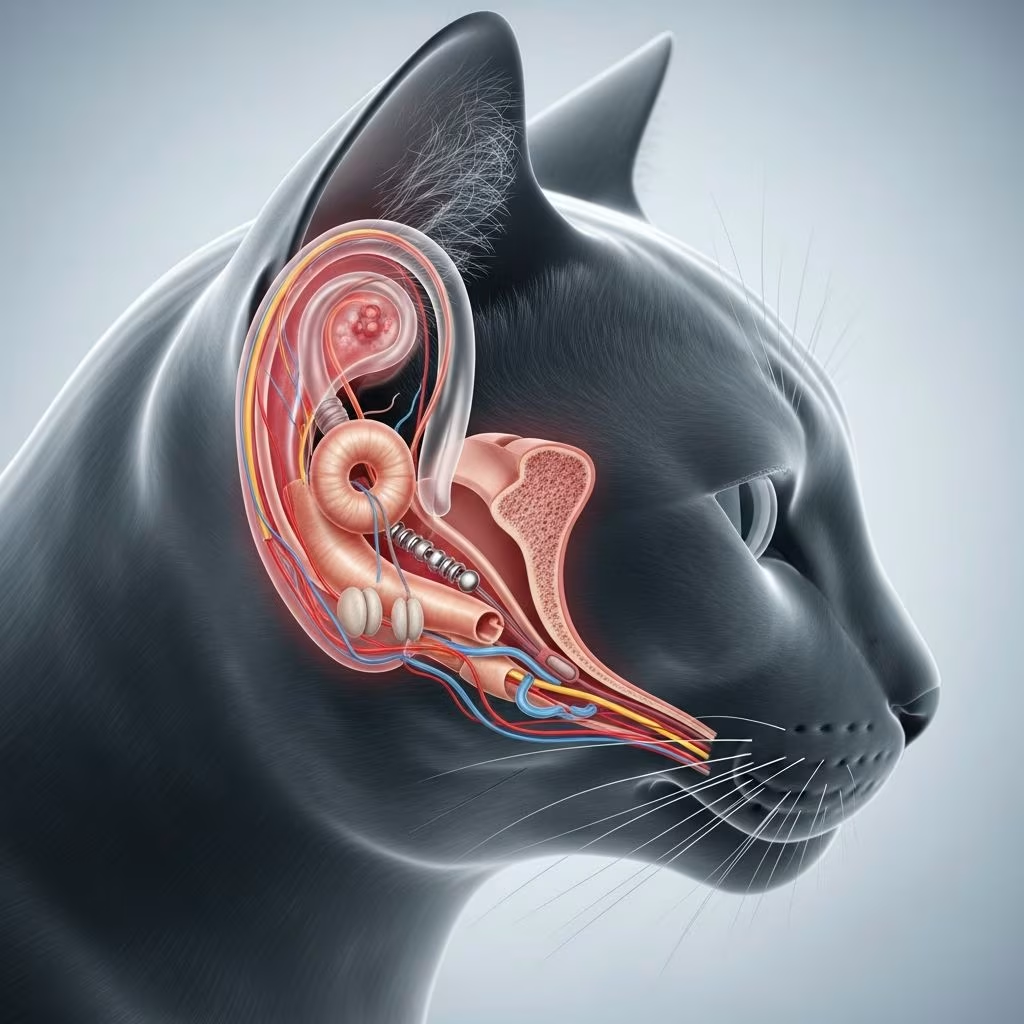
Understanding Inner Ear Infection (Otitis Interna) in Cats
Inner ear infection, medically known as otitis interna, represents a serious and potentially debilitating condition that affects the delicate structures within a cat’s inner ear. This condition requires prompt veterinary attention and comprehensive treatment to prevent long-term complications. The inner ear houses critical components responsible for hearing and balance, making infections in this area particularly concerning for your feline companion’s quality of life.
Otitis interna in cats is often a progression from untreated middle ear infections (otitis media) or can develop as a result of systemic infections spreading to the inner ear structures. Understanding this condition, recognizing its symptoms early, and seeking appropriate veterinary care are essential steps in protecting your cat’s health and preventing permanent damage to hearing and balance.
What Causes Inner Ear Infections in Cats?
Inner ear infections typically develop when bacteria, fungi, or other pathogens migrate from the middle ear to the inner ear structures. The infection rarely occurs in isolation and is usually preceded by infection in other parts of the ear canal or middle ear cavity. Several factors can predispose cats to developing otitis interna.
The primary cause involves bacterial organisms that commonly infect the middle ear and subsequently spread inward. Yeast infections, particularly those caused by Malassezia species, can also progress to inner ear involvement. Additionally, certain systemic diseases or immune system compromises may increase susceptibility to developing inner ear infections. Chronic external ear canal disease, if left untreated, can eventually lead to progression of infection to deeper ear structures.
Some cats may develop inner ear infections following upper respiratory infections or as a secondary complication of other systemic conditions. Anatomical factors, such as a ruptured eardrum, can allow bacteria to access the middle and inner ear more easily. In some cases, polyps or other growths in the ear canal may contribute to infection development by creating environments where bacteria can proliferate.
Recognizing the Signs and Symptoms
Cats suffering from otitis interna often display distinctive clinical signs that reflect the involvement of the vestibular system, which controls balance and spatial orientation. Recognizing these symptoms promptly is crucial for early intervention and treatment.
Vestibular System Signs: The most characteristic symptom of inner ear infection is a head tilt, where the cat consistently tilts its head toward the affected ear. Affected cats often experience severe disorientation and may have difficulty walking or maintaining balance. Many cats exhibit nystagmus, an involuntary back-and-forth eye movement that can be quite pronounced. Loss of balance, circling behavior, and falling toward the affected side are common manifestations. The cat may appear anxious or distressed due to the vertigo sensation.
Neurological Signs: Facial nerve involvement can occur with inner ear infections, leading to drooping of the lips on the affected side or an inability to blink the eye on that side. In cases of long-term facial nerve paralysis, the face may actually twist toward the side of the ear infection. Some cats may develop Horner’s syndrome symptoms, including a constricted pupil and drooping eyelid on the affected side.
Ear-Related Signs: You may notice redness in the affected ear and discharge with a foul odor emanating from the ear canal. The outer ear canal may become thickened and hard to the touch due to chronic inflammation. The lymph node at the base of the chin on the affected side may become enlarged and swollen.
Other Clinical Signs: Affected cats frequently experience nausea and may have difficulty eating or drinking normally. Some cats may exhibit signs of pain when the affected ear is touched. Vomiting can occur, particularly if the cat’s disorientation is severe. In some cases, cats may become reluctant to move or may stay in one position for extended periods.
Diagnosis of Otitis Interna
Accurate diagnosis of inner ear infection requires a combination of clinical examination, diagnostic imaging, and laboratory tests. Your veterinarian will begin with a thorough physical and neurological examination to assess the cat’s symptoms and locate the source of infection.
Otoscopic Examination: Your veterinarian will use an otoscope to visualize the external ear canal and eardrum. This examination helps determine whether the eardrum is intact, ruptured, or shows signs of infection. Material or discharge visible in the ear canal can provide important diagnostic clues.
Imaging Studies: Advanced imaging such as computed tomography (CT) or magnetic resonance imaging (MRI) is often necessary to definitively diagnose inner ear infection and assess the extent of infection. These imaging modalities allow visualization of the inner ear structures, middle ear cavity, and surrounding tissues. Imaging can reveal fluid accumulation, soft tissue swelling, or bone involvement.
Bacterial Culture and Sensitivity: If discharge or material is present, your veterinarian may collect samples for bacterial culture and sensitivity testing. These tests identify the specific organisms causing infection and determine which antibiotics will be most effective for treatment.
Cytology: Microscopic examination of ear discharge or material can reveal the presence of bacteria, yeast, or inflammatory cells, providing immediate information to guide initial treatment decisions while awaiting culture results.
Treatment Approaches for Otitis Interna
Treatment of otitis interna requires a comprehensive approach addressing the underlying infection while managing the cat’s comfort and preventing complications. Since this is a serious condition, hospitalization may be necessary, particularly if the cat is unable to eat or drink normally due to nausea or severe disorientation.
Medical Management
Hospitalization and Supportive Care: If your cat is unable to maintain adequate fluid intake or nutrition due to nausea and disorientation, hospitalization for intravenous fluid therapy is generally warranted. Dehydration can significantly compromise recovery and must be avoided. Your veterinarian may prescribe medications to control nausea and allow your cat to eat and drink normally. In some cases, sedation or anesthesia may be necessary to adequately visualize ear tissues, collect samples for bacterial culture, and properly clean the ear canal.
Antibiotic Therapy: Treatment of the underlying infection is absolutely critical for successful management. For bacterial infections, your veterinarian will prescribe appropriate antibiotics based on culture results when available. First-line antibiotics often include amoxicillin-clavulanic acid, cephalosporins, doxycycline, clindamycin, or metronidazole. If initial antibiotics prove ineffective, second-line options such as marbofloxacin, enrofloxacin, or cefovecin may be prescribed. Antibiotics are typically administered orally and may also be applied directly into the ear canal when appropriate.
Antifungal Medications: If the infection is fungal in nature, an antifungal medication will be prescribed. Itraconazole is recommended for severe yeast otitis in cats, typically given at 10 mg/kg once daily until remission is achieved. Whatever medications are prescribed, it is critical that they be given precisely as directed by your veterinarian.
Anti-inflammatory Therapy: Anti-inflammatory medications, including corticosteroids such as prednisolone or dexamethasone, may be prescribed to reduce inflammation and pain, particularly during the first week of treatment. Non-steroidal anti-inflammatory drugs (NSAIDs) such as meloxicam or robenacoxib may be used as alternatives or in combination with corticosteroids.
Duration of Treatment: Most cats require a prolonged course of antibiotics, typically lasting 3 to 6 weeks, or even up to 2 to 4 months in some cases, to prevent relapse and ensure complete resolution of the infection. Regular follow-up evaluations are essential to monitor progress and adjust treatment as needed.
Managing Your Cat at Home
During treatment, creating a safe environment for your cat is essential. If your cat has an altered sense of balance, restrict her activity to prevent falling injuries and potential trauma. These cats should not have access to stairs, as they may lose their balance and fall. Keep your cat confined to a safe, quiet area where she can move slowly without risk of injury.
Your cat may require temporary hand feeding if reaching down into a food or water dish stimulates nausea. Placing food and water bowls at an elevated level can sometimes help reduce nausea-induced discomfort. Monitor your cat closely for signs of discomfort or worsening symptoms and maintain regular communication with your veterinarian about your cat’s progress.
Surgical Intervention
If medical management alone does not resolve the infection, or if the infection is particularly severe, surgery may become necessary. Surgical options include myringotomy and bulla lavage, which involves creating an opening in the eardrum to access and flush the middle ear cavity. In severe cases of combined middle and inner ear infection, ventral bulla osteotomy may be performed, which involves surgically opening the bulla cavity to remove infected material and allow proper drainage.
In the most severe cases where infection is extensive and refractory to other treatments, total ear canal ablation and lateral bulla osteotomy may be considered. This surgical procedure removes the entire external ear canal and provides access to the middle ear for thorough cleaning and drainage. While this is a significant surgery, it can be curative in cases that have not responded to medical management.
Studies indicate that approximately 80% of cats undergoing ventral bulla osteotomy with concurrent medical management experience complete resolution of the infection. The decision to pursue surgery should be made in consultation with your veterinarian, considering your cat’s overall health status, response to initial medical therapy, and your preferences regarding treatment intensity.
Prognosis and Long-Term Outcomes
The prognosis for cats with otitis interna varies depending on the severity of infection, how quickly treatment is initiated, and the individual cat’s response to therapy. Most cats with otitis interna respond well to appropriate medical management when treatment is started early.
The altered sense of balance that generally accompanies otitis interna typically improves significantly during the first few weeks of treatment, though complete resolution may take several weeks to months. Many cats experience gradual improvement in coordination and balance as the inflammation subsides and the infection clears.
However, some cats may experience persistent neurological complications even after the infection has been successfully treated. Local nerve problems, including hearing loss in the affected ear or persistent facial nerve paralysis, may continue for life. Some cats may develop persistent signs of Horner’s syndrome. The severity of these residual signs is highly variable and depends on the extent of nerve damage that occurred during the infection.
Despite these potential complications, most cats maintain an excellent quality of life even with some residual neurological effects. Cats are remarkably adaptable animals and can function normally with unilateral hearing loss or mild balance abnormalities.
Prevention and Monitoring
While otitis interna cannot always be prevented, prompt treatment of external ear infections and middle ear infections may help reduce the risk of progression to inner ear involvement. Regular ear checks and maintenance of good ear hygiene are beneficial preventive measures.
Following successful treatment, continue to monitor your cat’s ears regularly for any signs of recurrent infection. Watch for discharge, odor, or any behavioral changes that might suggest ear problems. Maintain regular veterinary check-ups and report any concerns about ear health immediately.
If your cat has been treated for otitis interna, keep all follow-up appointments with your veterinarian to ensure the infection has completely resolved and to monitor for any persistent or recurrent issues.
Frequently Asked Questions About Otitis Interna in Cats
Q: How can I tell if my cat has an inner ear infection?
A: Common signs include a head tilt toward the affected ear, disorientation, loss of balance, nausea, and eye movements. You may also notice discharge with a foul odor from the ear, facial nerve paralysis symptoms, or an inability to blink on the affected side. If you notice any of these symptoms, contact your veterinarian immediately.
Q: Is otitis interna contagious to other cats?
A: Otitis interna itself is not contagious, but the underlying bacterial or fungal infection that causes it might be transmissible in certain circumstances. The infection typically results from progression of infection from the middle ear in an individual cat rather than transmission from other cats.
Q: How long does treatment for otitis interna take?
A: Most cats require 3 to 6 weeks of antibiotic therapy, though some may need treatment for 2 to 4 months. The exact duration depends on the severity of infection, response to initial therapy, and whether surgery is necessary. Your veterinarian will recommend the appropriate treatment duration for your specific cat.
Q: Can otitis interna be treated without surgery?
A: Yes, most cases respond well to medical management with appropriate antibiotics, anti-inflammatory medications, and supportive care. Surgery is typically reserved for cases that do not respond to medical therapy or for particularly severe infections where drainage and cleaning cannot be adequately achieved through medical means alone.
Q: Will my cat become deaf from otitis interna?
A: Your cat may become permanently deaf in the affected ear, though this does not occur in all cases. Hearing loss depends on the extent of damage to the inner ear structures during infection. However, cats can function very well with unilateral hearing loss, and most maintain an excellent quality of life.
Q: How much does treatment for otitis interna cost?
A: Costs vary widely depending on whether your cat requires hospitalization, imaging studies, bacterial culture, or surgical intervention. Medical management alone is typically less expensive than surgical treatment. Discuss costs with your veterinarian, who can provide estimates based on your cat’s specific condition and recommended treatment plan.
Q: Can otitis interna recur after treatment?
A: While recurrence is possible, completing the full course of prescribed antibiotics as directed significantly reduces recurrence risk. Some cats may experience relapse if treatment is discontinued prematurely, which is why completing the entire recommended treatment duration is essential.
References
- Otitis Media and Interna in Cats — Merck Veterinary Manual. 2024. https://www.merckvetmanual.com/cat-owners/ear-disorders-of-cats/otitis-media-and-interna-in-cats
- Diagnostic and Therapeutic Approach to Otitis Media in Cats — Today’s Veterinary Practice. 2024. https://todaysveterinarypractice.com/dermatology/diagnostic-and-therapeutic-approach-to-otitis-media-in-cats/
- Otitis media and interna with or without polyps in cats — PubMed Central, PMC National Center for Biotechnology Information. 2024. https://pmc.ncbi.nlm.nih.gov/articles/PMC10812352/
- Otitis — Cornell University College of Veterinary Medicine. 2024. https://www.vet.cornell.edu/departments-centers-and-institutes/cornell-feline-health-center/health-information/feline-health-topics/otitis
- Inner Ear Infection in Cats — Washington Dog and Cat Hospital. 2022. https://www.washingtondogandcathospital.com/site/blog/2022/01/15/ear-infection-cats



