
Innate Skin Growths In Animals: Expert Guide For Pet Owners
Exploring genetic and birth-present skin tumors and malformations in pets and livestock, their diagnosis, and care strategies.
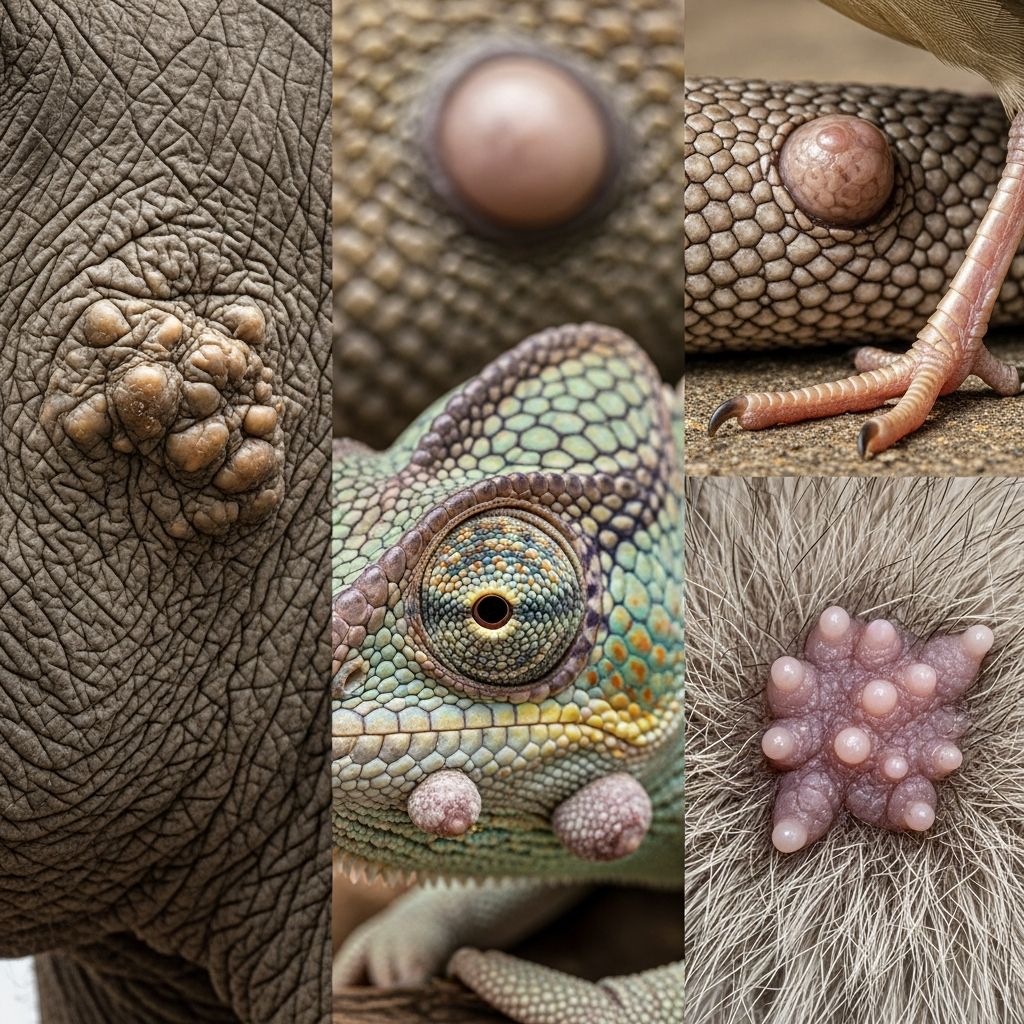
Congenital and hereditary skin growths represent a unique category of dermatological conditions in veterinary medicine, appearing at birth or developing due to genetic factors. These include true neoplasms like melanomas and hamartomas, which are benign tumor-like malformations. Understanding these lesions is crucial for early detection and intervention, particularly in predisposed breeds.
Defining Congenital Neoplasms and Hamartomas
Congenital neoplasms are malignant or benign tumors present from birth, originating from skin cells such as melanocytes or epithelial tissues. Hamartomas, by contrast, are non-neoplastic overgrowths of normal tissues in abnormal arrangements, often mimicking tumors but lacking invasive potential. Both can affect cosmetic appearance, function, and quality of life in animals.
In dogs, congenital cutaneous melanomas arise from pigment-producing cells and are rare but aggressive. A documented case involved a mixed-breed puppy born with an ulcerated lesion near the ear that rapidly enlarged, leading to metastasis by six months. Histopathology revealed melanin-containing cells positive for melan-A and S-100, confirming malignancy.
Prevalent Types in Companion Animals
Melanocytic Lesions in Dogs
Primary congenital melanomas in canines are exceptionally uncommon, differing from the typical adult-onset forms in older, darkly pigmented dogs. The reported puppy case showed quick progression to pulmonary, cardiac, and lymph node metastases, highlighting the need for prompt biopsy and staging.
- Initial presentation: Ulcerated, nodular skin mass.
- Diagnostic markers: Immunohistochemistry for vimentin, NSE, and melan-A.
- Prognosis: Poor due to metastatic potential.
Cystic Formations and Dermoids
Dermoid cysts, present at birth, are lined by skin-like structures and filled with keratin or hair. Breeds like Boxers, Kerry Blue Terriers, and Rhodesian Ridgebacks are prone. These fluid-filled sacs under the skin rarely cause issues unless infected but may require excision for rupture prevention.
Other follicular cysts, such as infundibular or matrix types, share similar congenital origins and are surgically managed.
Skin Tumors Across Species
While dogs dominate reports, other animals exhibit parallel conditions. In cats, peripheral nerve sheath tumors appear as firm nodules in older individuals, though congenital variants exist.
| Species | Common Congenital Growth | Predisposed Breeds/Lines | Key Features |
|---|---|---|---|
| Dogs | Dermoid cysts | Boxers, Ridgebacks | Present at birth, surgical removal ideal |
| Dogs | Melanoma | Mixed breeds (rare) | Rapid metastasis, IHC confirmation |
| Cattle | Hemangiomas | Dairy breeds | Disseminated vascular lesions |
| Horses | Nerve sheath tumors | Young foals | Distal limb nodules |
| Pigs | Hemangiopericytomas | Yorkshire boars | Scrotal skin involvement |
Genetic and Environmental Influences
Hereditary factors drive many cases, such as generalized nodular dermatofibrosis in German Shepherds, linking skin collagen nevi to renal tumors. Solar radiation exacerbates vascular tumors like angiosarcomas in light-coated dogs (Whippets, white Boxers), transitioning from benign hemangiomas.
Viruses, chemicals, and hormones contribute, but genetics predominate in innate forms. Routine screening in at-risk breeds aids prevention of complications like ulceration or secondary infections.
Diagnostic Approaches
Diagnosis hinges on fine-needle aspiration, biopsy, and histopathology. For melanomas, immunohistochemistry distinguishes them from other round-cell tumors. Imaging (radiographs, ultrasound) assesses metastasis, as in the canine case with lung involvement.
- Biopsy essentials: Excise margins for completeness.
- Imaging: Chest X-rays for pulmonary spread.
- Laboratory: Markers like S-100 for melanocytic origin.
Treatment Modalities
Surgical excision remains primary, with wide margins for infiltrative types. Benign hamartomas may need no intervention unless symptomatic. Malignant cases benefit from chemotherapy (carboplatin) or radiation.
For recurrent vascular tumors, sun avoidance and cryosurgery help. Retinoids manage multifocal sebaceous overgrowths in predisposed dogs.
Breed-Specific Vulnerabilities
Certain lineages face heightened risks:
- Hounds and Terriers: Squamous cell carcinomas, basal tumors.
- Short-coated breeds: Solar-induced angiosarcomas.
- Spaniels and Malamutes: Sebaceous adenomas transitioning to carcinomas.
Owners of high-risk animals should monitor neonates closely for nodules or ulcers.
Prognostic Factors
Benign hamartomas carry excellent outlooks post-excision. Malignant congenital tumors, like melanomas, portend grave outcomes due to early spread. Early intervention improves survival, emphasizing vigilant neonatal exams.
Preventive Strategies for Owners
Genetic testing in breeding lines reduces incidence. Sun protection (sunscreen, shade) for light-skinned dogs prevents progression. Annual dermatologic checks for at-risk breeds facilitate early detection.
FAQs
What are signs of congenital skin growths in puppies?
Look for birth-present lumps, ulcers, discoloration, or hairless patches that grow rapidly.
Can these growths be cancerous at birth?
Yes, rare cases like congenital melanoma in dogs demonstrate malignant potential from onset.
Is surgery always required?
No, asymptomatic benign cysts may be monitored, but excision prevents complications.
Which breeds need extra monitoring?
Boxers for dermoids, German Shepherds for dermatofibrosis, Whippets for vascular tumors.
How is metastasis detected?
Via histopathology, imaging, and lymph node evaluation.
Advances in Veterinary Care
Recent studies underscore immunohistochemistry’s role in precise diagnosis, enabling targeted therapies. Multimodal approaches, including metronomic chemotherapy, extend remission in infiltrative cases. Ongoing research into genetic markers promises breeding reforms to curb hereditary incidences.
References
- Congenital cutaneous melanoma in a dog — PubMed/NCBI. 2016-11-01. https://pubmed.ncbi.nlm.nih.gov/27813258/
- Congenital cutaneous melanoma in a dog — Wiley Online Library. 2017-04-11. https://onlinelibrary.wiley.com/doi/abs/10.1111/vde.12391
- Tumors of the Skin in Dogs – Dog Owners — MSD Veterinary Manual. 2023. https://www.msdvetmanual.com/dog-owners/skin-disorders-of-dogs/tumors-of-the-skin-in-dogs
- Connective Tissue Tumors in Animals — MSD Veterinary Manual. 2023. https://www.msdvetmanual.com/integumentary-system/tumors-of-the-skin-and-soft-tissues/connective-tissue-tumors-in-animals
- Overview of Tumors of the Skin and Soft Tissues in Animals — Merck Veterinary Manual. 2023. https://www.merckvetmanual.com/integumentary-system/tumors-of-the-skin-and-soft-tissues/overview-of-tumors-of-the-skin-and-soft-tissues-in-animals
Similar Articles








Read full bio of medha deb


