

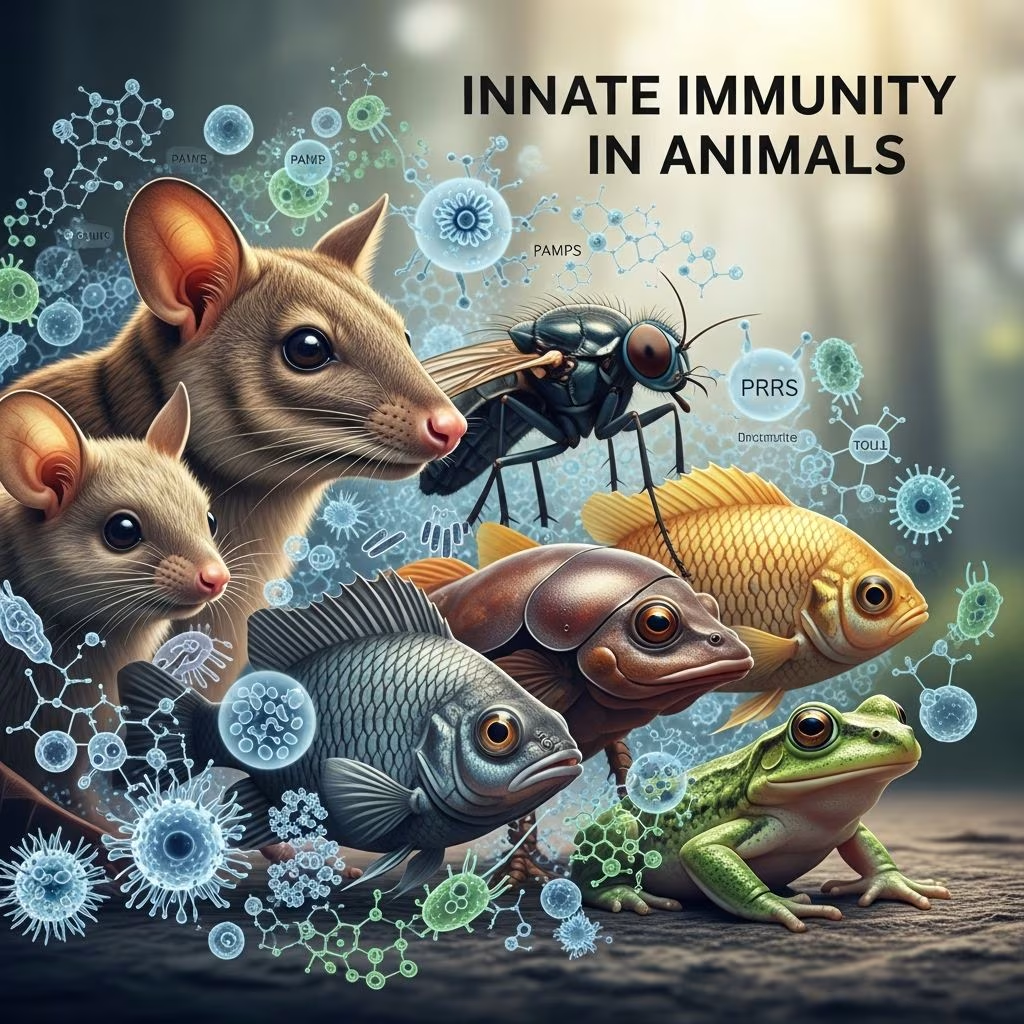
Innate immunity serves as the immediate, broad-spectrum shield in animals, activating within minutes of pathogen exposure without prior sensitization. This ancient system, conserved across evolutionary lineages, relies on physical barriers, cellular patrols, and molecular signals to neutralize threats before adaptive responses mobilize.
Foundational Barriers Against Invasion
Animals deploy multiple anatomic structures to block microbial entry at the outset. Epithelial linings in skin, mucous membranes, and gut walls form impenetrable fortresses fortified by antimicrobial secretions. For instance, skin’s keratinized layer and acidic pH deter bacterial colonization, while mucosal surfaces in respiratory and digestive tracts trap invaders in mucus laced with lysozyme and defensins.
In the gastrointestinal tract, a vast commensal microbiome outcompetes pathogens for resources and space. This microbial community not only excludes harmful agents but also trains the immune system by modulating inflammatory thresholds and fostering adaptive immunity development.
Cellular Guardians of the Innate Response
Sentinel cells like macrophages, dendritic cells, mast cells, and innate lymphoid cells (ILCs) orchestrate the innate defense. These cells express pattern recognition receptors (PRRs) that detect pathogen-associated molecular patterns (PAMPs) such as bacterial lipopolysaccharides or viral nucleic acids, and damage-associated molecular patterns (DAMPs) from injured host cells.
Upon detection, PRRs trigger NF-κB signaling, unleashing cytokines including IL-1, TNF-α, and interferons. Mast cells release histamine and prostaglandins, sparking vascular permeability and pain signals that recruit reinforcements. Macrophages and neutrophils execute phagocytosis, engulfing and destroying invaders via respiratory bursts producing reactive oxygen species (ROS) like hydrogen peroxide.
- Neutrophils: Short-lived phagocytes that swarm infection sites, limited to a few killing cycles before apoptosis.
- Macrophages: Versatile residents that engulf debris, present antigens, and secrete IL-23 to amplify neutrophil recruitment via Th17 cells.
- Natural Killer (NK) Cells: Target virus-infected or cancerous cells lacking MHC class I, injecting perforins and granzymes to induce apoptosis.
- Innate Lymphoid Cells (ILCs): Group 1 ILCs bolster antiviral defenses in intestines; Group 2 combat parasites body-wide.
Chemical Armory in Action
Beyond cells, soluble factors amplify innate potency. The complement system, a cascade of proteins, opsonizes pathogens for phagocytosis, lyses microbes directly, and summons inflammatory cells. Acute-phase proteins from the liver, like C-reactive protein, bind microbial surfaces to enhance clearance.
Antimicrobial peptides (AMPs) puncture pathogen membranes, while interferons establish antiviral states in neighboring cells by inducing hundreds of protective genes. These chemical mediators ensure rapid escalation without specificity.
The Inflammation Cascade: Rallying the Troops
Inflammation hallmarks innate activation, characterized by redness, heat, swelling, and pain. Triggered by cytokines and vasoactive amines, endothelial cells express adhesion molecules, enabling neutrophil diapedesis into tissues. Here, they form pus alongside dead microbes and debris.
IL-17 from Th17 cells, stimulated by macrophage-derived IL-23, sustains neutrophil influx. This controlled storm clears infection but, if dysregulated, contributes to chronic diseases. Resolution involves anti-inflammatory cytokines like IL-10 and lipid mediators promoting tissue repair.
Evolutionary Roots from Invertebrates to Vertebrates
Innate immunity predates adaptive systems, evident in sponges and cnidarians lacking lymphocytes. Poriferans wield PRRs like Toll-like receptors (TLRs) to sense PAMPs, activating MyD88 pathways for antimicrobial peptide production. Amphimedon queenslandica sponges deploy NLRs triggering pyroptosis against bacteria.
Cnidarians, including corals, balance symbiotic algae and pathogens via PRRs, maintaining microbiome equilibrium amid climate stressors. Mollusks like snails use peptidoglycan recognition proteins (PGRPs) for bacterial detection, producing ROS and nitric oxide.
Arthropods, exemplified by Drosophila, rely on Toll and Imd pathways for gram-positive/negative bacteria and fungi defense, respectively. These pathways culminate in NF-κB homologs inducing AMPs, conserved in vertebrates. Invertebrate diversity in effectors contrasts vertebrate streamlining via adaptive fine-tuning.
| Phylum | Key PRRs | Main Effectors | Conserved Pathways |
|---|---|---|---|
| Porifera (Sponges) | TLRs, NLRs | AMPs, cytokines | MyD88-dependent |
| Cnidaria (Corals, Jellyfish) | TLRs, scavenger receptors | ROS, phagocytosis | NF-κB signaling |
| Mollusca (Snails) | PGRPs, lectins | ROS, NOS | Phagocytosis enhancement |
| Arthropoda (Insects) | Toll, Imd receptors | AMPs (cecropins) | Toll/Imd to Rel/NF-κB |
| Vertebrata | TLRs, NLRs, RLRs | Complement, cytokines | NF-κB, inflammasomes |
Bridging Innate and Adaptive Immunity
Innate responses prime adaptive ones via antigen presentation by dendritic cells and cytokine milieus favoring T- and B-cell differentiation. Commensal microbes in guts calibrate this interface, preventing overzealous inflammation while licensing pathogen-specific attacks.
NK cells bridge gaps by eliminating MHC-downregulated cells, preserving antigen availability. ILCs mirror T-helper subsets, providing swift cytokine support until adaptive cells arrive.
Challenges and Dysfunctions in Veterinary Contexts
In domestic animals, innate defects manifest as recurrent infections. Neutropenia impairs bacterial clearance, while complement deficiencies heighten sepsis risk. Environmental stressors like heat in livestock disrupt mucosal barriers, inviting opportunists.
Coral bleaching illustrates climate impacts on invertebrate innate systems, where dysbiosis overwhelms PRR-mediated homeostasis. Vaccines targeting innate enhancers, like adjuvants stimulating TLRs, boost protection in species lacking robust adaptive responses.
FAQs
What distinguishes innate from adaptive immunity?
Innate immunity is rapid, nonspecific, and non-improving with exposure; adaptive is slower, antigen-specific, and generates memory.
How do animals without adaptive immunity survive?
Invertebrates rely on diverse PRRs, phagocytosis, AMPs, and ROS, sufficient for most threats via sheer mechanistic variety.
Can innate immunity be enhanced therapeutically?
Yes, via probiotics modulating microbiomes, TLR agonists as adjuvants, or cytokine therapies to amplify cellular responses.
Why is inflammation both protective and harmful?
It clears pathogens efficiently but unresolved inflammation causes tissue damage in chronic conditions like autoimmunity.
Are invertebrate innate systems relevant to veterinary medicine?
Absolutely; conserved pathways inform drug development, and aquaculture species like fish depend solely on innate defenses.
References
- The Role of Innate Immune System: A Crosstalk Between Invertebrates and Humans — Scientific Archives. 2020-10-15. https://www.scientificarchives.com/article/the-role-of-innate-immune-system-a-crosstalk-between-invertebrates-and-humans
- Innate Immunity in Animals — MSD Veterinary Manual. 2023-05-01. https://www.msdvetmanual.com/immune-system/the-biology-of-the-immune-system/innate-immunity-in-animals
- Evolution of Innate Immunity: Clues from Invertebrates via Fish to Mammals — Frontiers in Immunology. 2014-10-08. https://www.frontiersin.org/journals/immunology/articles/10.3389/fimmu.2014.00459/full
- Evolution of the Innate Immune System — National Center for Biotechnology Information (NCBI). 2001-01-01. https://www.ncbi.nlm.nih.gov/books/NBK27138/
- Innate Immunity in Vertebrates: An Overview — PubMed Central (PMC). 2016-05-18. https://pmc.ncbi.nlm.nih.gov/articles/PMC4863567/



