

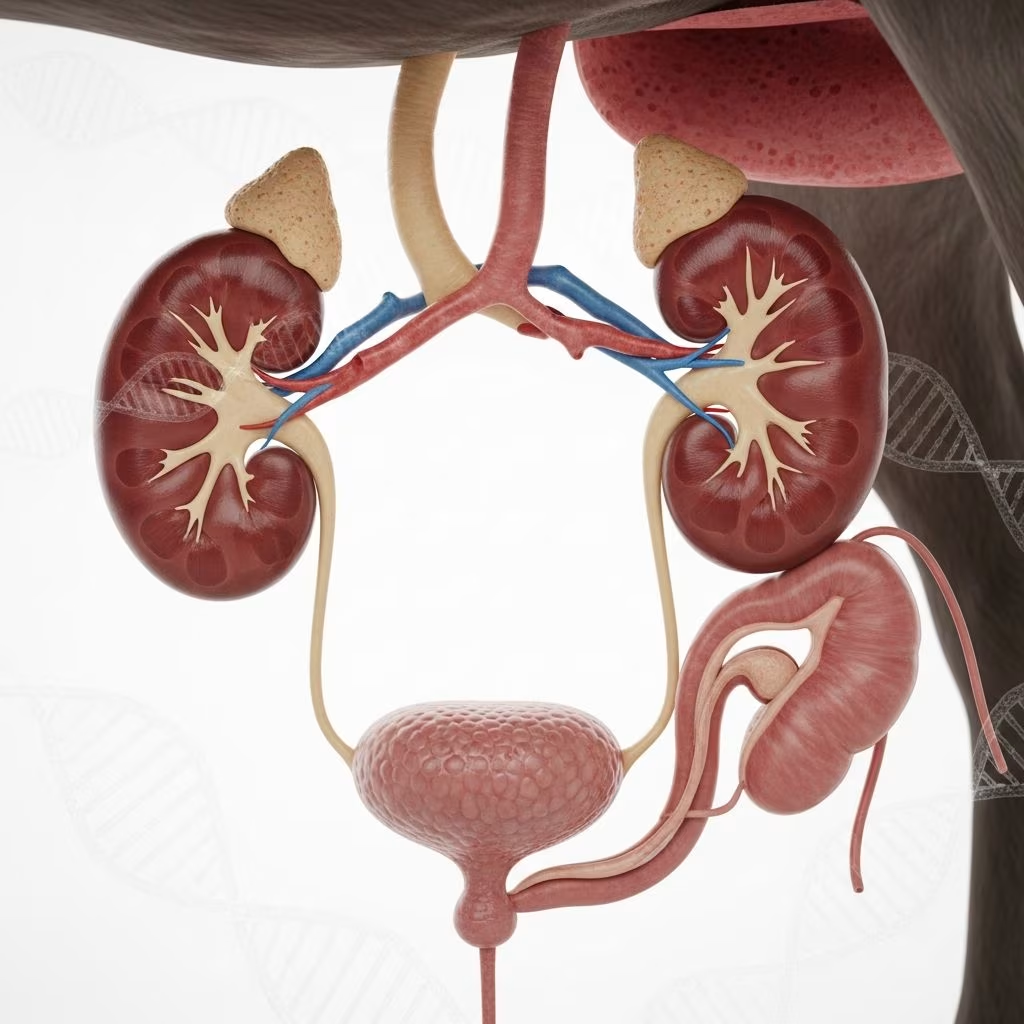
Congenital and inherited disorders of the equine urinary system represent developmental anomalies present from birth that can significantly impact a horse’s health, performance, and longevity. These conditions arise during fetal development and may affect the kidneys, ureters, bladder, urethra, or associated structures, leading to issues like incontinence, infections, or renal failure if untreated.
Understanding the Origins of Urinary Anomalies
During embryonic development, the urinary tract forms from complex interactions between the metanephric ducts, mesonephric remnants, and urogenital sinus. Disruptions in these processes can result in misplaced structures or incomplete formations. While rare in horses, these defects are documented across breeds and may go unnoticed until clinical signs emerge in foals or even mature animals.
Factors contributing to these anomalies include genetic predispositions, though specific equine genes remain largely unidentified, unlike in some companion animals. Environmental influences during gestation, such as maternal infections or nutritional deficiencies, may also play roles, but evidence is limited.
Key Renal Developmental Issues
The kidneys are frequent sites of congenital malformations in equines. These organs develop early in gestation, making them vulnerable to teratogenic effects.
Renal Agenesis and Hypoplasia
Renal agenesis occurs when one or both kidneys fail to form entirely, a severe condition often incompatible with life if bilateral. Unilateral cases may allow survival but predispose the horse to compensatory hypertrophy of the remaining kidney and chronic strain.
Hypoplasia involves underdevelopment of renal tissue, resulting in small kidneys with reduced functional nephrons. Affected foals may show poor growth, lethargy, and elevated blood urea nitrogen levels early in life.
Dysplastic and Cystic Kidneys
Renal dysplasia features disorganized kidney architecture, with immature glomeruli and tubules unable to filter waste effectively. This leads to progressive renal insufficiency, manifesting as weight loss, polyuria, and azotemia.
Polycystic kidneys, though uncommon, involve multiple cysts replacing normal parenchyma, impairing filtration and potentially causing hypertension or rupture. Hereditary links are suspected in certain lineages.
- Common signs: Appetite loss, recurrent colic, hematuria, abdominal distension.
- Diagnosis: Ultrasonography reveals irregular kidney shapes; biopsy confirms dysplasia.
Ureteral Malformations and Their Impact
Ureteral defects are among the most reported congenital urinary issues in horses, primarily affecting urine flow from kidneys to bladder.
Ectopic Ureters: A Primary Concern
The hallmark ureteral anomaly is ectopia, where ureters bypass the bladder trigone and insert into the urethra, vagina, or uterus. This developmental error stems from failed cranial migration of the metanephric duct.
Fillies are overrepresented due to visible incontinence and scalding of hindlimbs from constant urine dribbling. Colts may present with recurrent urinary tract infections (UTIs) as urine refluxes abnormally.
Associated complications include hydronephrosis (kidney swelling from backpressure), hypoplastic bladder, and secondary pyelonephritis.
| Symptom | Prevalence in Affected Horses | Diagnostic Clue |
|---|---|---|
| Urinary incontinence | 90% in fillies | Constant dribbling, moist vulva |
| Recurrent UTIs | Common in colts | Pyuria on urinalysis |
| Hydronephrosis | 70% unilateral cases | Ultrasound dilation |
Other Ureteral Defects
Ureteral duplication or strictures are rarer, causing partial obstructions and flank pain during urination. Vascular anomalies encircling ureters can mimic calculi on imaging.
Bladder and Lower Tract Anomalies
Patent Urachus in Neonates
The urachus, a fetal remnant linking bladder to allantois, normally obliterates post-birth. Persistence leads to urine leakage via the umbilicus, often linked to prematurity, sepsis, or omphalitis.
Foals exhibit a wet navel, pollakiuria (frequent small urinations), and risk septicemia from bacterial ascension. Males appear more susceptible.
- Treatment approaches: Conservative (antibiotics for mild cases), surgical ligation or cauterization for persistent patency.
- Prognosis: Excellent if addressed promptly; complications like peritonitis worsen outlook.
Bladder and Urethral Variations
Bladder duplication or diverticula create urine pooling sites prone to infection. Urethral atresia or strictures cause dysuria and colic, particularly in males.
Fistulas, such as rectovaginal types, allow fecal contamination of the urinary tract, leading to severe endometritis or cystitis.
Diagnostic Strategies for Early Detection
Prompt identification hinges on a multimodal approach. Neonatal foals warrant routine umbilical palpation and urine output monitoring.
- History and exam: Note incontinence, growth failure, or colic patterns.
- Imaging: Ultrasonography detects hydronephrosis, cysts, or ectopic openings; contrast cystography outlines ureters.
- Lab tests: Urinalysis for infection/proteinuria; serum creatinine/BUN for azotemia; culture for pathogens.
- Advanced: Endoscopy visualizes ectopic ureters; scintigraphy assesses function.
Prenatal ultrasound in mares is emerging but not routine in equine practice, unlike human medicine.
Management and Therapeutic Interventions
Treatment varies by anomaly severity and horse age. Supportive care includes fluid therapy, antibiotics, and dietary renal support.
Surgical Corrections
Neoureterostomy repositions ectopic ureters into the bladder, with 70-80% continence success in fillies. Urachal resection prevents sepsis.
Kidney anomalies often lack surgical cures; nephrectomy for unilateral agenesis/dysplasia preserves life if the contralateral kidney functions.
Medical and Supportive Care
Chronic cases benefit from low-protein diets, alkalinizing agents, and UTI prophylaxis. Hormone therapies (e.g., phenylpropanolamine) aid sphincter tone in incontinent horses.
Prognosis Across Conditions
| Condition | Prognosis | Factors Influencing Outcome |
|---|---|---|
| Ectopic Ureter | Good post-surgery | Unilateral vs. bilateral; early intervention |
| Renal Dysplasia | Guarded to poor | Degree of bilaterality; renal function |
| Patent Urachus | Excellent | Absence of sepsis |
| Polycystic Kidneys | Poor long-term | Progression rate |
Bilateral severe defects often culminate in euthanasia due to renal failure.
Preventive Measures and Breeding Considerations
While not fully preventable, screening breeding stock with ultrasound and genetic testing (where available) reduces incidence. Avoid mating horses with known familial anomalies.
Mare vaccination and nutrition optimization support fetal development.
Frequently Asked Questions (FAQs)
What causes urinary incontinence in foals?
Often ectopic ureters or patent urachus; veterinary imaging confirms.
Can adult horses develop signs of congenital urinary issues?
Yes, milder cases like unilateral ectopia may present later with infections.
Is surgery always needed for patent urachus?
No, many resolve with antibiotics; surgery for non-responders.
How do I differentiate UTI from congenital defects?
Persistent symptoms despite treatment suggest anomalies; endoscopy differentiates.
Are these disorders breed-specific?
Not strongly, but reported across Thoroughbreds, Quarter Horses, and others.
Long-Term Monitoring for Affected Horses
Horses post-treatment require quarterly renal panels, urinalysis, and ultrasounds. Owners should track water intake, urination frequency, and body condition. Early colic or weight loss signals deterioration.
Integrate farrier care and exercise adjustments to manage secondary effects like limb scalding or weakness.
References
- Congenital Disorders of the Urinary Tract — Veterian Key. 2023. https://veteriankey.com/congenital-disorders-of-the-urinary-tract/
- Congenital anomalies of the equine urinary tract — PubMed/NCBI. 2007-11-01. https://pubmed.ncbi.nlm.nih.gov/18061858/
- Ureteral Anomalies in Animals — MSD Veterinary Manual. 2023. https://www.msdvetmanual.com/urinary-system/congenital-and-inherited-anomalies-of-the-urinary-system/ureteral-anomalies-in-animals
- What Your Horse’s Urine Is Telling You — Mad Barn. 2024. https://madbarn.com/equine-urinary-symptoms/
- Bladder, Urachus, and Umbilicus Problems in Neonatal Foals — The Horse. 2011. https://thehorse.com/117256/bladder-urachus-and-umbilicus-problems-in-neonatal-foals/
- Congenital Urogenital Disorders — Wiley Online Library. 2021. https://onlinelibrary.wiley.com/doi/abs/10.1002/9781119617228.ch25



