

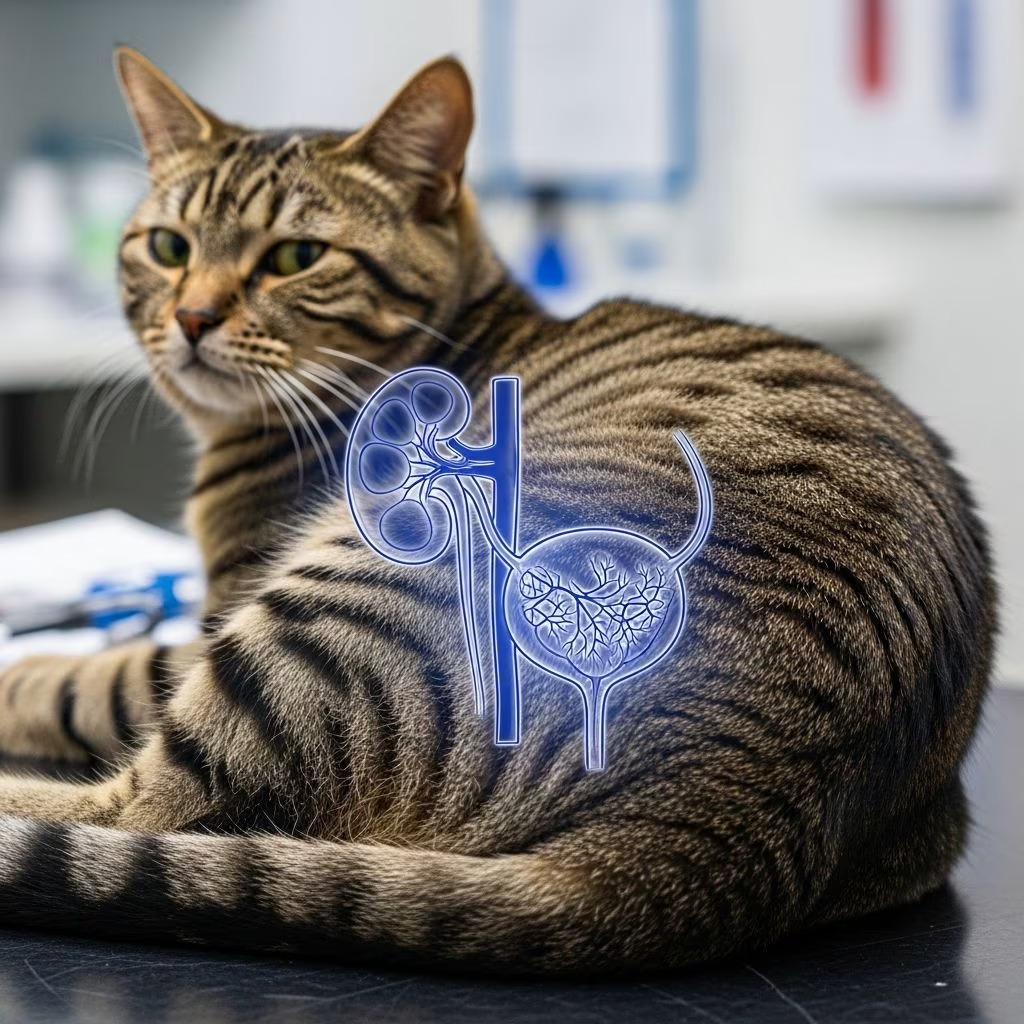
Congenital and inherited disorders of the feline urinary system encompass a range of structural abnormalities present from birth, often leading to progressive kidney dysfunction or urinary tract obstructions if untreated. These conditions, while uncommon, can significantly impact a cat’s quality of life, with some proving fatal in early kittenhood and others manifesting symptoms later in adulthood.
Understanding the Origins of Feline Urinary Anomalies
Many urinary defects in cats arise during fetal development due to genetic mutations or random developmental errors. Hereditary forms, like polycystic kidney disease (PKD), are linked to specific breeds such as Persians, where a dominant gene causes fluid-filled cysts to form in the kidneys, gradually impairing filtration and leading to chronic kidney disease. Developmental anomalies, including renal agenesis—where one or both kidneys fail to form—result from intrauterine disruptions, often without a clear genetic basis but carrying grave prognoses if bilateral.
Environmental factors during pregnancy, such as maternal infections or toxin exposure, may contribute to non-hereditary malformations, though evidence remains limited. Breeds like British Shorthairs and Himalayans also show elevated PKD risk, underscoring the need for genetic screening in breeding programs.
Primary Types of Congenital Kidney Malformations
Kidney-related defects dominate congenital urinary issues in cats. Key variants include:
- Polycystic Kidney Disease (PKD): The most frequent inherited form, characterized by numerous cysts that enlarge over time, compressing healthy tissue and causing renal failure. Symptoms often emerge between 3-10 years, including increased thirst, urination, vomiting, and lethargy.
- Renal Hypoplasia or Dysplasia: Underdeveloped or abnormally structured kidneys due to faulty embryonic growth. Unilateral cases may allow normal lifespans with one functional kidney, but bilateral involvement typically results in neonatal death.
- Renal Agenesis: Complete absence of one kidney (unilateral) or both (bilateral). Cats with unilateral agenesis can thrive if the remaining kidney compensates, though associated reproductive organ underdevelopment may occur.
These malformations often remain asymptomatic until secondary complications like hypertension or uremia arise, emphasizing routine veterinary check-ups for at-risk breeds.
Bladder and Ureteral Structural Abnormalities
Beyond kidneys, congenital defects affect the lower urinary tract. Ectopic ureters, where ureters bypass the bladder and insert abnormally into the urethra or vagina, cause persistent incontinence from birth, with urine leakage despite normal voiding efforts. Persistent urachus, a failure of the fetal urachus to close, leads to urine dribbling from the umbilical area.
| Defect Type | Description | Common Signs | Prognosis |
|---|---|---|---|
| Ectopic Ureters | Ureters empty outside bladder | Continuous incontinence, UTI risk | Good with surgical correction |
| Persistent Urachus | Open urachus post-birth | Umbilical urine leakage, infections | Fair; surgery often needed |
| Bladder Duplication/Agenesis | Extra/missing bladder | Obstruction or incontinence | Poor if bilateral agenesis |
These anomalies predispose cats to recurrent infections and stones, complicating management.
Clinical Signs and Symptom Progression
Early detection hinges on recognizing subtle cues. In kittens, failure to thrive, poor growth, or unexplained deaths signal severe bilateral defects. Older cats exhibit polyuria/polydipsia (excessive drinking/urination), anorexia, weight loss, and palpable abdominal masses from enlarged kidneys. Urinary issues manifest as hematuria, straining, or litter box avoidance, potentially escalating to life-threatening blockages in males. Neurological signs, rare but linked to cystinuria—a metabolic defect causing cystine stones—include ataxia from hyperammonemia due to arginine malabsorption.
Symptom timelines vary: PKD cysts may silently progress for years before renal failure strikes, while lower tract defects cause immediate incontinence.
Diagnostic Approaches for Accurate Identification
Veterinarians employ a multi-modal strategy. Initial physical exams assess hydration, palpate kidneys for irregularities, and note incontinence. Bloodwork reveals azotemia (elevated BUN/creatinine), anemia, and electrolyte imbalances indicative of renal compromise. Urinalysis detects dilute urine, proteinuria, or crystals.
Imaging is pivotal: Ultrasonography visualizes cysts, agenesis, or ectopic ureters with high sensitivity. Radiography with contrast (IVP or cystography) delineates structural anomalies. Genetic testing via cheek swab confirms PKD in predisposed breeds. Advanced cases may warrant biopsy to differentiate dysplasia from acquired disease.
Treatment Strategies and Management Options
Therapy targets symptom relief and complication prevention, as most defects are incurable. For PKD, renoprotective diets low in phosphorus, fluids, and ACE inhibitors manage chronic kidney disease progression. Surgical cyst decompression is experimental and rarely pursued.
Lower tract corrections involve neoureterostomy for ectopic ureters or urachus ligation, boasting 80-90% success rates post-surgery. Urolithiasis from cystinuria requires dissolution diets or lithotripsy, alongside arginine supplementation to avert encephalopathy. Supportive care includes antibiotics for UTIs, antiemetics, and pain control.
Cats with unilateral defects often require no intervention if the contralateral organ functions well, monitored via annual bloodwork.
Prevention Through Responsible Breeding Practices
PKD prevention relies on genetic screening; positive cats should be neutered to halt transmission. Breeders of Persians, Exotics, and related lines must prioritize ultrasound/genetic-tested stock. No vaccines exist for developmental anomalies, but avoiding teratogenic exposures in queens mitigates risks.
Owners of at-risk breeds benefit from early screening, enabling proactive management.
Prognosis Across Different Defect Severities
- Mild/Unilateral: Normal lifespan possible with monitoring.
- Bilateral Severe: Euthanasia often humane due to neonatal inviability.
- Correctable (e.g., Ectopic Ureters): Excellent post-surgical outcomes.
- Progressive (PKD): Variable; median survival 2-5 years post-diagnosis with treatment.
FAQs on Feline Congenital Urinary Disorders
What breeds are most prone to PKD?
Primarily Persians, but also British Shorthairs, Himalayans, and Persians crosses.
Can a cat live with one kidney?
Yes, unilateral agenesis or hypoplasia cats often lead normal lives if the remaining kidney is healthy.
How is PKD tested?
Non-invasive ultrasound or DNA test from blood/cheek swab.
Is surgery always needed for urinary defects?
No; many are managed medically, but structural issues like ectopic ureters often require correction.
Do these disorders cause pain?
Yes, advanced stages involve discomfort from distension, stones, or obstruction.
Long-Term Care for Affected Cats
Owners play a crucial role in monitoring. Provide unlimited fresh water, prescription renal diets, stress reduction via environmental enrichment, and regular vet visits. Weight tracking and home blood pressure checks aid early intervention. For breeders, ethical screening prevents perpetuating these painful conditions.
References
- Congenital Kidney Disease in Cats — Vetster. 2023. https://vetster.com/en/conditions/cat/congenital-kidney-disease-in-cats
- Lower Urinary Tract Conditions in Cats — Canadian Veterinary Medical Association (CVMA). 2018-04-12. https://www.canadianveterinarians.net/related-resources/lower-urinary-tract-conditions-in-cats/
- Renal Anomalies in Animals — MSD Veterinary Manual. 2023. https://www.msdvetmanual.com/urinary-system/congenital-and-inherited-anomalies-of-the-urinary-system/renal-anomalies-in-animals
- Diagnosing and Managing Feline Lower Urinary Tract Disease — Today’s Veterinary Practice. 2023. https://todaysveterinarypractice.com/urology-renal-medicine/diagnosing-and-managing-feline-lower-urinary-tract-disease/
- 2025 iCatCare consensus guidelines on the diagnosis and management of feline lower urinary tract disease — SAGE Journals. 2025. https://journals.sagepub.com/doi/10.1177/1098612X241309176



