
Inherited Urinary Defects In Dogs: 5 Diagnostic Approaches
Discover the genetic urinary issues affecting dogs, from kidney malformations to bladder anomalies, and learn about diagnosis, breeds at risk, and care options.
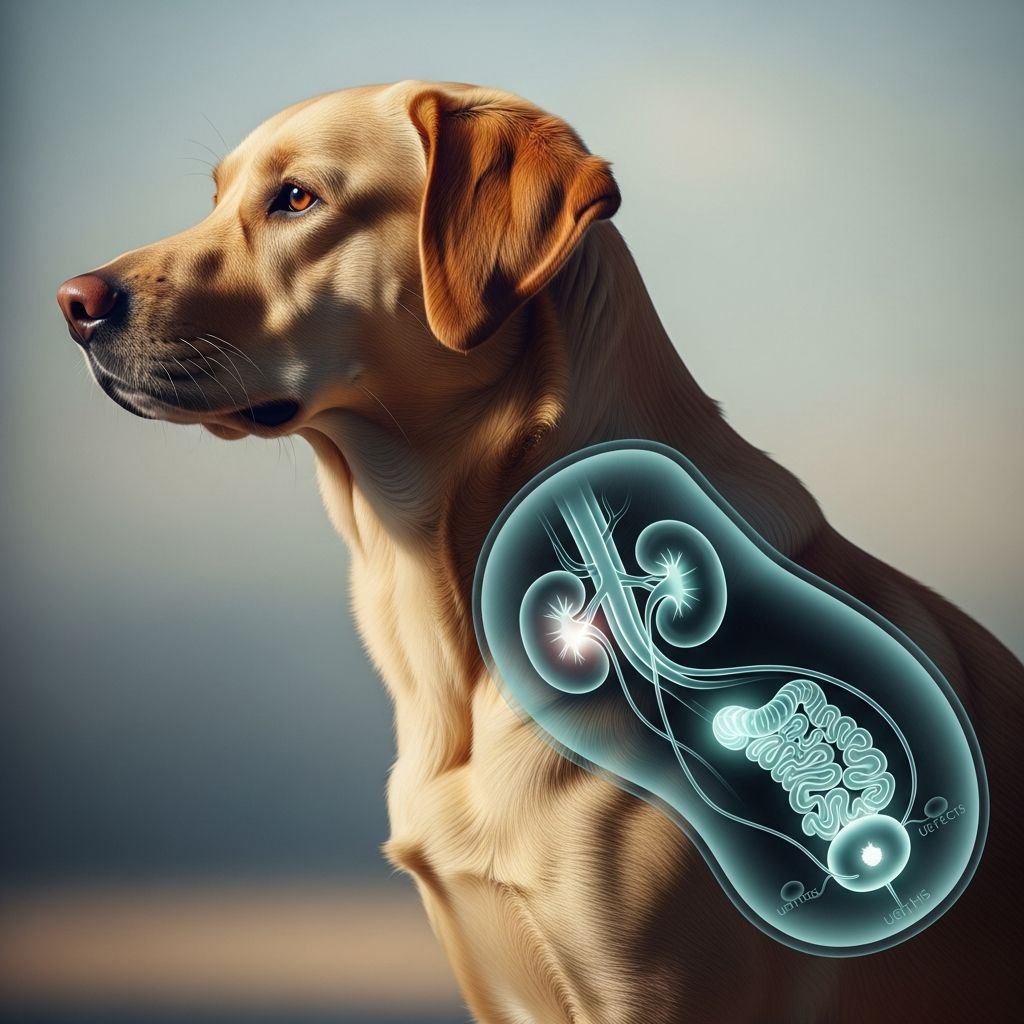
Congenital and inherited disorders of the urinary system represent a significant challenge for certain dog breeds, often manifesting early in life and leading to chronic health issues. These conditions, stemming from developmental errors during fetal growth or genetic predispositions, can impair kidney function, disrupt urine flow, and cause recurrent infections. Early detection through veterinary evaluation is crucial for managing symptoms and improving quality of life.
Understanding the Roots of Urinary System Anomalies
The urinary system in dogs comprises kidneys, ureters, bladder, and urethra, all essential for filtering waste and maintaining fluid balance. Disruptions during embryonic development can result in structural abnormalities present at birth. While some defects are sporadic, many cluster in specific breeds due to selective breeding practices that inadvertently propagate genetic flaws. Owners of predisposed breeds should monitor puppies closely for signs like poor growth, excessive thirst, or urinary accidents.
Genetic factors play a pivotal role, with conditions often following autosomal dominant or recessive patterns. Environmental influences during pregnancy, such as maternal infections or toxin exposure, may exacerbate risks, though heredity remains the primary driver. Veterinary genetic testing is advancing, offering breeders tools to reduce incidence in future generations.
Kidney Malformations: Dysplasia and Hypoplasia Explained
Renal dysplasia involves irregular kidney tissue formation, where normal nephrons— the functional units—are replaced by primitive ducts. This leads to progressive failure, typically evident by 2-6 months of age. Puppies exhibit stunted growth, increased urination, vomiting, and lethargy as toxins accumulate. Breeds like Shih Tzus, Lhasa Apsos, Soft-Coated Wheaten Terriers, and Standard Poodles face elevated risks.
Hypoplasia, a related condition, features underdeveloped kidneys with fewer nephrons, causing similar failure symptoms but often milder initially. Diagnosis relies on breed history, clinical signs, blood tests showing elevated creatinine and BUN, urinalysis for dilute urine, and ultimately kidney biopsy for confirmation. Imaging like ultrasound may reveal small, irregular kidneys.
Treatment focuses on supportive care: low-protein diets, fluid therapy, phosphate binders, and medications to control blood pressure and anemia. Prognosis varies; severe cases may require euthanasia, but mild unilateral dysplasia allows normal lifespans with monitoring.
Polycystic Kidney Disease: Cysts and Complications
This disorder features fluid-filled cysts proliferating within kidney parenchyma, distorting normal architecture and impairing function. Kidneys enlarge palpably, and cysts may extend to the liver. Progression ranges from asymptomatic to end-stage renal failure, with affected dogs showing polydipsia, polyuria, weight loss, and hypertension.
Beagles, Bull Terriers, West Highland White Terriers, and Cairn Terriers are genetically prone. Veterinary diagnosis involves physical exams, abdominal palpation, radiography, ultrasonography (revealing cysts), or laparotomy. No cure exists; management mirrors chronic kidney disease protocols, emphasizing hydration, renal diets, and ACE inhibitors for pressure control.
Ureter Anomalies: Ectopic Ureters and Urine Leakage
Ectopic ureters occur when ureters bypass the bladder, inserting into the urethra, vagina, or uterus, causing constant dribbling incontinence from birth or early puppyhood. Females are affected eight times more than males, with high incidence in West Highland White Terriers, Fox Terriers, Miniature/Toy Poodles, Siberian Huskies, and Labrador Retrievers.
Symptoms include urine pooling, scalding dermatitis around the vulva or prepuce, and recurrent cystitis. Diagnosis uses contrast cystography or fluoroscopic studies post-intravenous dye, visualizing aberrant paths. Surgical correction repositions ureters into the bladder trigone; success rates exceed 80%, though some dogs need post-op medications like phenylpropanolamine for sphincter tone.
Persistent Urachus and Related Bladder Remnants
The urachus, a fetal structure linking bladder to umbilicus, should close postnatally. Persistence leads to patent urachus (urine leakage from navel), urachal sinus (infection-prone pocket), diverticula, or cysts. Triggers include prematurity, uterine infections, or umbilical defects. Signs encompass continuous dribbling, navel wetness, scalding, and infections.
Diagnosis employs contrast urethrography or cystography. Surgical excision resolves most cases, paired with antibiotics for active infections. Early intervention prevents chronic issues like bladder stones or pyelonephritis.
Bladder Developmental Issues in Canines
Rare anomalies include duplicated bladders, hypoplastic bladders, or everted (inside-out) bladders, often coexisting with ureteral or urethral defects. Symptoms mimic outlet obstruction: straining, hematuria, or overflow incontinence. Diagnosis combines physical exams, voiding cystourethrography, and ultrasound.
| Anomaly | Key Signs | Diagnostic Tools | Treatment |
|---|---|---|---|
| Duplicated Bladder | Dysuria, incontinence | Contrast X-rays | Surgical removal of extra |
| Hypoplastic Bladder | Small urine volume, infections | Ultrasound | Supportive, dilation |
| Everted Bladder | Painful urination, prolapse | Cystoscopy | Repositioning surgery |
Tailored surgery offers best outcomes, with prognosis depending on concurrent anomalies.
Urethral Defects: From Hypospadias to Fistulas
Urethral issues, though less common, include atresia (imperforate), diverticula, strictures, and multiples. Hypospadias in males features urethral opening proximal to the glans, often with hypoplastic penis/os penis. Boston Terriers show breed predisposition. Urine scalding and infections ensue; surgical reconstruction normalizes anatomy.
Urethrorectal fistulas connect urethra to rectum, prevalent in English Bulldogs, causing pneumaturia, fecaluria, and UTIs. Rectovaginal variants affect females similarly. Diagnosis via contrast studies; surgical closure with flap techniques succeeds in most.
Clinical Signs and When to Seek Help
- Persistent puppy incontinence: Especially post-nap dribbling.
- Growth faltering: With polydipsia/polyuria.
- Recurrent UTIs: Despite antibiotics.
- Abdominal distension: Palpable masses.
- Scalding dermatitis: Around genitals or umbilicus.
Bloodwork, imaging, and specialist referral expedite accurate diagnosis.
Diagnostic Approaches for Precision
Comprehensive workups include:
- History and breed review.
- Complete blood count, serum biochemistry, urinalysis.
- Abdominal ultrasound for structural views.
- Excretory urography or cystoscopy for dynamics.
- Biopsy for histopathology.
Management Strategies and Long-Term Care
While cures are surgical for anatomic fixes, renal conditions demand lifelong palliation. Key elements:
- Renal-supportive nutrition to minimize waste.
- Fluid supplementation to combat dehydration.
- Antihypertensives and erythropoietin for CKD sequelae.
- UTI prophylaxis with targeted antibiotics.
Breeding avoidance preserves breed health.
Breeds at Heightened Risk: A Comparative Overview
| Disorder | Predisposed Breeds |
|---|---|
| Renal Dysplasia | Shih Tzu, Lhasa Apso, Wheaten Terrier, Poodle |
| Polycystic Kidneys | Beagle, Bull Terrier, Westie, Cairn Terrier |
| Ectopic Ureters | Westie, Fox Terrier, Toy Poodle, Husky, Labrador |
| Hypospadias/Fistulas | Boston Terrier, English Bulldog |
Frequently Asked Questions (FAQs)
Can congenital urinary disorders be prevented?
Genetic screening and responsible breeding minimize risks; prenatal care aids but doesn’t eliminate hereditary traits.
Is surgery always successful for ectopic ureters?
Success rates are high (80-90%), but 20-30% may need medications for residual incontinence.
What diet helps dogs with renal dysplasia?
Low-protein, phosphorus-restricted renal formulas support kidney function and delay progression.
Do these conditions affect lifespan?
Mild cases allow normal longevity; severe bilateral renal issues shorten life to months-years with care.
Should I neuter dogs with hypospadias?
Castration post-surgical correction prevents complications, as fertility is often impaired.
Advances in Treatment and Research
Stem cell therapies and gene editing hold promise for renal regeneration. Minimally invasive endoscopy improves ureteral surgeries. Owner education via apps tracks symptoms, aiding personalized care.
References
- Congenital and Inherited Disorders of the Urinary System in Dogs — Merck Veterinary Manual. 2023. https://www.merckvetmanual.com/dog-owners/kidney-and-urinary-tract-disorders-of-dogs/congenital-and-inherited-disorders-of-the-urinary-system-in-dogs
- Congenital Kidney Disease In Pets — Safari Veterinary Care Centers. 2022. https://www.safarivet.com/care-topics/dogs-and-cats/bladder-and-kidneys/congenital-disease-of-the-urinary-system/
- Diagnosing and Managing Urinary Incontinence in Canine Patients — Today’s Veterinary Practice. 2023. https://todaysveterinarypractice.com/urology-renal-medicine/urinary-incontinence-in-canine-patients/
- ACVIM consensus statement on diagnosis and management of urinary incontinence in dogs — PMC (PubMed Central). 2024-03-15. https://pmc.ncbi.nlm.nih.gov/articles/PMC10937496/
- Overview of Congenital and Inherited Anomalies of the Urinary System in Animals — MSD Veterinary Manual. 2023. https://www.msdvetmanual.com/urinary-system/congenital-and-inherited-anomalies-of-the-urinary-system/overview-of-congenital-and-inherited-anomalies-of-the-urinary-system-in-animals
- ISCAID Urinary Guidelines — NDSU Veterinary Diagnostic Lab. 2019-12. https://www.vdl.ndsu.edu/wp-content/uploads/2022/02/ISCAID-Urinary-Guidelines-2019.pdf
Similar Articles








Read full bio of Sneha Tete




