

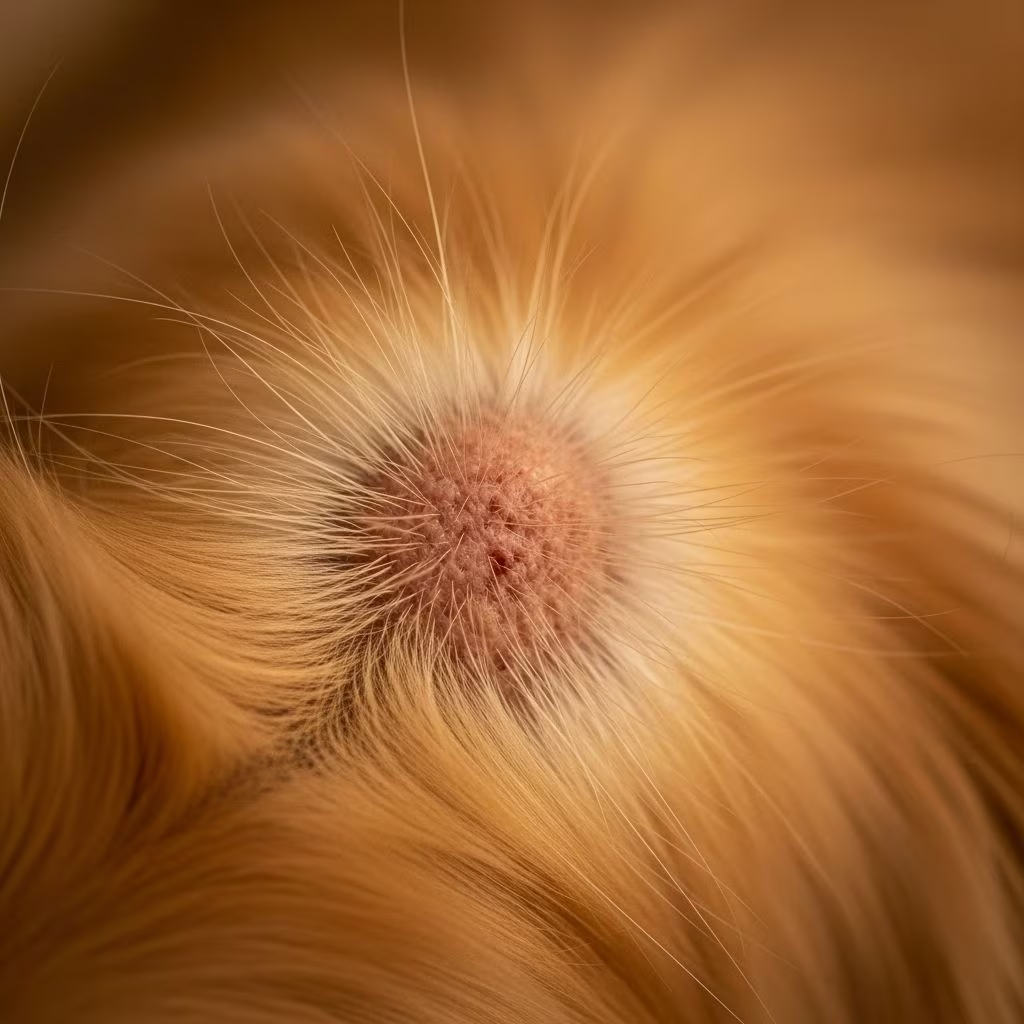
Genetic skin disorders in dogs represent a diverse group of conditions present at birth or developing early in life due to inherited traits. These issues range from scaling and hair loss to blistering and pigmentation changes, impacting various breeds differently. Owners play a crucial role in early detection through vigilant observation of symptoms like persistent flaking, unusual bald patches, or skin fragility.
Understanding the Roots of Genetic Skin Problems
Many canine skin anomalies stem from mutations passed through generations, disrupting normal skin development, barrier function, or immune responses. Brachycephalic breeds, such as English Bulldogs and Pugs, face heightened risks due to conformational traits exacerbating conditions like fold dermatitis alongside genetic predispositions. Environmental factors like heat or trauma can worsen these inherent weaknesses, but the core originates from faulty genes affecting keratinization, pigmentation, or structural proteins.
Breeds with pure lines often concentrate these defects, making selective breeding vital. For instance, heritable immunodeficiencies in some lines promote recurrent infections, compounding primary lesions into chronic issues.
Key Categories of Congenital Dermatoses
Congenital skin defects manifest in structural failures, keratinization errors, hair follicle dysfunctions, and pigmentation variances. Each category presents unique challenges:
- Structural defects: Involve incomplete skin layer formation or attachment failures, leading to fragility or absence.
- Keratinization disorders: Cause abnormal scaling resembling fish scales, impairing skin hydration.
- Hair growth anomalies: Result in sparse or absent coats from birth, often breed-specific.
- Pigment disruptions: Alter melanin distribution, increasing sun sensitivity or infection risks.
Scaling and Keratinization Disorders
Ichthyosis tops the list of keratinization faults, where dogs produce excessive scales due to NIPAL4 or FAM83H gene mutations. In American Bulldogs, symptoms emerge at birth: fine body scaling, thick axillary and abdominal flakes, skin wrinkling, and secondary yeast overgrowths like Malassezia dermatitis. Cavalier King Charles Spaniels show curly, rough coats, footpad thickening, nail dystrophy, and eye dryness risking blindness.
Diagnosis combines histopathology revealing hyperkeratosis with genetic tests confirming mutations. Management focuses on symptom relief: keratolytic shampoos remove scales, fatty acids restore barrier function, and antimicrobials combat infections. Retinoids offer advanced control but require monitoring. Breeding affected dogs is discouraged to curb spread.
Psoriasiform-lichenoid dermatosis strikes young English Springer Spaniels with red, scaly plaques on ears and groin, progressing to hyperkeratosis if ignored. Early intervention with topicals prevents advancement.
Disorders of Skin Integrity and Blistering
Epidermolysis bullosa syndromes weaken skin layer adhesions, causing blisters from minor friction. Collies, Shetland Sheepdogs, Toy Poodles, and Golden Retrievers suffer oral and paw lesions, exacerbated by heat or sunlight. Pups vary in severity; some heal with scars, others face lifelong fragility.
Diagnosis involves biopsies showing cleavage planes and family histories. Supportive care includes padded bedding, protective ointments, and infection prevention. Prognosis depends on subtype; dystrophic forms prove most debilitating.
Hereditary lupoid dermatosis in German Shorthaired Pointers begins around six months with head and leg crusting, evolving to widespread erythema and scaling.
Hair Follicle and Alopecia Syndromes
Hereditary alopecia arises from follicle dysplasia, notably color dilution alopecia in breeds like Dobermans with blue dilutions. Hairs break easily, leaving hypotrichotic areas prone to folliculitis.
| Breed | Condition | Main Features |
|---|---|---|
| Jack Russell Terrier | Ichthyosiform Dermatosis | Large flaking sheets, paw/nose thickening |
| German Shepherd | Nodular Dermatofibrosis | Pigmented skin masses, kidney links |
| Rhodesian Ridgeback | Dermoid Sinus | Dorsal cysts with hair/debris |
Black hair follicular dysplasia affects certain lines, sparing non-black hairs while causing early loss elsewhere.
Pigmentary and Growth Abnormalities
Lethal acrodermatitis in Bull Terriers disrupts zinc uptake, yielding crusty paws, diarrhea, and failure to thrive. Pigment loss heightens UV risks.
Epitheliogenesis imperfecta features absent skin patches at birth, exposing tissues; rare in dogs but familial in some terriers. Dermoid sinuses in Ridgebacks form midline cysts from neural tube errors, risking infections if unexcised.
Multisystem and Immune-Mediated Genetic Issues
Some dermatoses signal broader woes. Nodular dermatofibrosis in German Shepherds yields skin nevi alongside renal cysts. Uveodermatologic syndrome in Akitas and Chows attacks melanocytes, causing uveitis, alopecia, and ulcers via autoimmune assaults.
Brachycephalic predispositions amplify pyoderma and Malassezia via folds and stenotic canals. Genetic tests now aid many diagnoses, guiding breeding.
Diagnostic Approaches for Genetic Skin Diseases
Vets employ:
- Clinical exams noting breed, onset, distribution.
- Skin biopsies for histopathology.
- Genetic panels targeting known loci.
- Microbial cultures for secondaries.
- Family pedigrees tracing inheritance.
Early pinpointing averts complications like sepsis.
Treatment Strategies and Long-Term Care
No cures exist for most; palliation reigns:
- Topicals: Medicated shampoos, emollients.
- Systemics: Antibiotics, antifungals, immunomodulators.
- Supplements: Omega-3s, vitamin E.
- Surgery: For cysts or tumors.
Owners maintain hygiene, avoid irritants, and monitor progress. Ethical breeding excludes carriers.
Breeds at Highest Risk: A Comparative Overview
| Breed/Group | Common Disorders | Inheritance Pattern | Prognosis |
|---|---|---|---|
| Brachycephalics (Bulldog, Pug) | Ichthyosis, Fold Pyoderma, Malassezia | Polygenic/Conformational | Manageable with care |
| Terriers (Jack Russell, Bull) | Ichthyosiform, Lethal Acrodermatitis | Autosomal Recessive | Guarded |
| Hounds/Pointers | Lupoid Dermatosis, Epidermolysis | Familial | Variable |
Preventive Measures for Responsible Ownership
Choose breeders using genetic screening. Puppies from tested lines reduce risks. Routine checks catch issues early, enhancing life quality.
Frequently Asked Questions (FAQs)
Can inherited skin conditions be cured?
Most require lifelong management; genetic fixes are experimental.
Which breeds need genetic testing for skin issues?
High-risk ones like Bulldogs, Spaniels, Ridgebacks.
Do environmental changes help genetic dermatoses?
Yes, avoiding trauma and infections aids control.
Is ichthyosis fatal in dogs?
No, but untreated secondaries can be.
How do I know if it’s genetic vs. acquired?
Early onset, breed patterns, biopsies confirm.
References
- Dermatological Problems of Brachycephalic Dogs — PMC/NCBI. 2023-06-15. https://pmc.ncbi.nlm.nih.gov/articles/PMC10294810/
- Congenital and Inherited Skin Disorders in Dogs — Merck Veterinary Manual. 2023-01-01. https://www.merckvetmanual.com/dog-owners/skin-disorders-of-dogs/congenital-and-inherited-skin-disorders-in-dogs
- Congenital Anomalies of the Skin in Animals — MSD Veterinary Manual. 2024-01-01. https://www.msdvetmanual.com/integumentary-system/congenital-and-inherited-anomalies-of-the-integumentary-system/congenital-anomalies-of-the-skin-in-animals
- Whole-body Disorders that Affect the Skin in Dogs — Merck Veterinary Manual. 2023-01-01. https://www.merckvetmanual.com/dog-owners/skin-disorders-of-dogs/whole-body-disorders-that-affect-the-skin-in-dogs
- Genodermatoses – Genetic Skin Diseases — MedVet. 2022-05-10. https://www.medvet.com/genodermatoses-genetic-skin-diseases/



