

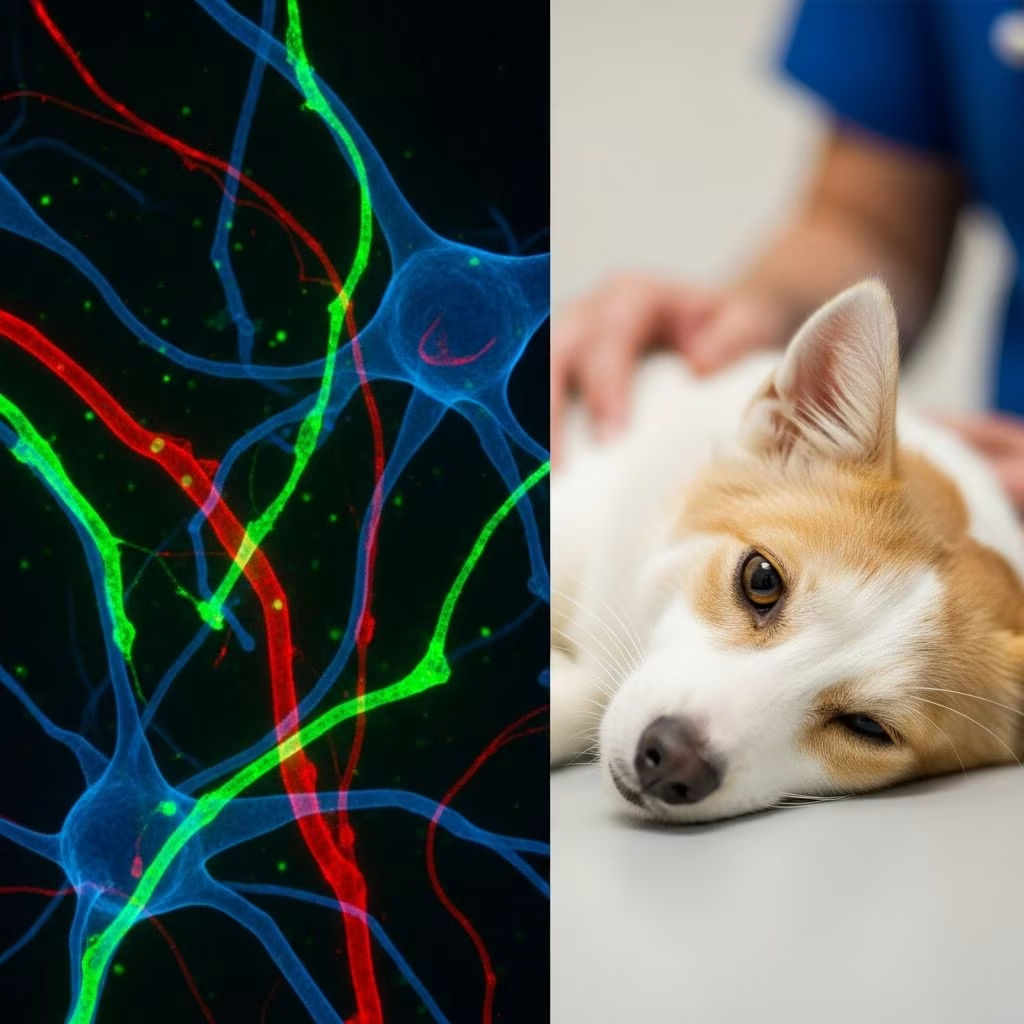
Animals can be born with or develop neurological issues due to genetic factors or prenatal influences, impacting their movement, coordination, and overall well-being. These conditions often manifest early in life and vary by species and breed, requiring prompt veterinary attention for optimal outcomes.
Understanding the Origins of Neurological Birth Defects
Neurological anomalies present at birth stem from a mix of hereditary traits and external factors during gestation. Genetic mutations passed from parents create predictable patterns in certain breeds, while environmental triggers like infections or toxins can disrupt normal brain and nerve development. In precocial species such as foals and calves, signs appear immediately after birth due to their advanced nervous system maturity. Conversely, in altricial animals like puppies and kittens, symptoms may emerge as they start exploring and walking, around 2-4 weeks of age.
Some defects remain subclinical until adulthood, complicating diagnosis. For instance, storage diseases or structural malformations might only show progressive deterioration later. Early identification through clinical exams, imaging like MRI, and genetic testing is crucial for managing these lifelong conditions.
Forebrain Malformations and Their Impact
The forebrain handles higher functions like behavior, learning, and vision. Defects here lead to seizures, disorientation, and cognitive delays. Congenital hydrocephalus, characterized by excess cerebrospinal fluid accumulation, is prevalent in small breeds such as Chihuahuas, Boston Terriers, and Cavalier King Charles Spaniels. This causes dome-shaped skulls, a persistent fontanelle (molera), and symptoms including lethargy, poor house training, ataxia, and occasional seizures.
Ventricular blockages or inflammation from neonatal infections contribute, but breed predisposition points to genetics. Treatment involves medications to reduce fluid or surgery to divert CSF flow, though prognosis varies with severity.
Cerebellar Abnormalities in Young Animals
The cerebellum coordinates balance and fine motor skills. Hypoplasia or underdevelopment results in wide-based stances, head tremors, and hypermetria (exaggerated movements). In ruminants like calves and lambs, in-utero pestivirus infections (e.g., bovine viral diarrhea virus) cause cerebellar hypoplasia, leading to persistent ataxia that worsens with activity but spares alertness. Affected offspring from persistently infected dams show ill-thrift and tremors during nursing.
In dogs, breeds like Irish Setters suffer from cerebellar abiotrophy, where Purkinje cells degenerate postnatally, causing progressive incoordination starting at 2-6 months. No cure exists, but supportive care helps maintain quality of life.
Brainstem and Vestibular Challenges
Brainstem issues disrupt cranial nerves, posture, and consciousness. Congenital vestibular syndrome in German Shepherds, English Cocker Spaniels, and Doberman Pinschers causes lifelong deafness, head tilts, nystagmus, and falling. Dogs adapt over time through compensation, but no cure reverses the deficits.
Multifocal brainstem involvement appears in lysosomal storage disorders, leading to dullness and gait issues. In goats, caprine arthritis encephalitis virus (CAEV) from lentiviral infection causes paresis progressing to tetraplegia, head tilt, and circling in kids aged 2-4 months.
Spinal Cord and Wobbler Conditions
Spinal anomalies affect limb function without altering mentation. Caudal cervical spondylomyelopathy, or wobbler syndrome, deforms the neck vertebrae, compressing the cord. Giant breeds like Great Danes, Dobermans, Borzois, and Basset Hounds are prone, with signs from subtle ataxia to tetraparesis emerging at various ages. Neck pain and flexed posture are hallmarks; surgical stabilization often improves mobility.
| Breed | Onset Age | Main Signs | Treatment Outlook |
|---|---|---|---|
| Great Dane | 6-24 months | Ataxia, neck pain | Surgery beneficial |
| Doberman Pinscher | 3-7 years | Paraparesis progressing | Guarded, surgical |
| Borzoi | Variable | Flexed neck, weakness | Medical management |
Peripheral Nerve and Muscle Disorders
Polyneuropathies impair nerve conduction, causing weakness and sensory loss. Alaskan Malamute polyneuropathy strikes at 10-18 months, with exercise intolerance, rear limb weakness spreading cranially, muscle atrophy, and laryngeal paralysis. Euthanasia is common as progression halts mobility.
- Border Collie sensory neuropathy: Onset 5-7 months; proprioceptive deficits, ataxia; fatal progression.
- Leonberger inherited polyneuropathy: 1-9 years; exercise dyspnea, bark changes, weakness.
- Congenital laryngeal paralysis: Siberian Huskies, Rottweilers; respiratory distress under sedation-diagnosed.
Muscle conditions include myasthenia gravis in Parson Russell Terriers and Springer Spaniels (5-10 weeks), with post-exercise collapse and megaesophagus risking aspiration pneumonia. Myotonia congenita in Chow Chows and Staffordshire Terriers causes rigid stiffness on initiation, mimicking fainting spells; anticholinergics alleviate symptoms.
Species-Specific Patterns Across Animals
Dogs dominate reports due to breeding intensity, but cats, ruminants, and horses face similar issues. Feline hydrocephalus mirrors canine forms, with brachycephalic breeds at risk. In pigs and alpacas, BVDV congeners induce hypoplasia. Horses exhibit cervical vertebral malformation akin to wobblers, while lentiviral diseases in sheep (maedi-visna virus) cause adult-onset ataxia rare outside Europe.
Multifocal disorders like neuronal ceroid lipofuscinosis affect storage, leading to blindness and seizures in adult-onset despite congenital onset.
Diagnostic Approaches for Early Detection
Vets use neurological exams assessing gait, reflexes, and cranial nerves. CSF analysis rules out infections; MRI/CT reveals structural defects like hydrocephalus or hypoplasia. Genetic panels confirm breed-specific mutations, aiding breeding avoidance. Bloodwork excludes metabolic mimics.
Management and Therapeutic Options
Treatment targets symptoms: anticonvulsants for seizures, anti-inflammatories for pain, physical therapy for ataxia. Surgical interventions shine in wobblers or shunts for hydrocephalus. Prognoses range from fair (adaptable vestibular) to poor (progressive neuropathies). Euthanasia prevents suffering in non-ambulatory cases.
Breeding restrictions curb incidence; responsible fanciers screen sires/dams.
Preventive Strategies for Breeders and Owners
Avoid inbreeding; pedigree analysis flags carriers. Prenatal care minimizes teratogen exposure. Early neutering/spaying in at-risk lines helps, though ethics debate arises.
Frequently Asked Questions (FAQs)
What causes most congenital neurological issues in pets?
Genetic inheritance in predisposed breeds, plus gestational infections or toxins.
Can dogs with wobbler syndrome live normal lives?
Many do post-surgery, regaining function, but monitoring prevents relapse.
Is hydrocephalus treatable in kittens?
Yes, with medications or shunts, though small size complicates surgery.
How to spot early signs in puppies?
Watch for tremors, circling, reluctance to move, or housebreaking failures.
Are these conditions painful?
Some like wobblers cause neck pain; others like hypoplasia mainly impair function.
Emerging Research and Genetic Insights
Genomic sequencing identifies markers for polyneuropathies and storage diseases, enabling carrier tests. Vaccine advancements curb pestiviral hypoplasias in livestock. Stem cell trials explore nerve regeneration, promising for myasthenia.
References
- Congenital and Inherited Disorders of the Nervous System in Dogs — MSD Veterinary Manual. 2023. https://www.msdvetmanual.com/dog-owners/brain-spinal-cord-and-nerve-disorders-of-dogs/congenital-and-inherited-disorders-of-the-nervous-system-in-dogs
- Congenital and Inherited Anomalies of the Nervous System in Animals — Merck Veterinary Manual. 2023. https://www.merckvetmanual.com/nervous-system/congenital-and-inherited-anomalies-of-the-nervous-system/congenital-and-inherited-anomalies-of-the-nervous-system-in-animals
- Congenital Hydrocephalus — University of Missouri Veterinary Health Center (.edu). 2023. https://vhc.missouri.edu/small-animal-hospital/neurology-neurosurgery/facts-on-neurologic-diseases/congenital-hydrocephalus/
- Neurologic Diseases of Ruminants — Auburn University College of Veterinary Medicine (.edu). 2018-09-01. https://www.vetmed.auburn.edu/wp-content/uploads/2018/09/Neurologic-Diseases-of-Ruminants.pdf



