

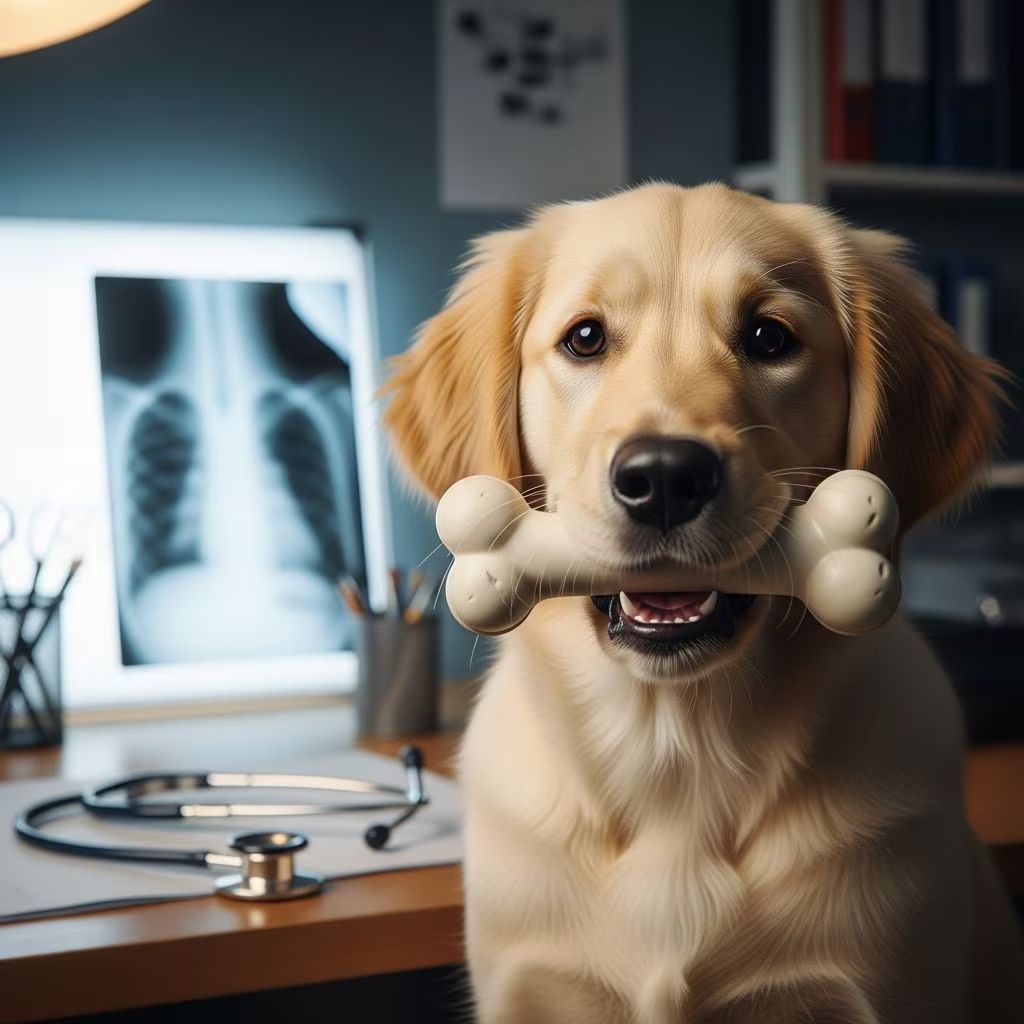
Companion animals like dogs and cats can face a range of musculoskeletal challenges from birth or early development, stemming from genetic factors, prenatal influences, or growth-related issues. These conditions impact bones, joints, muscles, and cartilage, often leading to pain, lameness, or mobility limitations. Understanding these disorders helps pet owners and veterinarians intervene early for improved outcomes.
Understanding the Roots of Musculoskeletal Anomalies
Many musculoskeletal problems in pets arise during fetal development or rapid growth phases. Viral infections in utero, nutritional imbalances, toxins, or genetic mutations can disrupt normal bone and tissue formation. Large and giant dog breeds are particularly susceptible due to high growth rates, while certain cat breeds show breed-specific risks. Conditions may manifest as weakened bones, malformed joints, or muscle degeneration, affecting quality of life if untreated.
Early detection through routine exams and imaging is crucial, as some anomalies progress silently until skeletal maturity. Owners should monitor puppies and kittens for subtle signs like reluctance to play or uneven gait.
Common Bone Development Disorders
Bone-related issues dominate congenital anomalies, with several well-documented in veterinary literature. These often involve faulty mineralization, excessive bone growth, or structural weaknesses.
Fragile Bone Syndromes
Osteogenesis imperfecta, known for producing brittle bones, affects both dogs and cats. Long bones become slender with thin cortices, prone to frequent fractures. Affected animals may show blue-tinted sclerae and joint laxity. Diagnosis relies on radiographic evidence of healing fractures and callus formation. Management focuses on supportive care, avoiding high-impact activities, and sometimes surgical stabilization.
Abnormal Bone Density Conditions
Osteopetrosis represents a rare, lethal disorder where bone marrow cavities fill with dense, spongy bone instead of functional marrow. Puppies are often stillborn or die shortly after, exhibiting shortened jaws, impacted teeth, and thickened skulls compressing the brain. Inheritance patterns suggest genetic screening in at-risk lines.
Excessive Bone Proliferation
Multiple cartilaginous exostoses involve tumor-like bone outgrowths on long bones, ribs, and vertebrae. Seen in young growing dogs, particularly Great Danes and Boxers, it follows an autosomal dominant pattern. Radiographs reveal characteristic bony projections, confirmed by biopsy to rule out malignancy like osteosarcoma. In cats, links to feline leukemia virus complicate prognosis.
Joint and Cartilage Abnormalities
Joints bear much of the musculoskeletal burden, and developmental flaws here lead to chronic lameness.
Cartilage Separation Issues
Osteochondrosis disrupts endochondral ossification, causing cartilage flaps to detach in shoulders, elbows, stifles, and hocks. Prevalent in fast-growing large breeds like Labradors and Rottweilers between 4-8 months, it triggers inflammation and joint effusion. Surgical removal of fragments often resolves lameness.
| Joint Affected | Common Breeds | Typical Age |
|---|---|---|
| Shoulder | Labrador, German Shepherd | 4-6 months |
| Elbow | Retriever, Rottweiler | 5-8 months |
| Stifle | Bernese Mountain Dog | 6-12 months |
| Hock | Great Dane | 8-12 months |
Femoral Head Growth Disruptions
Capital femoral physis dysplasia in cats causes gradual femoral head slippage without trauma, unlike Salter-Harris fractures. Maine Coons and overweight neutered males present with hindlimb lameness and hip pain around 4-42 months. Radiographs show physeal widening; treatment may involve femoral head ostectomy.
Forelimb Angular Deformities
Retarded carpal canalosis or radial carpal bone hypoplasia leads to angular limb deformities in large-breed puppies around 5 months. Torsion and shortening of the radius occur, impairing weight-bearing. Corrective osteotomies can realign bones if addressed early.
Muscle and Soft Tissue Disorders
Muscular dystrophies mimic human conditions, progressively weakening muscles through protein deficiencies.
Progressive Muscle Weakening
Duchenne-like dystrophy strikes male dogs (Golden Retrievers, Irish Terriers) and cats, targeting limb girdle and cardiac muscles. Symptoms include gait stiffness, swallowing difficulties, atrophy, and megaesophagus. Lacking dystrophin impairs membrane stability, often fatal by cardiomyopathy. A Labrador variant emerges by 6 months with exercise intolerance.
- Key Signs: Stiff gait, muscle wasting, regurgitation
- Genetic Mode: X-linked in most cases
- Breeds at Risk: Golden Retriever, Irish Terrier, Labrador
Other Limb Anomalies
Polydactyly (extra toes), hemimelia (missing bones), ectrodactyly (split toes), and syndactyly (fused toes) are heritable in cats. While often cosmetic, they can cause gait issues or infections. Selective breeding reduces incidence.
Diagnosis Strategies for Early Intervention
Veterinarians employ a multi-modal approach: history, physical exams, and advanced imaging.
- Radiography: Detects fractures, exostoses, physeal changes
- CT/MRI: Details cartilage flaps, deformities
- Biopsy: Confirms dystrophies, rules out neoplasia
- Genetic Testing: Identifies carriers in breeds like Miniature Poodles for certain risks
Bloodwork assesses nutrition or infection contributors. Juvenile onset (neonatal to 12 months) guides differential lists.
Treatment and Management Approaches
Therapies range from conservative to surgical, tailored to severity.
- Medical: Pain relief (NSAIDs), joint supplements, restricted exercise
- Surgical: Fragment excision (osteochondrosis), osteotomies (deformities), amputations (end-stage)
- Supportive: Physical therapy, weight control, orthopedic braces
Prognosis varies: excellent for isolated polydactyly, guarded for dystrophies. Breeding affected lines should cease.
Prevention Through Responsible Breeding
Genetic screening and pedigree analysis mitigate hereditary risks. Avoid breeding carriers of recessive traits like in Westies or Poodles. Nutritional balance during gestation and growth prevents secondary issues like hypertrophic osteodystrophy.
Frequently Asked Questions (FAQs)
What causes most congenital musculoskeletal issues in pets?
Genetic mutations, in utero infections, or rapid growth imbalances, especially in large breeds.
Can these conditions be cured?
Many are managed but not cured; early surgery improves function in joint cases.
Are certain breeds more prone?
Yes, e.g., Great Danes for exostoses, Maine Coons for hip dysplasia variants.
How do I know if my puppy has a bone disorder?
Watch for lameness, swelling, or pain; consult a vet for x-rays.
Is muscular dystrophy fatal in dogs?
Often yes, due to cardiac involvement, but supportive care extends life.
References
- Juvenile Orthopedic Disease in Dogs & Cats, Part 1: Musculoskeletal Development & Pediatric Bone Diseases — Today’s Veterinary Practice. N/A. https://todaysveterinarypractice.com/orthopedics/juvenile-orthopedic-disease-in-dogs-cats-part-1-musculoskeletal-development-pediatric-bone-diseases/
- Congenital and Inherited Disorders of Bones, Joints, and Muscles in Cats — Merck Veterinary Manual. N/A. https://www.merckvetmanual.com/cat-owners/bone-joint-and-muscle-disorders-of-cats/congenital-and-inherited-disorders-of-bones-joints-and-muscles-in-cats
- Juvenile Orthopedic Disease in Dogs and Cats, Part 2: Congenital & Neonatal Orthopedic Diseases — Today’s Veterinary Practice. N/A. https://todaysveterinarypractice.com/orthopedics/juvenile-orthopedic-disease-in-dogs-catspart-2-congenital-neonatal-orthopedic-diseases/
- Congenital and Inherited Anomalies of the Musculoskeletal System — Auburn University College of Veterinary Medicine. 2015-01. https://www.vetmed.auburn.edu/wp-content/uploads/2015/01/C-7-Congenital-and-inherieted-anomalies-of-the-musculoskeletal-system-Merk-Veterinary-Manual-for-Pet-Health-2007.pdf
- Congenital and Inherited Disorders of Bones, Joints, and Muscles in Dogs — MSD Veterinary Manual. N/A. https://www.msdvetmanual.com/dog-owners/bone-joint-and-muscle-disorders-of-dogs/congenital-and-inherited-disorders-of-bones-joints-and-muscles-in-dogs



