

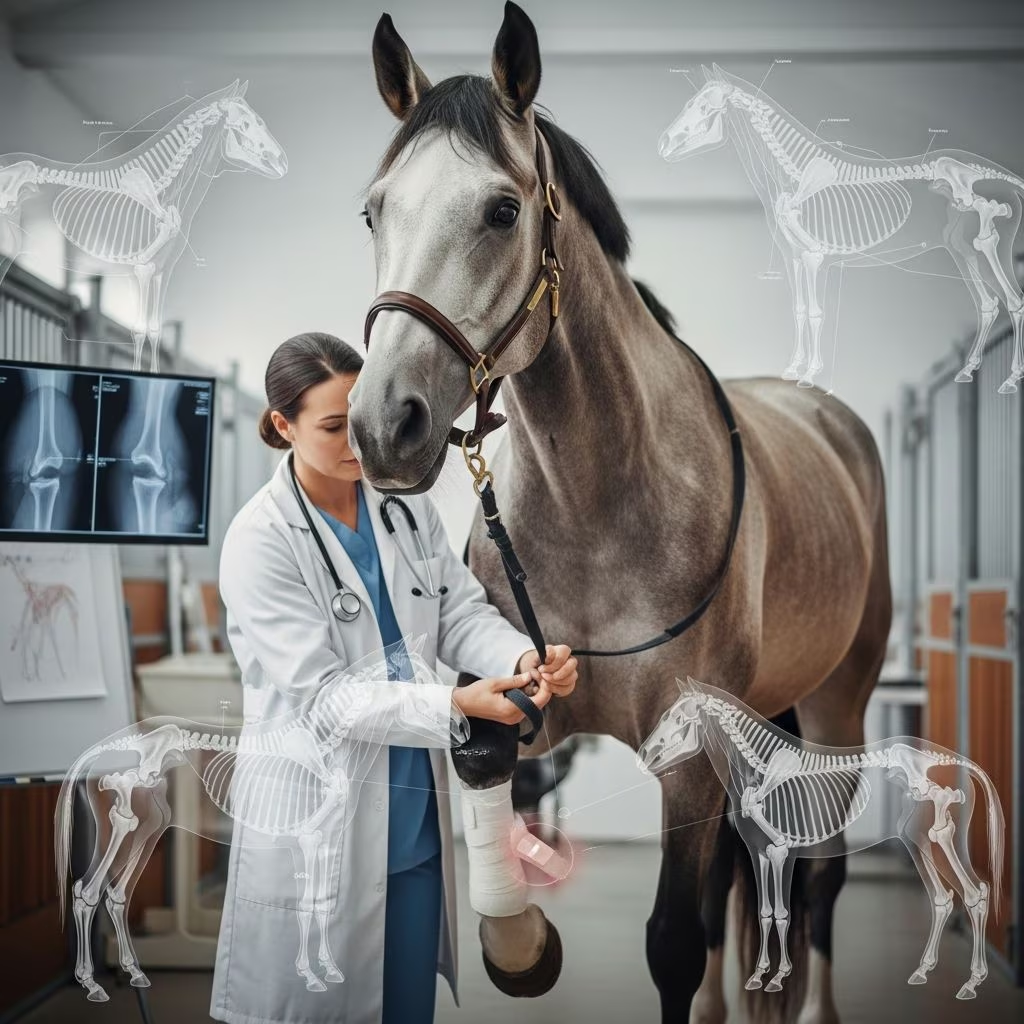
Horses can be born with or develop musculoskeletal anomalies due to genetic factors, rapid growth, or nutritional imbalances. These conditions often manifest in foals and can lead to lameness, reduced performance, or severe disability if not addressed early.
Understanding the Roots of Equine Musculoskeletal Anomalies
The musculoskeletal system in horses supports their athletic prowess, but congenital and inherited defects disrupt normal bone, joint, cartilage, and muscle development. These issues arise from a mix of hereditary predispositions, environmental influences during gestation, and postnatal growth stressors. Breeds like Thoroughbreds, Quarter Horses, Warmbloods, and miniatures show higher susceptibility to specific disorders.
Genetic mutations play a central role, altering skeletal formation or muscle function. For instance, imbalances in minerals or excess energy in diets accelerate growth beyond what developing tissues can handle, leading to weakened structures. Trauma in utero or early life exacerbates these vulnerabilities. Early veterinary intervention through exams and imaging is vital to mitigate long-term impacts.
Common Limb Deformities in Newborn Foals
Limb deformities are among the most visible congenital issues, often noticed immediately after birth. These include angular deviations where bones bend abnormally inward or outward, primarily affecting the carpus (knee), tarsus (hock), or fetlocks.
- Carpal Valgus: Outward deviation at the knee, common due to lax ligaments in neonates; many cases self-correct with controlled exercise.
- Fetlock Varus/Valgus: Sideways angulation at the ankle, linked to uneven growth plates.
- Tarsal Deformities: Hock angular issues from fetal positioning or hypothyroid influences.
Severe cases cause lameness and swelling, requiring splints, casts, or surgery. X-rays confirm bone alignment and growth plate status.
Flexural and Developmental Joint Disorders
Beyond angular problems, flexural deformities contract tendons, pulling limbs into flexed positions. These can be congenital from uterine constraints or acquired from nutritional excesses.
| Deformity Type | Description | Common Sites | Management |
|---|---|---|---|
| Cuboidal Defect | Shortened deep digital flexor tendon | Fetlock, pastern | Oxytetracycline, bandaging |
| Angular Limb | Bone angulation from growth plate issues | Carpus, tarsus | Splinting, periosteal stripping |
| Physitis | Flared growth plates from rapid growth | Radius, tibia | Diet restriction, rest |
Developmental orthopedic diseases (DODs) like osteochondrosis involve cartilage flaps in joints, causing pain and effusion. Physitis swells metaphyses due to biomechanical stress.
Spinal Column Abnormalities
Spinal defects, though rarer, compromise posture and neurology. Types include:
- Scoliosis: Lateral S-curve, often mild and gait-neutral; radiographs assess severity.
- Lordosis: Ventral lumbar curve from vertebral underdevelopment, leading to back weakness.
- Kyphosis: Dorsal thoracic arch (roach back), reducing spinal flexibility.
- Cervical Vertebral Malformation (Wobbler Syndrome): Narrowed canal in neck vertebrae compresses spinal cord, causing ataxia in young horses.
Diagnosis relies on myelography or advanced imaging. Prognosis varies; mild cases may stabilize with rest.
Muscle and Metabolic Inherited Conditions
Inherited myopathies stem from enzyme deficiencies or channel defects, affecting muscle control.
- Arthrogryposis: Rigid, locked joints from neuromuscular failure; often fatal or linked to hydrocephalus.
- Hyperkalemic Periodic Paralysis (HYPP): Potassium surges cause fasciculations, weakness; traced to Quarter Horse stallion ‘Impressive’; breeding prohibited.
- Glycogen Branching Enzyme Deficiency: Fatal in foals with weakness, seizures; genetic test confirms.
- Polysaccharide Storage Myopathy (PSSM): Muscle cramping, stiffness in drafts and warmbloods; managed with diet and exercise.
Rare Bone and Digit Anomalies
Digit malformations feature extra splint bones forming complete limbs (polydactyly) or split navicular bones, impairing foot function. Scapulohumeral dysplasia in miniatures mismatches shoulder joint components, causing instability and late-onset lameness. Dwarfism variants stunt growth, often with domed heads and short limbs.
Factors Driving These Anomalies
Multiple contributors converge:
- Genetics: Breed-specific risks, e.g., Warmbloods for DODs, Quarter Horses for HYPP.
- Nutrition: High-energy feeds, mineral gaps (copper, zinc) in mares/foals.
- Growth Dynamics: Overfeeding induces obesity and physeal overload.
- Exercise/Environment: Stall confinement or overwork stresses immature tissues.
- In Utero Influences: Malpositioning, mare health issues.
Diagnostic Approaches for Early Detection
Vets use physical exams, gait analysis, and imaging:
- X-rays for bone alignment and lesions.
- Ultrasound for soft tissues.
- Endoscopy or CT for spinal issues.
- Genetic tests for HYPP, PSSM.
Neonatal checks at birth flag issues promptly.
Treatment Strategies and Prognoses
Interventions range from conservative to surgical:
- Conservative: Exercise restriction, balanced diets, anti-inflammatories.
- Supportive: Splints, casts for deformities.
- Surgical: Osteochondrosis fragment removal, growth plate manipulation.
Outcomes improve with early action; some resolve spontaneously, others limit athletic careers.
Prevention Through Breeding and Nutrition
Select against known carriers via genetic screening. Provide balanced creep feeds, avoid overfeeding. Monitor growth rates and ensure pasture exercise. Mare nutrition pre-partum prevents fetal defects.
Frequently Asked Questions (FAQs)
What causes angular limb deformities in foals?
Primarily lax ligaments, uneven growth, or in utero positioning; most mild cases correct naturally.
Can horses with Wobbler syndrome recover?
Yes, with rest and anti-inflammatories in young horses; surgery for severe stenosis.
Is HYPP curable?
No, but manageable; affected horses should not breed.
How to prevent DODs?
Balanced nutrition, moderate growth, genetic screening.
Are miniature horses prone to specific defects?
Yes, scapulohumeral dysplasia causes shoulder instability.
Key Takeaways for Horse Owners
Regular foal exams, vigilant nutrition, and informed breeding curb these anomalies. Consult equine specialists for tailored plans.
References
- Developmental Orthopedic Diseases in Horses — Mad Barn. 2023. https://madbarn.com/developmental-orthopedic-diseases-in-horses/
- Birth Defect Disorders of Bones, Joints, and Muscles in Horses — Merck Veterinary Manual. 2023. https://www.merckvetmanual.com/horse-owners/bone-joint-and-muscle-disorders-in-horses/birth-defect-disorders-of-bones-joints-and-muscles-in-horses
- Congenital and Inherited Anomalies of the Musculoskeletal System — Auburn University College of Veterinary Medicine. 2015-01-15. https://www.vetmed.auburn.edu/wp-content/uploads/2015/01/C-15-Congenital-and-Inherited-Anomalies-of-the-Musculoskeletal-System-Merk-Manual-1997.pdf
- Congenital Defects and Disorders — Park City Equine Center. 2023. https://www.parkcityequinecenter.com/horse-vet-blog/congential-defects-and-disorders
- Musculoskeletal disorders in neonatal foals — PubMed (Peer-reviewed). 1985. https://pubmed.ncbi.nlm.nih.gov/3878188/
- Congenital and Acquired Musculoskeletal Disorders – Neonatal Foal — Wiley Online Library (Peer-reviewed). 2021. https://onlinelibrary.wiley.com/doi/abs/10.1002/9781119617228.ch36



