

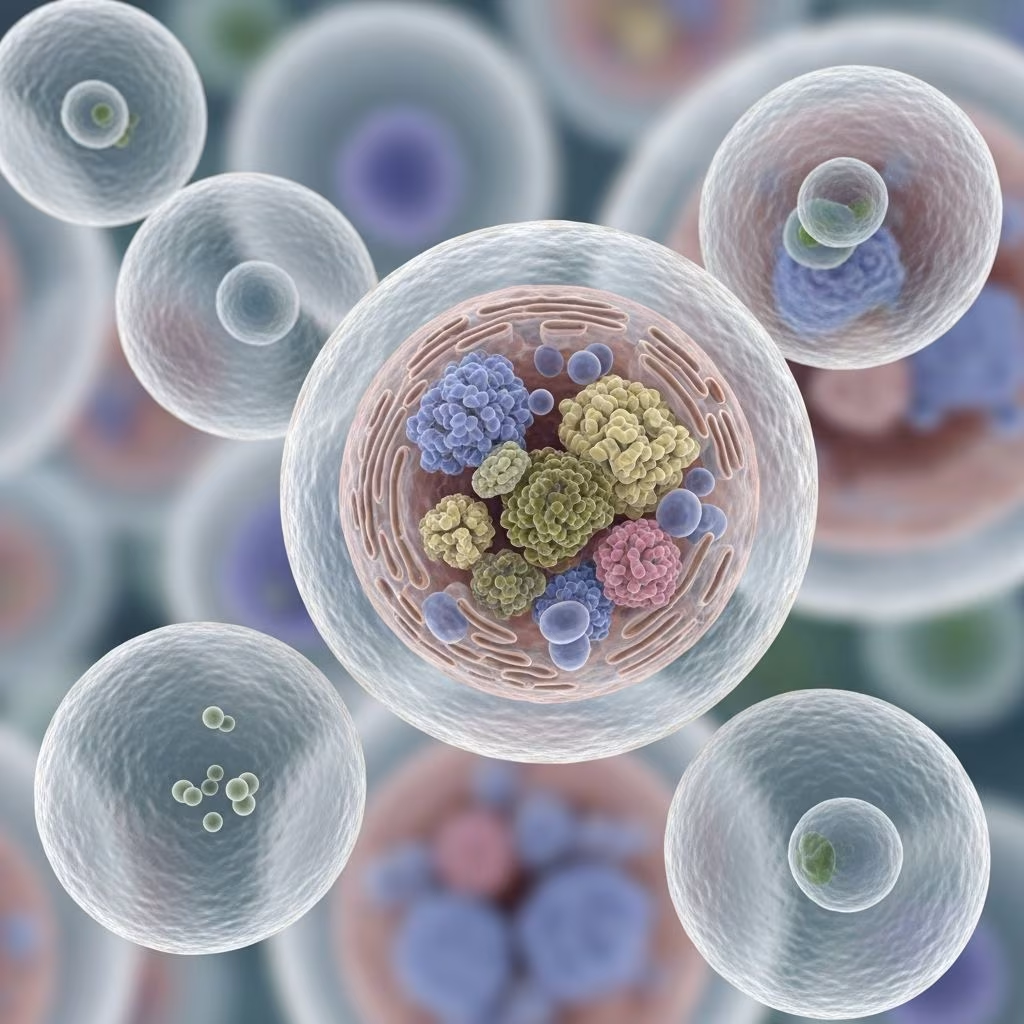
Inherited metabolic storage disorders represent a group of genetic conditions in animals, particularly dogs and cats, where defects in specific enzymes lead to the accumulation of undigested substances in cells. These buildups disrupt normal organ function, often resulting in progressive neurological, muscular, skeletal, or hematological problems. Commonly seen in purebred animals due to recessive inheritance patterns, these disorders highlight the importance of genetic screening in breeding programs.
Understanding the Mechanisms Behind Storage Disorders
At the core of these conditions lies a failure in lysosomal function or carbohydrate metabolism. Lysosomes act as cellular recycling centers, breaking down complex molecules using hydrolytic enzymes. When an enzyme is deficient, substrates like lipids, glycosaminoglycans, or glycogen accumulate, forming storage bodies that impair cell function. Similarly, glycogen storage diseases (GSDs) stem from enzyme shortages in glycogen breakdown pathways, causing energy deficits and tissue damage. These are autosomal recessive traits, meaning both parents must carry the mutated gene.
Pathophysiology varies by disorder. For instance, in lipid storage diseases, neuronal cells swell with lipopigments, leading to brain dysfunction. In contrast, GSDs enlarge liver and muscle cells, provoking hypoglycemia or cardiomyopathy. Early recognition is crucial, as symptoms often manifest in puppies or kittens under one year.
Key Lysosomal Storage Diseases Affecting Companion Animals
Lysosomal storage diseases (LSDs) encompass over a dozen variants in veterinary medicine, each tied to a specific enzyme absence. Below are prominent examples with breed predispositions and manifestations.
Ceroid Lipofuscinosis: The Neuronal Fat Accumulator
This condition arises from deficient enzymes degrading lipopigments, causing their deposition in neurons, liver, spleen, and kidneys. Affected breeds include Border Collies, Chihuahuas, Cocker Spaniels, Dachshunds, English Setters, and Salukis. Clinical signs emerge around 6-18 months: vision loss, behavioral alterations, dementia-like symptoms, seizures, and ataxia. Progression leads to blindness and severe coordination loss, with poor prognosis; euthanasia is common post-diagnosis.
Gangliosidoses: Disruptors of Brain Cell Membranes
Gangliosidoses result from enzymes failing to degrade gangliosides, sphingolipids essential for neuronal membranes. Breeds at risk: Beagle crosses, German Shorthaired Pointers, Japanese Spaniels, Portuguese Water Dogs, and English Springer Spaniels. Symptoms start at 2-4 months, including visual impairment, lethargy, weakness, tremors, stiff gait, incoordination, and paraparesis. GM1 gangliosidosis often culminates in death by 8 months.
Globoid Cell Leukodystrophy (Krabbe Disease)
Caused by galactocerebrosidase deficiency, psychosine accumulates, destroying myelin sheaths. Predisposed breeds: Beagles, Bluetick Hounds, Cairn Terriers, Poodles, West Highland White Terriers. Signs include tremors, hypermetria (exaggerated gait), incoordination, and paraparesis, appearing early in life with rapid decline.
Mucopolysaccharidoses: Structural Tissue Saboteurs
These involve glycosaminoglycan (GAG) buildup due to absent arylsulfatases or hexosaminidases. Common in Miniature Pinschers, Plott Hounds, Rottweilers, and various retrievers. Hindlimb weakness progresses to all limbs, alongside skeletal abnormalities (dysostosis multiplex) and corneal opacity. Affected animals rarely reach adulthood.
Fucosidosis and Glucocerebrosidosis
Fucosidosis in English Springer Spaniels causes slow learning, anxiety, ataxia, and vision loss by 6-12 months. Glucocerebrosidosis (Gaucher-like) in Australian Silky Terriers and Dalmatians features tremors, hyperactivity, stiff gait, and incoordination from 4-8 months.
Glycogen Storage Diseases: Energy Metabolism Failures
GSDs disrupt glycogenolysis or gluconeogenesis, leading to abnormal glycogen deposits in liver, muscle, heart, or nerves. Multiple types exist, classified by deficient enzymes.
| Type | Enzyme Deficiency | Affected Breeds | Main Symptoms |
|---|---|---|---|
| I-a | Glucose-6-phosphatase | Maltese | Hypoglycemia, failure to thrive, death by 60 days |
| II (Pompe) | Acid maltase (alpha-glucosidase) | Lapland dogs, domestic shorthairs | Muscle weakness, vomiting, cardiomyopathy, death before 2 years |
| III (Cori) | Glycogen debranching enzyme | German Shepherds, Akitas, Curly Coated Retrievers | Hypoglycemia, tremors, incoordination, exercise intolerance |
| IV | Glycogen branching enzyme | English Springer Spaniels (cats too) | Hemolytic anemia, hemoglobinuria |
| VII (Tarui) | Phosphofructokinase | Cocker Spaniels, English Springer Spaniels | Anxiety, incoordination, seizures, dysphagia |
These disorders cause organomegaly and functional deficits, with severity tied to tissue involvement.
Other Notable Inborn Errors: Blood and Energy Pathways
- Pyruvate Kinase Deficiency: Impairs red blood cell metabolism in Basenjis, Beagles, Cairn Terriers, West Highland White Terriers. Leads to chronic hemolytic anemia, jaundice, weakness, and tachycardia. Lifespan varies by breed.
- Phosphofructokinase Deficiency: Blocks glycolysis in muscles, causing exercise-induced crises in spaniels.
Diagnostic Approaches for Metabolic Storage Disorders
Diagnosis combines clinical suspicion, pedigree analysis, and lab tests. Initial screening includes bloodwork for anemia, hypoglycemia, or elevated enzymes; urinalysis detects abnormal metabolites. Definitive confirmation requires:
- Enzyme activity assays on leukocytes, fibroblasts, or liver biopsies.
- Genetic testing via PCR for known mutations (e.g., in PennGen labs).
- Histopathology revealing storage vacuoles under electron microscopy.
- Advanced imaging like MRI for brain lesions.
Early testing in at-risk litters prevents breeding carriers.
Treatment Challenges and Management Strategies
No cures exist; management is supportive. Enzyme replacement therapy (ERT) shows promise in human LSDs but is limited in vets due to cost and species differences. Options include:
- Nutritional support: Frequent small meals to combat hypoglycemia.
- Symptom palliation: Anti-seizure drugs, physical therapy for ataxia.
- Blood transfusions for anemias.
- Gene therapy trials in research models.
Prognosis remains guarded to poor, emphasizing prevention via genetic counseling.
Prevention Through Genetic Screening and Breeding
Responsible breeding hinges on DNA tests for carriers. Organizations like OFA and PennGen offer panels for high-risk breeds. Avoiding matings between carriers eliminates disease transmission. Public awareness reduces incidence in popular breeds.
Frequently Asked Questions (FAQs)
What causes metabolic storage disorders in pets?
Genetic mutations cause enzyme deficiencies, leading to substrate accumulation in lysosomes or cytoplasm.
Which dog breeds are most prone to these conditions?
Breeds like Border Collies, German Shepherds, Springer Spaniels, and Terriers face higher risks.
Can these disorders be treated?
Treatments are symptomatic; gene therapy is experimental.
How do I test my dog for carriers?
Use veterinary genetic labs for breed-specific panels.
Is there a cure for glycogen storage disease?
No, but diet and monitoring extend quality life.
References
- Metabolic Enzyme Deficiency in Dogs – Symptoms, Causes — WagWalking. 2023. https://wagwalking.com/condition/lysosomal-storage-diseases
- Glycogen Storage Disease in Dogs — PetMD. 2023. https://www.petmd.com/dog/conditions/endocrine/c_multi_glycogen_storage_disease
- Glycogen storage diseases — Vet Times. 2022-10-12. https://www.vettimes.com/news/vets/small-animal-vets/glycogen-storage-diseases
- Lysosomal Storage Diseases in Dogs — VCA Animal Hospitals. 2024. https://vcahospitals.com/know-your-pet/lysosomal-storage-diseases-in-dogs
- Lysosomal storage diseases — University of Prince Edward Island. 2023. https://cidd.discoveryspace.ca/disorder/lysosomal-storage-diseases.html
- Metabolic Storage Disorders and Inborn Errors of Metabolism in Animals — Merck Veterinary Manual. 2023. https://www.merckvetmanual.com/metabolic-disorders/metabolic-disorders-introduction/metabolic-storage-disorders-and-inborn-errors-of-metabolism-in-animals
- Introduction to Metabolic Disorders of Dogs — Merck Veterinary Manual. 2023. https://www.merckvetmanual.com/dog-owners/metabolic-disorders-of-dogs/introduction-to-metabolic-disorders-of-dogs
- Animal models of lysosomal storage diseases — NCBI Bookshelf (NIH). 2003. https://www.ncbi.nlm.nih.gov/books/NBK11578/ (Authoritative review on veterinary models).
- About Metabolic Tests — University of Pennsylvania Vet School. 2023. http://www.vet.upenn.edu/research/research-laboratories/penngenn-laboratories/resources/about-metabolic-tests/



