

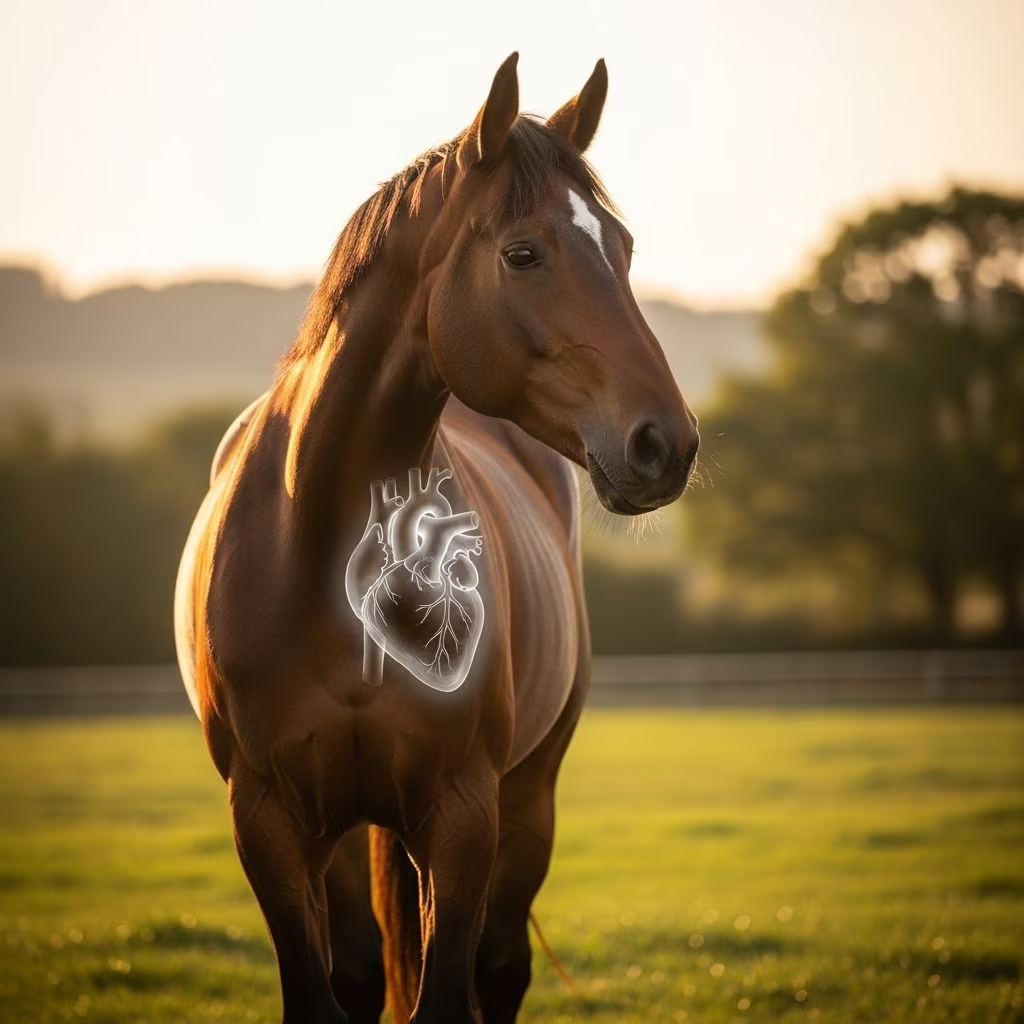
Introduction to Cardiovascular Birth Defects in Equines
The cardiovascular system develops during the early stages of fetal growth, and disruptions during this critical period can result in structural abnormalities present at birth. These developmental anomalies represent a significant concern for horse owners, breeders, and veterinary practitioners. While congenital heart conditions occur less frequently in horses compared to dogs, cats, and humans, they carry substantial implications for affected animals’ health, longevity, and performance capabilities.
Current research indicates that congenital cardiac malformations develop in approximately one to five foals per one thousand births. Despite this relatively low prevalence, the consequences of these conditions can range from minimal clinical impact to severe, life-threatening complications. Understanding the nature of these disorders, their inheritance patterns, and appropriate management strategies is essential for maintaining herd health and making informed breeding decisions.
Classification of Developmental Cardiovascular Abnormalities
Cardiovascular disorders in horses fall into two primary categories based on their timing of development. Congenital conditions are present from birth and result from abnormal cardiac development during fetal life. These differ fundamentally from acquired cardiovascular diseases, which develop after birth as a consequence of various environmental, infectious, or degenerative factors. This distinction is crucial because it influences diagnostic approaches, prognosis, and treatment recommendations.
When multiple structural abnormalities coexist within a single animal, the condition is termed complex congenital heart disease. Interestingly, horses appear more prone to developing complex defects compared to other domestic animal species, such as canines and felines. This phenomenon suggests unique aspects of equine cardiac development and may relate to specific genetic or environmental factors affecting the species.
Prevalence Patterns and Breed Susceptibility
While congenital heart disease maintains a generally low prevalence across equine populations, certain breeds demonstrate significantly elevated risk levels. Arabian horses consistently show higher incidence rates of inherited cardiovascular abnormalities compared to other breeds, though the precise genetic mechanisms remain incompletely understood. Specific malformations, particularly ventricular septal defects, occur with elevated frequency in Welsh Mountain ponies and Standardbred horses.
The familial clustering observed in Arabian horses strongly suggests a hereditary component, though the inheritance pattern has not been definitively established. Researchers have identified chromosomal regions associated with disease development in this breed, but the specific genes responsible for these conditions have not yet been confirmed. This knowledge gap highlights the ongoing need for genetic research and selective breeding programs focused on identifying and eliminating carriers.
Ventricular Septal Defects: The Most Common Manifestation
Ventricular septal defects represent the most frequently diagnosed congenital cardiac abnormality in equine populations. This condition involves incomplete development of the interventricular septum—the muscular wall that normally separates the right and left ventricles. The resulting defect creates an abnormal pathway for blood flow through the heart chambers.
In healthy equine hearts, oxygenated blood enters the left ventricle through the pulmonary veins and is then pumped out to the systemic circulation. When a septal defect exists, blood can shunt abnormally from the higher-pressure left ventricle through the hole into the right ventricle. This altered hemodynamics increases workload on the right ventricular chamber and can lead to progressive structural changes.
Clinical Manifestations and Severity Spectrum
The clinical presentation of ventricular septal defects varies dramatically based on defect size and whether additional cardiac abnormalities are present. Many horses with small, isolated defects demonstrate minimal to no clinical signs throughout their lives. In fact, research indicates that approximately 85% of horses with ventricular septal defects never develop overt signs of cardiac disease.
Conversely, larger defects can produce significant hemodynamic consequences. Affected horses may exhibit exercise intolerance, characterized by reduced stamina and inability to perform at expected levels. Progressive disease can ultimately lead to congestive heart failure, marked by fluid accumulation in body tissues and compromise of circulatory function. Foals born with severe defects may demonstrate failure to thrive, including stunted growth and developmental delays.
Diagnostic Evaluation Approaches
Ventricular septal defects are commonly detected through cardiac auscultation, wherein veterinarians identify characteristic heart murmurs using stethoscopy. The murmur associated with these defects typically occurs during ventricular contraction (systole) and reflects turbulent blood flow through the abnormal opening. However, definitive diagnosis requires echocardiographic imaging, which allows visualization of the defect location, estimation of size, and assessment of associated hemodynamic changes.
Advanced ultrasound techniques, particularly color-flow Doppler imaging, enable visualization of abnormal blood flow patterns through the septal defect. Measurement of cardiac chamber dimensions and thickness provides additional information regarding the cardiac response to the defect. In horses with larger defects or clinical signs, exercise testing may be recommended to assess functional cardiac capacity and establish safety parameters for athletic activities.
Prognosis and Management Considerations
The long-term outlook for horses with ventricular septal defects depends primarily on defect characteristics and overall cardiac status. Horses with small, uncomplicated defects typically maintain normal or near-normal life expectancy and can participate in athletic activities, including low-level racing, without apparent difficulty. Many such animals live complete functional lives with minimal or no limitations.
For horses diagnosed with ventricular septal defects, the American College of Veterinary Internal Medicine recommends annual cardiac examinations to monitor for disease progression or development of secondary complications. Horses used for athletic competition should undergo thorough evaluation before engaging in strenuous activities. Those with larger defects require more intensive monitoring and may need exercise restriction or additional diagnostic testing to establish safe activity levels.
Patent Ductus Arteriosus and Vascular Abnormalities
The ductus arteriosus represents a normal vascular structure in fetal life that typically closes within the first week following birth. This vessel allows blood to bypass the non-functional fetal lungs by creating a direct communication between the pulmonary artery and descending aorta. Patent ductus arteriosus occurs when this closure fails to occur, perpetuating left-to-right shunting of blood.
While patent ductus arteriosus can occur as an isolated defect, it frequently appears as one component of more complex malformation patterns. The hemodynamic consequences depend on defect size and whether additional cardiac abnormalities are present. Management approaches range from conservative monitoring to surgical intervention in selected cases.
Atrial and Valvular Developmental Abnormalities
Beyond ventricular involvement, developmental disorders can affect other cardiac structures. Atrial septal defects involve abnormal communication between the right and left atria. These may occur as isolated lesions or alongside other malformations as part of complex congenital disease.
Valvular dysplasia represents another category of developmental abnormality wherein heart valves fail to develop normal structural characteristics. Tricuspid atresia or dysplasia involves underdevelopment or absence of the tricuspid valve, which normally prevents backflow of blood into the right atrium during ventricular contraction. Such severe valvular abnormalities typically produce profound clinical consequences and limit survival.
Complex Congenital Heart Disease Syndromes
Some horses develop multiple simultaneous cardiac abnormalities as part of recognizable complex disease patterns. Tetralogy of Fallot represents one such complex malformation, characterized by four structural abnormalities: ventricular septal defect, right ventricular outflow obstruction (pulmonary stenosis), right ventricular hypertrophy, and rightward displacement of the aorta.
This combination of defects arises from incomplete development of the walls separating cardiac chambers and the walls of major vessels leaving the heart. Arabian horses show increased predisposition to tetralogy of Fallot development. Clinical signs typically include severe exercise intolerance, abnormally thick blood (increased viscosity), growth stunting, and blue-tinged mucous membranes reflecting inadequate oxygen circulation. Most foals affected with this condition die shortly after birth or require euthanasia.
Complex congenital heart disease occurs in approximately 22% of horses diagnosed with ventricular septal defects, meaning most defects present as isolated abnormalities. Horses with complex disease typically develop clinical signs at younger ages and consistently demonstrate abnormal cardiac dimensions on echocardiographic examination.
Etiology and Risk Factor Investigation
The precise mechanisms triggering congenital cardiac malformations in horses remain incompletely characterized. Because these conditions are relatively uncommon, systematic investigation of underlying causes has been limited. Current understanding derives largely from human medical research and knowledge of abnormal cardiac development in other species.
Potential risk factors identified in other species that may influence equine cardiac development include:
- Pharmaceutical agents administered during pregnancy
- Viral infections affecting the pregnant mare
- Environmental toxin exposure
- Nutritional deficiencies or imbalances
- Genetic predisposition and inheritance patterns
Genetic factors appear particularly relevant given the breed-specific prevalence patterns observed. The identification of chromosomal regions associated with disease in Arabian horses provides evidence for heritable components, though identifying specific genes remains an ongoing research focus.
Breeding Implications and Genetic Management
Horses diagnosed with congenital cardiac abnormalities should be considered unsuitable for breeding purposes. This recommendation applies regardless of whether defects are isolated or complex, and regardless of whether affected animals demonstrate clinical signs. The heritability of congenital cardiac defects in horses is not fully understood, but the presence of disease in an individual suggests genetic predisposition that could be transmitted to offspring.
Breeders should maintain awareness of increased cardiac disease prevalence in certain breeds and consider genetic screening when available. For breeds with elevated disease incidence, such as Arabians and Welsh Mountain ponies, selective breeding strategies focused on cardiac health may help reduce disease frequency in future generations.
Diagnostic Approach to Suspected Cardiac Disease
Veterinarians employ multiple diagnostic modalities to identify and characterize congenital cardiac abnormalities. Physical examination, including thorough cardiac auscultation, provides the initial assessment. The presence of an abnormal heart murmur warrants further investigation, particularly in young animals where congenital disease should remain in the differential diagnosis.
Echocardiography represents the gold standard for definitive diagnosis and characterization of structural cardiac abnormalities. This imaging technique allows visualization of all cardiac chambers, valves, and associated vessels, enabling identification of specific defects, measurement of chamber dimensions, and assessment of blood flow patterns.
Advanced imaging techniques such as color-flow Doppler provide detailed visualization of abnormal blood flow associated with septal defects and other shunt lesions. In selected cases, cardiac catheterization or computed tomography may provide additional anatomic information to guide management decisions.
Management Strategies and Prognosis Prediction
Management approach depends on defect type, severity, presence of clinical signs, and intended use of the animal. Many horses with small, isolated ventricular septal defects require only periodic monitoring and may be safely used for athletic activities. Owners should understand that while these defects are permanent, many affected horses live productive lives with minimal limitations.
For horses with larger defects or complex disease, more restrictive activity recommendations may be appropriate. Annual cardiac evaluations help detect progression or development of complications. Horses demonstrating clinical signs of heart failure may benefit from exercise restriction and, in some cases, pharmaceutical management directed at improving cardiac function.
Frequently Asked Questions
Can horses with ventricular septal defects perform athletic activities?
Many horses with small, isolated ventricular septal defects successfully participate in athletic activities, including low-level racing. However, each horse requires individual evaluation, and larger defects may necessitate activity restriction.
Is congenital heart disease hereditary in horses?
Heritability in horses is not fully understood, but familial clustering in certain breeds, particularly Arabians, suggests genetic components. Affected horses should not be bred.
How are cardiac defects detected in foals?
Abnormal heart murmurs detected during physical examination often prompt further investigation with echocardiography, which provides definitive diagnosis.
What is the life expectancy for affected horses?
Many horses with small, uncomplicated defects maintain normal life expectancy. Complex defects or those associated with clinical signs may reduce longevity depending on severity and disease progression.
Conclusion
Congenital and inherited cardiovascular abnormalities represent important health considerations in equine medicine, despite their relatively low overall prevalence. Ventricular septal defects predominate among identified conditions and demonstrate marked breed predisposition in Arabian horses and Welsh Mountain ponies. While many affected horses live productive lives with minimal clinical consequences, others may develop progressive disease requiring activity modification and ongoing monitoring. Understanding these conditions, recognizing clinical presentations, and employing appropriate diagnostic and management strategies enables veterinarians and horse owners to optimize outcomes for affected animals and make informed decisions regarding breeding and athletic use.
References
- Overview of Congenital and Inherited Anomalies of the Cardiovascular System in Animals — MSD Veterinary Manual. Accessed 2026-02-24. https://www.msdvetmanual.com/circulatory-system/congenital-and-inherited-anomalies-of-the-cardiovascular-system
- Heart Disease in Horses: Treatment and Prevention — Vetster. 2024. https://vetster.com/en/wellness/heart-disease-in-horses-treatment-and-prevention
- Heart Murmurs in Foals: Diagnosing Congenital Cardiac Defects — Mad Barn. 2024. https://madbarn.com/heart-murmurs-in-foals/
- Prevalence and Characteristics of Ventricular Septal Defects in a Non-Selected Population of Horses — PubMed Central (PMC8163134). 2021. https://pmc.ncbi.nlm.nih.gov/articles/PMC8163134/
- Understanding Heart Disease in the Horse — British Veterinary Nursing Association. 2024. https://bvna.org.uk/blog/understanding-heart-disease-in-the-horse-by-gayle-d-hallowell/



