

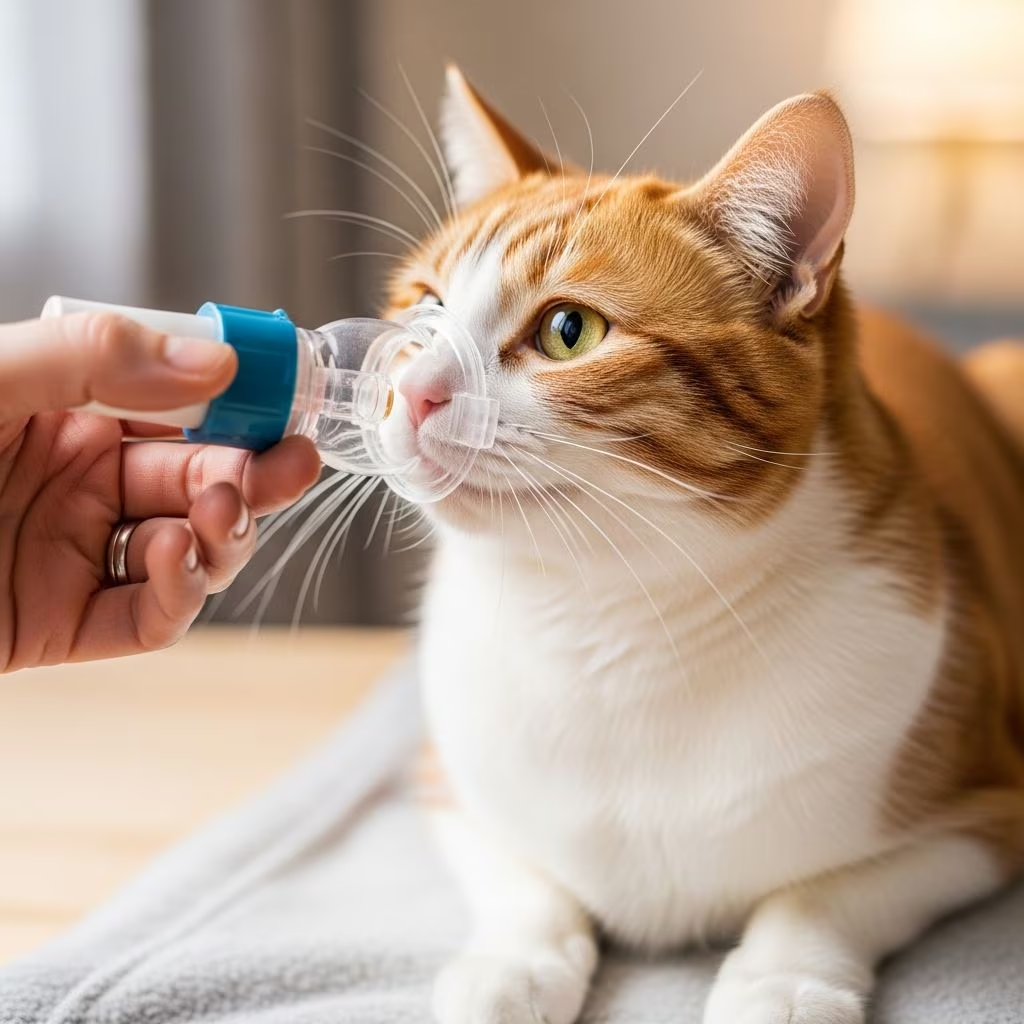
Feline asthma affects up to 5% of cats, causing wheezing, coughing, and breathing difficulties that can become life-threatening if untreated. Inhalers deliver medications like corticosteroids and bronchodilators directly to the lungs, offering targeted relief with fewer systemic side effects than oral or injected alternatives.
What Is an Inhaler for Cats?
An inhaler for cats is a device that administers aerosolized medications to treat respiratory conditions, primarily feline asthma. Unlike human inhalers used directly, cat inhalers pair a metered-dose inhaler (MDI) with a spacer chamber and feline-specific mask to ensure effective drug delivery. This method targets inflamed airways and constricted bronchioles precisely, minimizing absorption into the bloodstream.
Asthma in cats is a chronic inflammatory disease of the lower airways, triggered by allergens, stress, or irritants. Symptoms mimic hairballs but progress to open-mouth breathing, cyanosis, or collapse during attacks. Inhalers like Flovent (fluticasone propionate) for maintenance and albuterol for rescue provide rapid, localized therapy.
Why Use an Inhaler for Cats with Asthma?
Traditional treatments rely on oral corticosteroids (e.g., prednisolone) or injections, which reduce inflammation but carry risks like diabetes, immunosuppression, weight gain, and behavioral changes over time. Inhaled therapy bypasses the liver and systemic circulation, delivering 10-20% of the drug dose directly to the lungs for superior efficacy and safety.
- Targeted Delivery: Medications reach airways instantly, easing bronchospasm in seconds to minutes.
- Fewer Side Effects: Avoids gastrointestinal upset, polyuria, or polydipsia common with systemic steroids.
- Long-Term Control: Maintenance inhalers prevent flare-ups, improving quality of life without daily pills.
- Cost-Effective: Human MDIs last months; chambers like AeroKat optimize delivery, saving over $1,200 annually compared to suboptimal devices.
Veterinarians prefer inhalers for moderate to severe cases, especially when oral meds fail or cause adverse effects. Studies confirm inhaled fluticasone reduces airway inflammation effectively in cats with experimentally induced asthma.
Types of Inhalers and Medications for Cats
Two primary medication classes are used: corticosteroids for inflammation control and bronchodilators for acute relief. Human MDIs are prescribed off-label for cats due to identical formulations.
| Medication | Type | Use | Dosage (Typical) | Examples |
|---|---|---|---|---|
| Fluticasone Propionate (Flovent HFA) | Corticosteroid | Maintenance (daily) | 110 mcg puff, 1-2x daily | Flovent 110 mcg |
| Albuterol Sulfate (Ventolin, ProAir) | Bronchodilator | Rescue (as needed) | 90 mcg puff, 1-2 puffs every 4-6 hours | Albuterol HFA |
Corticosteroids like Flovent suppress immune-mediated inflammation in bronchial walls. Administered twice daily via spacer, they stabilize mast cells and reduce mucus production. Not for acute attacks, as they take hours to peak.
Bronchodilators like albuterol relax smooth muscles around airways, improving airflow. Ideal for wheeze, expiratory dyspnea, or status asthmaticus. Overuse risks paradoxical bronchospasm or tachyphylaxis, so reserve for emergencies.
AeroKat Chamber: The Best Inhaler Device for Cats
The AeroKat Feline Aerosol Chamber is the gold-standard spacer for cats, featuring a soft, anatomically shaped mask, one-way valves for efficient drug holding, and anti-static properties to prevent medication loss. Unlike generic chambers, AeroKat delivers up to 4x more drug, holding aerosol for 5-7 breaths.
- Key Features: Flow signal whistle confirms inhalation; visible valves show breath timing; dishwasher-safe components.
- Compatible with all MDIs; pediatric and adult mask options.
- Proven in studies to outperform competitors in dose availability.
Alternatives like generic spacers exist but vary in efficacy; choose valved, anti-static models for best results. Always pair with MDIs, not nebulizers for home use, as nebulizers suit hospitalized distress cases.
How to Use an Inhaler for Cats: Step-by-Step Guide
Success requires calm handling and training. Most cats adapt within 1-2 weeks with positive reinforcement. Administer in a quiet room; shake MDI well before each puff.
- Prepare: Attach MDI to chamber inlet; prime if new (2 test puffs away from cat).
- Position: Gently hold cat’s head straight; place mask over nose/mouth for airtight seal (eyes above mask edge).
- Deliver: Press MDI once while cat inhales naturally; allow 5-7 breaths (watch valve movement).
- Wait 30-60 seconds between puffs if multiple needed.
- Repeat: Second puff after 30-60 seconds; reward with treats/praise.
- Clean: Rinse chamber daily; air dry.
Tips: Use towel wrap for wiggly cats; train with empty chamber first. Video demos from manufacturers aid technique. Incorrect seal wastes 50-80% of dose.
Training Your Cat to Use an Inhaler
Desensitization prevents stress-induced resistance. Start sessions short (1-2 minutes daily).
- Week 1: Introduce mask alone with treats.
- Week 2: Add chamber; simulate puffs (no drug).
- Week 3: Full treatment with medication.
Some cats self-administer by rubbing against the device. Consistency yields 90% acceptance rates. Consult vets for behaviorists if phobia persists.
Side Effects and Safety of Cat Inhalers
Inhaled meds are safe; most side effects stem from improper use or overdose.
- Common (Flovent): Mild oral candidiasis (rare; rinse mouth post-dose), hoarse meow temporarily.
- Albuterol Overuse: Tremors, tachycardia, hypokalemia, hyperactivity; limit to 2 puffs/attack.
- Rare: Paradoxical bronchospasm; discontinue and seek vet care.
Monitor electrolytes in diuretic-using cats. No growth suppression in young cats per studies. Store MDIs at room temperature; discard after labeled puffs (e.g., 120 doses).
When to See a Vet for Cat Asthma
Seek immediate care for cyanosis, extended neck breathing, lethargy, or refusal to eat. Diagnostics include radiographs, bronchoscopy, or BAL cytology. Inhalers complement, not replace, trigger avoidance (dust-free litter, air purifiers).
Annual vet checks adjust dosing; weaning possible in mild cases after 6-12 months control.
Frequently Asked Questions (FAQs)
Can all cats use inhalers?
Yes, most cats tolerate inhalers well after training; brachycephalic breeds may need adjusted masks. Puppies or frail cats start with oral meds.
How long do cat inhaler treatments last?
Flovent: 12 hours per dose; one canister (120 puffs) lasts 2-4 months. Albuterol: Effects 4-6 hours.
Is AeroKat worth the cost?
Yes; superior delivery reduces waste, paying for itself quickly.
Can I use human nebulizers for my cat?
Clinic-only for distress; home inhalers/chambers preferred for precision.
What if my cat fights the inhaler?
Gradual training, sedation trial, or vet demo. 95% succeed with patience.
References
- Inhalation Therapy for Treatment of Feline Asthma — The Cat Doctor Seattle. 2023. https://www.catdoctorseattle.com/library/inhalation-therapy-for-treatment-of-feline-asthma
- Understanding Feline Asthma — MU Veterinary Health Center. 2024. https://vhc.missouri.edu/small-animal-hospital/small-animal-internal-medicine/diseases-and-treatments/understanding-feline-asthma/
- Cat Inhaler To Treat Feline Asthma — Atlantic Coast Vet. 2022-01-30. https://www.atlanticcoastvet.com/site/blog-long-island-vet/2022/01/30/inhaler-feline-asthma
- Albuterol Sulfate for Cats — Today’s Veterinary Practice. 2023. https://todaysveterinarypractice.com/pharmacology/albuterol-sulfate-for-cats/
- Fluticasone Propionate HFA for Cats — GoodRx Pet Health. 2024. https://www.goodrx.com/pet-health/cat/fluticasone-inhaler-for-cats
- Breathe easy: inhalational therapy for feline inflammatory airway disease — PMC (Peer-reviewed). 2024. https://pmc.ncbi.nlm.nih.gov/articles/PMC10812033/
- Feline Asthma: A Risky Business for Many Cats — Cornell Feline Health Center. 2023. https://www.vet.cornell.edu/departments-centers-and-institutes/cornell-feline-health-center/health-information/feline-health-topics/feline-asthma-risky-business-many-cats



