

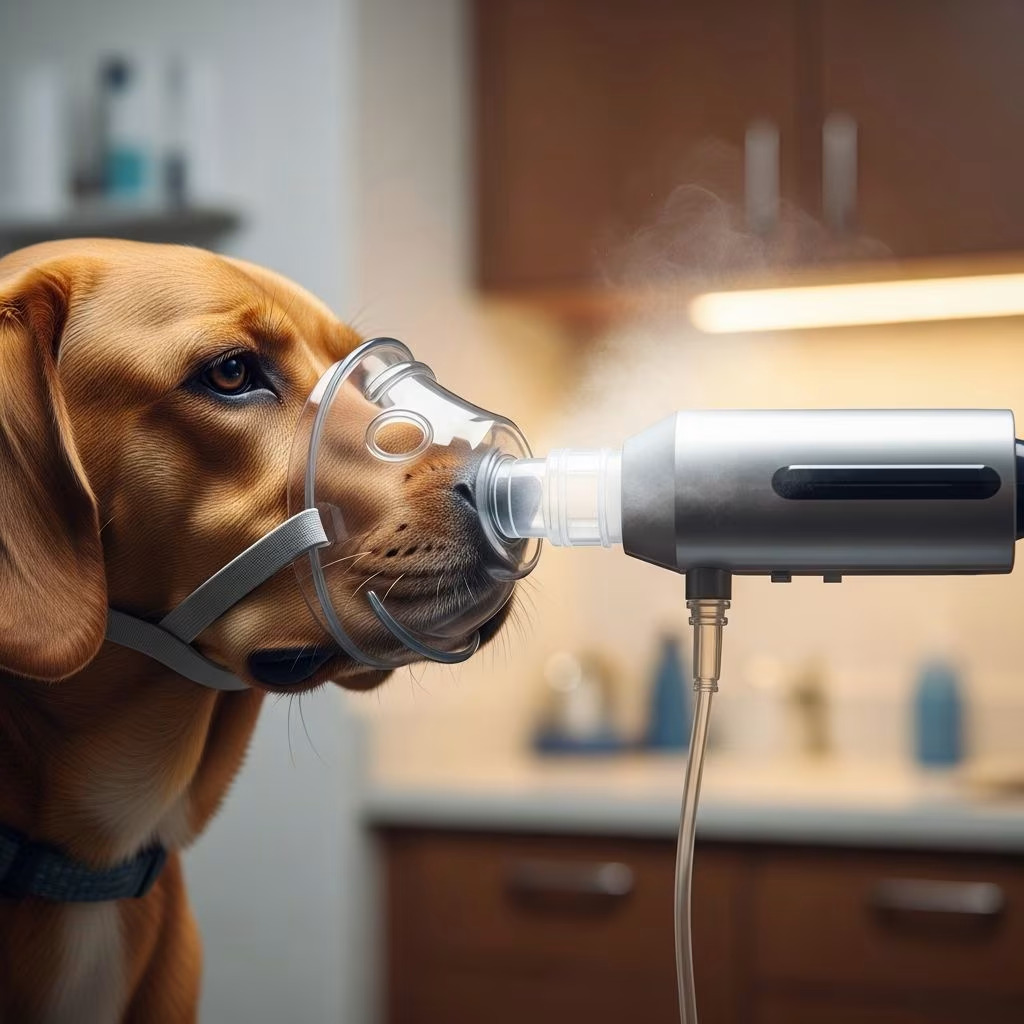
Targeted delivery of medications directly to the lungs offers a superior approach for managing chronic respiratory issues in pets, providing rapid relief with fewer widespread side effects compared to oral or injected drugs. This method concentrates therapeutic agents at the site of inflammation and constriction, improving efficacy for conditions like asthma in cats and bronchitis in dogs.
Understanding Respiratory Challenges in Companion Animals
Companion animals frequently suffer from persistent airway problems that compromise their quality of life. In cats, inflammatory lower airway disease manifests as recurrent coughing, wheezing, and labored breathing, often linked to allergic triggers. Dogs, meanwhile, commonly experience chronic bronchitis characterized by daily coughs lasting months, alongside issues like tracheal collapse and brachycephalic obstructive airway syndrome (BOAS). These disorders stem from ongoing inflammation, mucus buildup, and bronchial hyperactivity, necessitating long-term control strategies.
Diagnosis involves a multifaceted approach: thorough history-taking, physical exams, radiographic imaging, and sometimes bronchoalveolar lavage (BAL) to identify inflammatory cells or rule out infections, heart disease, or tumors. Early intervention prevents progression, but traditional systemic treatments like oral corticosteroids often lead to complications such as excessive thirst, urination, hunger, muscle wasting, and increased diabetes risk.
Core Benefits of Inhalation-Based Treatments
Inhaled therapies stand out by depositing drugs precisely in the lower airways, achieving therapeutic levels with doses up to 25 times lower than systemic equivalents. This localization minimizes exposure to other organs, reducing risks like immune suppression, endocrine disruption, and metabolic changes.
- Direct Targeting: Medications bypass the bloodstream, acting swiftly on inflamed tissues.
- Safety Profile: Ideal for patients with comorbidities like diabetes, hypertension, or ongoing chemotherapy.
- Long-Term Viability: Supports chronic use without the cumulative toxicity of pills or injections.
- Owner-Friendly: Devices facilitate at-home administration, fostering positive pet-owner interactions.
Studies confirm these advantages; for instance, cats pretreated with inhaled fluticasone showed reduced bronchial sensitivity and lower inflammatory markers in lung fluid compared to untreated groups.
Primary Medications for Airway Management
The cornerstone drugs fall into two categories: corticosteroids to curb inflammation and bronchodilators to ease airway constriction.
Corticosteroids: Inflammation Controllers
Inhaled corticosteroids (ICS) like fluticasone (brands: Flovent, Flixotide) and ciclesonide (Alvesco) form the backbone of maintenance therapy. Delivered twice daily, they stabilize airway linings, decrease mucus production, and suppress eosinophil activity central to allergic responses. Clinical data from over 200 feline asthma cases revealed that most patients weaned off oral steroids within weeks when switched to ICS, with only a fraction needing minimal supplemental dosing.
Bronchodilators: Airway Openers
Short-acting beta-agonists such as albuterol (salbutamol) provide quick relief during acute episodes by relaxing smooth muscles. A single 90-100 mcg puff via spacer delivers noticeable easing of breathing within minutes. For sustained control, long-acting options (LABA) combined with ICS extend effects up to 12 hours, though they suit step-up management rather than emergencies.
Notably, bronchodilators shine in bronchospasm crises but require clear airways for optimal penetration; initial mucus clearance may need systemic aids.
Specialized Delivery Systems for Pets
Success hinges on pet-specific devices that overcome anatomical differences. Metered-dose inhalers (MDIs) pair with spacers like AeroKat for cats or AeroDawg for dogs, featuring masks that seal comfortably around the muzzle. These chambers hold aerosol clouds, allowing 10-15 breaths to capture 20-30% of the drug—far superior to human designs.
Nebulizers, including vibrating mesh types, aerosolize solutions silently for stressed patients or upper airway issues like BOAS. Oxygen cage nebulization suits severe cases. Training tips include associating masks with treats, starting sessions short, and using pheromone sprays for calm.
| Device Type | Best For | Key Features | Admin Time |
|---|---|---|---|
| MDI + Spacer (AeroKat/AeroDawg) | Cats/Dogs, Lower Airways | One-touch actuation, breed-specific masks | 5-10 breaths |
| Vibrating Mesh Nebulizer | Upper/Lower Airways, BOAS | Silent, fine mist, portable | 5-10 minutes |
| MDI in Oxygen Cage | Hospitalized, Severe Cases | Passive delivery, no mask stress | Continuous |
Step-by-Step Treatment Protocols
Tailor plans to disease severity and response.
Acute Crisis Management
- Stabilize with injectable steroids and bronchodilators in-clinic.
- Follow with inhaled albuterol (1-2 puffs) for home rescue if breathing stabilizes.
- Escalate to emergency care if no improvement.
Chronic Maintenance Strategies
- Mild-Moderate: ICS (fluticasone 110-220 mcg BID) via spacer.
- Refractory: Add LABA-ICS combo or low-dose oral alternate-day steroids.
- Adjuncts: Weight control, allergen avoidance, harnesses over collars.
For canine chronic bronchitis, inhaled ICS reduced cough frequency in most cases, outperforming oral therapies in side-effect profiles. Feline asthma patients on consistent regimens often achieve remission-like states.
Species-Specific Considerations
Cats: Tackling Inflammatory Airway Disease
Feline disorders span asthma, bronchitis, and bronchiectasis, unified by eosinophilic inflammation. Inhaled glucocorticoids deliver higher local concentrations with negligible systemic absorption, preserving immunity and metabolism. Bronchodilators rescue status asthmaticus, where airways clamp shut.
Dogs: Addressing Bronchitis and Collapse
Chronic bronchitis demands exclusion of parasites or infections first. Inhaled options excel post-mucus clearance, with nebulization aiding tracheal issues. BOAS benefits from nebulized anti-inflammatories alongside surgery.
Challenges include brachycephalic intolerance to masks and initial mucus barriers; patience and technique refinement resolve most.
Evidence from Veterinary Research
Robust data backs inhaled efficacy. A 2006 study demonstrated fluticasone’s attenuation of carbachol-induced spasms in cats, correlating with BAL improvements. Padrid’s 2008 series reported 82% of cats discontinuing oral steroids on ICS alone. Aerodynamic models confirm salbutamol’s deposition in healthy feline lungs, predicting real-world utility.
Longitudinal outcomes show sustained cough reduction in dogs and fewer exacerbations in cats, affirming lifelong manageability.
Frequently Asked Questions (FAQs)
Is inhaled therapy safe for long-term use in pets?
Yes, with minimal systemic effects; monitoring for oral candidiasis or hoarseness is advised, though rare.
How do I train my pet to accept the mask?
Pair with rewards, practice daily sans drug, and use fitted veterinary spacers for comfort.
Can all airway diseases be treated this way?
Best for inflammatory/chronic types; infectious or neoplastic cases need diagnostics first.
What if my pet resists treatment?
Consult for alternatives like nebulizers or brief sedation training; most adapt within weeks.
Are generic inhalers effective?
Veterinary-prescribed MDIs ensure proper dosing; avoid human substitutions without guidance.
Future Directions in Veterinary Inhalation Therapy
Ongoing innovations include smarter spacers with dose counters, combination inhalers blending ICS/LABA/SABA, and nanoparticle formulations for deeper penetration. Telemedicine training enhances owner compliance, promising broader adoption.
Integrating inhaled therapy into multimodal plans—environmental controls, diet, and monitoring—yields optimal results. Veterinary teams play a pivotal role in education, device fitting, and follow-up to empower pet owners.
References
- Prescribing Inhaled Therapy – Trudell Animal Health — Trudell Animal Health. 2023. https://trudellanimalhealth.com/pages/veterinarians/inhaled-therapy
- Use of Inhaled Medications in the Management of Chronic Airway Disease — Nashville Veterinary Specialists. 2022. https://www.nashvillevetspecialists.com/articles/use-of-inhaled-medications-in-the-management-of-chronic-airway-disease
- Inhaled therapy for managing respiratory disease in dogs — BreatheEazy. 2024. https://www.breatheazy.co.uk/inhaled-therapy-for-managing-respiratory-disease-in-dogs/
- Breathe easy: inhalational therapy for feline inflammatory airway disease — PMC (NIH). 2024-01-15. https://pmc.ncbi.nlm.nih.gov/articles/PMC10812033/
- Treatment of Feline Lower Airway Disease — Today’s Veterinary Practice. 2023. https://todaysveterinarypractice.com/respiratory-medicine/treatment-of-feline-lower-airway-disease/
- Salbutamol transport and deposition in healthy cat airways — Frontiers in Veterinary Science. 2023. https://www.frontiersin.org/journals/veterinary-science/articles/10.3389/fvets.2023.1176757/full
- Respiratory Tract – Purdue University College of Veterinary Medicine — Purdue University (.edu). 2025. https://vet.purdue.edu/hospital/small-animal/resources/respiratory-tract.php



