

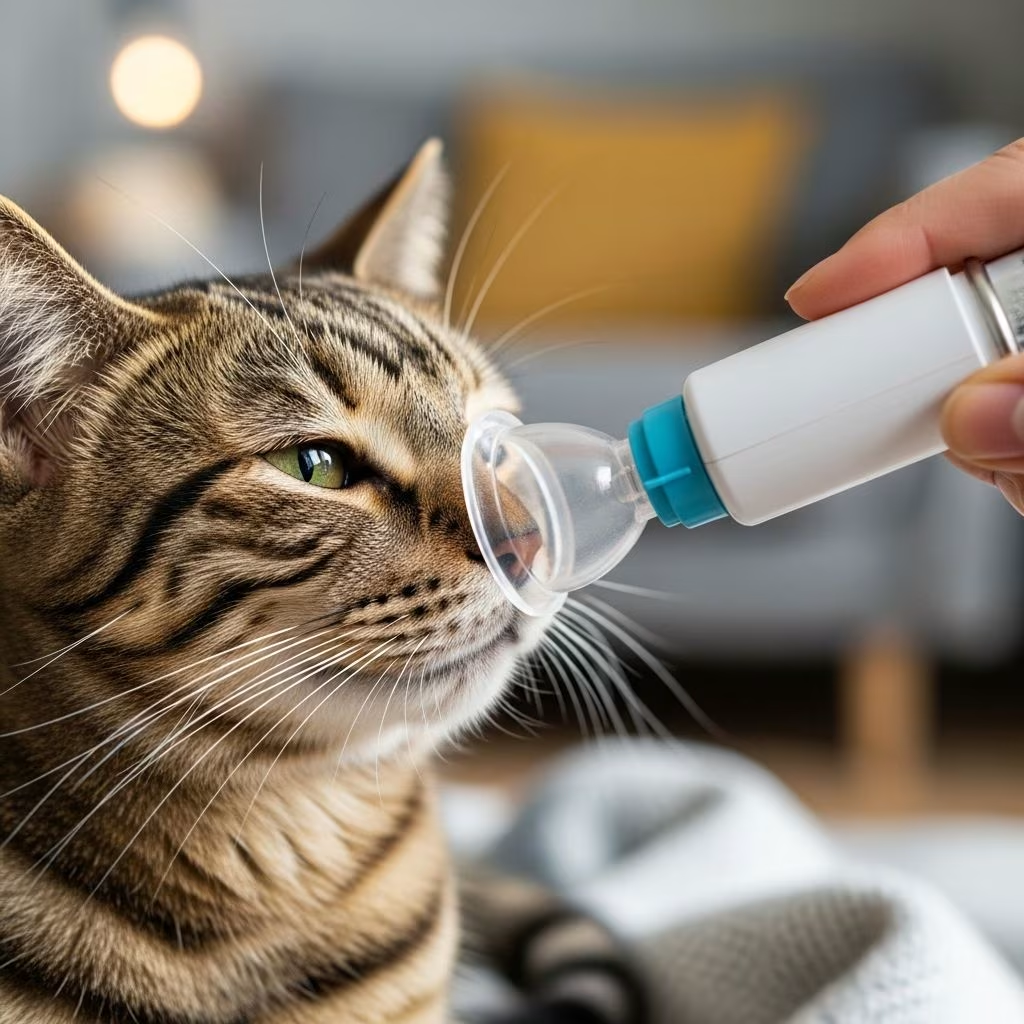
Understanding Feline Asthma and Bronchitis
Feline asthma and chronic bronchitis are inflammatory airway diseases that affect many cats throughout their lives. These conditions cause airway constriction, inflammation, and excessive mucus production, leading to coughing, wheezing, and difficulty breathing. While these conditions are chronic and require lifelong management, modern inhalant therapy has revolutionized how veterinarians treat feline respiratory disease. Understanding the advantages of inhalant treatment and how to properly administer these medications can significantly improve your cat’s quality of life and respiratory function.
What is Inhalant Treatment?
Inhalant treatment, also known as inhalational therapy, involves delivering medication directly to your cat’s airways through a device similar to those used by human asthma patients. Rather than giving oral tablets or injections that must be processed throughout the entire body, inhalant therapy targets the lungs directly where the medication is needed most. This localized delivery system represents a significant advancement in feline respiratory medicine and has become the preferred treatment approach for many veterinarians managing inflammatory airway disease.
Advantages of Inhaled Medications Over Traditional Treatment
Inhaled medications offer several compelling advantages compared to oral or injectable treatments for feline asthma and bronchitis:
Direct Drug Delivery
When medication is inhaled, high concentrations are delivered directly to the lungs and airways where they are needed most. This targeted approach ensures that the medication reaches the site of inflammation and airway constriction immediately, rather than being distributed throughout the entire body first.
Reduced Systemic Side Effects
Because inhaled medications work locally in the lungs with minimal systemic absorption, they produce far fewer side effects compared to oral or parenteral formulations. This is particularly important for long-term management, as cats receiving daily inhaled corticosteroids experience significantly fewer endocrine and immune system complications than those receiving systemic steroids.
Faster Onset of Action
The onset of action for inhaled bronchodilators and anti-inflammatory drugs is substantially shorter than that of oral or parenteral formulations. In emergency situations or acute asthma attacks, this rapid response can be life-saving.
Improved Compliance
Many cat owners find that administering inhaled medications is easier than giving oral tablets, especially with proper training and practice. Once cats become accustomed to the device, most tolerate inhalant therapy very well. This improved compliance helps ensure consistent medication delivery for better disease management.
Types of Inhaled Medications for Cats
Inhaled Corticosteroids
Inhaled corticosteroids represent the mainstay of therapy for managing feline asthma and chronic bronchitis. These anti-inflammatory medications reduce airway inflammation, which is the underlying cause of respiratory disease in cats. Fluticasone is the most commonly recommended inhaled corticosteroid for feline patients.
Fluticasone Dosage and Administration: An initial dose of 110 micrograms (mcg) administered every 12 hours using a metered-dose inhaler (MDI) and cat spacer is recommended. However, evidence suggests that 44 mcg every 12 hours may also be sufficient for some cats. Fluticasone must be given twice daily on a long-term, continuous basis to effectively manage asthma signs and prevent airway remodeling.
Inhaled Bronchodilators
Bronchodilators work by opening constricted airways and are used for acute asthma attacks and flare-ups. Albuterol (also called salbutamol) is the primary inhaled bronchodilator used in cats and is available under brand names including Proair, Proventil, and Ventolin.
Albuterol Dosage: A single dose of 90 mcg administered via MDI using a spacer such as an AeroKat chamber is appropriate for cats. Standard dosing typically involves 1-2 puffs per treatment, depending on the severity of symptoms and the size of the cat. For emergency management of respiratory distress, 2-4 puffs should be administered every 5 minutes until clinical signs resolve.
Important Note: Inhaled albuterol should not be used for chronic daily management because it contains a 1:1 mixture of R- and S-enantiomers. While the R-isomer is bronchodilatory and anti-inflammatory, the S-isomer is pro-inflammatory and promotes airway hyperreactivity. Albuterol should be reserved for acute attacks and used in conjunction with inhaled corticosteroids for ongoing management.
Anticholinergic Medications
Ipratropium is an anticholinergic medication that decreases mucous secretions and may help modulate muscarinic receptor response in asthmatic cats. While not as commonly used as corticosteroids and bronchodilators, this medication can be useful in specific cases, particularly when excessive mucus production is a significant problem.
Delivery Systems for Inhaled Medications
Metered-Dose Inhalers with Spacers
The most common method for delivering inhaled medications to cats is using a metered-dose inhaler (MDI) with a specially designed spacer chamber. The AeroKat Chamber is the most widely used spacer device for feline patients, as it includes a face mask sized appropriately for cats and a one-way valve that ensures medication delivery with each breath.
Nebulizers
Nebulization provides direct drug delivery to the lungs with minimal systemic drug absorption and few adverse effects. This method is particularly useful for cats that cannot tolerate MDI and spacer systems or for administering multiple medications simultaneously. Nebulized medications allow the cat to breathe in aerosolized medication over a period of several minutes.
How to Administer Inhaled Medications to Your Cat
Training Your Cat
Proper training is essential for successful inhalant therapy. Most cats need to be gradually introduced to the device over time. Start by allowing your cat to become familiar with the spacer and mask without any medication, letting them see, smell, and touch the equipment. Reward calm behavior with treats and praise. This training process can take several sessions but is crucial for long-term success.
Step-by-Step Administration
Step 1: Shake the inhaler vigorously for 10-15 seconds to ensure proper mixing of the medication.
Step 2: Insert the inhaler into the back of the chamber device.
Step 3: Gently apply the mask to your cat’s face, covering both the mouth and nose while maintaining a gentle but secure seal.
Step 4: Depress the inhaler to release one puff of medication into the chamber.
Step 5: Allow your cat to breathe normally for 7-10 breaths, or approximately 10-15 seconds, to ensure adequate medication inhalation.
Step 6: Gently remove the mask from your cat’s face.
Step 7: After treatment, use a damp cloth to remove any residual medication on the fur around the face and mouth area.
Treatment Protocols and Recommendations
Long-Term Management
Current recommendations for ongoing treatment of feline asthma and bronchitis involve using fluticasone corticosteroid every 12 hours combined with albuterol bronchodilator as needed during acute attacks. For initial treatment of moderately affected animals, a 5-day course of oral prednisone at 1 mg/kg may be helpful to reduce acute inflammation. More severely affected cats may require oral prednisone every other day at 1 mg/kg during acute episodes.
Emergency Management
In acute respiratory distress situations, 2-4 puffs of albuterol should be administered every 5 minutes until clinical signs resolve. Additional emergency treatment may include oxygen therapy and an intravenous dose of a rapid-acting glucocorticoid such as dexamethasone. If your cat experiences severe breathing difficulty, seek immediate veterinary care.
Individualized Treatment Plans
Every cat’s respiratory condition is unique, and treatment must be individualized based on disease severity, response to therapy, and any underlying health conditions. Your veterinarian may recommend adjunctive treatment with other inhaled or orally administered anti-inflammatories and bronchodilators depending on your cat’s specific needs. Regular follow-up examinations help ensure that your cat’s treatment plan remains optimal as their condition evolves.
Benefits of Consistent Inhalant Therapy
Research has demonstrated that inhaled glucocorticoids significantly reduce airway inflammation and hyperreactivity in asthmatic cats. Studies show that treated cats have substantially less bronchial reactivity, lower immune cell counts in airway fluid, and reduced inflammatory markers compared to untreated controls. Consistent use of inhaled corticosteroids helps prevent progressive airway damage and remodeling that can occur with inadequately treated inflammation.
Monitoring and Follow-Up Care
Once your cat begins inhalant therapy, regular veterinary monitoring is essential to assess treatment effectiveness and make adjustments as needed. Your veterinarian may recommend periodic rechecks to evaluate your cat’s respiratory function and ensure that the current medication regimen is providing adequate disease control. Some cats may require dosage adjustments over time, while others may benefit from adding additional medications to their treatment protocol.
Frequently Asked Questions
Q: How long does it take for inhaled medications to work?
A: Inhaled bronchodilators like albuterol work within minutes to open airways during acute attacks. Inhaled corticosteroids may take several days to weeks of consistent use to reduce underlying inflammation and provide significant symptom improvement.
Q: Can I stop giving my cat inhaled medications once symptoms improve?
A: No. Feline asthma and bronchitis are chronic conditions requiring lifelong management. Even when symptoms improve, continuous inhaled corticosteroid therapy is necessary to prevent inflammation recurrence and maintain airway stability. Stopping medications typically results in symptom return.
Q: Are inhaled medications safe for long-term use in cats?
A: Yes. Inhaled medications are specifically designed for long-term use with minimal systemic side effects. The localized delivery to the lungs means far fewer of the side effects associated with oral or injectable corticosteroids.
Q: What if my cat won’t tolerate the inhaler and mask?
A: With patience and proper training, most cats can learn to tolerate inhalant therapy. If your cat continues to resist, ask your veterinarian about nebulizer options or alternative medication delivery methods that might work better for your pet.
Q: How do I know if the medication is working?
A: Effective treatment typically results in reduced coughing, improved breathing, increased activity levels, and better overall quality of life. Your veterinarian can assess response through physical examination and may recommend diagnostic tests to evaluate airway inflammation.
Q: Can I use my own asthma inhaler medications for my cat?
A: No. Never use human medications for your cat without explicit veterinary guidance. Dosages are different, and some formulations may not be appropriate for feline use. Always use medications prescribed specifically for your cat.
References
- Inhalation Treatment of Airway Disease in Animals – Pharmacology — Merck Veterinary Manual. 2024. https://www.merckvetmanual.com/pharmacology/systemic-pharmacotherapeutics-of-the-respiratory-system/inhalation-treatment-of-airway-disease-in-animals
- Cat Inhaler To Treat Feline Asthma — Atlantic Coast Veterinary Conference. 2022-01-30. https://www.atlanticcoastvet.com/site/blog-long-island-vet/2022/01/30/inhaler-feline-asthma
- Asthma and chronic bronchitis in cats — International Cat Care. 2024. https://icatcare.org/articles/asthma-and-chronic-bronchitis-in-cats
- Treatment of Feline Lower Airway Disease — Today’s Veterinary Practice. 2024. https://todaysveterinarypractice.com/respiratory-medicine/treatment-of-feline-lower-airway-disease/
- Bronchodilator Medications For Cats: What They Are, Types Available, and Why Inhaled Medication is Preferred — Trudell Animal Health. 2024. https://trudellanimalhealth.com/blogs/blog/bronchodilator-medications-for-cats-what-they-are-types-available-and-why-inhaled-medication-is-preferred
- Use of Inhaled Medications in the Management of Chronic Airway Disease — CVE Clarksville. 2024. https://www.cvesclarksville.com/articles/use-of-inhaled-medications-in-the-management-of-chronic-airway-disease
- Breathe easy: inhalational therapy for feline inflammatory airway disease — National Center for Biotechnology Information. 2024. https://pmc.ncbi.nlm.nih.gov/articles/PMC10812033/



