
Infectious Laryngotracheitis: Diagnosis, Vaccines, Prevention
Comprehensive guide to understanding, preventing, and managing ILT in chickens and other birds for optimal flock health.
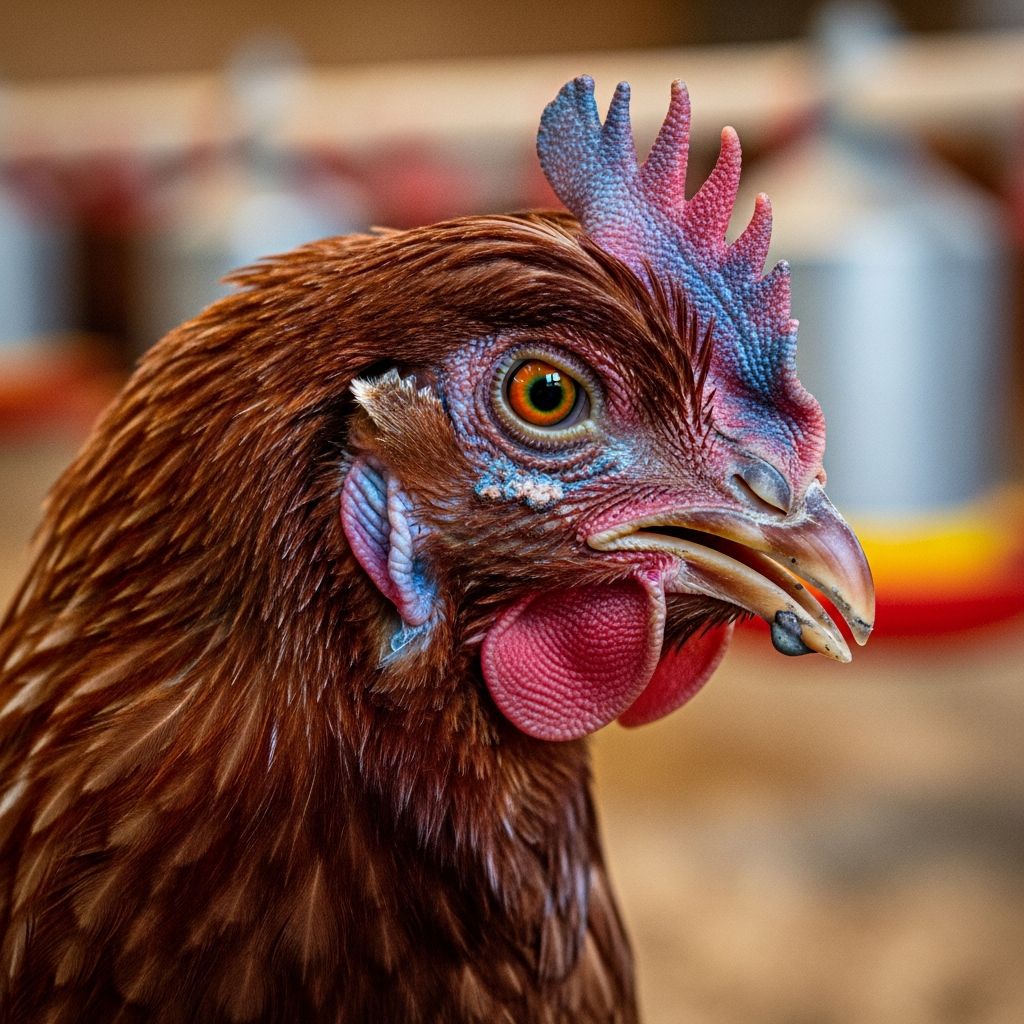
Infectious laryngotracheitis (ILT), also known as avian infectious laryngotracheitis, represents a significant respiratory challenge in poultry production. Caused by gallid alphaherpesvirus 1 (GaHV-1), this disease primarily targets chickens but can impact pheasants, peafowl, and other gallinaceous birds. ILT leads to substantial economic losses through mortality, reduced egg output, and slower growth rates in affected flocks.
The Viral Culprit Behind ILT
Gallid herpesvirus 1 belongs to the alphaherpesvirus family, characterized by its enveloped DNA structure. This virus exhibits varying virulence levels across strains, influencing disease severity from mild respiratory irritation to life-threatening conditions. Chickens over 20 days old are most susceptible, though dense populations can see infections in younger birds. The virus replicates in the upper respiratory mucosa and ocular tissues without causing viremia, a key feature distinguishing it from other poultry pathogens.
Once established, the virus can enter a latent phase, hiding in nerve ganglia for months or even years. This latency allows carrier birds to shed the virus intermittently, perpetuating outbreaks even after apparent recovery. Factors like stress, co-infections, and poor ventilation exacerbate viral replication and disease progression.
How ILT Spreads in Flocks
Transmission occurs primarily through direct contact with infected respiratory secretions, ocular fluids, or feces. Contaminated equipment, litter, and personnel serve as mechanical vectors, while airborne spread via aerosols and dust enables rapid dissemination within and between houses. Wild birds or rodents may introduce the virus, but carrier poultry remain the main reservoir.
The incubation period typically spans 6-12 days, with virus shedding peaking 6-8 days post-infection and continuing at lower levels for up to 10 days. In latent carriers, reactivation under stress can restart shedding without new external introductions. High-density commercial operations worldwide report endemic ILT, underscoring the need for vigilant biosecurity.
Recognizing Clinical Manifestations
ILT presents in peracute, acute, subacute, and mild forms, dictated by strain virulence and flock conditions. Peracute cases strike suddenly with gasping, neck extension, and bloody expectoration, often fatal within days due to tracheal obstruction. Mortality can reach 70% in severe epizootics.
- Mild form: Conjunctivitis, nasal discharge, sinus swelling, reduced feed intake, and slight egg drop (mortality 0.1-2%).
- Subacute form: Progressive respiratory distress, coughing, 10-30% mortality over 10-14 days.
- Acute form: Severe dyspnea, head shaking to clear mucus, bloody tracheal casts, up to 90-100% morbidity.
Flocks show depressed appetite and weight loss alongside respiratory signs. Recovery varies: 10 days for mild strains, up to 4-6 weeks for virulent ones. Co-infections with bacteria or other viruses prolong symptoms and amplify losses.
Pathological Changes at Necropsy
Post-mortem exams reveal trachea-specific lesions as ILT’s signature. In severe cases, hemorrhagic tracheitis features blood-mixed mucus, necrotic debris, and caseous casts filling the airway, causing asphyxiation. Conjunctival edema, sinusitis, and laryngeal inflammation accompany these findings.
Milder infections show tracheal congestion, mucoid exudate, and swollen turbinates without pronounced hemorrhage. Early deaths may lack gross lesions, complicating diagnosis. Lungs typically remain unaffected, differentiating ILT from systemic diseases.
| Severity | Key Signs | Mortality Range | Recovery Time |
|---|---|---|---|
| Mild | Conjunctivitis, nasal discharge | 0.1-2% | 10 days |
| Subacute | Coughing, sinus swelling | 10-30% | 2-3 weeks |
| Acute | Bloody mucus, dyspnea | 5-70% | 4-6 weeks |
Laboratory Confirmation Methods
Diagnosis combines clinical history, necropsy, and lab tests. Virus isolation in 9-11 day embryonated eggs via chorioallantoic membrane (CAM) inoculation yields opaque plaques within 48 hours, with embryo death in 2-8 days. PCR assays detect viral DNA in swabs or tissues, offering rapid, sensitive results.
Histopathology shows intranuclear inclusions in tracheal epithelium, confirming herpesviral involvement. Serology via ELISA or VN tests birds for antibodies, useful in vaccination monitoring but less for acute diagnosis due to latency.
Prevention Through Vaccination
No curative treatment exists; management relies on vaccination and biosecurity. Live attenuated vaccines (e.g., CEO, TCO strains) induce mucosal immunity when administered via eye-drop, spray, or drinking water. Chickens receive initial doses at 2-4 weeks, with boosters in layers.
Vaccine strains carry reversion risks to virulence, necessitating strain monitoring. Recombinant HVT or vector vaccines offer safer alternatives with lower shedding. Endemic areas vaccinate routinely, timing doses to match field strain circulation.
- Eye-drop: Precise, high efficacy for breeders.
- Mass spray/water: Practical for large flocks, variable uniformity.
- In-ovo: Emerging for broilers, pre-hatch protection.
Biosecurity and Management Strategies
Strict biosecurity curtails spread: all-in-all-out production, footbaths, equipment disinfection, and downtime between flocks. Avoid mixing ages, control ventilation to minimize dust, and quarantine new birds. Report outbreaks to authorities, as ILT is notifiable in some regions.
During outbreaks, isolate affected birds, enhance airflow, and medicate secondarily for bacteria. Cull severely ill birds to limit shedding. Post-recovery, test for carriers before restocking.
Economic Impact on Poultry Industry
Global ILT costs millions annually via culls, production dips (up to 20% egg loss), and growth delays. Endemic in dense regions like North America, Europe, and Australia, it disrupts supply chains. Proactive vaccination programs mitigate losses, but emergence of vaccine-derived strains poses ongoing challenges.
FAQs on Infectious Laryngotracheitis
What birds does ILT affect?
Primarily chickens, plus pheasants, peafowl, and partridges.
Is ILT treatable with antibiotics?
No, as it’s viral; antibiotics manage secondary infections only.
How long does shedding last?
6-10 days acutely, longer in latents.
Can ILT spread to humans?
No, it’s avian-specific.
When should flocks be vaccinated?
At 2-4 weeks in endemic areas, per vet advice.
References
- Infectious laryngotracheitis | Poultry diseases – Agriculture Victoria — Agriculture Victoria. 2023. https://agriculture.vic.gov.au/biosecurity/animal-diseases/poultry-diseases/infectious-laryngotracheitis
- Technical update: Infectious Laryngotracheitis (ILT) — The Poultry Site. 2022. https://www.thepoultrysite.com/articles/technical-update-infectious-laryngotracheitis-ilt
- Infectious laryngotracheitis: Etiology, epidemiology, pathobiology … — PMC (NCBI). 2020-05-12. https://pmc.ncbi.nlm.nih.gov/articles/PMC7241549/
- Avian infectious laryngotracheitis — WOAH (World Organisation for Animal Health). 2023. https://www.woah.org/en/disease/avian-infectious-laryngotracheitis/
- Infectious Laryngotracheitis (ILT) in Poultry — Penn State Extension. 2023. https://extension.psu.edu/infectious-laryngotracheitis-ilt-in-poultry
Similar Articles








Read full bio of medha deb


