

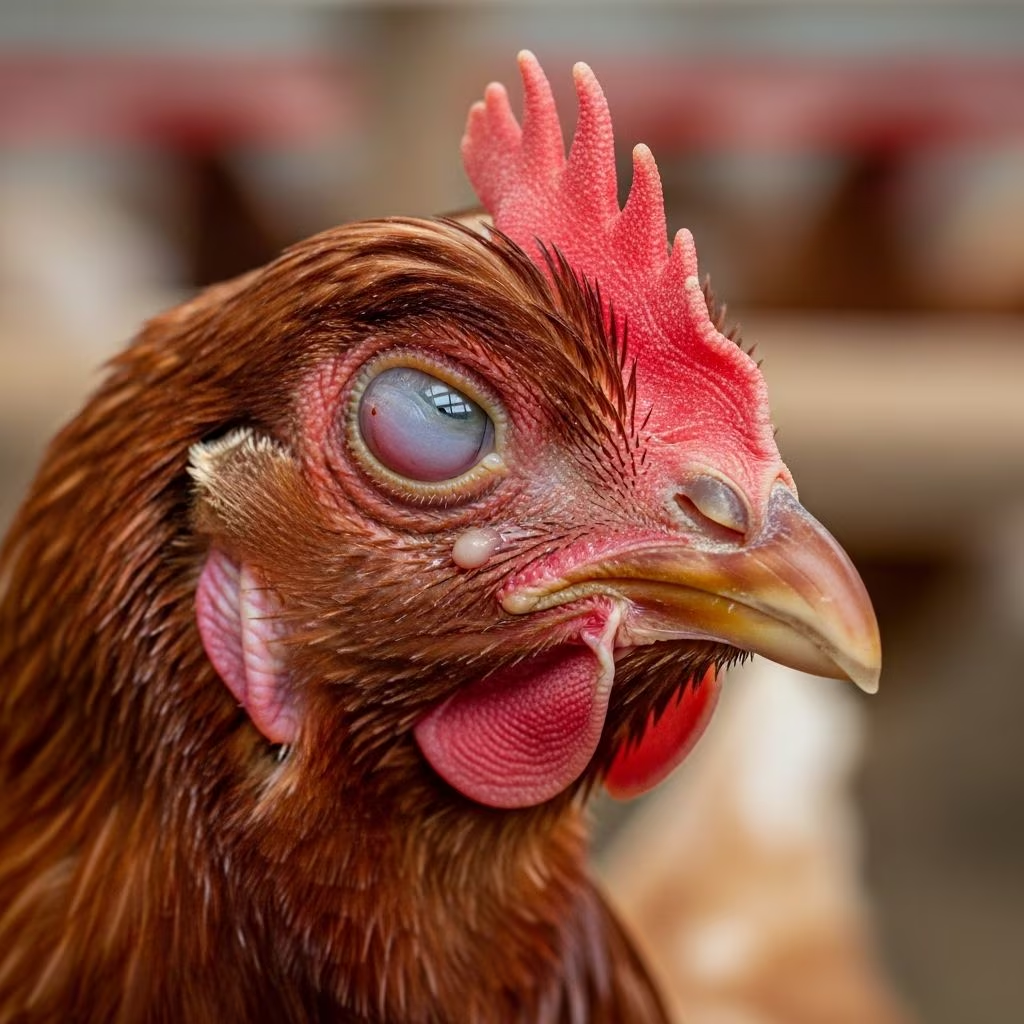
Infectious coryza represents a significant bacterial infection targeting the upper respiratory system of chickens, leading to substantial production challenges in poultry operations. Caused primarily by Avibacterium paragallinarum (previously known as Haemophilus paragallinarum), this disease manifests through inflammation of nasal passages and sinuses, resulting in high morbidity rates across flocks.
Understanding the Pathogen Behind the Disease
The bacterium Avibacterium paragallinarum thrives as a fastidious organism requiring specific growth factors like V factor for cultivation in laboratory settings. It exists in multiple serovars (A, B, and C), which complicates vaccine efficacy and control measures. This pathogen is not highly resilient outside the host, surviving only 2-3 days in the environment but succumbing quickly to heat, desiccation, and common disinfectants.
In multi-age poultry farms, where complete depopulation is rare, the bacterium persists through carrier birds, perpetuating cycles of infection. Recent outbreaks have highlighted its relevance not only in layers but also in broiler production, particularly in regions like North America and developing countries where co-infections amplify severity.
Recognizing Clinical Manifestations in Affected Flocks
Symptoms emerge rapidly, typically 1-3 days post-exposure, spreading flock-wide within 10 days. Key indicators include pronounced facial edema, especially around the eyes and wattles, purulent nasal and ocular discharges, sneezing, coughing, and open-mouth breathing. Affected birds often exhibit reduced appetite, weight loss, and diarrhea, contributing to stunted growth in young stock.
In laying hens, the impact is particularly devastating, with egg production plummeting by 10-40% or more, sometimes persisting for weeks. Wattles in roosters swell notably, aiding visual diagnosis. While uncomplicated cases rarely exceed 1-2% mortality, secondary infections with viruses (e.g., infectious bronchitis virus) or bacteria (e.g., E. coli) can elevate death rates up to 20-48%.
- Facial and wattle swelling: Hallmark sign, often unilateral initially.
- Nasal/ocular discharge: Thick, purulent mucus obstructing airways.
- Respiratory distress: Sneezing, dyspnea, head shaking.
- Production losses: 10-60% egg drop, poor feed conversion.
- Carrier state: Recovered birds shed intermittently without symptoms.
Epidemiology and Risk Factors in Poultry Production
Infectious coryza prevails globally, with higher incidence in multi-age sites, dense housing, and regions like the U.S. Southwest, West Coast, Southeast, and Northeast. Mature layers and breeders face greatest risk during peak production or post-stress events like relocation. Broilers experience milder impacts unless outbreaks occur late in grow-out.
Transmission occurs via direct contact with exudates, aerosols, contaminated fomites (feeders, waterers, clothing), or carrier birds. Unlike vertical transmission through eggs, horizontal spread dominates, exacerbated by poor ventilation, high stocking densities, and concurrent respiratory pathogens like mycoplasma or Newcastle disease virus.
| Risk Factor | Impact Level | Management Tip |
|---|---|---|
| Multi-age farms | High | Implement all-in, all-out systems |
| Poor biosecurity | High | Restrict visitor access, disinfect equipment |
| Co-infections | Medium-High | Vaccinate against common viruses |
| High density | Medium | Optimize space and ventilation |
| Stress events | Medium | Minimize handling during peaks |
Diagnostic Approaches for Accurate Identification
Field diagnosis relies on characteristic swelling and discharges, but lab confirmation is essential to differentiate from fowl cholera, mycoplasmosis, or viral tracheitis. Swabs from sinuses, trachea, or palatine cleft cultured on chocolate agar yield definitive results, with PCR offering rapid serovar typing.
Post-mortem reveals caseous sinus exudate, conjunctivitis, and cerebral meningoencephalitis in severe cases. Bacterial isolation confirms A. paragallinarum, sensitive to antibiotics like tetracyclines but increasingly resistant strains reported.
Treatment Protocols to Mitigate Outbreaks
Antibiotics delivered via water (e.g., sulfonamides, tetracyclines, enrofloxacin) curb bacterial replication, promoting recovery within 3-6 weeks for individuals, though flock-level effects linger 4-10 weeks. Early intervention minimizes cull rates, but treated birds remain carriers.
Supportive care includes clean water, electrolytes, and improved ventilation. Avoid over-reliance on meds due to resistance; integrate with biosecurity. In high-prevalence areas, water medication for 3-5 days post-symptom onset proves effective.
Prevention and Control Strategies for Long-Term Success
Vaccination with inactivated oil-emulsion vaccines targeting serovars A, B, C administered at 8-12 weeks and boosters pre-lay reduces severity, though side effects like transient production dips occur. Best suited for endemic zones; not routine elsewhere due to carrier persistence.
Core prevention emphasizes biosecurity: all-in, all-out production, 3-week downtime post-depopulation with thorough disinfection, footbaths, and wild bird exclusion. Depopulate chronic shedders; monitor via sentinel birds.
- Establish strict biosecurity protocols.
- Use vaccines judiciously in risk areas.
- Maintain optimal housing: ventilation, density control.
- Conduct routine health surveillance.
- Isolate new introductions for 2-3 weeks.
Economic Implications and Management in Commercial Settings
Outbreaks trigger 10-60% egg losses, culling surges, and growth retardation, costing millions annually, especially in layers. Meat birds suffer feed efficiency drops, extending grow-out by days. Multi-house spreads via shared belts amplify impacts.
Proactive management yields ROI through sustained production; e.g., vaccination programs in endemic U.S. regions recoup via 20-30% fewer drops. Track metrics like daily egg logs and mortality to gauge efficacy.
Frequently Asked Questions (FAQs)
Is infectious coryza fatal to chickens?
Uncomplicated cases have low mortality (<2%), but co-infections raise it to 20-48%.
Can infectious coryza spread to other species?
Primarily chickens; rare in pheasants, guinea fowl. Turkeys have a distinct form.
How long do symptoms last?
Individuals recover in 2-6 weeks; flocks 4-10 weeks with proper treatment.
Does vaccination prevent carriers?
No, it reduces severity but not shedding.
What if I suspect an outbreak?
Isolate, submit lab samples, start antibiotics promptly.
References
- Infectious Coryza | The Poultry Site — The Poultry Site. Accessed 2026. https://www.thepoultrysite.com/disease-guide/infectious-coryza
- Infectious coryza: overview of the disease and new diagnostic options — PubMed (Veterinary Research). 1999-09-01. https://pubmed.ncbi.nlm.nih.gov/10515906/
- Infectious Coryza: Overview of the Disease and New Diagnostic… — PMC/NCBI (Veterinary Research). 1999-09-01. https://pmc.ncbi.nlm.nih.gov/articles/PMC88928/
- Infectious coryza in chickens — Texas A&M Veterinary Medical Diagnostic Laboratory. Accessed 2026. https://tvmdl.tamu.edu/case-studies/infectious-coryza-in-chickens/
- Poultry Diseases: Infectious Coryza — Michigan State University Extension. Accessed 2026. https://www.canr.msu.edu/resources/poultry-diseases-infectious-coryza



