

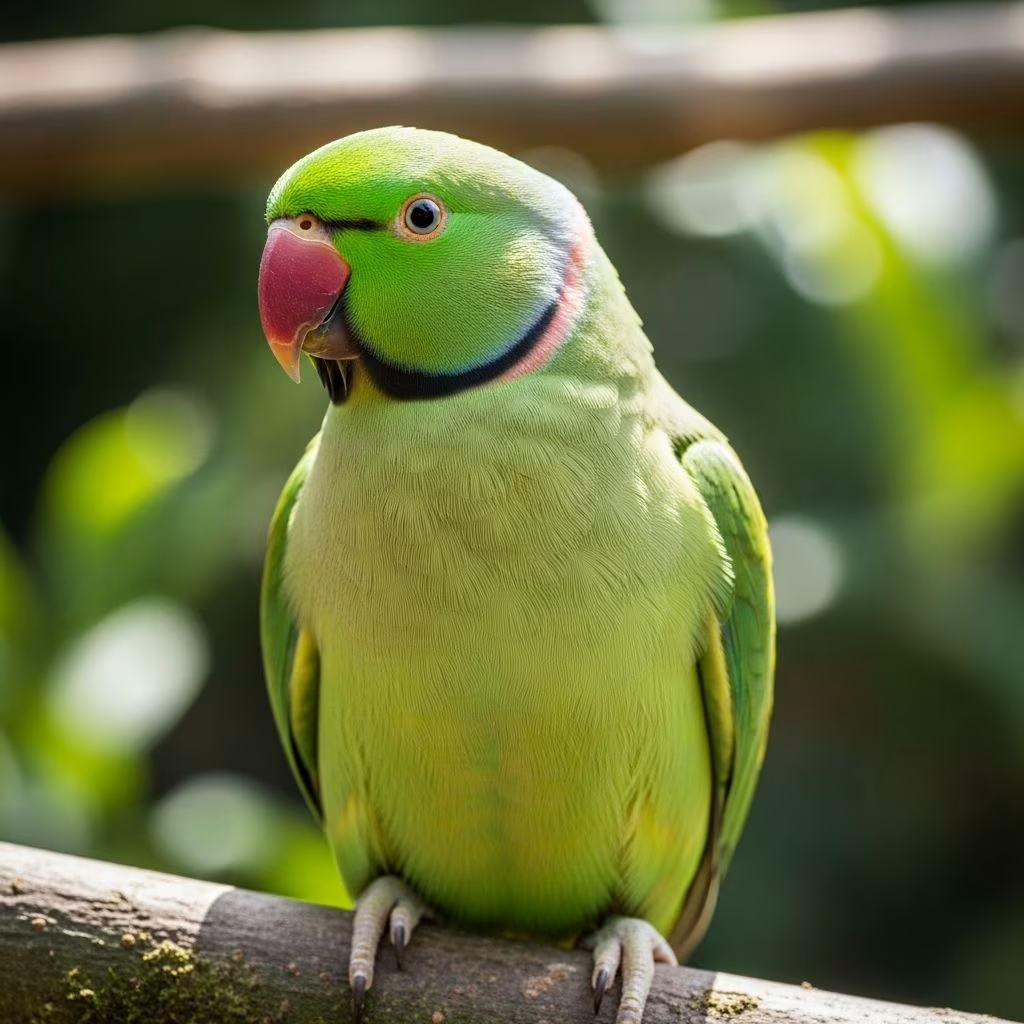
Indian ringneck parakeets have captivated bird enthusiasts for centuries with their striking appearance, remarkable vocal abilities, and complex personalities. These medium-sized parrots represent both a rewarding companionship opportunity and a significant commitment requiring patience, knowledge, and dedication. Whether you’re considering bringing one into your home or seeking to deepen your understanding of these fascinating creatures, this guide covers everything you need to know about successful Indian ringneck ownership.
Species Overview and Physical Characteristics
The Indian ringneck parakeet, scientifically recognized and commonly referred to as the rose-winged parakeet, stands approximately 16 inches in length, making it a moderately-sized companion bird suitable for various living environments. These birds exhibit remarkable visual diversity, with color mutations extending far beyond their natural green plumage. Breeders have developed blue, yellow, pied, and albino varieties, offering potential owners aesthetic choices aligned with personal preferences.
A particularly distinctive feature of this species involves sexual dimorphism—visible differences between males and females. Upon reaching maturity, males develop a characteristic ring pattern around their neck area, a trait absent in females. This biological marker enables owners to visually determine their bird’s sex without requiring veterinary sexing procedures, though DNA testing remains the most definitive method.
Personality Dimensions and Behavioral Tendencies
Indian ringneck parakeets display personalities far more complex than their charming exterior suggests. These birds are fundamentally extroverted, demonstrating little inclination toward shyness or withdrawal. Instead, they actively seek interaction and will vocally demand attention from their human companions. Understanding this trait proves essential for prospective owners, as these birds thrive with individuals who appreciate outgoing, spirited companions capable of communicating their needs clearly and insistently.
The temperament of an individual ringneck depends significantly on early socialization and consistent handling. Birds receiving daily interaction develop into affectionate, loyal companions capable of profound bonds with their chosen people. Conversely, neglected ringnecks may develop defensive behaviors including biting and aggression, potentially becoming challenging to manage even with rehabilitation efforts.
Gender-Based Behavioral Differences
Female ringnecks often exhibit territorial protective behaviors, particularly regarding their chosen person. These birds may chase away other household members or animals with lunging and biting displays, reflecting their strong pair-bonding instincts. Despite this protective aggression, females frequently become intensely loyal to their selected human, forming deep attachments.
Male ringnecks typically display different social patterns, preferring to avoid rather than confront individuals they dislike. While generally less confrontational than females, males can occasionally become aggressive, particularly if they’ve bonded strongly with a specific person and perceive threats to that relationship.
Vocal Capabilities and Communication Patterns
Perhaps the most celebrated characteristic of Indian ringnecks involves their exceptional talking ability. These parakeets rank among the most articulate parrot species, capable of learning extensive vocabularies and reproducing human speech with impressive clarity. Some individuals begin vocalizing words as early as seven months of age, though most typically develop speech capabilities around twelve months.
Potential owners must understand that this vocal prowess arrives with a significant caveat: ringnecks are exceptionally loud and persistent speakers. What initially delights as charming mimicry can become exhausting when your bird decides to repeat favorite phrases dozens of times daily at considerable volume. Additionally, these birds possess excellent whistling abilities and may prefer this form of vocalization over speech if not properly trained during early development stages.
The auditory impact extends beyond talking. Ringnecks engage in frequent, often ear-piercing chatter throughout their waking hours, creating considerable ambient noise that may strain relationships with neighbors or family members sensitive to sound. This reality represents one of the most frequently underestimated challenges of ringneck ownership, as breeders and retailers often emphasize talking ability without adequately conveying the accompanying noise levels.
Understanding Breeding Season Behavioral Changes
A critical aspect of ringneck ownership involves recognizing dramatic behavioral transformations during breeding season. While these birds maintain generally outgoing dispositions year-round, their conduct shifts markedly when hormonal cycles activate. The normally independent parakeet becomes unusually physically demonstrative, seeking constant contact and attention with intensity that can overwhelm unprepared owners.
The physical affection displayed during breeding season carries sexual connotations from the bird’s perspective. When owners fail to reciprocate or redirect this attention appropriately, ringnecks interpret the rejection as offense, often responding with nipping, biting, or aggressive posturing. Understanding this dynamic prevents owners from inadvertently reinforcing inappropriate behaviors through confused responses.
Regurgitation behaviors also frequently emerge during breeding season. Ringnecks may deposit white, pasty regurgitated food on toys, cage furniture, or other favored objects as part of natural courtship and nesting preparation behaviors. This necessitates increased cage maintenance and cleaning protocols during these months.
Housing and Environmental Requirements
Providing appropriate physical accommodations represents a cornerstone of responsible ringneck stewardship. Due to their distinctively long tail feathers, these birds require larger cages than other parrots of comparable body size. A spacious enclosure accommodates their climbing, flying, and acrobatic behaviors while preventing stress-related feather plucking and psychological disorders.
These highly intelligent, active birds become rapidly bored without adequate environmental enrichment. Ringnecks are notorious toy destroyers, methodically dismantling, shredding, and tossing toys around their enclosures. Rather than discouraging this natural, healthy behavior, owners should maintain continuous supplies of replaceable toys, understanding that destruction indicates psychological engagement rather than misbehavior.
Out-of-Cage Time and Exercise Needs
Indian ringnecks require substantial daily time outside their cages to maintain mental and physical health. These naturally active birds need opportunities for flight, climbing, and exploratory behavior. Without adequate exercise and environmental variation, ringnecks develop neurotic disorders including compulsive behaviors, aggression, and self-directed destructive actions that prove extremely difficult to reverse once established.
Supervised out-of-cage time should incorporate multiple forms of stimulation: interactive play with owners, puzzle toys requiring problem-solving, foraging opportunities mimicking natural feeding patterns, and social interaction with household members or other birds.
Nutritional Requirements and Feeding Practices
Indian ringnecks thrive on varied, balanced diets incorporating high-quality commercial pellets supplemented with fresh fruits, vegetables, and proteins. These birds demonstrate enthusiastic interest in food and respond well to treat-based training and enrichment activities. However, owners must carefully monitor portion sizes and food composition to prevent obesity and nutritional deficiencies.
Variety in diet maintains nutritional balance while providing psychological stimulation through novelty and flavor variation. Seasonal availability of different produce offers opportunities for natural dietary changes that mirror wild feeding patterns.
Health Considerations and Veterinary Care
Indian ringneck parakeets generally demonstrate robust constitutions compared to some exotic bird species. However, they remain susceptible to several health conditions requiring awareness and preventive care.
Common Health Vulnerabilities
- Polyomavirus: A viral infection affecting multiple organ systems
- Psittacosis: A bacterial infection transmissible to humans
- Aspergillosis: A fungal respiratory condition
- Bacterial infections: Various secondary infections requiring antibiotic intervention
Regular veterinary examinations by avian specialists remain essential for early disease detection and prevention. Additionally, these exceptional fliers maintain flight capabilities even following recent wing-feather trims, necessitating careful management to prevent escape and injury. Outdoor time should occur exclusively within secure harnesses or travel carriers to eliminate flight-away risks.
Behavioral Development and Training Considerations
The first year of a ringneck’s life establishes behavioral foundations that persist throughout their lifespan. Young birds naturally enter a bluffing phase characterized by biting and aggression displays as they establish social hierarchies and personal boundaries. Owners must resist reacting to bites with alarm, punishment, or excessive attention, as these responses inadvertently reinforce the very behaviors they seek to discourage.
Consistent, gentle handling throughout the first year prevents birds from “going wild”—developing deeply ingrained aggression and fear responses that resist remediation. This critical developmental window demands patience, appropriate response protocols, and commitment to establishing respectful relationships based on mutual understanding rather than dominance.
Body Language and Communication Understanding
Indian ringnecks communicate extensively through subtle and overt body language signals indicating emotional states, intentions, and comfort levels. Recognizing these signals enables owners to respond appropriately and prevent misunderstandings that escalate into aggressive encounters.
Common Body Language Signals
| Body Signal | Meaning | Appropriate Response |
|---|---|---|
| Pinned eyes with gravelly sounds | Warning; request to stop current activity | Cease interaction immediately |
| Fluffed head feathers, head down | Irritation and aggression warning | Provide space and avoid contact |
| Stretched neck, alert posture | Curiosity or heightened awareness | Proceed cautiously with positive interaction |
| Wings slightly open, mouth open | Thermoregulation; cooling behavior | Ensure adequate ventilation and hydration |
| Tucked wings, ruffled feathers | Relaxation and contentment | Allow quiet rest time |
Suitability Assessment for Different Households
Indian ringneck parakeets represent excellent companions for experienced bird owners appreciating vocal, demanding birds requiring daily engagement. These parakeets may prove challenging for households with young children sensitive to noise, individuals with limited daily availability, or those seeking calm, undemanding pets.
Ideal ringneck owners possess patience with behavioral quirks, commitment to daily interaction, tolerance for noise levels, and appreciation for complex personalities displaying both affection and independence. These birds flourish with individuals willing to invest time understanding their unique behavioral patterns and communication styles.
Advantages and Disadvantages Summary
Notable Advantages
- Exceptional talking and mimicry abilities providing entertainment and engagement
- Playful, intelligent personalities responding to training and enrichment
- Long lifespan enabling decades-long companionship
- Manageable size compared to larger macaws or cockatoos
- Visual appeal through natural green coloring and color mutations
Significant Challenges
- Extreme vocalization and persistent noise throughout waking hours
- Demanding attention requirements and potential behavioral issues without daily interaction
- Complex personality requiring experienced, patient ownership
- Risk of disease transmission to humans in certain conditions
- Substantial cage space and enrichment resource requirements
Long-Term Ownership Perspective
Successfully keeping Indian ringneck parakeets demands realistic expectations and genuine commitment. These birds represent living creatures with complex emotional, social, and physical needs extending far beyond initial purchase considerations. Prospective owners should thoroughly research species-specific requirements, honestly assess their lifestyle compatibility, and consider consulting with experienced ringneck owners before making acquisition decisions.
For individuals aligning with these parakeets’ considerable requirements, ringnecks offer unparalleled companionship, entertainment, and emotional connection. Their remarkable intelligence, expressive personalities, and interactive nature create relationships transcending typical pet-owner dynamics. Understanding both the rewards and challenges enables informed decisions leading to mutually satisfying long-term relationships between humans and these remarkable birds.
Frequently Asked Questions
How long do Indian ringneck parakeets live?
Indian ringneck parakeets typically live 20-30 years or longer in captivity with proper care, making them long-term life companions requiring commitment spanning decades.
Can ringnecks be trained to talk?
Yes, Indian ringnecks are among the most vocal parrot species, capable of learning extensive vocabularies and clear speech. Training should emphasize words and phrases before whistling to prevent preference for whistling over talking.
Are ringnecks suitable for apartments?
Their significant noise levels make ringnecks challenging apartment pets, potentially creating conflicts with neighbors and household members sensitive to sound.
Do male and female ringnecks behave differently?
Yes, females often display territorial protective behaviors while males prefer avoidance. Females may become extremely loyal to chosen people, while males maintain broader social flexibility.
What’s the minimum cage size for a ringneck?
Due to long tail feathers, ringnecks require larger cages than similarly-sized birds. A minimum of 24x24x24 inches for a single bird is recommended, though larger enclosures provide better welfare.
Why is my ringneck so aggressive during certain seasons?
Breeding season triggers hormonal changes causing increased physical affection and protectiveness. Understanding these seasonal behavioral shifts prevents misinterpretation and inappropriate responses.
References
- Indian Ring-Necked Parakeet Personality, Food & Care — Lafeber Company. Accessed January 2026. https://lafeber.com/pet-birds/species/indian-ring-necked-parakeet/
- Indian Ringnecks As Pets — IndianRingneck.com. Accessed January 2026. https://indianringneck.com/pet/
- The Pros and Cons of Owning an Indian Ringneck Parrot — Kook Shop. Accessed January 2026. https://www.kookshop.com/the-pros-and-cons-of-owning-an-indian-ringneck-parrot
- Indian Ringnecks: Smart, Talkative, and Full of Character — Jangly Bird Toys. Accessed January 2026. https://janglybirdtoys.com/blogs/fascinating-parrots/the-indian-ringneck-parakeet-history-personality-and-care-of-a-remarkable-species
- Indian Ringnecks – BirdTricks — BirdTricks Store. Accessed January 2026. https://birdtricksstore.com/blogs/birdtricks-blog/indian-ringnecks



