

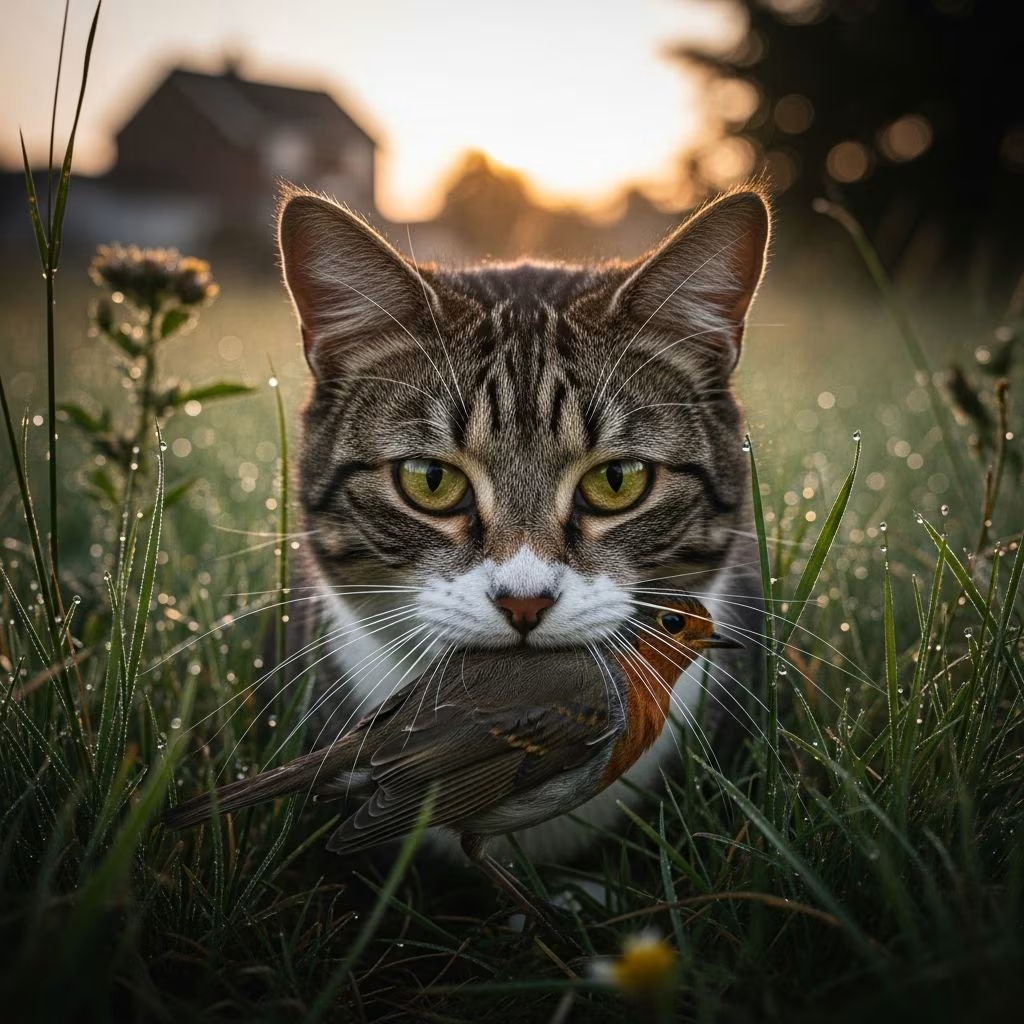
Domestic cats, beloved by millions as pets, exert a considerable influence on local ecosystems when allowed to roam freely outdoors. Free-ranging cats—including owned pets that go outside and feral cats—predate on birds, mammals, reptiles, and amphibians, contributing to wildlife declines and, in some cases, species extinctions. This article delves into the mechanisms of these impacts, supported by scientific data, and offers practical guidance for cat owners to minimize harm to local fauna.
What Makes Cats Such Effective Predators?
Cats (Felis catus) are apex predators honed by evolution for hunting. Their sharp claws, keen senses, and stalking prowess make them lethal to small wildlife. Unlike wild predators, domestic cats hunt compulsively, even when well-fed, killing billions of animals annually worldwide. In the United States alone, free-ranging cats kill 1.3–4.0 billion birds and 6.3–22.3 billion small mammals each year, surpassing other human-related mortality sources for these species.
- Compulsive hunting behavior: Cats kill for pleasure, not just sustenance, targeting prey regardless of hunger.
- 24/7 activity: Nocturnal and crepuscular patterns allow cats to exploit vulnerable wildlife at dawn, dusk, and night.
- High success rate: Cats kill over 1,000 prey items per year on average, with many consumed in the field rather than brought home.
This predatory efficiency stems from their origins as self-domesticated hunters from the Fertile Crescent, adapting globally while maintaining wild instincts.
How Many Animals Do Cats Actually Kill?
Quantifying cat predation is challenging due to varying methodologies, but peer-reviewed estimates paint a stark picture. A landmark study synthesized data showing U.S. cats responsible for 1.4–3.7 billion bird deaths and 6.9–20.7 billion mammal deaths annually, with unowned cats causing the majority. In Australia, cats kill 399 million birds, 609 million reptiles, and over 1 billion mammals yearly.
| Region | Birds Killed Annually | Mammals Killed Annually | Source |
|---|---|---|---|
| United States | 1.3–4.0 billion | 6.3–22.3 billion | |
| Australia | 399 million | 1+ billion | |
| Global Islands | Contributed to 63 extinctions | N/A |
These figures represent direct mortality, but cats also cause indirect effects like nest disturbances and behavioral changes in prey species.
Types of Prey Targeted by Cats
Cats prey on a wide spectrum of wildlife, disproportionately affecting native species. In California, 95% of birds and 100% of lizards brought home by cats were native, with native rodents declining in cat-populated areas. Common victims include songbirds, small mammals like mice and voles, amphibians, and reptiles.
- Birds: Nestlings, fledglings, and adults; cats cause 52% of bird admissions to rehab centers, with 78% mortality.
- Mammals: Rodents (native and invasive), rabbits, and opossums.
- Reptiles/Amphibians: Lizards, frogs, and snakes, critical for ecosystem balance.
- Game species: Quail, pheasants, and waterfowl, impacting hunters economically.
While cats occasionally kill invasives like house mice or pigeons, they fail to control populations effectively and shift to natives when available.
Beyond Predation: Other Impacts on Wildlife
Cats’ toll extends past killing. They spread diseases like toxoplasmosis, avian influenza, and parasites via feces and fleas, affecting wildlife, livestock, and humans. Competition for resources and fear effects alter prey behavior, reducing foraging and reproduction.
- Disease transmission: Outdoor cats proliferate fleas carrying plague and typhus.
- Habitat alteration: Feeding stations attract predators like coyotes, harming wildlife further.
- Island extinctions: Cats contributed to 63 global species losses, 14% of island bird/mammal/reptile extinctions.
Cats vs. Natural Predators: A False Equivalence
Some argue cat predation mirrors natural predators like hawks or foxes. However, cats are non-native invaders with unnatural densities—up to 10 times native predator levels—and lack natural controls. Their broad distribution amplifies impacts beyond what ecosystems evolved to handle. Unlike natives, cats receive human subsidies (food, shelter), sustaining high populations.
The Role of Feral vs. Owned Cats
Feral (unowned, wild-living) cats inflict the heaviest damage due to sheer numbers and lack of oversight. Owned cats, while fewer killers individually, multiply impacts through widespread roaming. Both groups target wildlife relentlessly. In the U.S., unowned cats drive most mortality, but pet cats’ ubiquity rivals this.
Do Cats Control Pest Populations?
A common myth: Cats curb rodents and invasives. Evidence shows otherwise—house mice thrive alongside cats, and native prey suffers more. Cats inefficiently target pests while decimating beneficial species. Rodent booms post-cat removal are temporary and manageable without sustaining cat colonies.
Urban vs. Rural Impacts
Urban cats prey more on birds in dense areas, while rural cats take mammals and game. Proximity to villages increases bird deaths (e.g., 30% of sparrows in one UK study). No environment spares wildlife from roaming cats.
Global Perspective: Islands vs. Mainland
On continents, cats contribute to declines amid habitat loss and multi-predator pressures, not sole extinction drivers. Islands, with naive prey and few predators, suffer catastrophically—cats drove multiple extinctions.
Solutions: Keeping Cats Safe and Wildlife Protected
Responsible ownership mitigates impacts without relinquishing cats.
- Keep cats indoors: Primary solution; extends cat lifespan 3–5x while zeroing predation.
- Enclosure play: Catteries or leash walks satisfy instincts safely.
- Bells/collars: Reduce kill rates by 30–50%, though not foolproof.
- Neuter/Spay Trap-Neuter-Release (TNR): Limits feral growth but sustains populations; eradication better for biodiversity.
- Laws/Support: Advocate indoor policies and wildlife-friendly communities.
Frequently Asked Questions (FAQs)
What is the annual prey tally for a single cat?
Estimates range from 14 brought home to over 1,000 total kills per year, varying by location and cat type.
Are feral cats worse than pets?
Yes, due to higher numbers and no human intervention, but owned outdoor cats still kill billions collectively.
Can bells on collars stop cats from hunting?
Bells reduce success by alerting prey, cutting kills by up to 50%, but determined cats adapt.
Do cats only kill invasives?
No—95%+ of birds/lizards are native; cats prefer or shift to them over pests.
Is keeping cats indoors cruel?
No—enriched indoor environments with toys, perches, and interaction match natural needs, boosting health and longevity.
Conclusion: Harmony for Cats and Wildlife
Cats enrich human lives, but their outdoor freedom devastates local wildlife. By transitioning to indoor living with enrichments, owners protect ecosystems without sacrificing joy. Conservation demands balancing affection with responsibility—data clearly shows the path forward.
References
- Outdoor domestic cats and wildlife: How to overrate and misinterpret — Liberg O. 2022-12-22. https://pmc.ncbi.nlm.nih.gov/articles/PMC9794845/
- Free-ranging and Feral Cats — USDA APHIS. 2023 (updated). https://www.aphis.usda.gov/sites/default/files/free-ranging-and-feral-cats.pdf
- TWS Issue Statement: Feral and Free-Ranging Domestic Cats — The Wildlife Society. 2023-05-01. https://wildlife.org/tws-issue-statement-feral-and-free-ranging-domestic-cats/
- Domestic cats and their impacts on biodiversity: A blind spot — People and Nature Journal. 2021-06-15. https://besjournals.onlinelibrary.wiley.com/doi/full/10.1002/pan3.10073
- Keep Cats Indoors — American Bird Conservancy. 2024 (accessed). https://abcbirds.org/solutions/keep-cats-indoors/



