

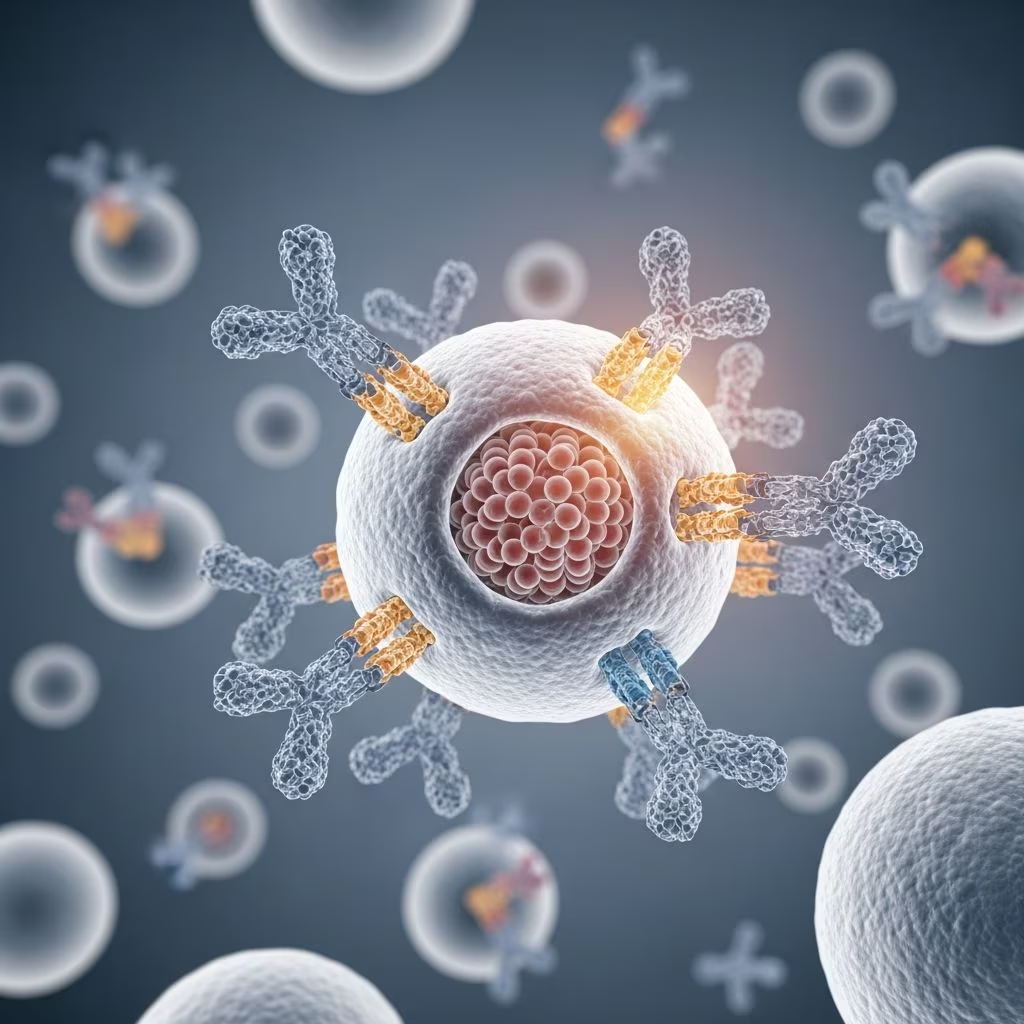
Immune-mediated neutropenia occurs when the body’s immune system mistakenly targets and destroys neutrophils, the vital white blood cells responsible for combating infections. This condition, though uncommon in veterinary practice, poses significant risks for pets, particularly dogs and cats, by increasing susceptibility to bacterial, fungal, and viral threats. Understanding its mechanisms, identification, and management is crucial for timely intervention and improved outcomes.
The Role of Neutrophils in Pet Health
Neutrophils serve as the frontline defenders in the innate immune response, rapidly responding to pathogens by engulfing and neutralizing them through phagocytosis. In healthy animals, these cells constitute 50-70% of circulating leukocytes, with bone marrow continuously producing millions daily to maintain steady levels. When neutrophil counts drop below critical thresholds—typically under 1,500 per microliter in dogs or 2,000 in cats—neutropenia ensues, impairing the ability to fight off even minor infections.
This depletion can stem from various causes, but immune-mediated forms specifically involve autoantibodies binding to neutrophil surfaces, marking them for splenic destruction or complement-mediated lysis. Unlike production deficits from toxins or marrow infiltration, this process accelerates peripheral loss, often without overt bone marrow suppression.
Primary vs. Secondary Causes of Neutropenia
Neutropenia classification hinges on whether it’s primary (idiopathic or congenital) or secondary to external factors. Immune-mediated cases often fall into secondary categories, triggered by infections, drugs, or concurrent autoimmune diseases.
- Production Failures: Bone marrow hypoplasia from viral assaults like feline leukemia virus (FeLV) or chemotherapy.
- Increased Consumption: Overwhelming sepsis where neutrophils are rapidly depleted at infection sites.
- Immune Destruction: Antibody-coated neutrophils removed by the reticuloendothelial system, as seen in Felty-like syndromes combining neutropenia, arthritis, and splenomegaly.
In pets, distinguishing these requires comprehensive evaluation, as overlapping etiologies like ehrlichiosis can mimic immune processes by both impairing production and inciting autoimmunity.
Symptoms and Clinical Presentation in Dogs and Cats
Pets with immune-mediated neutropenia often present with non-specific signs tied to recurrent infections rather than the neutropenia itself. Common manifestations include:
- Fever of unknown origin, persisting despite antibiotics.
- Severe gingivitis, oral ulcers, or periodontal disease.
- Recurrent skin abscesses, pyoderma, or wound healing delays.
- Gastrointestinal upset, including diarrhea or vomiting from enteric infections.
- In advanced cases, sepsis leading to lethargy, anorexia, and collapse.
Dogs may show concurrent thrombocytopenia or anemia if multisystem immune dysregulation is present, while cats with FeLV-associated forms exhibit cyclic neutropenia patterns. Blood smears might reveal neutrophil clumping or monocytosis as compensatory responses.
| Species | Common Signs | Frequency |
|---|---|---|
| Dogs | Fever, oral infections, skin lesions | High |
| Cats | Transient mild neutropenia post-FIV/FeLV | Moderate |
Severity correlates with absolute neutrophil counts: mild (1,000-1,500/μL) may be asymptomatic, while severe (<500/μL) demands hospitalization.
Diagnostic Approaches for Confirmation
Diagnosis begins with a complete blood count (CBC) revealing persistent neutropenia, ideally confirmed on serial samples to rule out transient causes like stress leukograms. Bone marrow aspiration assesses production reserves; hypercellular marrow with maturation arrest supports immune-mediated destruction over hypoplasia.
Advanced testing includes:
- Antineutrophil antibody assays via flow cytometry or immunofluorescence, though sensitivity varies.
- Infectious disease panels for tick-borne agents, fungal pathogens, or retroviruses.
- Imaging (radiographs, ultrasound) to exclude splenic or marrow infiltration.
Response to immunosuppressive therapy often clinches the diagnosis in idiopathic cases, as per exclusionary criteria.
Treatment Strategies and Protocols
Management prioritizes infection control alongside immune modulation. Broad-spectrum antibiotics (e.g., beta-lactams plus aminoglycosides) cover gram-negative threats during neutropenic phases. Granulocyte colony-stimulating factor (G-CSF) stimulates marrow output but risks exacerbating autoimmunity if misused.
Immunosuppressants form the cornerstone:
- Corticosteroids: Prednisone at 2-4 mg/kg/day initially, tapered based on neutrophil recovery.
- Adjuncts: Cyclosporine or mycophenolate for steroid-refractory cases.
- Splenectomy: Considered in hypersplenic sequestration with rheumatoid features.
Supportive care—fluids, nutrition, and isolation—prevents secondary complications. Most respond within 7-14 days, with monitoring via daily CBCs.
Prognosis and Long-Term Outlook
Prognosis hinges on etiology and promptness of intervention. Primary immune-mediated forms in dogs carry good prognoses with immunosuppression, achieving remission in 70-80% of cases. Cats with retroviral links face guarded outlooks due to underlying progression.
Relapses occur in 20-30%, necessitating chronic low-dose therapy. Owners must vigilantly monitor for infections, vaccinate judiciously, and avoid live agents during nadir counts.
Preventive Measures for At-Risk Pets
While idiopathic, minimizing triggers aids prevention:
- Tick control to avert ehrlichiosis-induced mimicry.
- FeLV/FIV testing and segregation in multi-cat homes.
- Drug history review before prescribing marrow-toxic agents.
Regular hematology screens in breeds prone to cyclic forms (e.g., Greyhounds) enable early detection.
FAQs on Immune-Mediated Neutropenia
What is the most common age for onset in dogs?
Typically young to middle-aged adults, though any age possible.
Can diet influence recovery?
Nutritional support bolsters marrow function, but no specific diet cures it.
Is it contagious?
No, it’s an autoimmune process, not transmissible.
How long does treatment last?
Initial intensive phase: 4-6 weeks; maintenance: months to lifelong.
What breeds are predisposed?
No strong breed links, but immune disorders cluster in some lines.
References
- Neutropenia – Hematology – Merck Manual Professional Edition — Merck Sharp & Dohme Corp. 2023. https://www.merckmanuals.com/professional/hematology-and-oncology/leukopenias/neutropenia
- Is it immune-mediated neutropenia? – DVM360 — dvm360. 2022. https://www.dvm360.com/view/it-immune-mediated-neutropenia
- Autoimmune Neutropenia: Symptoms, Causes & Diagnosis — Cleveland Clinic. 2024. https://my.clevelandclinic.org/health/diseases/23475-autoimmune-neutropenia
- Suspected immune-mediated neutropenia and corticosteroid … – PMC — National Library of Medicine. 2016-10-26. https://pmc.ncbi.nlm.nih.gov/articles/PMC5157745/
- Neutropenia – Hematology – Merck Manual Professional Edition — Merck Sharp & Dohme Corp. 2023. https://www.merckmanuals.com/professional/hematology-and-oncology/leukopenias/neutropenia



