

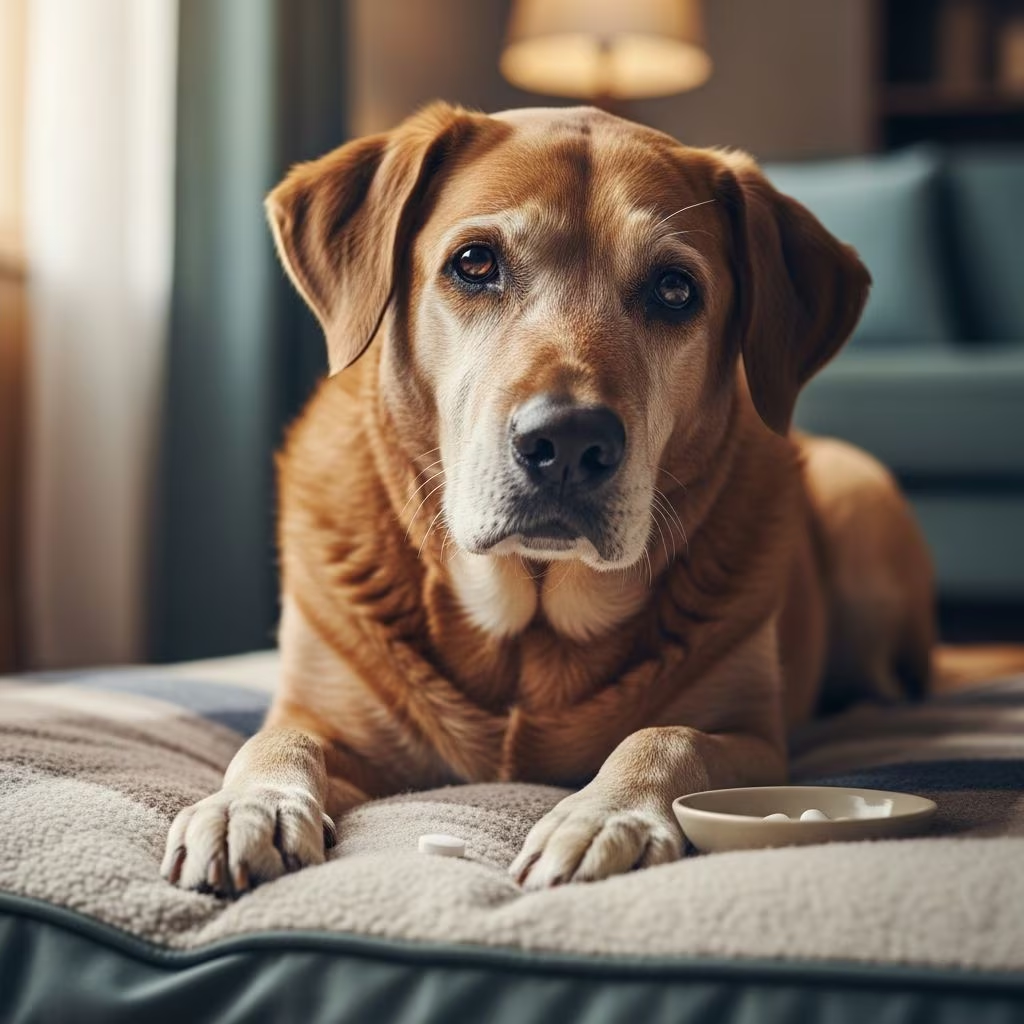
Urinary incontinence in dogs, characterized by involuntary urine leakage, affects many pets, particularly spayed females due to weakened urethral sphincters. Imipramine, a tricyclic antidepressant, offers a viable treatment by enhancing urethral tone and bladder control, providing relief where other options fall short.
Understanding Canine Urinary Incontinence
Canine urinary incontinence (UI) involves the unintentional release of urine, often during rest or sleep. This condition disrupts normal bladder function, leading to dribbling that owners notice as wet spots or skin irritation around the hindquarters. It stems from issues like urethral sphincter mechanism incompetence (USMI), the most prevalent cause in middle-aged to senior spayed females, where post-spay hormonal changes reduce alpha-adrenergic receptor sensitivity in the urethra.
Other contributors include ectopic ureters (congenital misplacement), urinary tract infections (UTIs), bladder stones, or neurological disorders. Breeds such as Boxers, Dobermans, and Old English Sheepdogs show higher susceptibility. Early signs include urine puddles after the dog rises, frequent licking of genitals, or recurrent UTIs. Diagnosis typically involves urinalysis, bloodwork, ultrasound, and sometimes contrast studies to rule out structural anomalies.
Role of Imipramine in Treatment
Imipramine hydrochloride works through multiple mechanisms: it stimulates alpha-adrenergic receptors to contract urethral smooth muscle, exhibits anticholinergic effects to relax the detrusor muscle, and provides mild local anesthesia to the bladder neck. These actions collectively improve continence in dogs with USMI or detrusor instability.
Veterinarians often prescribe imipramine when primary treatments like phenylpropanolamine (PPA) cause side effects or prove ineffective. Dosing starts at 2-4 mg/kg orally every 12 hours, adjusted based on response. Tablets come in 10mg, 25mg, and 50mg strengths, making it adaptable for various dog sizes. Improvement typically appears within days to weeks, with full effects in 4-6 weeks.
Expected Outcomes and Monitoring
Studies indicate 40-60% of dogs achieve continence on imipramine, especially females with USMI. Owners should track leakage episodes, monitor for UTIs, and report behavioral changes. Regular vet check-ups ensure dosage optimization and early detection of resistance.
Standard Medical Therapies Compared
While imipramine serves as an alternative, frontline treatments dominate due to higher efficacy. Here’s a comparison:
| Treatment | Mechanism | Efficacy | Common Side Effects | Dosing Frequency |
|---|---|---|---|---|
| Phenylpropanolamine (PPA) | Alpha-agonist, strengthens sphincter | 80-95% success | Restlessness, hypertension | Twice daily |
| Estrogens (Incurin, DES) | Upregulates receptors | 70-90% | Bone marrow suppression (rare) | Once daily |
| Imipramine | Alpha stimulation + anticholinergic | 40-60% | Sedation, dry mouth | Twice daily |
| Testosterone (males) | Hormonal support | <50% | Prostate issues | Every 1-4 weeks |
PPA leads as the gold standard, restoring continence in most cases without surgery. Combinations, like PPA with estrogen, boost success rates further.
Advanced and Surgical Interventions
For medication-refractory cases, interventional options exist. Urethral collagen injections act as bulking agents, improving closure; 66-68% of females achieve continence for 8-24 months, often needing redosing.
Artificial urethral sphincters involve implanting an adjustable silicone cuff around the urethra, connected to a port for pressure tuning. Reviews show near-complete continence in treated dogs, with minimal complications like obstruction.
Laser correction for ectopic ureters offers minimally invasive success rates exceeding traditional surgery’s 50-75%, with rapid recovery.
Emerging Regenerative Approaches
Stem cell therapy represents a breakthrough for refractory UI. In a trial supported by the AKC Canine Health Foundation, researchers at North Carolina State University injected autologous skeletal muscle stem cells around the urethral sphincter. Of 15 spayed females unresponsive to meds, 14 improved markedly, with 11 continent at two years post-injection—most at reduced medication doses.
This regenerative method addresses root muscle weakness, promising fewer side effects than lifelong drugs. Ongoing refinements may eliminate medication needs entirely.
Holistic and Supportive Care Strategies
Beyond pharmacology, supportive measures enhance outcomes:
- Pharmaceutical-free aids: Belly bands prevent household messes and skin scalding.
- Dietary adjustments: Low-protein kibble reduces urine volume; cranberry supplements deter UTIs.
- Acupuncture: Targets nerve pathways for sphincter control in select cases.
- Weight management: Obesity exacerbates pressure on the bladder.
- Scheduled outings: Frequent potty breaks minimize leakage opportunities.
Integrating these with meds like imipramine yields holistic management.
Potential Side Effects and Precautions
Imipramine’s anticholinergic properties may cause sedation, constipation, or tachycardia, particularly in cardiac-compromised dogs. Avoid in glaucoma or seizure-prone pets. Drug interactions with MAOIs or SSRIs demand vet oversight. Pregnant or lactating dogs require alternatives.
Long-term use necessitates bloodwork to monitor liver enzymes and cardiac function.
Preventive Measures for At-Risk Dogs
Delaying spay until skeletal maturity or using hormone-sparing sterilizations may lower USMI risk. Routine wellness exams catch early signs. Owners of predisposed breeds should discuss prophylaxis post-spay.
Frequently Asked Questions
Can imipramine cure incontinence permanently?
No, it manages symptoms; continence depends on ongoing therapy or adjunct procedures.
How quickly does imipramine work?
Many dogs show reduced leakage in 1-2 weeks, with peak effects by one month.
Is imipramine safe for senior dogs?
Yes, with monitoring; it’s often used when PPA intolerance arises.
What if medications fail?
Explore collagen injections, sphincters, or stem cells—success rates vary by case.
Does diet influence incontinence?
Yes, hydration control and UTI-preventive foods support treatment efficacy.
Choosing the Right Path Forward
Tailoring treatment to your dog’s profile—age, breed, incontinence type—maximizes success. Consult a veterinary specialist for complex cases. With options from imipramine to regenerative innovations, most dogs regain comfort and dignity.
References
- Urinary Incontinence in Dogs: Signs, Causes, Treatments — Best Friends Animal Society. 2023. https://bestfriends.org/pet-care-resources/urinary-incontinence-dogs-signs-causes-treatments
- Canine Urinary Incontinence — dvm360. 2022-10-01. https://www.dvm360.com/view/canine-urinary-incontinence
- Treating Canine Urinary Incontinence — Oklahoma State University. 2019-05-20. https://news.okstate.edu/articles/communications/2019/treating-canine-urinary-incontinence.html
- Urinary Incontinence in the Dog — UC Davis School of Veterinary Medicine. 2024. https://www.vetmed.ucdavis.edu/hospital/animal-health-topics/canine-incontinence
- New Treatment for Urinary Incontinence — AKC Canine Health Foundation. 2023. https://www.akcchf.org/breakthrough/new-treatment-for-urinary/
- Treating Your Dog’s Urinary Incontinence — Wedgewood Pharmacy. 2024. https://www.wedgewood.com/blog/treating-your-dog-s-urinary-incontinence/
- ACVIM consensus statement on diagnosis and management of urinary incontinence — PMC (PubMed Central). 2024-03-15. https://pmc.ncbi.nlm.nih.gov/articles/PMC10937496/



