Complete Guide to Iguana Housing Requirements
Learn essential iguana housing setup, cage requirements, heating, and environmental needs for healthy reptile pets.
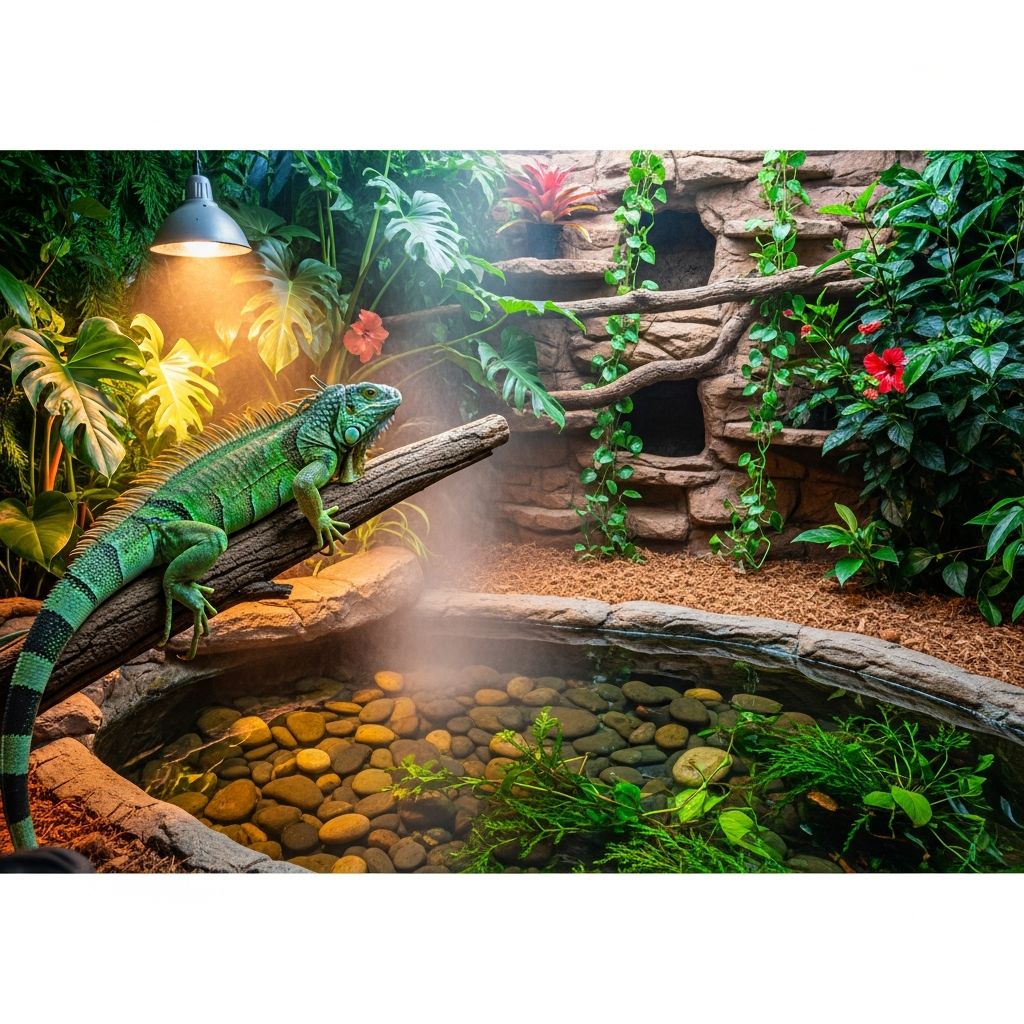
Providing appropriate housing is one of the most critical aspects of iguana care. Iguanas are large, arboreal reptiles that require specialized enclosures to thrive in captivity. Understanding the proper housing requirements, including cage size, heating, lighting, humidity, and enrichment, is essential for maintaining your iguana’s health and well-being throughout its lifespan.
What Type of Cage Does Your Iguana Require?
Selecting the right cage size is fundamental to iguana care. The appropriate enclosure size depends on your iguana’s age and expected adult size. Juvenile iguanas can start in smaller housing, but they will quickly outgrow these initial enclosures as they mature.
Cage Size for Different Life Stages
Young juvenile iguanas, typically up to 18 inches long, can begin their lives in a 10- to 20-gallon aquarium. However, this is only a temporary solution. The average adult iguana measures 3 to 5 feet in length, though larger males can reach up to 6 feet when properly fed and housed. Adult male iguanas typically weigh between 15 to 20 pounds, with some individuals exceeding this range. As your iguana grows, it must be moved to progressively larger enclosures to accommodate its expanding size and activity requirements.
Minimum Adult Enclosure Dimensions
For a single adult iguana, the minimum acceptable enclosure size is approximately 12 feet in length, 6 feet in width, and 8 feet in height. However, larger enclosures are strongly recommended whenever possible. The most critical aspect of iguana housing is providing both horizontal and vertical space. Iguanas need horizontal areas for walking, exploring, eating, drinking, and defecating, as well as vertical areas for climbing and basking.
Enclosure Construction Options
Many commercially available cages are inadequate for tree-dwelling iguanas. Custom-built enclosures with ramps, shelves, and climbable branches are preferred by serious iguana keepers. Some dedicated owners even convert entire rooms or large closets into iguana habitats to provide sufficient space. This approach allows for optimal environmental control and enrichment opportunities while accommodating the iguana’s substantial size and climbing behavior.
Essential Cage Features and Design
Beyond size, your iguana’s enclosure requires specific features to ensure comfort, safety, and proper health maintenance.
Cage Bottom and Cleaning
The cage bottom must be easy to disinfect and should be cleaned every few days. This regular maintenance prevents the accumulation of waste and reduces the risk of bacterial infections and parasites. A screened top is essential to prevent escape while allowing adequate ventilation throughout the enclosure.
Preventing Nose Damage
As iguanas explore their environment, they may rub or strike their nose on glass surfaces, causing sores and injuries. To prevent this problem, place a visual barrier such as dark-colored duct tape at the pet’s eye level around the lower perimeter of glass or Plexiglas enclosures. This simple modification significantly reduces stress-related injuries and improves your iguana’s well-being.
Bedding and Substrate Selection
Choosing appropriate bedding material is crucial for maintaining a healthy enclosure environment. Substrate must be non-toxic and easy to clean and disinfect.
Recommended Bedding Materials
Suitable substrates for the cage floor include newspaper, butcher paper, commercially available recycled paper pellets, and artificial grass designed specifically for reptiles, commonly called ”reptile carpet.” These materials are safe, easy to maintain, and promote good hygiene within the enclosure.
Materials to Avoid
Certain bedding materials pose serious health risks to iguanas. Avoid sand, gravel, wood shavings, corn cob material, walnut shells, and cat litter, as these are difficult to clean and are indigestible if consumed, potentially leading to dangerous gastrointestinal tract obstructions. Never use cedar wood shavings, as the aromatic oils are toxic to reptiles. If you use reptile carpet, maintain an extra piece available so you can rotate it during cleaning.
Heating and Temperature Requirements
Proper temperature maintenance is vital for iguana health, metabolism, and immune function. Iguanas are ectothermic reptiles that rely on environmental heat sources to regulate their body temperature.
Placement of Heat Sources
Heating elements and ultraviolet lights should be positioned 10 to 12 inches away from the top of the cage to prevent thermal burns. Large rocks in the cage can also serve as basking surfaces, allowing iguanas to absorb heat and regulate their body temperature effectively.
Nighttime Temperature Management
During nighttime hours, UV and heat lamps may be turned off provided the enclosure temperature does not fall below 65°F to 70°F (18°C to 24°C). If cage temperature drops below this critical threshold, especially during winter months in cold climates, additional heating is necessary. When an iguana’s body temperature dips below 65°F, their metabolism and digestive mechanisms slow significantly, and their immune system becomes susceptible to infectious organisms.
Outdoor Sunlight Exposure
Regular exposure to direct sunlight is ideal for iguanas when outdoor temperatures exceed 80°F. Outdoor time provides natural, unfiltered UV exposure that artificial lighting cannot completely replicate, promoting optimal calcium metabolism and overall health.
Ultraviolet Light Requirements
Ultraviolet-B (UVB) lighting is essential for iguana survival and health. UVB light enables iguanas to metabolize calcium, which is critical for bone health and proper physiological function. Without adequate UVB exposure, iguanas develop metabolic bone disease, a serious and potentially fatal condition.
UV Light Placement and Duration
Position UV lights appropriately within the enclosure to provide your iguana with adequate exposure for basking and climbing activities. The lights should be part of a regular day-night cycle, typically providing 10 to 12 hours of light and heat daily, with night periods allowing for natural rest cycles.
Humidity and Moisture Considerations
Maintaining appropriate humidity levels is essential for iguana health and comfort. Iguanas require at least 60% humidity, with 70% to 90% being preferred for optimal health. Humidity supports respiratory function, aids shedding, and maintains overall physiological well-being.
Increasing Enclosure Humidity
You can increase your iguana’s habitat humidity by adding a pool of water to the enclosure. Regular misting of the enclosure and plants also helps maintain appropriate moisture levels. Live, non-toxic plants not only provide hiding places but also contribute to humidity management through transpiration.
Enrichment and Hiding Places
Iguanas require environmental enrichment to maintain psychological health and promote natural behaviors. Iguanas typically love a place to hide, providing security and comfort in their habitat.
Enrichment Options
Artificial plants or live, non-toxic plants can be arranged to create hiding places and climbing opportunities. Additional enrichment items include clay pots, cardboard boxes, large pieces of bark, split hollow logs, and other containers that allow your iguana to express natural behaviors. Branches and vines for climbing provide both physical exercise and psychological stimulation, benefiting your pet’s overall well-being.
Housing Multiple Iguanas
Iguanas are highly territorial animals and are best kept alone, particularly males. If you wish to house multiple iguanas together, you must provide a proportionally larger enclosure. However, even in spacious enclosures, there is always the risk of cage-mate aggression, which can result in severe injuries. Males should never be housed together under any circumstances.
Free-Roaming Considerations
While iguanas are large, active lizards requiring substantial activity, free-roaming throughout your home like a dog or cat is not recommended. Even with a proper enclosure, iguanas still have specific temperature, humidity, and UVB lighting needs that can only be maintained within their dedicated habitat. The majority of your iguana’s time should be spent in an appropriately-sized and furnished enclosure that meets all environmental requirements.
Frequently Asked Questions About Iguana Housing
Q: Can I house a young iguana in an aquarium?
A: Yes, juvenile iguanas can temporarily be housed in 10- to 20-gallon aquariums, but they will outgrow these small spaces rapidly. Plan to upgrade to a larger custom enclosure as your iguana grows, with adult iguanas requiring enclosures of at least 12 feet long, 6 feet wide, and 8 feet tall.
Q: What is the ideal humidity level for iguanas?
A: Iguanas require at least 60% humidity, with 70% to 90% being ideal for optimal health. You can maintain proper humidity by adding water features, misting the enclosure, and including live plants in the habitat.
Q: Why is UVB lighting important for iguanas?
A: UVB light is essential for iguanas to metabolize calcium properly. Without adequate UVB exposure, iguanas develop metabolic bone disease, a serious condition that can affect their skeletal health and overall survival.
Q: What temperature should my iguana’s enclosure maintain?
A: During the day, maintain basking spots at around 85°F to 90°F with cooler spots around 80°F. At night, the temperature should not fall below 65°F to 70°F. If your cage temperature drops below this range, provide additional heating to maintain your iguana’s metabolism and immune function.
Q: How often should I clean the iguana’s cage?
A: The cage bottom should be cleaned every few days to prevent the accumulation of waste and maintain a hygienic environment. Regular cleaning reduces the risk of bacterial infections and parasites.
Q: Can I use cedar shavings as bedding for my iguana?
A: No, cedar shavings should never be used as reptile bedding. The aromatic oils on cedar shavings are toxic to reptiles and can cause serious health problems. Use newspaper, butcher paper, recycled paper pellets, or reptile carpet instead.
Q: Should I provide hiding places in my iguana’s enclosure?
A: Yes, iguanas typically love places to hide, which provide security and comfort. Arrange artificial or live non-toxic plants, clay pots, cardboard boxes, or hollow logs to create suitable hiding areas in your iguana’s habitat.
References
- Housing Pet Iguanas — VCA Animal Hospitals. https://vcahospitals.com/know-your-pet/iguanas-housing
- Iguana as a Pet: Everything You Should Know — Total Pet Care / Dallas Vets. 2023-09-15. https://www.totalpetcare.net/site/blog/2023/09/15/iguana-pet
- Everything You Should Know about Pet Iguanas — Cerbat Cliffs / Kingman Exotic Pet. 2022-12-26. https://www.cerbatcliffs.com/site/blog/2022/12/26/everything-know-pet-iguanas
- Green Iguana Care Sheet — ReptiFiles. https://reptifiles.com/green-iguana-care-sheet/
- Iguana Care Tips — Bird Exotics Vet / Long Island Bird & Exotics. https://www.birdexoticsvet.com/iguana-care-tips
- BASIC IGUANA CARE SHEET — Colorado Reptile Humane Society. https://www.corhs.org/
Similar Articles






Read full bio of Sneha Tete