

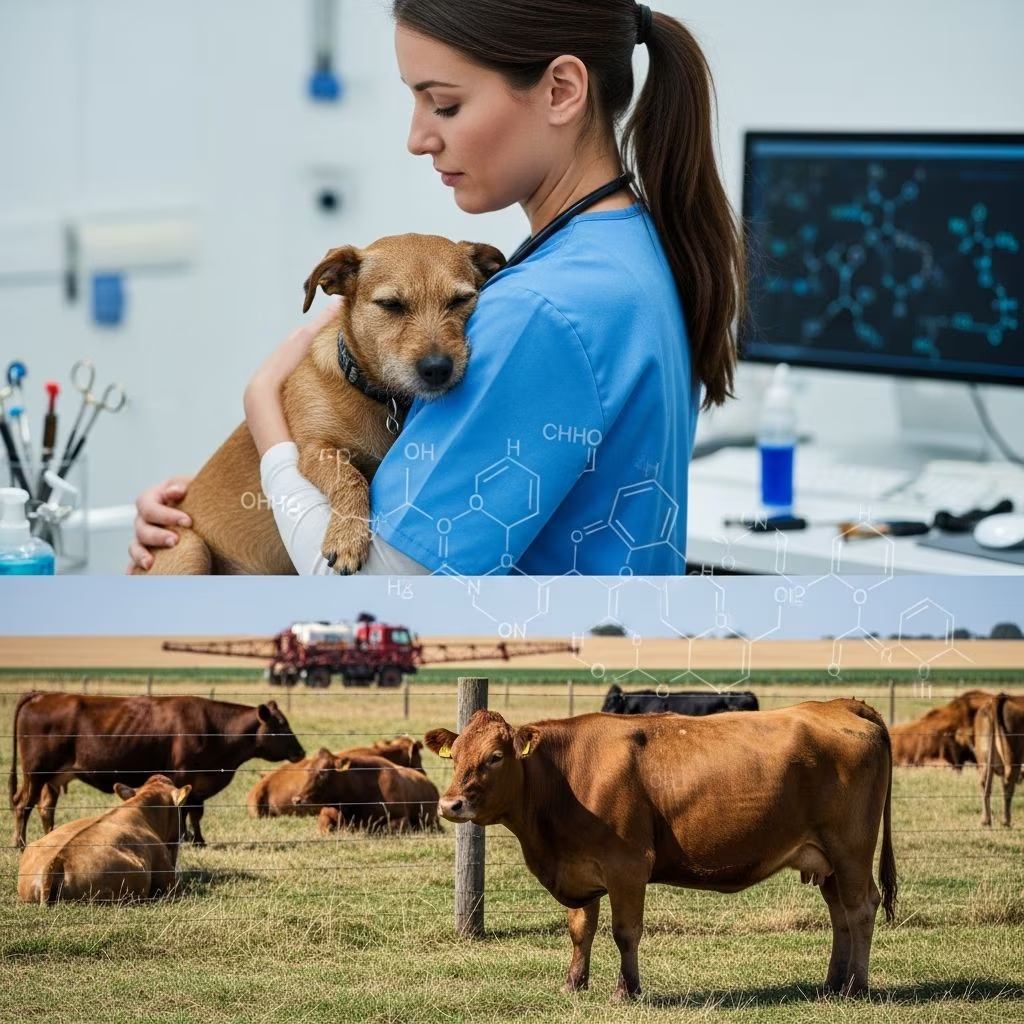
Insect growth regulators (IGRs) represent a class of pest control agents designed to disrupt the developmental processes unique to insects, offering a safer alternative to traditional broad-spectrum insecticides for use in veterinary medicine. These compounds primarily target juvenile stages of pests like fleas, flies, and mites, preventing maturation and reproduction without posing significant threats to mammalian hosts due to fundamental biological differences.
How Insect Growth Regulators Work Against Pests
IGRs mimic or interfere with natural hormones that govern insect molting, growth, and reproduction. Unlike conventional pesticides that kill on contact, IGRs exert their effects subtly over time by halting the transformation from larva to viable adult. This targeted approach exploits the absence of analogous hormonal pathways in vertebrates, ensuring high selectivity.
Key mechanisms include juvenile hormone analogs, which prolong the larval phase indefinitely, and chitin synthesis blockers, which impair exoskeleton formation during molts. For instance, exposure during early life stages leads to malformed pupae incapable of emerging as reproductive adults, effectively breaking pest life cycles.
Main Categories of IGRs in Animal Applications
Veterinary IGRs fall into two primary groups: juvenile hormone mimics and chitin inhibitors. Each category serves specific pest control needs in companion animals and livestock.
Juvenile Hormone Mimics
These synthetic compounds replicate the structure and function of insect juvenile hormones, which normally prevent premature metamorphosis. By overstimulating this system, mimics ensure insects remain in non-reproductive juvenile forms.
- Methoprene: A widely used racemic mixture where the S-enantiomer drives activity. Applied topically in flea preventives, it passes through host blood to fleas, sterilizing eggs and larvae.
- Hydroprene: Similar to methoprene, with comparable safety margins and efficacy against developing insects.
- Pyriproxyfen: Potent against fleas, ants, and roaches, affecting embryos, larvae, and adult reproduction by blocking normal development.
Chitin Synthesis Inhibitors
Chitin forms the rigid exoskeleton essential for insect survival. Inhibitors disrupt its production, causing fatal deformities during molting.
- Diflubenzuron: Employed in cattle fly larvicides and mosquito control, it induces early molting without proper shell formation, lethal only to larvae.
- Lufenuron: Oral or injectable for cats and dogs, accumulates in fat and transfers to fleas via blood or feces, preventing larval exoskeleton development and causing dehydration death.
Safety Profiles Across Common IGR Compounds
Extensive toxicity testing underscores the low risk of IGRs to mammals. Acute oral LD50 values consistently exceed 2,000–10,000 mg/kg in rats, mice, dogs, and rabbits, far above environmental or therapeutic exposure levels.
| Compound | Acute Oral LD50 (mg/kg) | Target Species Safety Notes |
|---|---|---|
| Methoprene (S-enantiomer) | >5,000 (rats); 5,000–10,000 (dogs) | No topical reactions in dogs; mucous membrane irritant at high doses |
| Hydroprene | >5,000 (rats) | Profile mirrors methoprene |
| Pyriproxyfen | >5,000 | Liver effects and anemia only at extreme doses |
| Diflubenzuron | >4,600 (rats/mice) | No adult insect toxicity; safe larvicide |
| Lufenuron | >2,000 (rats/mice) | Non-irritating; monthly oral in cats |
Dermal LD50s surpass 2,000 mg/kg, indicating negligible skin absorption risks. Inhalation or ingestion hazards are minimal under labeled use, though direct exposure may cause mild respiratory or gastrointestinal irritation.
Potential Adverse Effects and Clinical Signs
While mammalian toxicity is rare, overexposure scenarios warrant awareness. High-dose experimental studies reveal reversible effects like elevated liver enzymes or cholesterol shifts, but these thresholds dwarf practical applications.
In pets, improper product misuse—such as applying dog formulations to cats—heightens risks, though IGRs themselves remain benign compared to synergized pyrethroids or organophosphates. Observed signs, if any, include transient salivation, lethargy, or dermatitis, resolving without intervention.
Veterinary Uses and Administration Guidelines
IGRs integrate into comprehensive parasite control programs for dogs, cats, and livestock.
- Flea Control: Lufenuron orally monthly for cats; pyriproxyfen in spot-ons for multi-species efficacy.
- Livestock Fly Management: Diflubenzuron in feed additives targets manure-breeding larvae.
- Combination Products: Paired with adulticides like fipronil for complete life-cycle coverage, maintaining safety via complementary mechanisms.
Dosing adheres to weight-based schedules, with injections (e.g., lufenuron every 6 months) offering convenience for non-compliant patients.
Diagnosis of Suspected IGR Overexposure
Confirming IGR toxicosis relies on history of exposure, clinical exclusion of other insecticides, and analytical confirmation. Blood or tissue assays detect residues, though clinical signs are often absent. Differential diagnoses include pyrethroid hypersensitivity or organophosphate cholinesterase inhibition.
Management and Treatment Strategies
Supportive care suffices for rare cases: decontamination via bathing, activated charcoal for ingestions, and monitoring vital signs. No specific antidotes exist, reflecting low toxicity. Prognosis excels with prompt veterinary attention.
Preventive Measures for Pet Owners and Farmers
To minimize risks:
- Follow label instructions precisely, avoiding off-label species use.
- Store products securely away from children and pets.
- Integrate IGRs with environmental sanitation and IPM principles.
- Consult veterinarians for tailored regimens, especially in multi-pet homes.
Research Insights and Future Directions
Ongoing studies affirm IGR safety, with peer-reviewed data highlighting 700–1300-fold insect selectivity over mammals. Emerging formulations enhance duration and spectrum, promising refined ectoparasite control.
Frequently Asked Questions (FAQs)
Are IGRs safe for pregnant animals?
Yes, low systemic absorption and high LD50s indicate safety; however, veterinary approval is recommended.
Can IGRs kill adult fleas?
No, they target immatures; combine with adulticides for full control.
What if my pet licks IGR spot-on treatment?
Mild GI upset possible but unlikely toxic; monitor and contact vet if concerned.
How long do IGR effects last in the environment?
Varies by compound; methoprene persists weeks in treated areas, aiding ongoing control.
Do IGRs affect beneficial insects?
Selective for target pests; minimal impact on pollinators at labeled rates.
IGR technology exemplifies precision pest management, balancing efficacy with animal welfare. By disrupting insect-specific biology, these agents safeguard health without compromising safety.
References
- Insect Growth and Development Regulator Toxicosis in Animals — Merck Veterinary Manual. 2026. https://www.merckvetmanual.com/toxicology/insecticide-and-acaricide-organic-toxicity/insect-growth-and-development-regulator-toxicosis-in-animals
- Safety of Fipronil in Dogs and Cats: a review of literature — Australian Pesticides and Veterinary Medicines Authority (APVMA). 2003. https://www.apvma.gov.au/sites/default/files/fipronil-phase-5-prf-vol2-animal-safety-literature_0.pdf
- Insecticide Poisoning — MSD Veterinary Manual. 2026. https://www.msdvetmanual.com/special-pet-topics/poisoning/insecticide-poisoning
- Pesticide and Insecticide Poisoning in Dogs — PetMD. 2026. https://www.petmd.com/dog/poisoning/insecticide-poisoning-dogs
- Ectoparasiticides Used in Small Animals — Merck Veterinary Manual. 2026. https://www.merckvetmanual.com/pharmacology/ectoparasiticides/ectoparasiticides-used-in-small-animals
- Toxicology of Newer Insecticides in Small Animals — PubMed (NCBI). 2018-08-24. https://pubmed.ncbi.nlm.nih.gov/30149970/



