

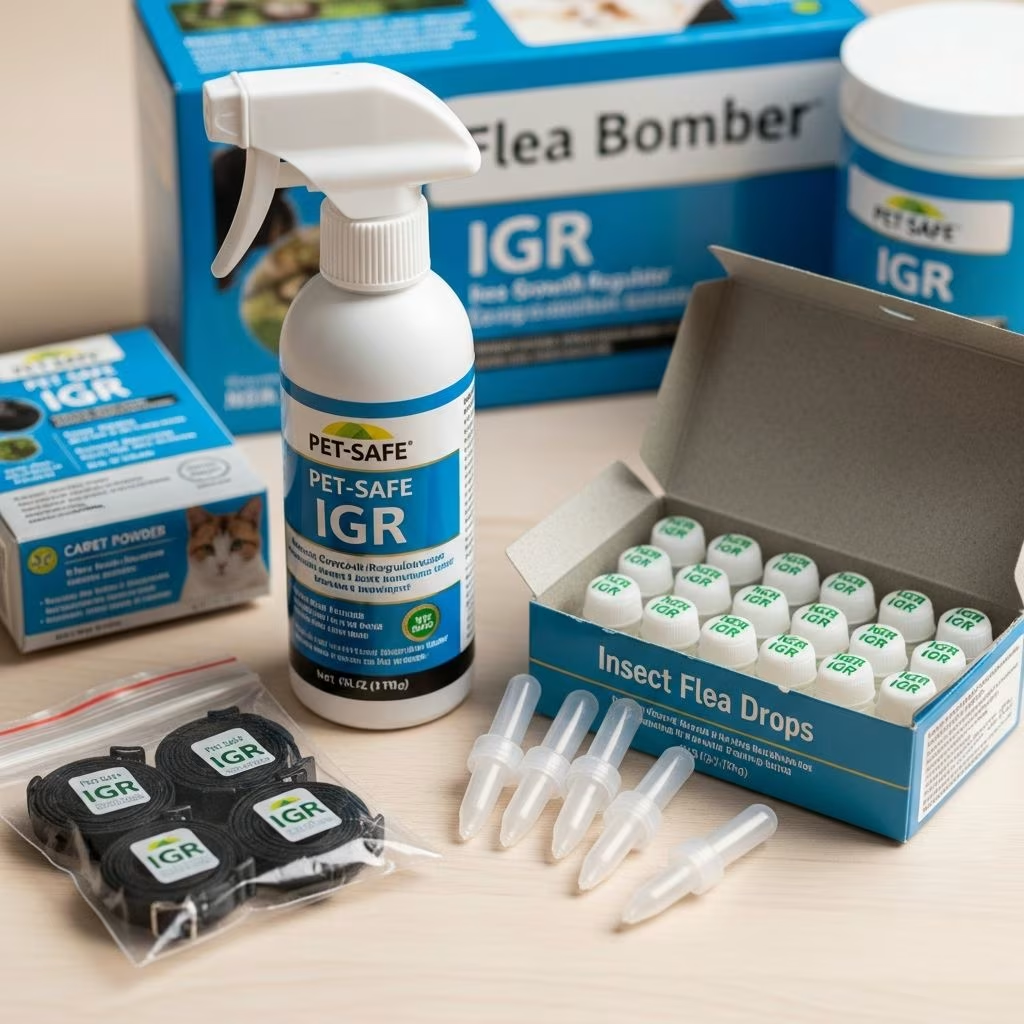
Insect growth regulators (IGRs) represent a cornerstone in modern flea management, offering a targeted approach to breaking the flea’s complex lifecycle. Unlike traditional insecticides that primarily eliminate adult fleas, IGRs focus on immature stages—eggs, larvae, and pupae—preventing them from maturing into biting adults. This strategy ensures prolonged protection for pets, households, and environments, minimizing reinfestations that plague conventional treatments.
Understanding the Flea Lifecycle Challenge
Fleas undergo complete metamorphosis, progressing through egg, larva, pupa, and adult stages. Adult fleas, which comprise only about 5% of an infestation, feed on pets and lay eggs that fall into surroundings. These eggs hatch into larvae that feed on organic debris and flea feces, then spin cocoons as pupae, emerging as adults when conditions are favorable. This resilience allows populations to rebound quickly without intervention at early stages.
Disrupting this cycle requires precision. IGRs interfere with hormonal processes unique to insects, halting development without posing risks to mammals. They mimic or block juvenile hormones, ensuring eggs fail to hatch, larvae cannot molt, or pupae remain trapped in cocoons.
How Insect Growth Regulators Function
IGRs operate by mimicking insect hormones, specifically juvenile hormones that regulate growth and maturation. Exposure causes developmental abnormalities: eggs may not hatch, larvae remain stunted and unable to feed properly, and pupae fail to eclose into adults. This indirect lethality targets reproduction and growth rather than immediate kill, providing residual effects lasting months.
| IGR Effect | Target Stage | Outcome |
|---|---|---|
| Prevents egg hatch | Eggs | No larvae develop |
| Inhibits molting | Larvae | Immature death |
| Blocks emergence | Pupae | No adults form |
| Sterilizes adults | Adults (some IGRs) | No viable eggs |
Studies confirm high efficacy; for instance, formulations with pyriproxyfen and methoprene achieve over 80% reduction in adult emergence for up to seven months on treated surfaces.
Key Types of IGRs for Flea Management
Several IGR classes excel against fleas, categorized by mechanism.
- Juvenile Hormone Analogues (JHAs): Such as methoprene and pyriproxyfen. Methoprene exhibits larvicidal and ovicidal properties, preventing egg hatch and larval growth. Pyriproxyfen similarly targets eggs and juveniles, with prolonged exposure potentially affecting adults.
- Chitin Synthesis Inhibitors: Like lufenuron, which disrupts exoskeleton formation during molting. Administered orally or injectably, it reduces adult emergence by 90% for over six months.
- Other Regulators: Fenoxycarb provides extended residual control, maintaining efficacy against larvae for months in environmental applications.
These compounds are formulated into sprays, foggers, spot-ons, and oral treatments, often combined for comprehensive coverage.
IGR Products for Pets: Top Choices and Applications
For direct pet treatment, IGRs integrate into spot-on formulations like those containing methoprene (e.g., the ‘Plus’ in certain brands) or pyriproxyfen. These apply monthly to the skin, distributing via oils to kill fleas on contact while regulating growth in the environment from shed eggs.
Oral lufenuron offers systemic protection, incorporated into the pet’s tissues to affect feeding fleas’ offspring. Injectable versions provide long-term suppression, ideal for heavy infestations. Combining IGRs with adulticides like fipronil, imidacloprid, or nitenpyram ensures rapid adult kill alongside future prevention.
In multi-pet homes, treat all animals simultaneously to curb cross-infestation. For kittens over 8 weeks and weighing more than 1 kg, spot-on pyriproxyfen products prevent 100% egg hatch for seven weeks.
Environmental IGR Strategies for Homes and Yards
Indoor hotspots—carpets, bedding, cracks—harbor 95% of flea life stages. Total release aerosols with IGRs like fenoxycarb or pyriproxyfen penetrate fibers, inhibiting larvae for months. Vacuuming beforehand enhances efficacy by exposing hidden stages.
A dual approach pairs IGRs with adulticides: insecticides provide immediate relief, while IGRs safeguard against survivors and new hatches. This method outperforms standalone insecticides, as IGR residuals catch missed fleas.
Outdoor treatments focus on shaded, moist areas using IGR sprays. Regular applications every 3-6 months maintain control, especially in warm climates.
Safety Profile: Why IGRs Suit Pets and Families
IGRs’ specificity to insect physiology ensures low mammalian toxicity. They lack impact on human or pet hormones, earning EPA approval for household use. Products are safe around children and pregnant animals when labels are followed.
Side effects are rare, typically mild skin irritation from carriers. Studies affirm no systemic absorption risks in cats or dogs at recommended doses. Always consult veterinarians for breed-specific advice, like avoiding certain topicals in collies.
Implementing a Complete Flea Control Protocol
- Assess Infestation: Check pets and environments for signs like itching or flea dirt.
- Treat Pets: Apply IGR-adulticide combo monthly.
- Environment Clean: Vacuum daily, wash bedding, deploy IGR foggers.
- Monitor Progress: Flea combs verify reduction; full control takes 8 weeks with IGRs alone.
- Prevent Reinfestation: Year-round prevention in endemic areas.
For allergic pets, rapid adulticides like nitenpyram pair with lufenuron to minimize bites and hypersensitivity.
Common Myths and Facts About IGRs
- Myth: IGRs kill adults instantly. Fact: They target juveniles; pair with adulticides.
- Myth: Natural remedies suffice. Fact: Studies debunk efficacy of yeast, garlic, or ultrasonics.
- Myth: One treatment ends fleas. Fact: Pupae delay emergence; sustain efforts.
Frequently Asked Questions (FAQs)
Are IGRs safe for pregnant pets?
Yes, most are, but verify product labels and vet approval.
How long until I see results?
Adult kill is fast with combos; full cycle disruption in 1-2 months.
Can I use IGRs outdoors?
Yes, on lawns and patios per instructions.
Do IGRs work on ticks?
No, they target fleas specifically; use separate products.
What’s the best IGR for cats?
Pyriproxyfen or lufenuron spot-ons/injectables show 90-100% efficacy.
Advanced Tips for Persistent Infestations
In severe cases, integrate nitenpyram for 24-48 hour kill with monthly IGRs. Environmental rotation of IGR types prevents resistance. Professional pest services employ high-concentration aerosols for deep carpet penetration.
Track efficacy with flea counts pre/post-treatment. If populations persist, reassess compliance or underlying issues like wildlife reservoirs.
References
- Insect Growth Regulators Mean Longer Flea Control — Colonial Pest Control. 2017-07-03. https://www.colonialpest.com/2017/07/03/insect-growth-regulators-mean-longer-flea-control/
- My Favorite Hack in the War Against Insect Pests — Savvy Pet Care. N/A. https://savvypetcare.com/best-pest-hack-insect-growth-regulator/
- Residual Effectiveness of Insect Growth Regulators Applied to Carpet Against Cat Flea (Siphonaptera: Pulicidae) Larvae — Journal of Economic Entomology, Oxford Academic. 1995. https://academic.oup.com/jee/article-abstract/88/4/903/806478
- Flea Control in Cats: New concepts and the current armoury — PMC / National Center for Biotechnology Information. 2024. https://pmc.ncbi.nlm.nih.gov/articles/PMC10816492/
- Insect Growth Regulators (IGRs) — National Pesticide Information Center, Oregon State University. N/A. https://npic.orst.edu/ingred/ptype/igr.html



