

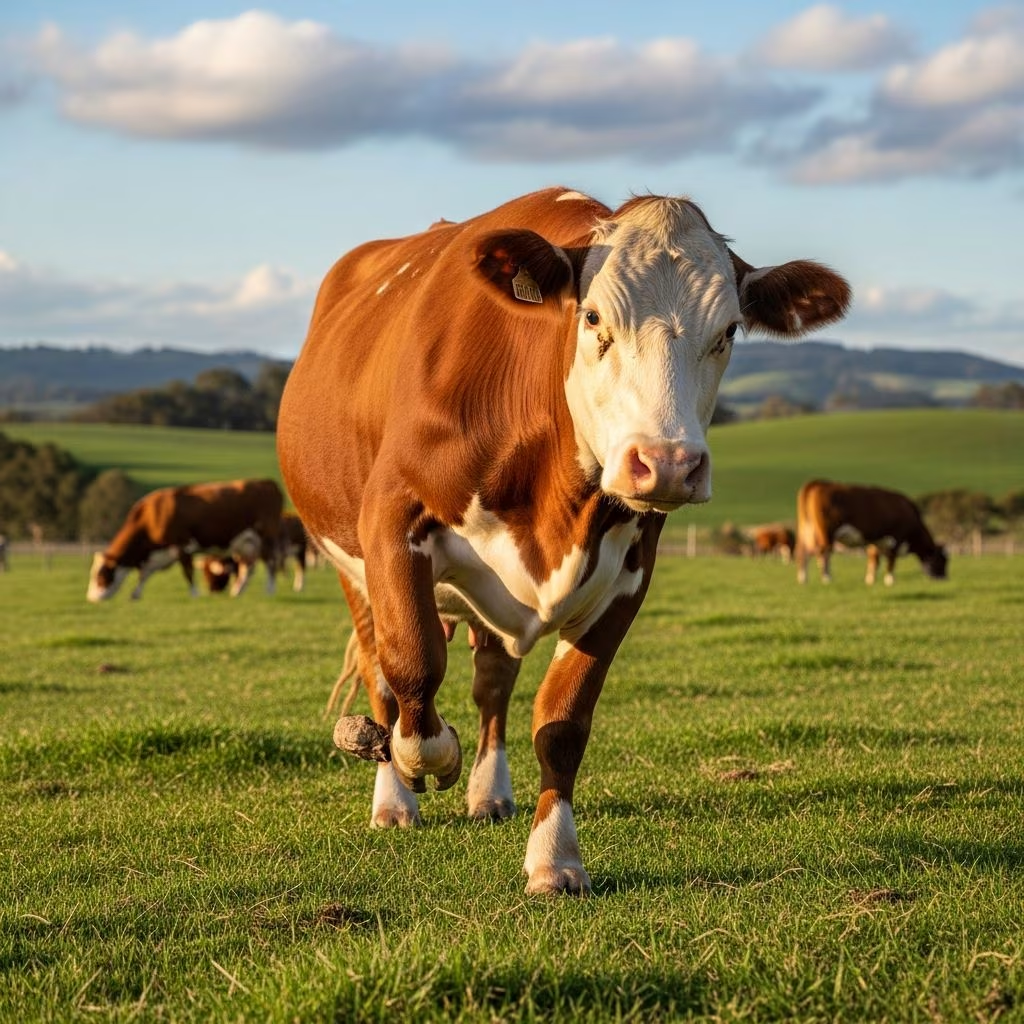
Movement difficulties in cattle represent one of the most prevalent health challenges affecting both beef and dairy operations. When cattle experience pain or discomfort affecting their limbs or hooves, their gait and posture change noticeably. Recognizing these changes early enables farmers and veterinarians to intervene promptly, reducing animal suffering and economic losses. This guide explores the methods and systems used to identify movement problems in cattle populations.
Understanding the Importance of Early Recognition
Cattle that experience movement difficulties often show altered walking patterns before more severe clinical signs appear. By identifying these subtle changes, producers can implement treatment strategies before conditions worsen. The financial impact of undetected movement problems extends beyond treatment costs, affecting milk production in dairy herds, weight gain in beef cattle, and overall reproductive performance.
Movement problems also compromise animal welfare, causing chronic pain that affects behavior, feeding patterns, and social interactions within the herd. Early detection transforms management outcomes, allowing for targeted interventions that restore mobility and comfort.
Visual Observation: The Foundation of Assessment
The primary method for identifying movement problems in cattle relies on careful visual observation of how animals walk and stand. This foundational approach requires understanding normal cattle movement and recognizing deviations that suggest discomfort or pain.
For accurate assessment, cattle should be observed while walking under consistent conditions. The ideal evaluation environment includes:
- A flat, obstacle-free walking surface
- Minimal slopes, steps, or turns that might alter natural gait
- Observation of at least four consecutive complete walking strides
- Consistent lighting and minimal distractions
- A clear viewing angle to assess body position and limb movement
Observers should watch for changes in stride length, weight distribution, and the smoothness of movement. Cattle with movement problems often display shortened strides, uneven weight-bearing, or altered body posture while walking.
Posture Assessment During Rest and Standing
Movement problems manifest not only during walking but also when cattle stand still or rest. Abnormal posture can indicate underlying pain or structural issues affecting the limbs or hooves.
Key postural indicators include:
- Unequal weight distribution between front or back limbs
- Reluctance to bear weight on specific legs
- Abnormal positioning of feet while standing
- Changes in spinal curvature or rounding of the back
- Neck tension or head position abnormalities
For tie-stall dairy herds, assessment can also occur while cattle remain in their stalls, evaluating posture and movement within this confined space. This approach offers practical advantages in large operations where gathering animals for walking assessment proves labor-intensive.
Locomotion Scoring Systems: Standardized Evaluation Methods
Veterinarians and producers use multiple locomotion scoring systems to provide objective, consistent assessment across herds and over time. These systems translate visual observations into numerical scores that standardize communication and track changes in individual animals and herd health.
Key Elements of Scoring Systems
Locomotion scoring systems evaluate cattle while walking and standing, comparing their movement patterns against established standards. Different systems may emphasize various aspects of gait and posture, but all aim to identify deviations from normal mobility.
The scoring process involves:
- Observing the animal during active movement over a defined distance
- Assessing standing posture and weight-bearing distribution
- Recording observations using a standardized numerical scale
- Comparing individual animals to herd baselines
- Tracking changes over time to monitor progression or improvement
Application in Different Herd Management Systems
Locomotion scoring protocols vary slightly depending on whether cattle are evaluated in pasture systems, free-stall barns, or tie-stall facilities. Each environment presents unique challenges for consistent observation.
In pasture-based systems, cattle may be gathered in handling facilities where they can walk freely on appropriate surfaces. Free-stall barns allow observation of cattle moving through feeding and housing areas. Tie-stall operations require assessment while animals stand in stalls or during brief movement periods.
Physical Examination and Diagnostic Procedures
Beyond visual gait assessment, veterinarians conduct detailed physical examinations to identify the specific cause of movement problems. This systematic approach helps pinpoint whether issues originate in the hoof, lower leg, upper limb, or systemic conditions.
Hoof and Lower Limb Evaluation
The majority of movement problems in cattle originate from hoof or lower leg structures. Physical examination of these areas includes:
- Inspection of hoof shape, wear patterns, and surface condition
- Palpation for heat, swelling, or sensitivity
- Assessment of hoof moisture and horn quality
- Evaluation of interdigital space between hooves
- Examination for signs of infection or inflammation
Upper Limb and Systemic Assessment
When hoof examination reveals no obvious abnormalities, evaluation extends to upper leg structures and systemic conditions. Veterinarians assess joint mobility, muscle tone, and neurological function. They may also evaluate overall body condition, fever presence, and other systemic signs suggesting underlying disease.
Modern Technological Approaches to Lameness Detection
Recent advances in agricultural technology offer promising alternatives and supplements to traditional visual assessment. These methods provide objective data and enable monitoring of larger populations with reduced labor requirements.
Computer Vision and Image Analysis
Advanced imaging technologies analyze cattle movement patterns using video cameras and depth sensors. These systems identify specific anatomical landmarks on the cow’s body and track their movement during walking, extracting quantitative features such as stride length, back arch curvature, and movement asymmetry. Computer vision-based approaches offer non-contact monitoring capabilities, allowing simultaneous assessment of multiple animals and easy integration with existing farm infrastructure.
Recent research demonstrates that systems measuring back curvature, head oscillation, and movement symmetry can classify cattle into multiple lameness categories with accuracy exceeding 90%. These systems automatically transfer and analyze results alongside milk production data, functioning as continuous assessment by a movement expert.
Accelerometer Technology
Wearable accelerometer devices attached to individual animals measure movement patterns and activity levels with high precision. Research indicates that low-resolution accelerometers (operating below 100 Hz frequency) could provide accurate, cost-effective automation of movement problem detection. Experts recommend systems achieving 90 percent sensitivity and 99 percent specificity rates, which would minimize false identifications while maintaining practical utility for farm management.
Thermal Imaging
Infrared thermal imaging captures heat distribution patterns in cattle hooves and limbs. Research shows that cattle with movement problems exhibit significantly higher hoof temperatures than healthy counterparts, with temperature variations correlating strongly with clinical assessment scores. This non-invasive approach requires no direct animal contact, making it practical for rapid herd screening.
Implementing a Herd-Based Assessment Strategy
Successful identification of movement problems requires systematic, routine evaluation rather than sporadic observation. Establishing protocols ensures consistent assessment and enables tracking of herd trends.
Routine Monitoring Components
Regular herd assessment should include:
- Scheduled visual observation of all animals at defined intervals
- Standardized scoring using established systems
- Documentation of individual animal scores and trends
- Routine hoof trimming and maintenance programs
- Environmental audits identifying risk factors (flooring, stall design, facilities)
Combining Multiple Assessment Methods
The most effective approach integrates traditional visual observation with selected modern technologies. While new technologies offer advantages in objectivity and labor efficiency, they work best alongside experienced visual assessment. This combined approach provides comprehensive information supporting management decisions.
Key Considerations for Accurate Assessment
Several factors influence the reliability and usefulness of movement problem identification efforts:
| Factor | Impact on Assessment | Management Approach |
|---|---|---|
| Observer Experience | Affects consistency and accuracy of visual scoring | Provide training and regular calibration sessions |
| Environmental Conditions | Influences how cattle move and appear during evaluation | Standardize walking surfaces and lighting |
| Animal Stress Level | Altered movement patterns may not reflect chronic conditions | Allow acclimation time and minimize handling stress |
| Herd Management System | Affects assessment opportunities and technique selection | Adapt protocols to facility design and operational practices |
| Technology Validation | New systems require proven accuracy across different farms | Invest in independently tested systems proven in diverse settings |
Challenges in Movement Problem Identification
Despite available tools and methods, consistent identification of movement problems remains challenging. Some cattle mask discomfort effectively, especially in early stages when structural damage remains minimal. Environmental factors, stress responses, and individual variation in pain expression complicate assessment.
Technological approaches, while promising, continue evolving. Researchers acknowledge that detection algorithms and analytical methods require further refinement before widespread commercial adoption becomes practical and affordable. Farm managers should hold out for independently tested systems proven across different farm types and cattle breeds.
The Connection Between Early Detection and Positive Outcomes
Cattle identified with movement problems early in disease progression respond better to treatment and prevention. Early intervention prevents progression to severe lameness, reducing animal suffering and economic losses. Furthermore, identification of environmental or management factors contributing to movement problems enables preventive strategies benefiting the entire herd.
Investment in systematic assessment approaches, whether traditional visual scoring or enhanced with modern technology, represents a commitment to animal welfare and operational efficiency. Regular identification of movement problems transforms outcomes, enabling producers to maintain more mobile, productive, and comfortable cattle.
References
- Lameness detection in dairy cows from overhead view — Frontiers in Veterinary Science. 2025. https://www.frontiersin.org/journals/veterinary-science/articles/10.3389/fvets.2025.1675181/full
- Identifying lameness in cattle – what works, what doesn’t and what farmers should aim for — The Beef Site. https://www.thebeefsite.com/news/55072/identifying-lameness-in-cattle-what-works-what-doesnt-and-what-farmers-should-aim-for
- Automated lameness detection in dairy cows: A deep learning approach — Dellait Knowledge Center. 2025. https://dellait.com/automated-lameness-detection-in-dairy-cows-a-deep-learning-approach-dellait/



