

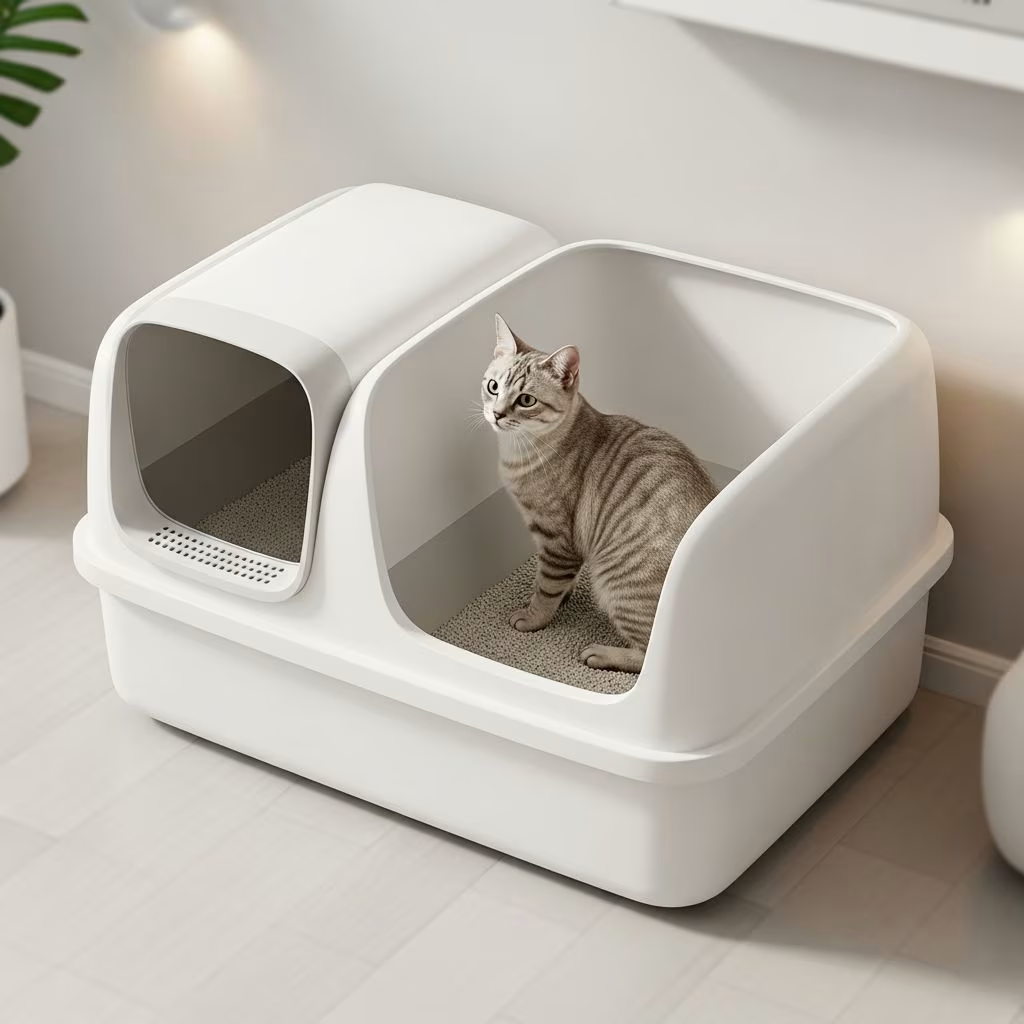
Selecting the appropriate litter box size is fundamental to your cat’s comfort and hygiene habits. A properly sized box allows cats to move freely, dig comfortably, and cover their waste without feeling confined, which can prevent avoidance behaviors and accidents outside the box.
Why Size Matters in Litter Box Selection
Cats instinctively seek spacious areas for elimination to mimic natural behaviors like digging and turning. Undersized boxes force cats into awkward positions, leading to stress and incomplete waste coverage, often resulting in scattered litter or inappropriate elimination. Research from cat behavior experts emphasizes that spacious boxes enhance satisfaction and cleanliness.
Larger boxes also accommodate deeper litter layers—typically 2-3 inches—which cats prefer for burying waste effectively. This reduces tracking and odors, benefiting both cat and owner.
Standard Sizing Guidelines
The most widely recommended formula is to choose a litter box **1.5 times the length** of your cat, measured from nose tip to tail base. This provides ample room for stretching, squatting, and maneuvering.
- Average adult cat (15-18 inches long) needs a box at least 22-27 inches long.
- Standard commercial boxes (around 16×10 inches) often fall short for most adults.
- Jumbo options (22×18 inches) suit many, but larger breeds require even more space.
| Cat Length (nose to tail base) | Recommended Box Length | Example Dimensions |
|---|---|---|
| 14-16 inches (small/young) | 21-24 inches | 20x15x6 inches |
| 17-20 inches (average adult) | 25-30 inches | 24x18x7 inches |
| 21+ inches (large breeds) | 32+ inches | 36x24x8 inches |
These dimensions ensure cats can perform natural actions without constraints.
Tailoring Size to Cat Size and Breed
**Small cats and kittens** thrive in compact yet accessible boxes. Low sides (3-4 inches) prevent climbing struggles, with lengths around 18-20 inches suiting most kittens under 10 inches long. Transition to larger sizes as they grow to avoid future adjustments.
**Average adults** (8-12 pounds) benefit from jumbo boxes, providing space to circle and dig without edges scraping fur. Measure your cat lying stretched out for precision.
**Large or long-haired breeds** like Maine Coons (often 20+ pounds, 24+ inches) demand extra-large options. Cement mixing tubs (27×20 or 36×24 inches) offer economical, spacious alternatives with smooth scooping surfaces.
Adjustments for Age, Health, and Special Needs
Senior cats or those with mobility issues require low-entry designs (sides under 5 inches) paired with generous floor space to ease entry and exit. Obese cats need wider, longer boxes to accommodate bulk without discomfort.
Monitor for signs of inadequacy: urine crystals on walls, waste near edges, or hesitation to enter. These indicate a need for upsizing.
Multi-Cat Households: Quantity and Placement
In homes with multiple cats, follow the “n+1” rule: one box per cat plus one extra. Each must be appropriately sized for its user—don’t share undersized units.
- Place boxes in separate, quiet locations to avoid territorial disputes.
- Avoid lining them up; distribute across preferred zones (e.g., one per floor).
- Larger shared boxes work if cats coexist peacefully, but monitor usage.
This setup minimizes competition and ensures privacy, reducing stress-related accidents.
Litter Type Compatibility and Depth
Box size interacts with litter choice. Clumping or crystal litters need 3+ inches depth, favoring deeper-sided boxes (6-8 inches) to contain scatter.
- Clumping clay: High sides prevent fling-outs.
- Pellets/crystals: Shallower boxes suffice due to low scatter.
- Non-clumping: Wider bases handle volume.
Test combinations: fill proposed boxes with 2-3 inches litter and observe usage.
Practical Solutions for Oversized Boxes
Worried about space? Opt for top-entry or corner designs that maximize floor area efficiency. DIY hacks like plastic storage bins (cut low entry) or under-bed totes provide custom sizes cheaply.
| Type | Pros | Cons | Best For |
|---|---|---|---|
| Top-Entry (e.g., 21×16 inches) | Reduces tracking, private | May intimidate kittens/seniors | Average adults |
| Open Jumbo | Easy access, spacious | Takes floor space | Large cats |
| Covered | Odor control, security | Feels confining to some | Shy multi-cat homes |
| DIY Tubs | Cheap, huge sizes | Plain aesthetic | Budget/large breeds |
Installation and Maintenance Tips
Position boxes in low-traffic, well-lit areas away from food/water. Use mats to catch scatter. Scoop daily, fully change litter weekly, and wash boxes monthly with mild soap.
Larger boxes hold more litter, easing maintenance despite size. High-sides or liners further simplify cleanup.
Frequently Asked Questions
What if my cat still avoids a properly sized box?
Check litter type, cleanliness, location, or medical issues like UTIs. Consult a vet if persists.
Can a box be too big?
Rarely, but kittens may feel lost in giants. Start proportional and scale up.
How often should I measure my cat for sizing?
Annually or after weight/age changes. Growing kittens need frequent updates.
Are covered boxes okay for large cats?
Only if spacious inside; many prefer open for headroom.
What’s the best material?
Plastic for affordability, stainless steel for durability and odor resistance.
Common Mistakes to Avoid
- Choosing based on room aesthetics over cat needs.
- Ignoring breed size—standard boxes fail large cats.
- Insufficient boxes in multi-cat setups.
- Skipping litter depth tests.
By prioritizing these factors, you’ll foster better habits and harmony.
References
- How Big Should a Cat’s Litter Box Be? — Pet Professional Guild, Jennifer Mauger. 2023. https://www.petprofessionalguild.com/barks/barks-magazine-blog/how-big-should-a-cats-litter-box-be/
- The Size of Your Cat’s Litter Box — Cat Behavior Associates. 2023. https://catbehaviorassociates.com/the-size-of-your-cats-litter-box/
- Everything You Should Know About Litter Boxes — Cat Friendly Homes. 2024. https://catfriendly.com/everything-you-should-know-about-litter-boxes/
- What Is the Standard Litter Box Size for Optimal Cat Comfort? — SiiPet. 2024. https://siipet.com/blogs/info/what-is-the-standard-litter-box-size-for-optimal-cat-comfort
- Demystifying the Cat Litter Box: A Guide to Size and Placement — My ShiChic. 2024. https://www.myshichic.com/blogs/cat-blog/cat-litter-box-size-guide



