

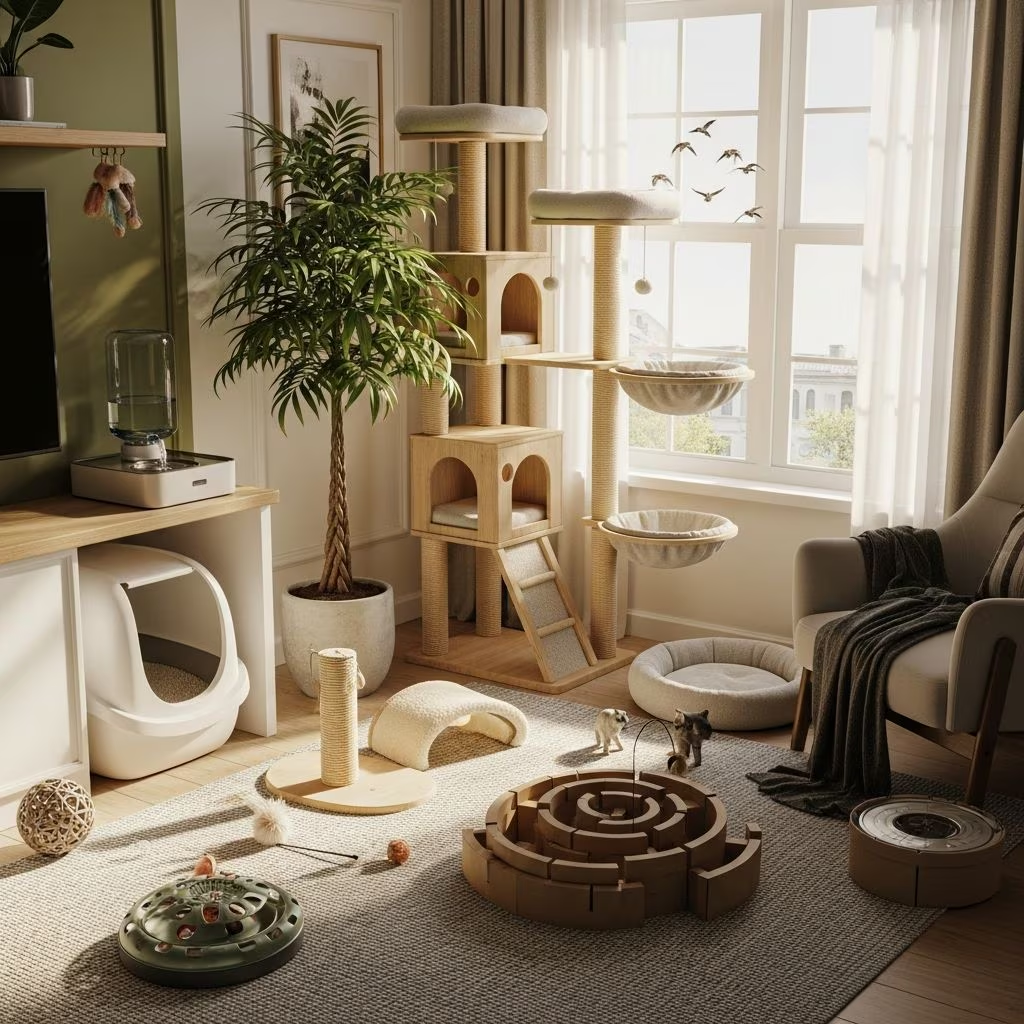
Many prospective cat owners worry that their living situation may be too small to accommodate a feline companion. The good news is that cats are remarkably adaptable animals capable of thriving in various housing situations, from compact urban apartments to sprawling suburban homes. However, this adaptability doesn’t mean that cats require no consideration when it comes to their spatial needs. Understanding what constitutes an appropriate living environment for a cat involves looking beyond simple square footage and examining the quality and arrangement of the space you provide.
Understanding Minimum Space Requirements
The question of how much space a cat needs doesn’t have a single definitive answer, as individual felines have varying requirements based on their characteristics and lifestyle. However, research and professional recommendations provide useful guidelines for cat owners planning their home setup.
Industry standards suggest that a minimum of 18 to 20 square feet of living space serves as a baseline for housing a single cat. To put this in perspective, this is equivalent to a small bedroom or a modest home office. Remarkably, even a 300-square-foot apartment can provide adequate space for a cat, demonstrating that cats don’t require expansive territory to feel comfortable and secure.
The critical distinction to understand is that when determining whether your home is suitable for a cat, raw square footage tells only part of the story. The quality, configuration, and vertical dimensions of the space matter significantly more than the simple calculation of floor area. A well-designed smaller space often provides more value to a cat than a large, open, minimally furnished area.
How Individual Characteristics Affect Space Needs
Different cats require different amounts of space depending on several personal factors that influence their activity levels and territorial preferences.
Size and Breed Considerations
A cat’s physical dimensions directly impact the amount of usable space they require. Larger breeds, such as Maine Coons or Norwegian Forest Cats, naturally need more room to move comfortably than their smaller counterparts like Devon Rex or Singapore cats. Larger cats benefit from additional floor space and higher perches that can comfortably support their weight. When selecting a cat for your home, considering breed size alongside your available space helps ensure a good match between pet and living situation.
Age and Life Stage
A cat’s age significantly influences their spatial needs and activity patterns. Younger cats and kittens require more territory because they have higher energy levels and a greater need to explore, play, and establish their own domain within the household. Kittens are naturally curious and benefit from multiple levels and spaces to investigate.
In contrast, senior cats typically prefer a more compact, accessible living arrangement. Older felines gravitate toward comfort zones near their food bowls, water dishes, and litter boxes, spending more time resting than exploring. They appreciate easy access to their essential resources without requiring extensive space for physical activity.
Energy Level and Temperament
Individual personality plays a crucial role in determining space requirements. Some cats are naturally more active and playful, while others are calm and sedentary by nature. High-energy cats benefit from more space to engage in running, climbing, and interactive play, whereas laid-back cats may be perfectly content in more confined quarters. Understanding your cat’s natural temperament helps you optimize their environment accordingly.
The Importance of Vertical Space
One of the most frequently misunderstood aspects of feline spatial needs is the critical importance of vertical dimensions. Many cat owners focus exclusively on floor space while neglecting the three-dimensional aspects of their home environment.
Vertical climbing space is equally important as floor space when designing a cat’s living environment. Cats naturally seek high vantage points from which they can observe their surroundings, engage in predatory behavior through play, and escape from perceived threats or unwanted social interaction. This vertical orientation isn’t merely a preference—it’s a fundamental behavioral need rooted in their evolutionary history as climbing animals.
You can create adequate vertical space through various means:
- Cat trees and multi-level cat furniture that provide climbing routes and resting perches
- Wall-mounted shelves arranged at varying heights to encourage climbing and exploration
- Window sills and bookcases that serve as natural observation points
- Furniture rearrangement to create climbing pathways across cabinets and dressers
- Tall pieces of furniture that provide elevated resting spots
A small apartment with extensive vertical elements can actually provide more enrichment and usable space than a larger home with minimal climbing opportunities. The three-dimensional aspect of the environment multiplies the effective space available to your cat exponentially.
Creating Hidden Retreats and Safe Spaces
Beyond vertical space and floor area, cats require adequate locations where they can retreat, hide, and establish personal territories away from household activity. These hidden spaces serve important psychological functions, allowing cats to manage stress and feel secure within their environment.
Effective hiding spots can be as simple or elaborate as your home allows:
- Cardboard boxes placed in quiet corners provide inexpensive but highly valued retreats
- Under-bed spaces that accommodate cat hideaway tunnels or enclosed beds
- Spare room closets or corners designated as cat-only zones
- Commercial cat caves or enclosed beds that simulate den-like environments
- Quiet areas behind furniture where cats feel protected
- High shelves where cats can observe without being observed
Research indicates that cats prefer safe spaces that are sized appropriately for their bodies, have surrounding sides for protection, and are positioned off the ground to provide additional security. Providing multiple retreat options throughout your home ensures your cat always has access to a comfortable hiding spot when they feel overwhelmed or simply desire solitude.
Organizing Essential Resources Strategically
Beyond physical space itself, the arrangement of your cat’s essential resources significantly impacts their comfort and satisfaction with their environment. Proper positioning of food, water, litter, and play areas demonstrates respect for your cat’s natural preferences and behavioral instincts.
Food and Water Placement
Cats are naturally fastidious animals with distinct preferences about where they eat relative to where they eliminate. Food and water bowls should be positioned well away from the litter box, typically in a separate area of your home. In their natural behavior, cats avoid eating in close proximity to waste materials, and maintaining this separation in your home respects this instinctive preference. Adequate distance between these areas demonstrates good feline husbandry.
Litter Box Accessibility
The general recommendation is to provide one litter box per cat plus one additional box, distributed throughout your home rather than clustered in a single location. This ensures your cat always has convenient access to an appropriate elimination site regardless of where they happen to be. Multiple distributed boxes also reduce territorial conflicts in multi-cat households by providing independent facilities.
Scratching and Play Areas
Scratching posts, scratching boards, and interactive play spaces should be integrated throughout your home. These elements serve both behavioral and protective functions—they satisfy your cat’s natural scratching instincts while simultaneously protecting your furniture from damage. Vertical scratching posts double as climbing opportunities, further enhancing your home’s spatial efficiency.
Multi-Cat Household Considerations
If you’re considering adopting multiple cats or already share your home with several felines, spatial requirements increase proportionally. Each cat requires approximately 18 square feet of individual floor space, meaning that space demands don’t decrease when cats live together—if anything, they increase.
Cats are inherently territorial animals and prefer to maintain their own space and resources rather than share. Multiple cats benefit from:
- Sufficient vertical space so cats can occupy different levels simultaneously
- Multiple retreat areas where cats can separate from one another
- Distributed resources so cats don’t compete for litter boxes, food, or water
- Visual barriers and separate zones that allow cats to maintain distance
- Multiple high perches where cats can observe from different vantage points
In communal cat environments, the general guideline suggests no more than 10 to 12 cats should occupy a single space, regardless of room size, to maintain acceptable stress levels and prevent overcrowding issues.
Adapting Small Spaces for Feline Comfort
If you live in a small apartment or compact home, several strategies can maximize the available space for your cat’s benefit without requiring major renovations or excessive furniture purchases.
Furniture Arrangement Optimization
Thoughtful furniture rearrangement can create climbing pathways, visual interest, and additional usable space. Rather than pushing all furniture against walls, consider creating a layout that allows cats to climb across pieces, creating a multi-level environment. This approach transforms your existing furniture into climbing infrastructure without adding bulk to the space.
Vertical Infrastructure Investment
A single cat tree occupies minimal floor space while dramatically increasing your home’s vertical capacity. Modern cat trees come in various sizes and styles, from corner-mounted units to floor-to-ceiling installations. Even a modest investment in vertical climbing structures provides exponentially greater enrichment than additional floor space.
Wall-Mounted Solutions
Wall-mounted shelves, perches, and climbing systems utilize previously unused vertical space without consuming floor area. These solutions can transform an ordinary room into a cat-friendly environment with multiple levels for exploration and observation.
Designated Cat Zones
Creating a specific room or area dedicated primarily to your cat can be highly effective, particularly in small homes. A spare bedroom, home office, or even a large closet can serve as your cat’s primary territory. Such designated spaces feel less overwhelming to cats compared to large, open floor plans, and they simplify resource management and space organization.
Recognizing Signs That Your Cat Needs More Space
Even if your home meets minimum spatial requirements, your cat may display behaviors indicating they would benefit from environmental modifications or expanded territory. Recognizing these signals helps you make adjustments before behavioral problems develop.
Warning signs that your cat may need more space include:
- Excessive hiding behavior or reluctance to emerge from retreat areas
- Increased aggression or territorial marking
- Over-grooming or other stress-related behaviors
- Lack of physical activity or engagement with play opportunities
- Excessive vocalization or attention-seeking behavior
- Litter box avoidance or inappropriate elimination
When you observe these behaviors, environmental modifications often resolve the issues more effectively than simply accepting the status quo. Adding vertical space, creating additional hiding spots, or redistributing resources can dramatically improve your cat’s well-being and behavior.
Frequently Asked Questions About Cat Space Requirements
Can a cat live happily in a studio apartment?
Yes, cats can thrive in studio apartments if the space is well-organized and includes adequate vertical elements, hiding spots, and enrichment opportunities. Studio living doesn’t inherently provide insufficient space; rather, it requires thoughtful arrangement of available square footage.
Do outdoor cats need more space than indoor cats?
Outdoor and indoor-outdoor cats typically have larger home ranges than purely indoor cats, as they have access to unlimited vertical space, diverse terrain, and broader territories. However, properly enriched indoor environments can satisfy most cats’ needs without outdoor access.
Is one cat better than multiple cats for small spaces?
Single cats typically adapt more easily to small spaces than multiple cats, as space requirements multiply with each additional feline. However, compatible cats with sufficient vertical space and distributed resources can successfully cohabitate in smaller homes.
What type of cat furniture provides the most value for small spaces?
Corner-mounted cat trees and wall-mounted shelving systems maximize space efficiency by utilizing previously unused vertical real estate. These options provide climbing and observation opportunities without significantly reducing available floor space.
How often should I rearrange my cat’s environment?
Periodic furniture rearrangement provides environmental enrichment and maintains your cat’s interest in their space. Many cats benefit from changes every few weeks or months, though individual preferences vary significantly.
Conclusion: Matching Your Home to Your Cat’s Needs
The amount of space a cat needs extends far beyond simple square footage calculations. While 18 to 20 square feet provides a reasonable baseline, the true measure of an adequate feline environment encompasses vertical space, strategic resource placement, hiding opportunities, and environmental enrichment. Cats are remarkably adaptable animals capable of thriving in spaces ranging from compact apartments to expansive homes, provided those spaces thoughtfully address their behavioral and psychological needs.
Before welcoming a cat into your home, honestly assess your available space and your willingness to optimize it through furniture arrangement, climbing structures, and dedicated cat zones. With intentional planning and appropriate environmental modifications, even small living spaces can become enriching, stimulating homes where cats feel secure, engaged, and genuinely content. The key lies not in finding the biggest space, but in creating the most thoughtfully designed environment for your feline companion.
References
- How Much Space Do Cats Need Revealed — Purina. Accessed February 2026. https://www.purina.co.za/find-a-pet/cat/how-much-space-do-cats-need
- How Much Space Does a Cat Need? — Feliway. Accessed February 2026. https://us.feliway.com/blogs/news/how-much-space-does-a-cat-need
- Key Elements for Successful Communal Cat Rooms — ASPCApro. Accessed February 2026. https://www.aspcapro.org/key-elements-successful-communal-cat-rooms
- How Much Space Does a Cat Need? — Hill’s Pet Nutrition. Accessed February 2026. https://www.hillspet.com/cat-care/new-pet-parent/how-much-space-does-a-cat-need
- What Your Cat Needs to Feel Secure — Cat Friendly Homes. Accessed February 2026. https://catfriendly.com/cat-friendly-homes/what-your-cat-needs-to-feel-secure/
- Setting Up the Perfect Cat Space: Furniture and Accessories — Petmate. Accessed February 2026. https://www.petmate.com/blogs/petmate-academy/perfect-cat-space-furniture-accessories
- Preparing Kitty’s Space in Advance — SAFE Haven for Cats. Accessed February 2026. https://www.safehavenforcats.org/news/preparing-kittys-space-in-advance/



