

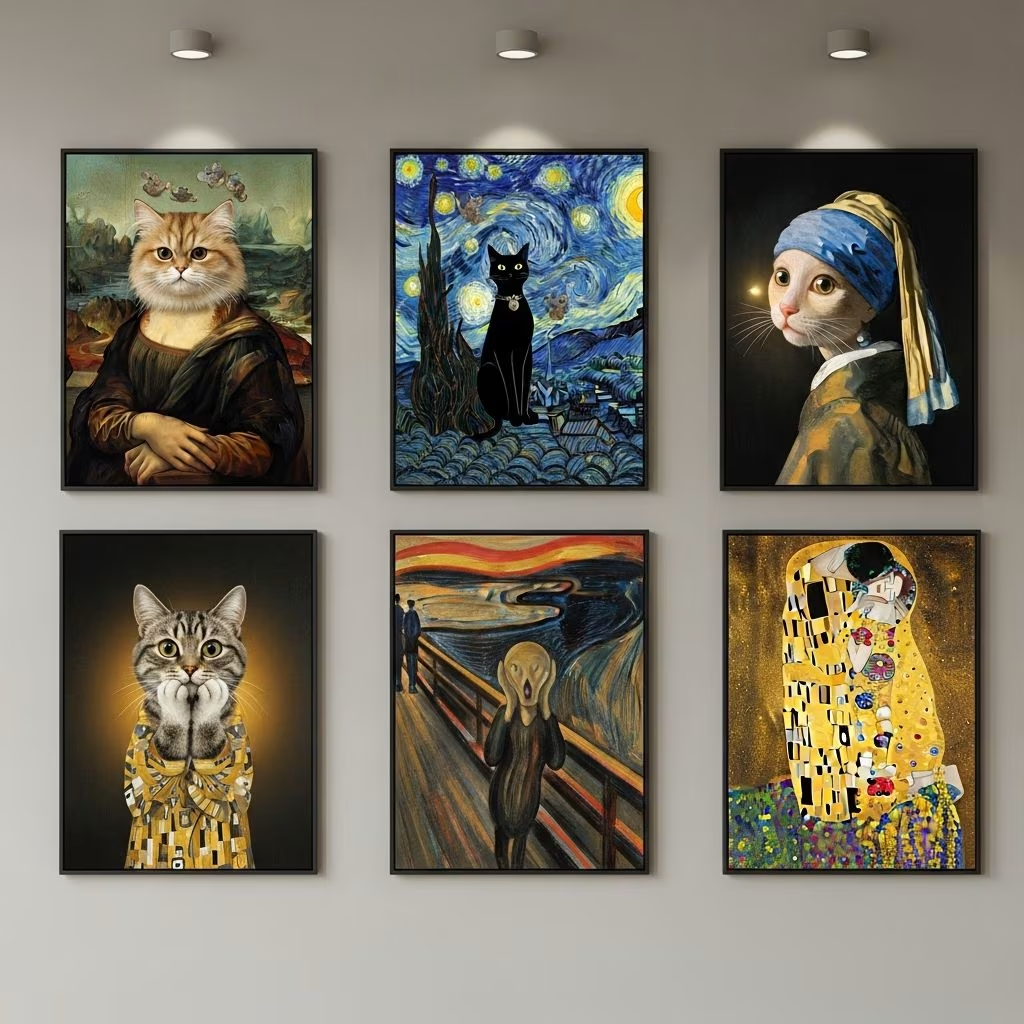
Cats have long captivated artists, serving as muses in countless masterpieces that span eras and styles. These feline figures often symbolize mystery, independence, and domestic charm, appearing in works from intimate still lifes to grand surreal compositions. This exploration delves into some of the most celebrated cat-themed paintings, revealing their historical context, artistic techniques, and enduring appeal.
The Allure of Felines in Artistic Expression
Throughout art history, cats embody a duality—graceful companions in everyday scenes and enigmatic symbols in abstract visions. Artists drew inspiration from their pets, cultural myths, and societal roles, transforming simple animals into profound subjects. From 17th-century Dutch realism to 20th-century modernism, these paintings reflect evolving perceptions of cats as both household pets and spiritual entities.
Early depictions often placed cats in moralistic still lifes, warning against temptation, while later works celebrated their playful nature. This shift mirrors broader changes in human-animal relationships, with cats transitioning from symbols of witchcraft to beloved icons.
Monumental Feline Feasts: Group Portraits
One standout example is a vast canvas brimming with felines, commissioned by a devoted collector. This enormous piece, measuring over six feet high, showcases dozens of cats in luxurious repose, capturing their varied poses and expressions with meticulous detail. Created in the late 19th century, it highlights the opulence of the era’s elite and their affection for purebred cats.
| Artwork | Artist | Year | Key Features |
|---|---|---|---|
| My Wife’s Lovers | Carl Kahler | 1893 | 42 cats, oil on canvas, 6×8.5 ft, sold for $826,000 in 2015 |
| The Cat’s Lunch | Marguerite Gérard | Late 18th C. | Single cat with food, oil on canvas, Fragonard Museum |
Such group portraits not only demonstrate technical prowess in rendering fur and anatomy but also serve as social statements on pet ownership among the wealthy.
Impressionist Intimacies: Cats in Daily Life
Impressionists like Pierre-Auguste Renoir infused cat paintings with warmth and spontaneity. In one notable work, a young woman shares a tender moment with a feline companion, her gaze meeting the cat’s curious stare. Painted in soft, luminous strokes, it evokes the quiet joys of home life in 19th-century France.
Similarly, Pierre Bonnard, a post-impressionist, distorted forms for humorous effect in depictions of arching cats, emphasizing their quirky personalities over photorealism. His intimate interiors place cats front and center, showcasing his lifelong fascination with these animals.
- Renoir’s focus on light and texture brings fur to life.
- Bonnard’s playful distortions add whimsy to domestic scenes.
- Both artists elevate cats from background elements to starring roles.
Symbolic Purity: Modernist Interpretations
Franz Marc’s early 20th-century piece features a stark white cat against vivid colors, where blue signifies spirituality, yellow joy, and red intensity. This expressionist work uses bold geometry to convey emotional depth, positioning the cat as a pure, masculine force in nature.
In contrast, surrealists like Balthus introduced ambiguity. His scene of a cat-headed figure at a lavish table with seafood merges human and animal realms, blending dreamlike tension with Renaissance clarity. Cats in his oeuvre often hide in shadows, inviting viewers to uncover layered meanings.
Playful and Anthropomorphic Visions
Marc Chagall’s mid-century etching captures a cat poised with sparrows, its form warped in his signature dreamlike style. Blurred lines and floating perspectives suggest impending action, blending folklore with personal whimsy.
Earlier, Abraham Teniers anthropomorphized cats in human attire, engaging in tavern scenes—a nod to his family’s genre of animal satires. These works humorously critique society through feline proxies. Théodule-Augustin Ribot’s realistic portrayal of a cook and watchful cat grounds the animal in everyday realism, emphasizing texture and light on fur and fabric.
Poster Icons and Cultural Symbols
Théophile Steinlen’s iconic black cat silhouette became synonymous with Parisian nightlife. Designed as a poster for a cabaret, its simplicity and boldness made it instantly recognizable, spawning merchandise and museum displays. Steinlen, a cat enthusiast, infused his lithographs with affectionate detail.
Louis Wain’s whimsical illustrations, like a cat in cozy repose, reflect Victorian anthropomorphism. His evolving styles—from cute to psychedelic—mirror his personal struggles while delighting cat lovers.
Renaissance and Baroque Foundations
Roots trace to the Renaissance, with Judith Leyster’s lively scene of children and a wriggling cat-eel interplay, capturing youthful mischief. Dutch masters like Clara Peeters and Jean-Baptiste-Siméon Chardin included cats in still lifes, where they eye fish temptingly, symbolizing restraint.
Marguerite Gérard’s delicate Angora cat portraits exemplify 18th-century refinement, with meticulous fur rendering.
Surreal Dreams and Eastern Influences
Salvador Dalí and peers wove cats into melting landscapes, amplifying their mystical aura. Eastern artist Hiroshige II depicted a white cat batting a string, embodying serene playfulness in ukiyo-e tradition.
Arthur Rackham’s ink illustrations transform women into cats, drawing from fairy tales with gothic flair.
Cats in Institutional Collections
Museums worldwide treasure these works. The Rijksmuseum holds Henriette Ronner’s playful kittens and Anselmus de Boodt’s fantastical drawings from imperial commissions. Chicago’s Art Institute features guardian lion statues alongside painted cats, underscoring their guardianship role.
| Museum | Notable Cat Works | Artist Examples |
|---|---|---|
| Rijksmuseum | Playful families, fantastical sketches | Henriette Ronner, Anselmus de Boodt |
| Musée d’Orsay | Distorted domestic cats | Pierre Bonnard |
| Art Institute of Chicago | Guardian motifs | Various |
The Evolution of Cat Imagery
Cat depictions evolved from symbolic warnings in medieval art to celebrated subjects in modernism. This mirrors domestication trends and cultural shifts, with cats gaining status as artists’ confidants. Today, these paintings inspire reproductions and digital tributes.
Why Cats Endure in Art
Their enigmatic eyes, fluid movements, and independent spirits make cats perfect for artistic exploration. Whether in photorealistic detail or abstract forms, they evoke universal emotions—curiosity, affection, mischief.
FAQs
What is the largest famous cat painting?
The monumental group portrait with 42 cats by Carl Kahler stands at 6×8.5 feet.
Which artist painted the most cats?
Pierre Bonnard was renowned as a dedicated cat painter, featuring them prominently.
Are there surrealist cat paintings?
Yes, Balthus and Dalí incorporated cats into dreamlike, ambiguous scenes.
Where can I see original cat artworks?
Museums like Rijksmuseum, Musée d’Orsay, and De Kattenkabinet house many.
Why were cats symbolic in old art?
Often representing temptation or independence in still lifes and moral tales.
References
- 23 Famous Cat Paintings That Have Made History Hiss-terical! — PortraitFlip. 2023. https://www.portraitflip.com/blog/famous-cat-paintings/
- Famous Paintings Of Cats: The History Behind Them — FrontPageMeews. 2023. https://frontpagemeews.com/category/pet-news/history/paintings-of-cats/
- Cats — Themes in Art — Art History Project. 2023. https://www.arthistoryproject.com/subjects/animals/cats/
- 10 x Cats in the Rijksmuseum — Rijksmuseum. 2023. https://www.rijksmuseum.nl/en/stories/10-things/story/10-cats-in-the-rijksmuseum
- 15 Cats in Art History Every Cat Lover Would Love — DailyArt Magazine. 2023. https://www.dailyartmagazine.com/15-cats-in-art/
- Unfazed: Cats in Art — Art Institute of Chicago. 2023. https://www.artic.edu/articles/1062/unfazed-cats-in-art



