

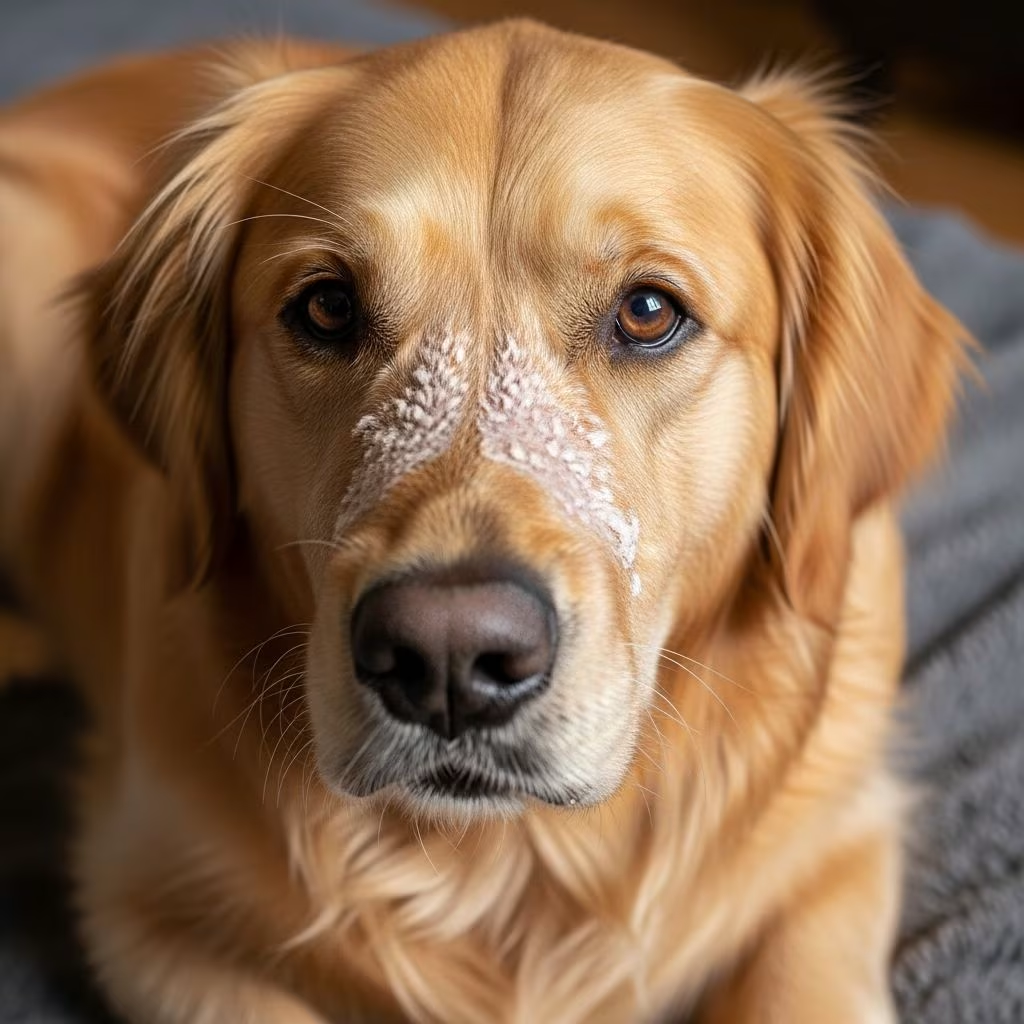
Ichthyosis represents a hereditary skin condition prevalent among Golden Retrievers, characterized by abnormal skin cell development leading to excessive scaling and flaking. This disorder, named after the Greek term for fish due to its scale-like appearance, stems from genetic mutations that disrupt the epidermis’s outer layer.
Understanding the Genetic Roots of Ichthyosis
At its core, ichthyosis in Golden Retrievers is an autosomal recessive condition, meaning a dog must inherit two copies of the mutated gene—one from each parent—to exhibit symptoms. The primary form, known as Ichthyosis type 1 (ICH-1), involves a mutation in the PNPLA1 gene, which encodes a protein essential for lipid metabolism in skin cells. This leads to improper formation of the epidermal barrier, causing cells to accumulate and flake excessively.
A second variant, Ichthyosis type 2 (ICH-2), arises from a mutation in the ABHD5 gene and tends to produce more pronounced symptoms. Both types fall under non-epidermolytic ichthyosis, where the skin’s structural layers remain intact but keratinocyte turnover is disrupted. Breeds like Golden Retrievers carry these mutations at higher frequencies, with carriers often showing no signs themselves.
- Autosomal recessive inheritance requires both parents to be carriers.
- PNPLA1 mutation (ICH-1) is most common in Goldens.
- ABHD5 mutation (ICH-2) linked to severer cases.
Recognizing Early Signs and Symptoms
Symptoms typically emerge in puppyhood, though they may not become evident until later, sometimes up to a year or more. The hallmark is widespread flaking, with white-grey scales loosely adhering to the coat, especially along the trunk, abdomen, thighs, and inguinal areas. Owners often spot large flakes during brushing or on bedding.
Hyperpigmentation frequently accompanies scaling, darkening thinly haired regions like the belly and armpits, giving a dirty or blackened look. Skin may thicken in patches, and footpads can become hardened. While not inherently itchy, secondary issues like yeast (Malassezia) overgrowth introduce discomfort, redness, and odor.
| Symptom | Description | Common Locations |
|---|---|---|
| Excessive Flaking | White-grey, loosely adherent scales | Trunk, thighs, abdomen |
| Hyperpigmentation | Darkened, thickened skin | Ventral abdomen, inguinal folds |
| Secondary Infections | Yeast/bacterial overgrowth causing itch | Moist areas like folds |
| Footpad Changes | Thickening and cracking | Paws |
Severity varies: mild cases appear cosmetic, while severe ones heighten infection risks due to a compromised skin barrier.
When and How Symptoms Progress
In Golden Retrievers, signs often start subtly as increased abdominal pigmentation in puppies, evolving into noticeable dandruff-like shedding. The skin renewal cycle, normally 21 days, shortens dramatically, accelerating cell loss. Stress, hormones, or seasonal changes can exacerbate flaking.
Without intervention, scales accumulate, trapping moisture and fostering microbes. Chronic cases may lead to alopecia or crusting, though primary ichthyosis rarely causes pain unless complicated.
Diagnostic Approaches for Confirmation
Diagnosis begins with breed history and visual exam: Golden Retrievers with diffuse scaling raise high suspicion. Cytology from scale-heavy areas detects secondary Malassezia (4-6 per field indicates overgrowth).
Definitive confirmation uses genetic testing via cheek swabs, targeting PNPLA1 and ABHD5 variants. Labs like UC Davis Veterinary Genetics Laboratory report homozygous results (e.g., Ich1/Ich1). Skin biopsies reveal orthokeratotic hyperkeratosis and pigmentation but are invasive.
- Visual and cytology for initial assessment.
- Genetic swabs: non-invasive gold standard.
- Biopsy: histological confirmation if needed.
Management and Treatment Strategies
Ichthyosis lacks a cure, but proactive care minimizes symptoms and complications. Focus on keratolytic shampoos (e.g., those with sulfur, salicylic acid) to dissolve scales and restore barrier function. Weekly baths, followed by moisturizers like mineral oil sprays, hydrate and soften skin.
Address infections with antifungal shampoos or topical chlorhexidine for bacteria. Humectants and emollients prevent dryness. Severe cases may require oral antimicrobials short-term.
Owners report success with routines: bathe bi-weekly, apply oils post-bath, and monitor for flares. Diet rich in omega-3s supports skin health.
Breeding Implications and Prevention
Genetic testing identifies carriers (heterozygous) and affecteds (homozygous). Responsible breeders screen breeding stock to reduce prevalence, though eliminating the gene entirely risks inbreeding depression. Puppies from carrier matings have a 25% affected risk.
Organizations like the Golden Retriever Club of America advocate testing, noting underdiagnosis due to seborrhea confusion.
Prognosis and Long-Term Outlook
Most Golden Retrievers thrive with management; it’s rarely life-threatening. Quality of life improves markedly with consistent care, preventing secondary issues. Early detection via testing enhances outcomes.
Frequently Asked Questions (FAQs)
What breeds besides Golden Retrievers get ichthyosis?
Common in Jack Russell Terriers, West Highland White Terriers, Dobermans, Norfolk Terriers, and others, with varying severity.
Is ichthyosis painful for my dog?
Primary symptoms are cosmetic; discomfort arises from secondary infections.
How often should I bathe a dog with ichthyosis?
Weekly to bi-weekly with medicated shampoos, adjusting per vet advice.
Can ichthyosis be cured?
No, but symptoms are controllable lifelong.
Should I breed a carrier dog?
Breed only to tested clear dogs to avoid affected pups.
This guide empowers Golden Retriever owners to navigate ichthyosis effectively, ensuring their pets enjoy healthy, comfortable lives.
References
- Ichthyosis (Golden Retriever Type) — Animal Genetics. Accessed 2026. https://animalgenetics.com/dog-tests/canine-disorder-tests/38-ich/
- Ichthyosis-A (ICT-A) — GenSol DX. Accessed 2026. https://www.gensoldx.com/tests/ichthyosis-a-ict-a/
- Canine ichthyosis in a Golden retriever — ProDermavet. Accessed 2026. https://pro.dermavet.com/ichthyosis-in-a-golden-retriever/
- Understanding Ichthyosis (Fish Scale Disease) — Groomer to Groomer. 2023-02. https://digital.groomertogroomer.com/issue/february-2023/understanding-ichthyosis-fish-scale-disease/
- Ichthyosis (ICH-1) – Test Details — University of Pennsylvania Veterinary Genetics. Accessed 2026. https://netapps.vet.upenn.edu/PennGen/SampleTesting/GeneticsTest.aspx?testid=66



