

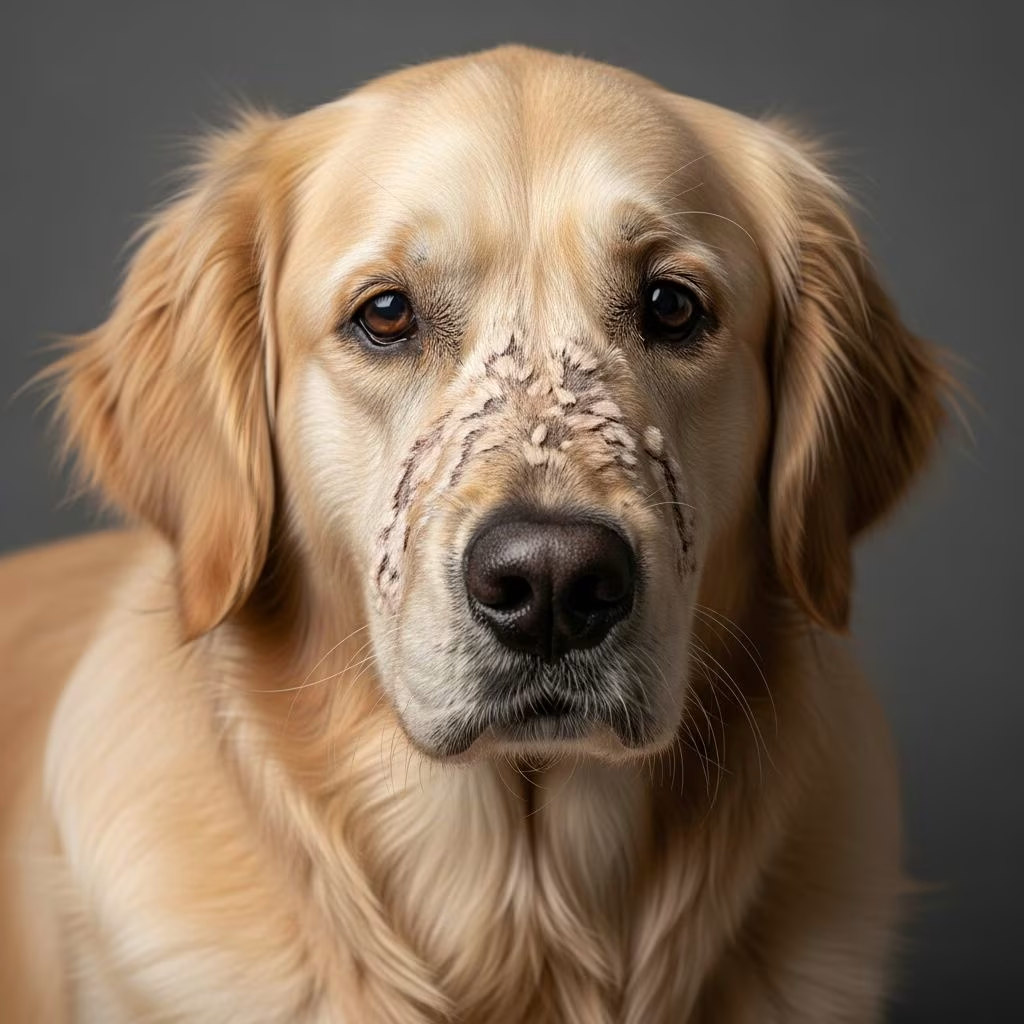
Understanding Ichthyosis in Dogs
Ichthyosis is a genetic skin condition that affects dogs throughout their lives, characterized by excessive scaling and abnormal skin development. The name derives from the Greek word “ichthys,” meaning fish, as affected dogs develop thick, darkly pigmented scales resembling fish scales on their skin. This inherited disorder impacts the outer layer of the skin, preventing it from forming properly and resulting in the distinctive scaling pattern that defines the condition.
This chronic skin disorder represents one of the primary cornification defects in dogs, meaning the process by which skin cells mature and form the protective outer barrier is disrupted. Unlike some skin conditions that resolve with treatment, ichthyosis is a lifelong condition that requires ongoing management and care.
What Causes Ichthyosis in Dogs?
Ichthyosis in dogs is an inherited genetic disorder passed from parents to offspring through specific genetic mutations. The condition is autosomal recessive, meaning a dog must inherit the mutated gene from both parents to develop the disease.
Genetic Mutations
Different dog breeds carry mutations in different genes that cause ichthyosis. In Golden Retrievers, there are two recognized types of congenital ichthyosis:
Ichthyosis Type 1 (ICH-1): This form is caused by mutations in the filaggrin gene, resulting in a milder form of the disease in most cases.
Ichthyosis Type 2 (ICH-2): This type is believed to be more severe and is caused by a mutation in the abhydrolase domain containing 5 (ABHD5) gene, leading to more pronounced scaling and skin complications.
In Jack Russell Terriers, ichthyosis is caused by a loss of function mutation in transglutaminase 1 (TGM1), which mediates calcium-dependent cross-linking of peptides to form the cornified envelope, the strong exterior of skin cells.
Skin Cell Turnover Rate
Ichthyosis is considered a congenital disease where the normal skin cycle, which typically occurs every 21 days, may accelerate to as short as every three to four days. This dramatically increased turnover rate results in excessive accumulation of dead skin cells, creating the characteristic scaling.
Symptoms and Clinical Signs
Dogs with ichthyosis present a variety of clinical signs that typically become noticeable during puppyhood, though the condition may worsen significantly with age.
Primary Symptoms
Excessive Scaling: The most prominent symptom is generalized scaling across the body. Affected dogs typically display large, greasy flakes of dandruff-like material that accumulate on their coat and skin.
Darkly Pigmented Scales: The scales are often darkly pigmented and appear particularly prominent on the nose, paw pads, and muzzles.
Lack of Itching: Interestingly, many ichthyotic dogs are not itchy in the early stages, distinguishing this condition from allergic skin diseases. However, secondary infections can introduce pruritus.
Progression and Severity
The disease typically waxes and wanes with periodic bouts of exacerbation and remission. Severity varies significantly among affected dogs, with some experiencing mild scaling that remains manageable throughout life, while others develop severe manifestations. The scales can become so thick that they crack and cause fissures, leading to considerable discomfort and increasing the risk of secondary infections.
Secondary Complications
Although considered primarily a cosmetic condition initially, the increased scale accumulation can create an environment conducive to secondary bacterial and yeast infections. Dogs may develop secondary bacterial folliculitis or Malassezia dermatitis, which can lead to significant pruritus and clinical confusion with allergic skin disease. Some dogs with ichthyosis may be more likely to develop atopic dermatitis and other skin infections.
Breeds Most Commonly Affected
While ichthyosis can affect various dog breeds, certain breeds show higher prevalence rates:
Golden Retrievers: This breed represents the most commonly diagnosed group, typically diagnosed at less than one year of age, though adult-onset cases are not uncommon.
Jack Russell Terriers: These small terriers are frequently affected with a specific genetic form of the condition.
American Bulldogs: Mild forms of ichthyosis are not uncommon in this breed.
Additional breeds showing increased incidence include West Highland White Terriers, Miniature Schnauzers, and other purebred dogs.
Diagnosis of Ichthyosis
Clinical Examination
Diagnosis begins with careful examination of the characteristic lesions and clinical presentation. The distinctive scaling pattern, particularly on the nose and paw pads, often provides the initial diagnostic clue.
Confirmatory Testing
Beyond visual examination, veterinarians may employ several diagnostic methods:
Genetic Testing: Genetic testing can confirm the specific mutation responsible for ichthyosis in affected dogs, particularly valuable in breeds where specific mutations have been identified.
Skin Biopsies: Histological examination reveals lesions typical of nonepidermolytic ichthyosis, showing diffuse lamellar orthokeratotic hyperkeratosis in the absence of epidermal hyperplasia and dermal inflammation.
Cytology: Skin cytology helps identify secondary infections, showing whether microbes, inflammatory cells, or only keratinocytes are present.
Differential Diagnosis
It is important to rule out other conditions that may cause scaling, including allergic dermatitis, parasitic infections, and nutritional deficiencies. A thorough diagnostic workup may include bloodwork and evaluation for ectoparasites.
Treatment and Management Options
While there is no cure for ichthyosis, symptoms can be effectively controlled through diligent and ongoing management. Treatment varies based on disease severity and individual dog needs.
Topical Therapies
Medicated Shampoos: Topical therapy remains the treatment of choice for all forms of ichthyosis. Frequent mild anti-seborrheic shampoos containing ingredients like ophytrium help remove excessive scale and maintain skin hydration. Weekly to bi-weekly bathing with these specialized shampoos is typically recommended.
Emollients and Moisturizers: Moisturizing rinses and emollients are essential for restoring the skin barrier and preventing water loss. These should include phytosphingosines or ceramides that specifically support skin barrier function. More gentle emollients are generally preferred over harsh keratolytic agents like salicylic acid or benzoyl peroxide, which can be overly drying and worsen scaling.
Combing and Scale Removal: In long-coated breeds, frequent combing helps with mechanical scale removal and prevents accumulation of flakes.
Oral Supplementation
Omega-3 and Omega-6 Fatty Acids: Oral omega-3 and omega-6 fatty acid supplementation may be beneficial in managing ichthyosis. Commercial veterinary omega-3 supplements are often recommended as daily supplements to support skin barrier function.
Retinoids: In severe cases that significantly affect a dog’s quality of life, oral retinoids like isotretinoin have been used successfully. However, due to cost and potential side effects, retinoids are typically reserved for severe cases that do not respond to conventional topical therapy.
Treatment of Secondary Infections
Since secondary infections are common with ichthyosis, monitoring is essential throughout treatment. If recurrent bacterial or yeast infections develop, topical antimicrobials such as chlorhexidine or miconazole may be recommended. Systemic antibiotics or antifungals may be necessary in acute cases, though topical therapies are preferred to reduce long-term reliance on systemic medications.
Individualized Approach
Treatment must be tailored to each individual dog’s needs. What works effectively for one dog may not be optimal for another. Regular veterinary consultation helps adjust treatment protocols based on response and changing disease manifestations.
Long-Term Prognosis
Ichthyosis is a chronic condition with no cure, but the prognosis for most dogs is generally good. With proper management and conscientious care, many dogs can live comfortable lives despite the ongoing scaling.
Disease Progression
The disease typically worsens with age, and some dogs are more severely affected than others. While mild to moderate cases can be managed effectively with consistent topical care and supplementation, severely affected dogs may experience significant quality of life challenges.
Severe Cases
Unfortunately, severely affected dogs may ultimately be euthanized due to their disease when the burden of management becomes too great or when severe complications develop that significantly compromise quality of life.
Breeding Considerations
Affected dogs, their parents, and their siblings should not be used for breeding. Responsible breeding practices aimed at eliminating carrier dogs from the breeding pool are essential to reduce the incidence of this inherited condition in future generations.
Frequently Asked Questions About Canine Ichthyosis
Q: At what age do symptoms of ichthyosis typically appear?
A: Affected dogs can show signs of scaling as puppies, with Golden Retrievers typically diagnosed at less than one year of age. However, adult-onset cases are not uncommon, and the disease tends to worsen with age.
Q: Is ichthyosis contagious to other dogs?
A: No, ichthyosis is not contagious. It is an inherited genetic condition that affected dogs are born with, not an infectious disease.
Q: Can ichthyosis be cured?
A: No, there is no cure for ichthyosis. However, symptoms can be effectively managed with lifelong topical care, supplementation, and veterinary monitoring.
Q: How often should a dog with ichthyosis be bathed?
A: Most dogs with ichthyosis benefit from weekly to bi-weekly bathing with medicated shampoos. The frequency may be adjusted based on individual response and disease severity.
Q: Will my dog be itchy if they have ichthyosis?
A: Many ichthyotic dogs are not itchy in the early stages. However, secondary bacterial or yeast infections can develop, leading to significant itching and discomfort.
Q: Can ichthyosis lead to serious complications?
A: While primarily a cosmetic condition initially, ichthyosis can lead to secondary infections, thick scale buildup that creates fissures, and increased susceptibility to bacterial and yeast infections that may cause discomfort.
Q: Should affected dogs be bred?
A: No, affected dogs, their parents, and their siblings should not be used for breeding to help eliminate this inherited condition from the gene pool.
Living with a Dog with Ichthyosis
Caring for a dog with ichthyosis requires commitment and consistency. Owners must maintain regular bathing schedules, apply moisturizers, provide supplementation, and work closely with their veterinarian to monitor for complications. With proper management and conscientious care, many dogs with ichthyosis can enjoy comfortable, happy lives despite their chronic skin condition. Regular veterinary check-ups help ensure that secondary infections are caught early and that the treatment regimen remains effective for the individual dog’s needs.
References
- Canine ichthyosis in a Golden retriever — Rebecca Mount, DVM, DACVD, Dermatology for Animals, Albuquerque, NM. May 2024. https://pro.dermavet.com/ichthyosis-in-a-golden-retriever/
- Ichthyosis and dogs — Foundation for Ichthyosis & Related Skin Types (FIRST). https://www.firstskinfoundation.org/ichthyosis-and-dogs
- Canine ichthyosis and related disorders of cornification in small animals — PubMed Central, National Center for Biotechnology Information. https://pmc.ncbi.nlm.nih.gov/articles/PMC3529142/
- Congenital Ichthyosis 1 and 2 in Golden Retrievers — University of California Davis Veterinary Genetics Laboratory (VGL). https://vgl.ucdavis.edu/test/congenital-ichthyosis-1-and-2-golden-retrievers
- Ichthyosis in Dogs — VCA Animal Hospitals. https://vcahospitals.com/know-your-pet/ichthyosis-in-dogs



