

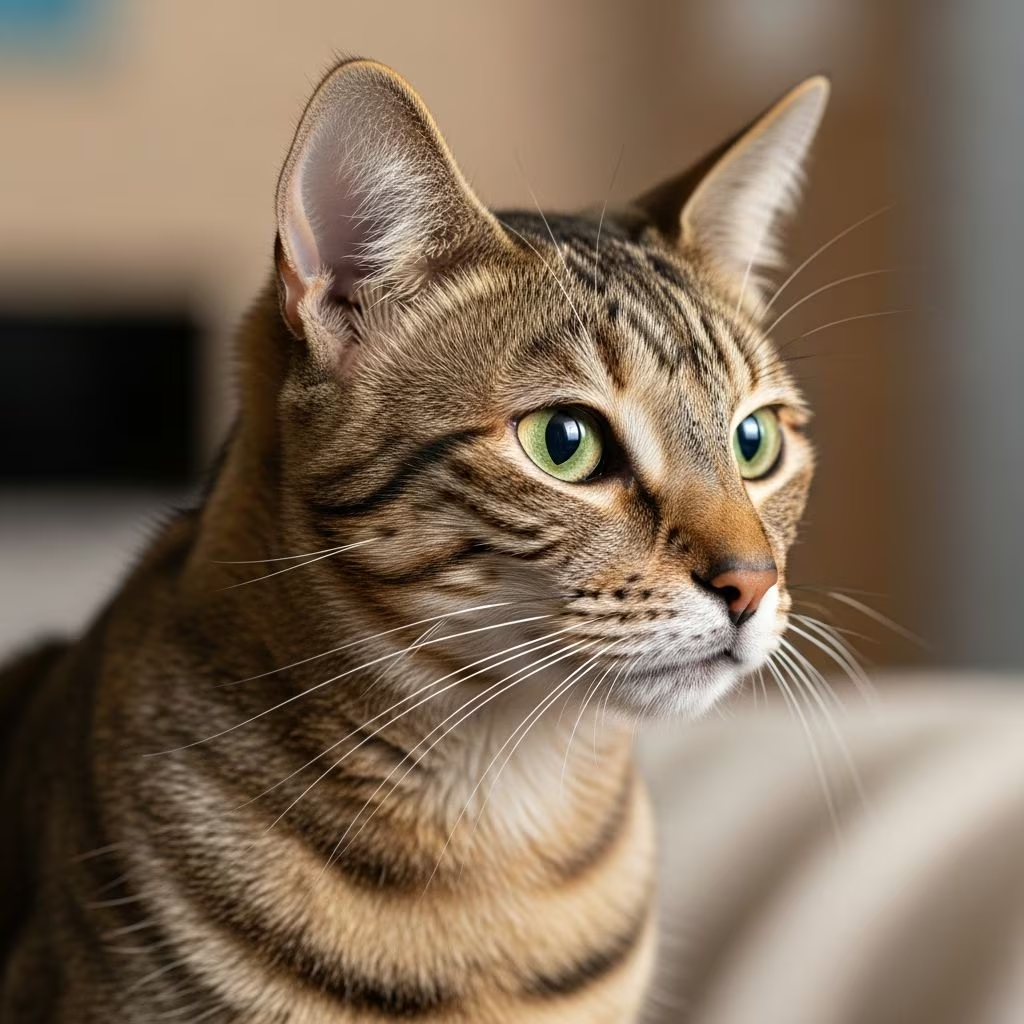
Understanding Hyperthyroidism in Cats
Hyperthyroidism is one of the most common endocrine disorders affecting cats, particularly as they age. This condition occurs when the thyroid gland produces excessive amounts of thyroid hormone, leading to a significantly elevated metabolic rate. The disease is typically caused by a benign tumor within the thyroid gland that produces an overabundance of thyroxine, the primary thyroid hormone responsible for regulating an animal’s metabolism. While hyperthyroidism can develop in cats of any age, it is most frequently diagnosed in older felines. Understanding this condition is essential for cat owners to ensure their pets receive appropriate care and treatment.
Common Symptoms of Hyperthyroidism
Hyperthyroidism in cats presents with a variety of clinical signs that result from the dramatically increased metabolic rate. Recognizing these symptoms early can lead to faster diagnosis and treatment.
Primary symptoms include:
– Weight loss despite increased appetite or ravenous eating- Unkempt or poor-quality fur coat- Poor body condition- Vomiting or periodic diarrhea- Increased thirst (polydipsia)- Increased urination (polyuria)- Rapid or difficult breathing- Hyperactivity and restlessness- Behavioral changes such as aggression or crankiness- Increased vocalization, particularly at night- An enlarged thyroid gland that may be felt as a lump on the neck- Thickened or brittle nails- Anxiety or nervousness- Heart abnormalities including murmurs, rapid heart rate, or abnormal rhythms
Interestingly, less than 10% of hyperthyroid cats exhibit atypical signs such as poor appetite, loss of appetite, depression, and weakness. One of the most distinctive features of hyperthyroidism is the paradox of weight loss despite increased appetite. Cats with elevated thyroid hormone levels experience dramatically accelerated metabolism, causing them to burn calories at an abnormal rate. This results in weight loss even when the cat is eating more than usual. As the disease progresses, some cats may develop anorexia, making monitoring and early intervention crucial.
What Causes Hyperthyroidism in Cats?
Hyperthyroidism develops when thyroid nodules become hyperactive and produce excess thyroid hormones without regulation from the pituitary gland. However, the exact causes of why these nodules become dysfunctional remain an area of ongoing research. Several theories have emerged regarding potential contributing factors:
– Advancing age, which significantly increases the risk of developing the condition- Thyroid cancer, though this is a rare cause- Dietary factors, with some reports linking hyperthyroidism to fish-flavored canned foods- Environmental exposure to flame-retardant chemicals, specifically polybrominated diphenyl ethers (PBDEs), used in furniture and carpeting that circulate in household dust- Genetic predisposition in certain cat populations
While researchers have not definitively identified a single cause, these factors appear to play roles in the development of hyperthyroidism. Environmental and dietary factors may be particularly relevant for indoor cats that spend significant time on furniture and carpets treated with flame retardants.
Diagnosing Hyperthyroidism
If your veterinarian suspects hyperthyroidism based on clinical signs, diagnosis typically involves blood tests to measure thyroid hormone levels. The primary test measures thyroxine (T4) concentration. In most hyperthyroid cats, T4 levels are significantly elevated above the normal range. Some cats may have borderline elevated T4 levels, requiring additional testing such as measuring thyroid-stimulating hormone (TSH) or performing a thyroid scan to confirm the diagnosis. Your veterinarian may also recommend baseline bloodwork to assess kidney function and overall health status, as this information is crucial for determining the most appropriate treatment option.
Treatment Options for Hyperthyroidism
There are four primary treatment approaches for feline hyperthyroidism: medication, radioactive iodine therapy, surgical removal of the thyroid gland, and dietary management. Each option has distinct advantages and disadvantages, and the best choice depends on your cat’s individual health status, your ability to administer treatment, and financial considerations.
Radioactive Iodine Therapy (I-131 Treatment)
Radioactive iodine therapy, also known as I-131 treatment, is widely considered the gold standard treatment for feline hyperthyroidism and offers the highest cure rate. During this procedure, radioactive iodine is administered as an injection, which is rapidly absorbed into the bloodstream. The radioactive iodine concentrates specifically within the thyroid gland because thyroid cells require iodine to produce thyroid hormones. The emitted radiation destroys the abnormal thyroid tissue while leaving surrounding normal tissues and parathyroid glands unaffected. Most cats treated with radioactive iodine achieve normal thyroid hormone levels within one to two weeks of treatment, with the majority experiencing a complete cure after a single treatment. In rare cases, a second treatment may be necessary.
The primary advantages of I-131 therapy include a high cure rate, minimal side effects, the fact that cats do not require sedation, and the elimination of the need for lifelong medication. However, the main disadvantages are the significant cost, which can range from several thousand dollars depending on location, and the requirement that cats remain in isolation for at least a week following treatment to protect people from radiation exposure. This extended hospitalization period may be stressful for both cat and owner.
Surgical Thyroidectomy
Surgical removal of the diseased thyroid gland is another curative option that can provide long-term or permanent resolution of hyperthyroidism for most cats. Like radioactive iodine therapy, surgery is curative rather than merely managing symptoms. However, surgery is generally most effective when only one thyroid gland is affected, as removal of both thyroid glands can lead to hypothyroidism, a condition where the body produces insufficient thyroid hormone. Another potential complication is the successive hyperactivity of the remaining thyroid gland following surgery. Cats undergoing thyroidectomy must be monitored afterward for the development of hypothyroidism and may require thyroid hormone supplementation.
Veterinarians typically stabilize a cat’s condition with anti-thyroid medication before surgery to reduce surgical and anesthetic risks. Your veterinarian will work with you to determine if your cat is a suitable surgical candidate based on age, overall health status, and the extent of thyroid involvement.
Methimazole Medication
Methimazole is probably the most commonly prescribed treatment for feline hyperthyroidism and offers a non-invasive management approach. This anti-thyroid medication works by blocking the excessive production of thyroid hormone and is administered orally in pill form or formulated by compounding pharmacies into a transdermal gel that can be applied to the cat’s ear. Methimazole does not cure hyperthyroidism but rather controls the clinical signs by preventing the overproduction of thyroid hormone. Most cats show a decrease in T4 concentration within two to three weeks of starting therapy.
The primary advantage of methimazole is that it is non-invasive and relatively affordable compared to other treatment options. The disadvantages include the need for lifelong administration, usually once or twice daily at regularly spaced intervals, and potential side effects. Side effects occur in approximately 18% of treated cats and can include vomiting, anorexia, depression, self-induced facial or neck excoriations, blood disorders, and liver problems. Additionally, methimazole is often administered as an initial treatment before radioactive iodine therapy or surgery to stabilize a cat’s clinical signs and reduce the risks associated with these procedures.
For hyperthyroid cats with concurrent chronic kidney disease, methimazole therapy requires careful monitoring, as treatment of hyperthyroidism with methimazole can decrease glomerular filtration rate. However, most cats experience only mild changes in renal function that stabilize within approximately one month after successful treatment.
Prescription Diet Therapy
Dietary management using an iodine-limited prescription diet, such as Hill’s Prescription Diet y/d, offers an alternative or complementary approach to treating hyperthyroidism. By restricting dietary iodine intake, this specialized diet can help resolve clinical signs and lower thyroid hormone concentration. The advantage of dietary therapy is that it is non-invasive and does not involve medication or invasive procedures. However, the diet requires strict compliance and must be the cat’s only food source, which can be challenging in multi-cat households or for cats with particular food preferences. Dietary therapy may be particularly suitable for cats whose owners cannot manage daily medication administration or afford more expensive treatment options.
Comparison of Treatment Options
| Treatment Option | Curative | Cost | Ongoing Management | Side Effects |
|---|---|---|---|---|
| Radioactive Iodine (I-131) | Yes (high cure rate) | Very High ($2,000-$5,000+) | Minimal; monitoring after treatment | Minimal; requires isolation |
| Surgery (Thyroidectomy) | Yes | Moderate to High ($1,000-$3,000) | Possible hypothyroidism monitoring | Surgical/anesthetic risks; potential complications |
| Methimazole Medication | No (management only) | Low to Moderate ($10-$50/month) | Lifelong daily administration | Vomiting, anorexia, liver problems (18% of cats) |
| Prescription Diet (y/d) | No (management only) | Moderate ($30-$60/month) | Strict dietary compliance | Minimal; may be unpalatable to some cats |
Post-Treatment Monitoring
Regardless of the treatment option chosen, ongoing monitoring is essential to ensure successful management of hyperthyroidism. After initiating treatment, thyroid hormone levels should be measured regularly to ensure they are not too high or too low. Your veterinarian will recommend appropriate monitoring intervals based on the treatment method used. Additionally, it is important to monitor kidney function, as approximately 25% of hyperthyroid cats have underlying chronic kidney disease that cannot be detected until hyperthyroidism is successfully treated. When hyperthyroidism is resolved, the cat’s metabolism returns to normal, potentially unmasking previously undiagnosed kidney disease or exacerbating known kidney problems due to decreased renal blood flow.
Managing Hyperthyroidism Long-Term
Many cats can live long and happy lives with appropriate hyperthyroidism management. If medication is chosen, consistent daily administration at regularly spaced intervals is crucial for maintaining therapeutic effects. If your cat is on a prescription diet, maintaining strict dietary compliance is essential. For cats treated with radioactive iodine or surgery, periodic monitoring ensures that thyroid hormone levels remain in the normal range and that no complications develop. Regular veterinary visits allow your veterinarian to assess your cat’s overall health, adjust treatment as needed, and monitor for secondary conditions such as chronic kidney disease.
Frequently Asked Questions
Q: Is hyperthyroidism in cats life-threatening?
A: If left untreated, hyperthyroidism can lead to serious complications including heart disease, high blood pressure, and kidney damage. However, with appropriate treatment, most cats can achieve normal thyroid function and live quality lives.
Q: Can hyperthyroidism in cats be prevented?
A: While the exact causes are not fully understood, reducing exposure to environmental toxins and providing a balanced diet may help reduce risk factors. Regular veterinary checkups, especially for older cats, allow for early detection and treatment.
Q: How long do hyperthyroid cats live after treatment?
A: With appropriate treatment and monitoring, many hyperthyroid cats live several years or more. Life expectancy depends on the cat’s age at diagnosis, overall health status, and how well the condition is managed.
Q: Can my cat return to a normal diet after radioactive iodine treatment?
A: Yes, once hyperthyroidism is cured with radioactive iodine therapy, your cat can return to a regular diet. However, your veterinarian may recommend specific nutritional support based on your cat’s overall health and any concurrent conditions.
Q: Will my cat need lifelong medication if I choose methimazole treatment?
A: Yes, methimazole must be given lifelong to manage hyperthyroidism, as it controls symptoms rather than curing the condition. However, with consistent medication administration and veterinary monitoring, most cats maintain good quality of life.
References
- Hyperthyroidism in Cats: Symptoms and Treatment — PetMD. Accessed November 2025. https://www.petmd.com/cat/conditions/endocrine/c_ct_hyperthyroidism
- Diagnosis and management of feline hyperthyroidism — National Center for Biotechnology Information (NCBI). 2020. https://pmc.ncbi.nlm.nih.gov/articles/PMC7337209/
- Hyperthyroidism in Cats — Cornell University College of Veterinary Medicine. Accessed November 2025. https://www.vet.cornell.edu/departments-centers-and-institutes/cornell-feline-health-center/health-information/feline-health-topics/hyperthyroidism-cats
- Hyperthyroidism in Cats: Symptoms and Treatment — GoodRx Pet Health. Accessed November 2025. https://www.goodrx.com/pet-health/cat/hyperthyroidism-in-cats
- Hyperthyroidism (Overactive thyroid) in Cats — Blue Cross UK. Accessed November 2025. https://www.bluecross.org.uk/advice/cat/health-and-injuries/hyperthyroidism-overactive-thyroid-in-cats
- Senior cat health alert: Recognizing hyperthyroidism — Virginia Tech University, College of Veterinary Medicine. Accessed November 2025. https://vth.vetmed.vt.edu/animal-care-tips/cat-hyperthyroidism.html



