

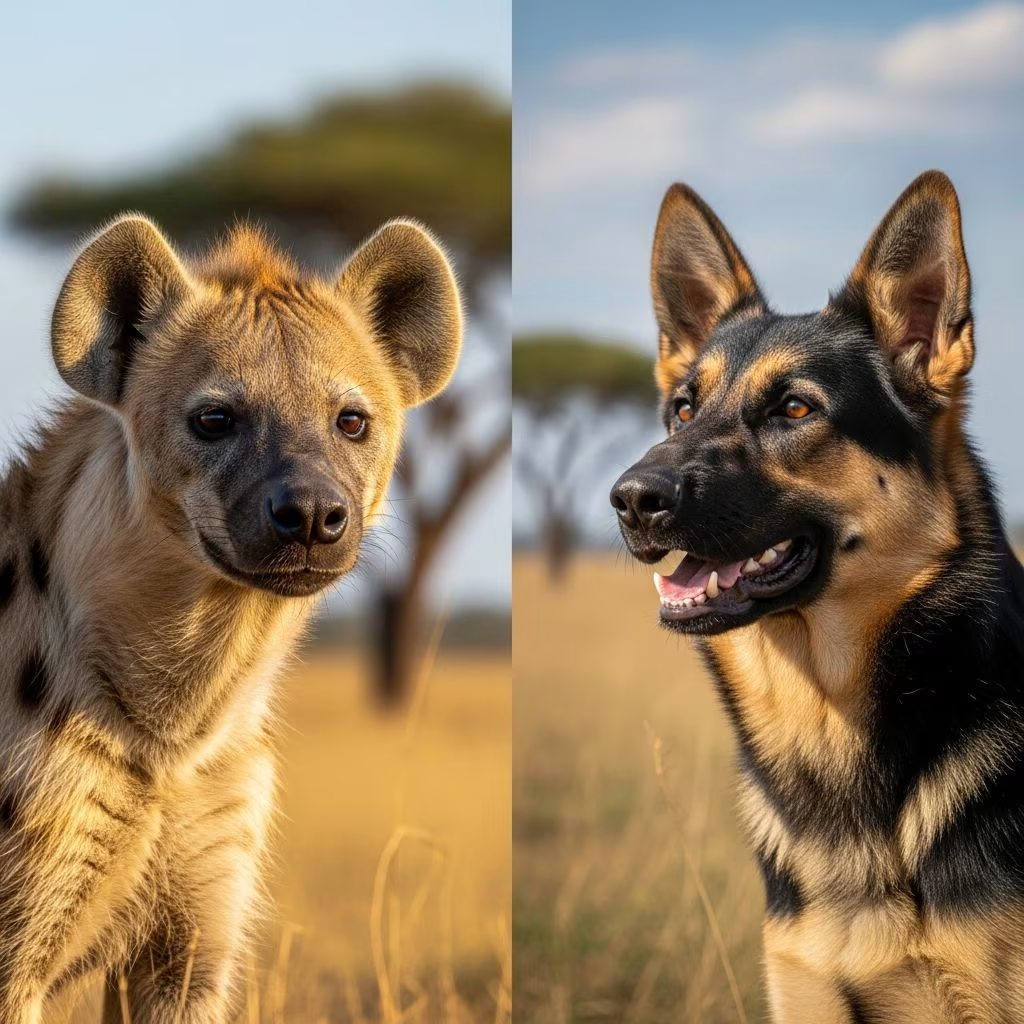
Hyenas captivate observers with their distinctive calls and scavenging prowess, often leading to questions about their relation to domestic dogs. Biologically, hyenas belong to the family Hyaenidae and are more closely aligned with felines in evolutionary terms than with canines.
The Evolutionary Divide: Where Hyenas Fit in the Animal Kingdom
Hyenas diverged from the lineage leading to cats and mongooses millions of years ago, placing them in the suborder Feliformia within the order Carnivora. This contrasts sharply with dogs, which fall under Caniformia, alongside bears, seals, and wolves. The distinction arises from genetic and anatomical evidence showing hyenas share more traits with cat-like animals, such as grooming behaviors and skeletal structures optimized for agility and power.
Four extant hyena species exist: the spotted hyena, the largest and most social; the striped hyena, more solitary; the brown hyena, coastal dwellers; and the aardwolf, an insectivore. None share a direct ancestry with the Canidae family that includes dogs, wolves, foxes, and African wild dogs.
Physical Traits That Fuel the Confusion
At first glance, hyenas resemble wild dogs due to their four-legged stance, pack hunting tendencies, and spotted or striped coats. However, closer inspection reveals key differences. Hyenas exhibit a sloping back with longer front legs than hind ones, creating a hunched appearance, while wild dogs maintain a level back and lean, agile build.
| Feature | Hyena | African Wild Dog |
|---|---|---|
| Weight | 90-190 lbs | 40-80 lbs |
| Shoulder Height | 2-3 ft | 2-2.5 ft |
| Body Length | 3-5 ft | 3-3.5 ft |
| Coat Pattern | Spots, stripes, or brown | Irregular blotches, painted-like |
| Ears | Smaller, pointed | Large, rounded |
| Toes per Foot | 4 | 4 (but blunter claws) |
Hyenas possess broader faces, shaggier fur, and bear-like bulk in the front, contrasting the slender, delicate frame of wild dogs. Bite force further differentiates them: hyenas crush bones with up to 1,100 PSI, using 34 conical teeth, while wild dogs’ 320 PSI bites and 42 shearing teeth suit flesh-tearing.
Hunting Strategies and Social Dynamics
Both animals hunt in groups, but their approaches differ. Spotted hyenas employ stamina-driven chases, reaching 35-40 mph with exceptional endurance thanks to oversized hearts. They scavenge opportunistically, stealing kills or consuming carrion, showcasing versatility.
African wild dogs, true pack hunters, hit 45 mph speeds and use cooperative tactics to exhaust prey over long distances. They prioritize fresh kills, eating live prey to evade thieves like hyenas. Hyena clans feature matriarchal structures where females dominate and compete fiercely, unlike the egalitarian, playful wild dog packs that emphasize unity and minimal conflict.
- Hyenas: Bold scavengers and hunters; use whoops and laughs to intimidate.
- Wild dogs: Endurance runners; share food regurgitated for pups and injured members.
Habitats and Geographic Ranges
Hyenas thrive across sub-Saharan Africa, North Africa, and parts of the Middle East and India, adapting to savannas, woodlands, and deserts. Spotted hyenas favor open grasslands, while striped hyenas prefer arid regions.
African wild dogs roam vast territories in eastern and southern Africa, covering hundreds of square miles per pack. Habitat loss and human encroachment threaten their numbers, now critically low at around 6,600 individuals, compared to hyenas’ more stable populations.
Interactions in the Wild: Rivals or Coexistors?
Encounters between hyenas and wild dogs often turn tense. Hyenas, larger and stronger, frequently bully wild dogs off kills, using numbers or intimidation. Lone hyenas test packs by snatching bites, while groups employ vocalizations to scatter opponents. Wild dogs defend fiercely, sometimes repelling hyenas through coordinated attacks.
In hypothetical confrontations, a single hyena overpowers a wild dog due to size and bite strength. Packs even the odds, but hyenas’ power usually prevails. These dynamics highlight their competitive niches without direct predation on each other.
Debunking Persistent Myths
Folklore paints hyenas as cowardly scavengers, ignoring their 60-95% hunting success rate for spotted hyenas—higher than many big cats. Another myth links them closely to dogs due to superficial similarities, perpetuated by media depictions. Genetic studies confirm their feline affinities, dispelling canine connections.
Unlike dogs, hyenas lack retractable claws and have pseudo-penises in females, unique reproductive traits underscoring their distinct evolution.
Conservation Challenges Facing Both Species
While hyenas fare better overall, striped and brown species face declines from habitat fragmentation. Wild dogs suffer most, with populations plummeting 500,000 to 6,600 due to snares, disease, and retaliatory killings. Both require protected corridors and anti-poaching efforts.
Observing These Predators Responsibly
Safaris offer glimpses into their worlds. Look for hyenas’ sloping backs and whoops at dusk; spot wild dogs’ blotchy coats during dawn hunts. Ethical tourism supports conservation without disturbing natural behaviors.
Frequently Asked Questions
Are hyenas part of the dog family?
No, hyenas belong to Hyaenidae, related to cats, not Canidae like dogs.
Which is stronger, a hyena or a wild dog?
Hyenas dominate due to size, bite force, and strength.
Do hyenas and wild dogs ever team up?
Rarely; they compete over food sources.
Why do female hyenas lead clans?
Higher testosterone levels make them larger and more aggressive than males.
Can hyenas be domesticated like dogs?
No, their wild instincts and social structures prevent it.
Unique Adaptations of Hyenas
Hyenas’ bone-crushing jaws enable full carcass utilization, minimizing waste. Their acute senses—smell detecting prey miles away, superior night vision, and directional hearing—aid nocturnal hunts. Aardwolves, despite hyena kinship, subsist on termites using sticky tongues, illustrating family diversity.
Comparing Social Structures
| Aspect | Hyena Clans | Wild Dog Packs |
|---|---|---|
| Leadership | Female-dominated, hierarchical | Egalitarian, cooperative |
| Group Size | 10-80 members | 6-20 members |
| Interactions | Competitive, aggressive | Playful, affectionate |
| Communication | Whoops, laughs, scents | Barks, twitters, greetings |
These contrasts reveal specialized survival strategies honed over millennia.
Understanding hyenas beyond dog comparisons enriches appreciation of biodiversity. Their resilience and ingenuity make them vital to ecosystems as top carnivores controlling prey populations.
References
- Hyena vs. Wild Dog: Who Would Win In A Fight? — A-Z Animals. 2023-05-15. https://a-z-animals.com/articles/hyena-vs-wild-dog-who-would-win-in-a-fight/
- What’s the Difference Between Hyenas and African Wild Dogs? — Natural Habitat Adventures. 2022-08-10. https://www.nathab.com/blog/whats-the-difference-between-hyenas-and-african-wild-dogs
- Wild dog vs Hyena — Sabi Sabi Private Game Reserve. 2021-11-20. https://www.sabisabi.com/discover/topics/wild-dog-vs-hyena



