Hydrolyzed Protein Dog Food Guide
Explore how hydrolyzed protein diets help dogs with allergies and digestive issues while weighing benefits, risks, and practical tips.
Hydrolyzed Protein Dog Food: A Comprehensive Guide
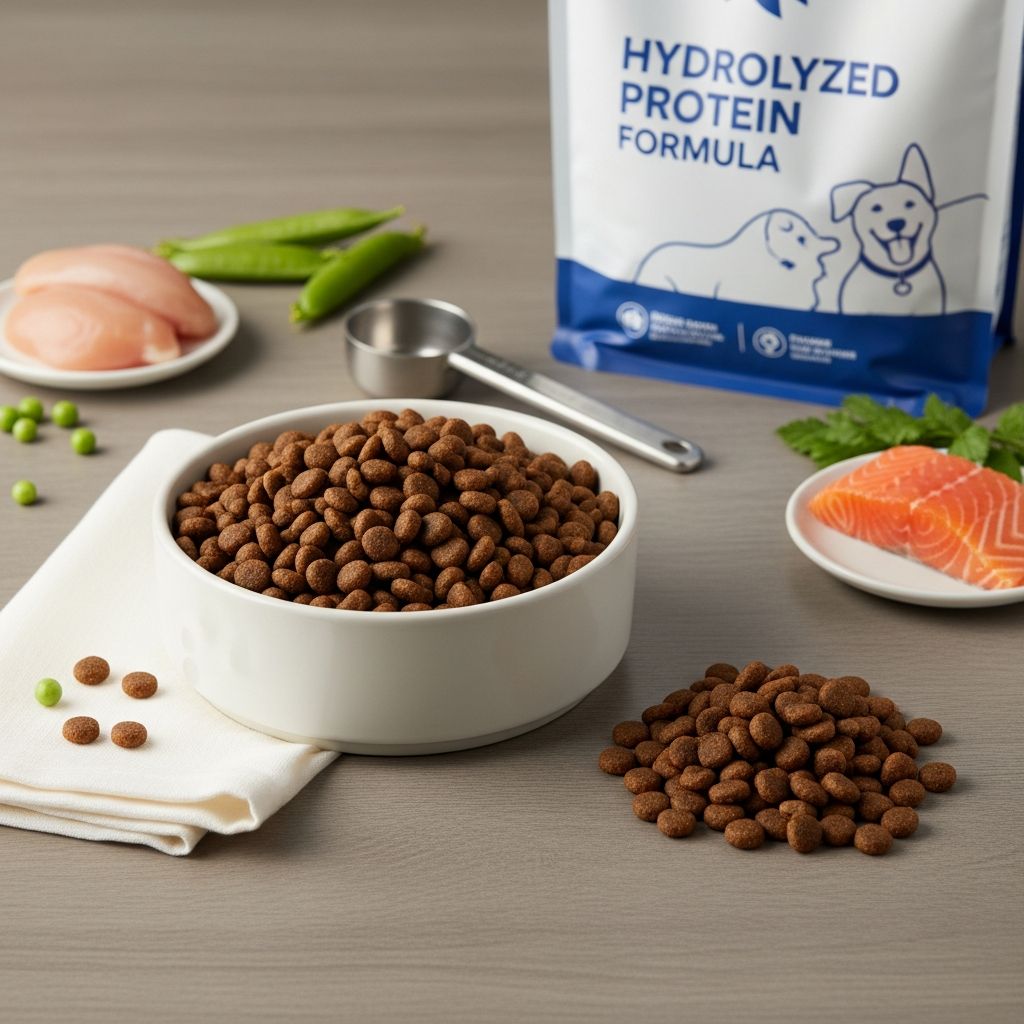
Hydrolyzed protein dog food breaks down proteins into smaller components to reduce allergic reactions and improve digestion in sensitive dogs. These specialized diets are often prescribed by veterinarians for conditions like food allergies and inflammatory bowel disease (IBD).
Understanding the Science Behind Hydrolyzed Proteins
Proteins in standard dog foods consist of large molecules that the canine immune system may misidentify as threats, triggering adverse reactions. Hydrolysis uses enzymes or acids to split these into tiny peptides or amino acids, making them unrecognizable to the immune system and easier to absorb.
This process minimizes the chance of an immune response, which is crucial for dogs prone to allergies. Unlike novel protein diets that switch to unfamiliar sources like duck or kangaroo, hydrolyzed options use common proteins like soy or chicken but in a modified form to evade detection.
When Veterinarians Recommend These Diets
Vets turn to hydrolyzed protein foods primarily for two conditions: food allergies and IBD. Food allergies manifest through skin issues or gastrointestinal upset, often developing suddenly even after years on the same diet.
IBD involves chronic inflammation of the gut, leading to poor nutrient absorption and discomfort. Breeds like German Shepherds, Labrador Retrievers, and Shar-Peis face higher risks for these issues.
- Skin-related allergy signs: Itching, hair loss, infections in ears or paws.
- Digestive allergy signs: Vomiting, diarrhea, gas.
- IBD symptoms: Weight loss, lethargy, noisy bowels.
Diagnosis typically requires an elimination trial: feeding only the hydrolyzed diet for 8-12 weeks. Symptom improvement followed by relapse upon reintroducing old food confirms the issue.
Key Advantages for Sensitive Dogs
The primary benefit is reduced allergenicity, allowing dogs to eat without flare-ups. Smaller protein fragments ease gut workload, benefiting those with compromised digestion.
| Benefit | Description | Supported Conditions |
|---|---|---|
| Lower Immune Trigger | Peptides too small for antibody recognition | Allergies, skin issues |
| Enhanced Digestibility | Pre-broken proteins reduce gut strain | IBD, chronic diarrhea |
| Skin and Coat Improvement | Eliminates itch cycles and infections | Atopic dermatitis |
| Elimination Trial Aid | Hypoallergenic base for testing | Diagnosis process |
Manufacturers produce these under strict controls to prevent cross-contamination, ensuring purity. This aids in identifying specific allergens for potential diet normalization later.
Potential Drawbacks and Side Effects
Despite benefits, challenges exist. These diets cost more due to processing and are usually prescription-only, available via vets or online.
Palatability poses issues; the bitter taste from hydrolysis may deter picky eaters. Gradual transitions over 7-10 days help mitigate refusal or initial digestive upset like loose stools.
- Short-term effects: Vomiting, diarrhea, flatulence during switchover.
- Nutritional concerns: Processing may degrade some vitamins, suggesting short-term use unless monitored.
- Not 100% effective: 20-50% of allergic dogs may still react due to incomplete hydrolysis or other factors.
Long-term use requires vet oversight to prevent deficiencies. Some reports link specific brands to issues like thyroid problems or bladder stones, though evidence varies.
Popular Breeds and Risk Factors
Certain breeds show predispositions. Retrievers, Spaniels, and Shepherds often battle allergies, while Boxers risk IBD.
| Breed | Common Issue |
|---|---|
| Labrador Retriever | Food allergies |
| Cocker Spaniel | Skin allergies |
| German Shepherd | IBD, allergies |
| Shar-Pei | Skin conditions |
Age plays a role; allergies can emerge anytime, IBD peaks in middle age.
Implementing a Hydrolyzed Diet Successfully
Consult a vet before starting. They may recommend brands like those from Royal Canin or Hill’s, tailored to needs.
- Secure prescription if required.
- Transition slowly: Mix 25% new food days 1-3, increase gradually.
- Monitor weight, stool quality, skin daily.
- Conduct full elimination trial without treats.
- Reassess after 8 weeks; biopsy for IBD confirmation if needed.
Post-trial, vets might suggest novel proteins or reintroduction challenges to customize long-term plans.
Alternatives to Hydrolyzed Protein Diets
Not every dog needs hydrolysis. Novel single-protein diets work for mild cases, using limited ingredients like venison.
Hypoallergenic options with duck or fish offer variety. For severe IBD, amino acid-based diets provide even smaller units.
Probiotics or fiber supplements complement any regimen, supporting gut health.
Frequently Asked Questions (FAQs)
Is hydrolyzed dog food safe for all dogs?
No, it’s for diagnosed allergies or IBD. Healthy dogs don’t need it and may dislike the taste.
How long should my dog stay on this diet?
Minimum 8 weeks for trials; lifelong for some chronic cases under vet guidance.
Can I make hydrolyzed food at home?
Not recommended; requires precise processing to ensure safety and efficacy. Use commercial veterinary formulas.
Will it cure my dog’s allergies?
It manages symptoms, not cures. Identifying triggers allows potential switches.
Are there over-the-counter versions?
Most are prescription; check with vets for options.
Long-Term Management Strategies
Beyond diet, integrate skin care, flea prevention, and regular check-ups. Track symptoms in a journal for pattern recognition.
Nutritional balance is key; bloodwork ensures no deficiencies from prolonged use. Collaborate with veterinary nutritionists for personalized plans.
For multi-dog homes, separate feeding prevents cheating during trials.
References
- Hydrolyzed Dog Food: Pros and Cons — Boosie Pet Foods. 2023. https://www.boosie.co/blogs/journal/hydrolyzed-protein-dog-food-side-effects
- The Benefits and Risks of a Hydrolyzed Protein Diet — MyWoof. 2023. https://mywoof.com/blogs/articles/the-benefits-and-risks-of-a-hydrolyzed-protein-diet-for-allergy-prone-dogs-what-every-dog-owner-should-know
- Hydrolyzed Pet Food Problems — Dr. Andrew Jones, DVM (YouTube). 2022. https://www.youtube.com/watch?v=V_n-ZjcaH10
- What to Know About Hydrolyzed Protein Dog Food — PetMD. 2024-01-15. https://www.petmd.com/dog/nutrition/hydrolyzed-protein-dog-food
- Hydrolyzed Diets — NC State Veterinary Hospital. 2023. https://hospital.cvm.ncsu.edu/services/small-animals/nutrition/hydrolyzed-diets/
- Everything You Need to Know About Hydrolysed Dog Food — Pooch & Mutt. 2023. https://www.poochandmutt.co.uk/blogs/nutrition/everything-you-need-to-know-about-hydrolysed-dog-food
- Hydrolyzed Protein and Amino Acid–Based Diets — Today’s Veterinary Practice. 2022. https://todaysveterinarypractice.com/nutrition/hydrolyzed-protein-and-amino-acid-based-diets/
Similar Articles







Read full bio of Sneha Tete