

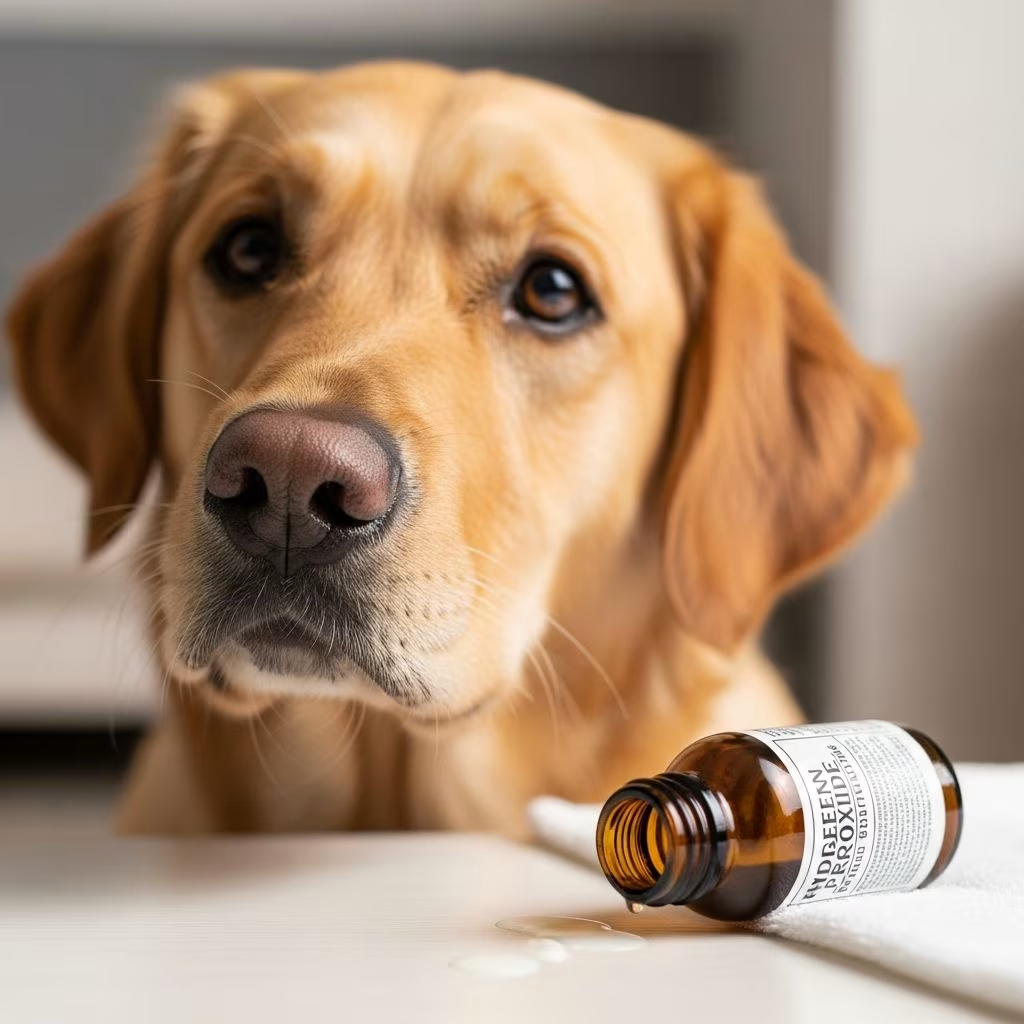
Hydrogen peroxide, a staple in many household medicine cabinets, prompts questions among dog owners about its veterinary applications. While it has niche uses under strict veterinary supervision, misuse can lead to severe complications like gastrointestinal damage or aspiration pneumonia. This guide examines its potential benefits, substantial dangers, and best practices for pet safety.
Understanding Hydrogen Peroxide’s Role in Canine Care
Hydrogen peroxide (H2O2) is an oxidizing agent commonly available as a 3% solution. In veterinary contexts, it irritates the stomach lining to trigger vomiting, but only in precise scenarios approved by professionals. Its reactive properties make it unsuitable for broad applications, as they can harm delicate canine tissues.
- Mechanism of Action: Produces oxygen bubbles that stimulate the gag reflex via gastric irritation.
- Concentration Matters: Exclusively 3% solutions; higher strengths risk corrosion to the esophagus and stomach.
- Time Sensitivity: Effective only within 30-60 minutes of toxin ingestion, after which substances move to the intestines.
Primary Veterinary Application: Inducing Vomiting
The sole common recommendation for hydrogen peroxide in dogs is to induce emesis following recent toxin exposure, but solely with veterinary approval. Pet owners often consider it for chocolate, grapes, or xylitol ingestion, yet professionals caution against self-administration due to variable efficacy and risks.
| Toxin Type | Potential for Safe Induction | Vet Recommendation |
|---|---|---|
| Chocolate/Grapes | Possible if <30 min post-ingestion | Call vet for dosage |
| Sharp Objects/Batteries | Never—risks perforation | Immediate ER visit |
| Caustic Chemicals | Never—exacerbates burns | Professional decontamination |
Dosage typically ranges from 1ml per 5 pounds of body weight, up to 45ml maximum, administered orally. If no vomiting occurs within 15 minutes, a second dose may be vet-approved, but repetition heightens risks.
Dangers and Side Effects to Watch For
Administering hydrogen peroxide without guidance frequently results in adverse outcomes. Studies reveal it causes gastritis, esophagitis, and gastric ulcers in dogs, confirmed via endoscopy post-administration. Brachycephalic breeds like Pugs face amplified dangers from aspiration during vomiting.
- Gastrointestinal Harm: Chemical burns, ulcers, inflammation leading to pain, bloody stools, or perforation.
- Respiratory Risks: Vomitus inhalation causes pneumonia, especially in flat-faced dogs.
- Overdose Effects: Excessive foaming, bloat, or systemic toxicity from high volumes.
- Ineffectiveness: Fails in 20-30% of cases, delaying critical care.
Recent research emphasizes pairing it with gastroprotectants like sucralfate or proton-pump inhibitors for 5-7 days if used, underscoring its non-benign profile.
Why Avoid Hydrogen Peroxide on Dog Wounds
A widespread myth persists that hydrogen peroxide cleanses wounds effectively due to its fizzing action. In reality, this oxidation kills healthy cells essential for healing, slows tissue repair, and increases infection risk. Veterinary consensus favors saline or warm water rinses followed by professional evaluation.
“The bubbling action… harms the cells needed for proper healing.”
For minor cuts, apply pet-safe antiseptics; for deeper injuries, seek immediate care to prevent abscesses or systemic infections.
Safer Alternatives for Emergency Pet Care
Veterinary clinics prefer apomorphine for reliable emesis, administered via injection for rapid, controlled results without GI trauma. At home, avoid table salt, mustard, or soap, as they cause hypernatremia or further irritation.
- Step 1: Prevent access to toxins via secure storage.
- Step 2: Contact ASPCA Poison Control or vet hotline immediately upon suspicion.
- Step 3: Transport to clinic for IV fluids, activated charcoal, or lipid therapy as needed.
- Step 4: Follow-up with protectants if emesis was induced.
When to Skip Home Remedies Entirely
Certain ingestions demand zero delay: petroleum products, corrosives, or bloated abdomens signal GDV or obstruction. Dogs exhibiting seizures, lethargy, or respiratory distress require ER intervention without attempts at vomiting.
Pre-existing conditions like megaesophagus amplify risks, making professional assessment non-negotiable.
Building a Pet-First Aid Kit Wisely
Stock essentials excluding hydrogen peroxide unless vet-recommended:
- Gauze, tape, and saline for wounds.
- Digital thermometer.
- Tweezers for ticks.
- Pet-safe Benadryl (vet-dosed).
- Muzzle for safety during handling.
Include poison hotline numbers: ASPCA (888-426-4435) or Pet Poison Helpline (855-764-7661).[10]
Frequently Asked Questions (FAQs)
Can I give my dog hydrogen peroxide without calling a vet?
No—always seek guidance first, as inappropriate use causes more harm.
What if my dog doesn’t vomit after hydrogen peroxide?
Do not repeat without vet approval; proceed to clinic for alternatives like apomorphine.
Is 3% hydrogen peroxide safe for dog ears or teeth?
No, it irritates sensitive mucous membranes; use vet-prescribed cleaners.
How quickly does hydrogen peroxide work in dogs?
Typically 10-15 minutes; ineffective beyond 2 hours post-ingestion.
What breeds are at highest risk from hydrogen peroxide?
Brachycephalics (e.g., Bulldogs, Pugs) due to airway anatomy.
Prevention: The Best Medicine for Your Dog
Proactive measures outperform reactive treatments. Secure human foods, medications, and chemicals; educate family on toxicities. Regular training reinforces “leave it” commands, reducing ingestion risks by up to 70% per behavior studies.
Annual vet checkups identify vulnerabilities early. In poisoning scenarios, time is critical—professional care yields 90%+ survival rates for many toxins when addressed promptly.
References
- Hydrogen Peroxide for Dogs: Is It a Safe Emergency Treatment? — GSVS. 2023. https://gsvs.org/blog/hydrogen-peroxide-for-dogs-emergency/
- Is Safe Hydrogen Peroxide Safe for Pets? — BLVD Vet. 2024. https://www.blvd.vet/blog/hydrogen-peroxide-dog-cat
- Can I use hydrogen peroxide in the canine poisoned patient? — VETgirl. 2017-09-01. https://vetgirlontherun.com/can-i-use-hydrogen-peroxide-in-the-canine-poisoned-patient-vetgirl-veterinary-continuing-education-blog/
- Can You Use Peroxide on Dogs? — Warrenville Grove Animal Hospital. 2024. https://warrenvillevet.com/blog/can-you-use-peroxide-on-dogs/
- Making Dogs Throw Up — PetMD. 2025. https://www.petmd.com/dog/poisoning/making-dogs-throw-up
- Why You Shouldn’t Use Hydrogen Peroxide on Your Pet — DoveLewis. 2024. https://www.dovelewis.org/blog/why-you-shouldnt-use-hydrogen-peroxide-your-pet
- Inducing Vomiting at Home — Ellicott Vets. 2025-06. https://www.ellicottvets.com/wp-content/uploads/2025/06/Inducing_Vomiting.pdf



