

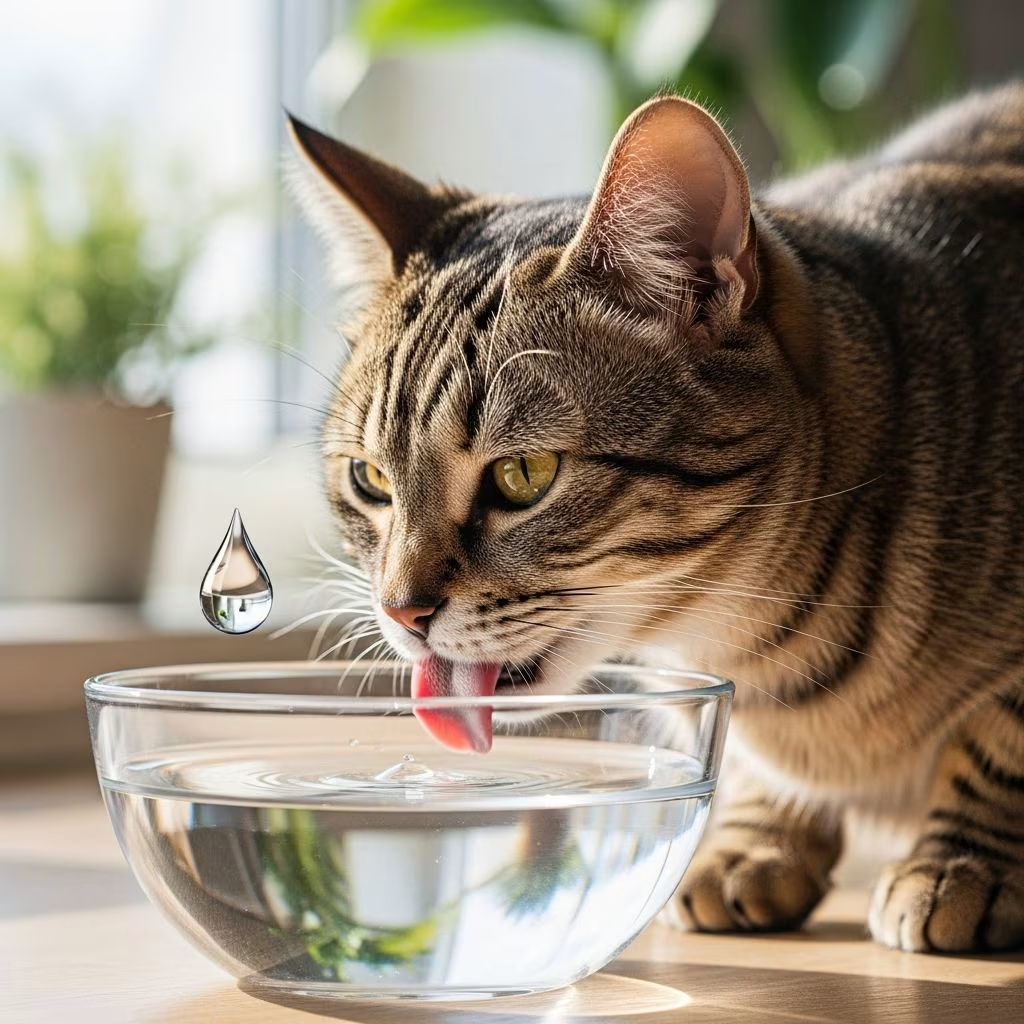
Proper hydration is fundamental to maintaining your cat’s bladder health, as it dilutes urine to prevent crystal and stone formation while flushing out potential pathogens. Cats evolved as desert dwellers with efficient water conservation, often leading to low voluntary intake from static bowls, which heightens risks for urinary disorders.
Why Cats Struggle with Hydration
Domestic cats descend from arid-adapted ancestors, instinctively sipping small amounts infrequently rather than gulping large volumes like dogs. This behavior persists, causing many to consume insufficient water, especially from still bowls that quickly grow stale or collect debris, deterring drinks.
Dehydration manifests subtly: check for tacky gums, sunken eyes, skin tenting when pinched, lethargy, or concentrated dark urine. Chronic low intake concentrates urine, fostering mineral supersaturation that crystallizes into struvite or calcium oxalate stones, irritating the bladder lining.
Urinary Disorders Linked to Poor Hydration
Feline lower urinary tract disease (FLUTD) encompasses inflammation, infections, and obstructions, with dehydration as a key aggravator. Concentrated urine promotes bacterial growth and crystal aggregation; males face higher blockage risks due to narrow urethras, where even small plugs can prove fatal without swift intervention.
| Condition | Hydration Impact | Prevalence Notes |
|---|---|---|
| Bladder Stones (Uroliths) | Dilute urine reduces mineral clumping | 15-20% of FLUTD cases |
| Urethral Obstruction | Prevents debris buildup in males | 1.5-9% incidence; 11-43% recurrence |
| Idiopathic Cystitis | Flushes irritants, eases inflammation | Common in stressed indoor cats |
| Chronic Kidney Disease | Supports filtration, delays onset | Affects 1/3 cats over 10 years |
These issues demand emergency care; hydrated cats produce more urine volume, lowering relative supersaturation and recurrence odds.
Boosting Water Intake with Fountains
Circulating water fountains mimic natural streams, enticing cats via motion, aeration, and freshness—often tripling intake compared to bowls. Filters remove impurities, ensuring palatability; cats prefer cooler, oxygenated flows.
- Continuous filtration: Keeps water pristine, reducing stagnation aversion.
- Multiple access points: Suits multi-cat homes, minimizing competition.
- Quiet pumps: Avoid startling sensitive pets.
- Varied materials: Ceramic or stainless steel resists bacteria better than plastic.
Position fountains centrally, away from litter boxes and food, refreshing daily. Studies affirm fountains elevate total fluid turnover, yielding dilute urine akin to wet-food fed cats.
Dietary Moisture: A Hydration Powerhouse
Wet foods supply 70-80% water, vastly outpacing kibble’s 10%, naturally boosting total intake without behavioral shifts. Research shows high-moisture diets yield larger urine volumes and lower crystal risks, even if bowl drinking dips.
Combine strategies: wet food mornings, kibble evenings with fountain access. Specialized urinary formulas adjust pH (ideal 6.2-6.4) and limit stone-forming minerals. Transition gradually to avoid digestive upset.
Water Quality and Its Hidden Effects
Tap water’s chlorine, hardness, or pH extremes can deter drinking or imbalance urine. Opt for filtered, low-mineral sources; ozonated or pH-balanced options like those at 6.2-6.4 promote uptake and optimal acidity to dissolve struvite while deterring oxalates.
Avoid demineralized extremes; test home water and adjust. Freshness matters—stale bowls breed microbes, worsening tract vulnerability.
Recognizing and Addressing Early Warning Signs
Monitor for straining sans output, bloody urine, frequent small voids, vocalizing during elimination, or hiding—hallmarks of distress. Females may mask symptoms longer; seniors warrant vigilance for kidney ties.
At onset, entice drinking with fountains, wet food boosts, or broth additives. Vet consults confirm via urinalysis; antibiotics or diets resolve most, but hydration underpins prevention.
Long-Term Strategies for Urinary Resilience
- Multi-fountain setup for territory respect in homes with several cats.
- Flavor enhancers: tuna water or chicken broth (low-sodium) to spark interest.
- Environmental enrichment: reduce stress via play, perches, pheromone diffusers—stress exacerbates cystitis.
- Weight control: obesity hampers mobility, concentrating urine further.
- Regular checkups: annual urine tests catch subclinical issues.
Track intake: aim for 45-60ml/kg body weight daily, adjusting for diet. Puppies drink more; kittens need frequent access.
FAQs
How much water should my cat drink daily?
Target 50-100ml per kg of body weight, varying by food moisture and activity; fountains help achieve this.
Are fountains safe for all cats?
Yes, with quiet models and easy-clean designs; supervise kittens initially.
Can dry food cause bladder problems?
It contributes via low moisture if water intake lags, raising stone risks—balance with wet options.
What if my cat ignores the fountain?
Run briefly to demonstrate, place near favored spots, try varied models.
Is filtered water necessary?
Beneficial for purity and pH; enhances appeal and health outcomes.
Integrating Hydration into Daily Care
Transform routine: fountain by dawn, wet meal rotations, bowl flushes thrice daily. Observe patterns—steady sipping beats binges. This proactive hydration fortifies bladders against prevalent foes, extending vitality.
Owners report fewer vet visits post-fountain adoption, underscoring simplicity’s power. Pair with litter monitoring for holistic oversight.
References
- Water Fountains for Cats Bladder Health: A Comprehensive Guide — UAH Pet. 2023. https://www.uahpet.com/blogs/post/water-fountains-for-cats-bladder-health-a-comprehensive-guide
- Are Water Fountains Really Good for Cats? — Cheerble. 2024. https://cheerble.com/blogs/cheerble-blog/cat-water-fountain-health-benefits
- How a Cat Water Fountain Can Reduce Urinary Problems in Cats — Your Pets Daily. 2025-10-03. https://www.yourpetsdaily.co.uk/article/2025/10/03/how-cat-water-fountain-can-reduce-urinary-problems-cats
- Cat Hydration: Why Water is a Key Nutrient to Lifelong Health in Felines — Pet Age. 2024. https://www.petage.com/cat-hydration-why-water-is-a-key-nutrient-to-lifelong-health-in-felines/
- CATWATER – Urinary Formula — Cat Water. 2023. https://catwater.com
- Clean Drinking Water for Cats: What Every Cat Owner Should Know — Clean Water Store. 2024. https://www.cleanwaterstore.com/blog/clean-drinking-water-for-cats-what-every-cat-owner-should-know/
- Effect of water source on intake and urine concentration in healthy cats — PMC (PubMed Central). 2024. https://pmc.ncbi.nlm.nih.gov/articles/PMC10822276/



