

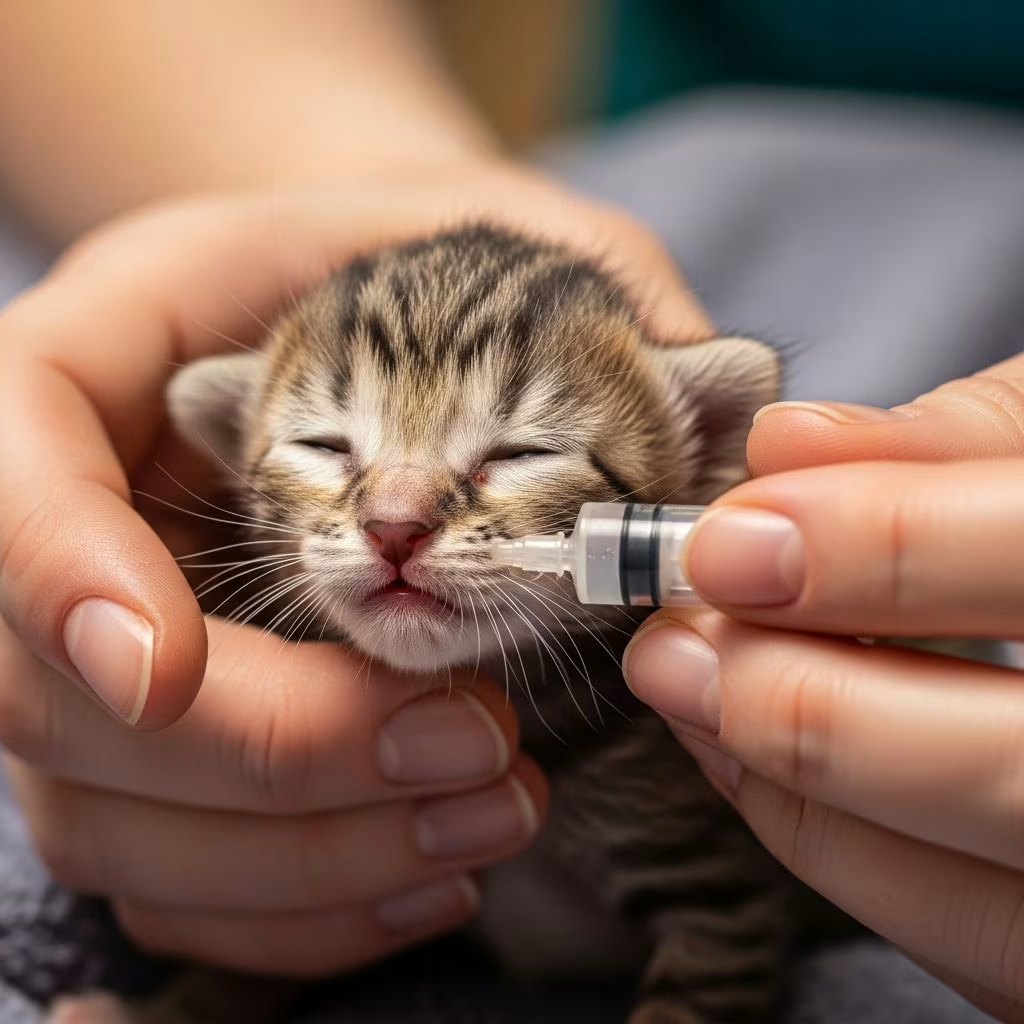
Newborn kittens rely entirely on caregivers for hydration, as they cannot yet drink water independently. Proper fluid intake is crucial for their survival and development, with needs ranging from 155-230 mL per kilogram of body weight daily. This guide explores essential practices for maintaining hydration in these vulnerable pets.
Understanding Fluid Needs in Neonatal Kittens
Neonatal kittens, typically under four weeks old, derive most hydration from milk replacer formulas designed to mimic mother’s milk. These formulas provide not just nutrition but also the necessary water content, as cow’s milk is unsuitable due to its high lactose and low nutrient profile. Kittens require high fluid volumes because their small bodies lose moisture quickly through skin and respiration.
- Daily fluid goal: Approximately 180 mL per kg body weight, combining formula and any supplemental water.
- Formula dilution: Standard ratio is 1 part powder to 2 parts warm water (around 100°F).
- Avoid cow’s or goat’s milk to prevent diarrhea.
Monitoring weight gain is key; healthy kittens should gain steadily, with bellies rounding softly after feeds but not bloating.
Signs of Dehydration and When to Act
Dehydration manifests quickly in kittens. Look for sunken eyes, dry gums, lethargy, or skin that tents when pinched. Cold extremities or weak cries signal emergencies. Always warm chilled kittens fully before any feeding, as their bodies cannot regulate temperature until about three weeks old.
| Symptom | Severity | Action |
|---|---|---|
| Sunken eyes, tacky gums | Mild | Increase formula feeds; offer diluted electrolytes. |
| Tenting skin, lethargy | Moderate | Warm kitten; consult vet for fluids. |
| Cold body, no response | Severe | Emergency vet care immediately. |
Prevent issues by maintaining a warm nest (80-85°F floor temperature) with heating pads covered by towels, allowing kittens to move away from heat.
Preparing and Administering Formula
Commercial kitten milk replacer (KMR) is the gold standard. Mix precisely: 1 scoop powder to 2 parts water, warming to 98-102°F by placing the bottle in hot water—never microwave. Test on your wrist; it should feel neutral, like skin temperature.
- Wash hands thoroughly.
- Overfill bottle slightly, allowing air release.
- Position kitten sternal (on stomach), head slightly elevated—not on back.
- Insert nipple at 45-degree angle; wiggle gently to stimulate suckling.
If the nipple collapses, remove and reinflate. Feed until the kitten stops, repeating rounds for litters. Burp by gently patting the belly post-feed.
Age-Based Feeding Schedules
Adjust frequency and volume by age and weight. Use 8 mL formula per ounce of body weight daily as a baseline.
| Age | Weight Range | Amount per Feed | Frequency |
|---|---|---|---|
| 0-10 days | 100-250g | 2-5 mL | Every 2 hours (24/7) |
| 11 days-2.5 weeks | 250-350g | 8-14 mL | Every 3-4 hours |
| 2.5-4 weeks | 350-450g | 14-18 mL | Every 5-6 hours |
| 4-5 weeks | 450-550g | 18-22 mL | Every 6 hours + weaning |
Capacities prevent overfeeding risks like aspiration. For multiple kittens, rotate feeds.
Transitioning from Formula to Solids
Around 3-4 weeks, introduce gruel: mix formula with wet food, thinning progressively. Provide fresh water in shallow bowls. Add dry kibble soaked in formula for picky eaters.
- Start with formula:wet food (3:1), adjust to more solids.
- Monitor stools; looseness means slow introduction.
- By 5-8 weeks, offer wet food 2x daily plus free-choice dry and water.
Weaning completes by 8 weeks, ensuring hydration via water bowls.
Common Mistakes to Avoid
Errors can be fatal. Steer clear of:
- Forcing feeds—kittens lack gag reflex.
- Feeding cold or chilled kittens.
- Over-squeezing bottles, flooding milk.
- Improper positioning, risking pneumonia.
Clean equipment after each use to prevent bacteria.
Special Considerations for Weak or Sick Kittens
Smaller kittens eat less per session but more frequently. For rehydration, dilute formula or use unflavored Pedialyte mixed with KMR, plus probiotics. Consult vets for IV fluids if needed.
Creating an Optimal Kitten Environment
Beyond fluids, warmth and cleanliness matter. Use low-sided boxes with frequent bedding changes. Introduce litter around 3 weeks, using non-clumping types. Stimulate elimination by wiping genitals with warm cloths post-feed until 3 weeks.
Frequently Asked Questions (FAQs)
Can newborn kittens have plain water?
No, not directly until weaning. Formulas suffice; excess water risks dilution of nutrients or aspiration.
What if a kitten refuses the bottle?
Warm fully, try nipple pulling to encourage latch, or syringe-feed cautiously under vet guidance.
How do I know if feeds are successful?
Round belly, firm stools turning yellow/mustard, steady weight gain (4-10g daily initially).
Is tap water safe for mixing formula?
Yes, unless high minerals/chlorine; use filtered if concerned.
When to seek veterinary help?
Persistent crying, diarrhea, weight loss, or breathing issues.
References
- Bottle-Feeding Kittens: A Comprehensive Guide — Best Friends Animal Society. 2023. https://bestfriends.org/pet-care-resources/bottle-feeding-kittens-comprehensive-guide
- Neonatal & Newborn Kittens | Care, Feeding Help & Burping Tips — Alley Cat Allies. 2023. https://www.alleycat.org/community-cat-care/caring-for-neonatal-kittens/
- Kitten Bottle Feeding Guide — ASPCA Professional. 2023-06. https://www.aspcapro.org/sites/default/files/2023-06/kittenbottlefeedingguide.pdf
- Feeding Orphaned Kittens — VCA Animal Hospitals. 2023. https://vcahospitals.com/know-your-pet/feeding-orphaned-kittens
- Bottle Feeding Kittens — PAWS Chicago. 2020-05-14. https://www.pawschicago.org/fileadmin/media/images/News_Resources/Cat_Resources/PAWS_Chicago_Bottle_Feeding_Kittens_5.14.2020.pdf
- General Care of Bottle Baby/Nursing Kittens — Longmont Humane Society. 2020-09. https://www.longmonthumane.org/wp-content/uploads/2020/09/Bottle20Baby-Nursing20Kitten20Guide20-20Public20Inquiry.pdf



