
Hyacinth Macaw: Personality, Food & Care Guide
Complete guide to hyacinth macaw care, diet, personality traits, and requirements for pet owners.
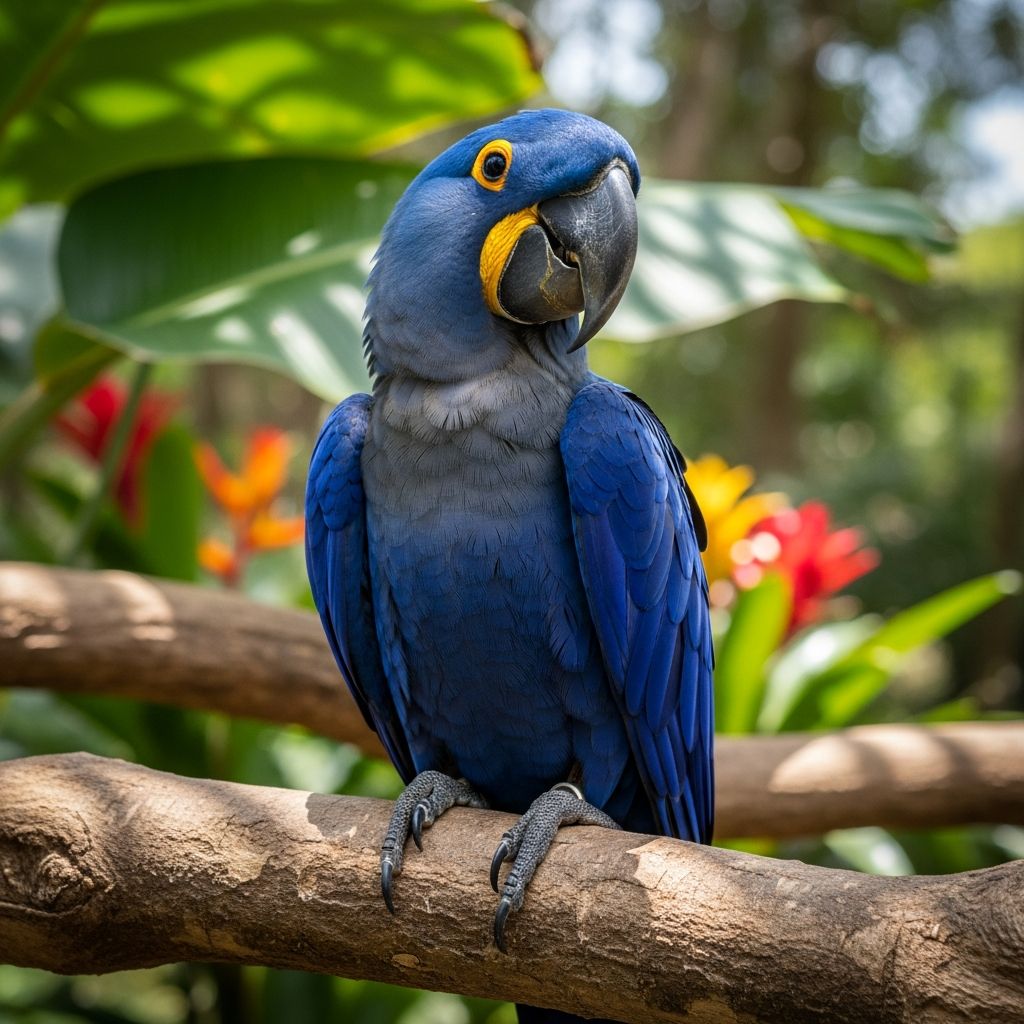
The hyacinth macaw stands as one of the most extraordinary birds in the avian world, captivating pet enthusiasts and bird lovers alike with its stunning cobalt-blue coloring and impressive stature. These magnificent creatures are the largest flying parrots in existence, commanding attention wherever they go. With their distinctive bright yellow markings around the eyes and remarkable intelligence, hyacinth macaws have earned a special place in the hearts of those who understand their complex needs and personalities.
Physical Characteristics and Appearance
The hyacinth macaw’s appearance is nothing short of spectacular. These birds are immediately recognizable by their uniform cobalt-blue plumage that exhibits a rich, glossy quality under natural light. What truly sets them apart from other macaw species is the distinctive bright yellow coloring that adorns the areas around their eyes and along their lower mandible, creating an appearance that often seems to showcase a cheerful expression.
Size and Dimensions
Hyacinth macaws are truly impressive in scale, measuring up to 40 inches in length from head to tail. These birds typically weigh between 2.75 to 3.5 pounds, with a wingspan of approximately 4 feet. Notably, nearly half of their total length comprises their long, pointed tail, which they use with remarkable dexterity during flight and climbing activities. Their substantial size makes them the largest of all parrot species, a distinction they carry with unmistakable presence.
Distinctive Features
One of the most notable features of the hyacinth macaw is its massive, strongly hooked black beak that lacks the ridges found on other macaw species. This powerful beak is capable of exerting over 200 pounds of pressure per square inch, enabling these birds to crack even the hardest nuts with ease. The beak serves multiple functions, acting as a third foot to assist in climbing and grasping onto trees and branches. Their short, sturdy legs are perfectly adapted for hanging sideways or upside-down, and they possess zygodactylous feet with two toes pointing forward and two pointing backward, providing exceptional gripping ability.
The underside of their flight and tail feathers displays gray coloring, creating subtle contrast with their predominantly blue plumage. Their dry, smooth tongues contain a small bone structure inside that functions as an effective tool for tapping into fruits and extracting seeds from protected sources.
Personality and Behavioral Traits
Despite their impressive size and powerful beaks, hyacinth macaws are often described as “gentle giants” – a characterization that requires careful understanding. These birds possess affectionate and loving personalities, enjoying playful interaction with their human companions. However, their concept of “gentle” differs significantly from human expectations.
Social Nature and Interaction
Hyacinth macaws are profoundly social creatures that thrive on companionship and interaction. In the wild, they are typically seen in pairs or small groups, and they maintain constant vocal contact with their partners, even across distances. These birds are not “loners” by any measure, and they will languish without adequate company and social engagement. A confined hyacinth macaw without proper interaction becomes cranky, neurotic, and may develop destructive behaviors including self-mutilation and excessive screaming.
This bird, like all parrots, requires substantial free time daily to play with its humans or simply spend time in their presence. They will generally get along with other birds, particularly New World parrots, though individuals should be introduced early to prevent compatibility issues.
Communication and Vocalizations
Hyacinth macaws are vocal communicators that emit distinctive harsh guttural calls when alarmed or excited. They excel at mimicking human vocalizations and can learn to speak, though they are not as naturally gifted in this area as some other parrot species. Nevertheless, they are intelligent birds capable of learning words and phrases in the correct context, making them engaging conversationalists for patient owners.
Play and Handling Considerations
These birds tend to play rough, both with each other and with their human companions. While they are not inherently aggressive, their sheer strength and powerful beaks mean that even playful “mouthing” of an owner’s hand or arm can cause significant bite injuries. This behavior should be discouraged through consistent training begun when the bird is young. Their playful nature, combined with their lack of understanding of their own strength, makes early socialization and behavioral training essential for safe interaction.
Diet and Nutritional Requirements
A proper diet is fundamental to the health and longevity of captive hyacinth macaws. In their natural habitat, these birds consume a varied diet of nuts, fruits, seeds, insects, and grains, playing an important ecological role by dispersing seeds and nuts throughout their territory.
Natural Food Preferences
Hyacinth macaws in the wild travel extensively to find the ripest foods across vast areas. They particularly favor hard nuts that they can crack with their powerful beaks, though some nuts are so hard that the birds cannot feed on them until they have passed through the digestive systems of other animals like cattle. They also consume palm nuts, fruits, nectar, and various seeds. Their specialized tongue structure allows them to effectively tap into fruits and extract seeds from otherwise inaccessible food sources.
Captive Diet Guidelines
Captive hyacinth macaws require a carefully balanced diet that replicates their natural food sources as closely as possible. A quality pellet-based diet should form the foundation of their nutrition, supplemented with fresh fruits and vegetables daily. Nuts should be provided regularly, as they provide essential fats, proteins, and mental stimulation through the cracking process. Seeds, whole grains, and legumes add nutritional variety and enrichment opportunities. All foods should be pesticide-free and thoroughly washed before presentation.
Fresh, clean water must be available at all times, and food items should be removed within a few hours to prevent spoilage and bacterial growth. Nutritional supplementation should be discussed with an avian veterinarian familiar with macaw species to ensure optimal health outcomes.
Lifespan and Longevity
Hyacinth macaws are exceptionally long-lived birds, with lifespans of 30 or more years in captivity, and records indicating some individuals living well over 50 years. This extended lifespan represents a significant long-term commitment for potential owners, as these birds often outlive their human companions. This longevity factor should be carefully considered before acquiring one of these remarkable creatures, as they require consistent care and attention throughout their entire lives.
Care Requirements and Housing
Providing appropriate housing and care for a hyacinth macaw is substantially more demanding than caring for smaller parrot species. These birds require spacious, sturdy accommodations that can withstand the constant pressure of their powerful beaks.
Housing Specifications
Hyacinth macaws require large, heavy-duty cages or aviaries constructed from strong materials capable of withstanding their powerful beaks. The cage should be sufficiently spacious to allow for flight and movement, with multiple perches of varying diameters made from natural wood. Stainless steel or powder-coated metal cages are preferable to avoid zinc toxicity, which can be fatal to parrots.
These birds need secure locks on cage doors, as they are intelligent enough to figure out standard latches. The cage should be positioned in a social area of the home where the bird can observe family activities while still maintaining a quiet place for sleeping and resting.
Environmental Enrichment
Mental and physical stimulation is crucial for preventing boredom-related behavioral problems. Hyacinth macaws should have access to various toys, including destructible items they can shred, foraging toys that encourage natural feeding behaviors, and puzzle feeders that provide cognitive challenges. Toys should be rotated regularly to maintain novelty and interest. Natural branches and perches provide both psychological enrichment and exercise opportunities.
Temperature and Lighting
These birds thrive in moderate temperatures between 65 and 80 degrees Fahrenheit. They benefit from exposure to natural sunlight or full-spectrum lighting for 10 to 12 hours daily, which supports healthy plumage, mood regulation, and circadian rhythms. A separate sleeping area with reduced lighting encourages proper rest patterns.
Reproduction and Breeding Information
In their native habitat, hyacinth macaws are monogamous birds that usually remain with one partner for their entire life. These dedicated pairs engage in courting, copulation, and bonding activities throughout the year. In the wild, breeding occurs primarily between July and December, with nests constructed in tree cavities or cliff faces.
A single breeding pair typically produces one or two eggs per season, with around 100 breeding pairs in the wild population producing approximately seven to 25 offspring annually. Male birds attend to their females during the incubation period, which lasts about one month. Chicks fledge around 110 days but remain dependent on their parents until approximately six months old. Sexual maturity is typically reached between 2 to 4 years of age.
Conservation Status and Natural Habitat
The hyacinth macaw is native to southern Brazil and western Bolivia, inhabiting tall trees and palms in swamps, forests, and near river systems. The current wild population is estimated at 2,500 to 10,000 individuals. These birds are classified as Vulnerable by the IUCN, listed on CITES Appendix I, and designated as Endangered by the USFWS. Their habitat continues to face threats from deforestation and agricultural development, making conservation efforts crucial for species survival.
Frequently Asked Questions
Q: How long do hyacinth macaws live?
A: Hyacinth macaws typically live 30 or more years in captivity, with some individuals exceeding 50 years of age, making them a lifelong commitment.
Q: Are hyacinth macaws good pets for first-time bird owners?
A: No. Hyacinth macaws require experienced handlers due to their size, strength, complex social needs, and long lifespan. They are best suited for dedicated, experienced bird enthusiasts.
Q: How much space does a hyacinth macaw need?
A: These birds require very large, sturdy cages or aviaries with ample space for movement, multiple perches, and toys. They also benefit from out-of-cage flight time in secure spaces.
Q: Can hyacinth macaws talk?
A: Yes, hyacinth macaws can learn to speak and mimic human vocalizations, though they are not as naturally gifted in this area as some other parrot species.
Q: What should I feed my hyacinth macaw?
A: A quality pellet-based diet supplemented with fresh fruits, vegetables, nuts, seeds, and grains provides proper nutrition. Consult an avian veterinarian for specific dietary recommendations.
Q: How social are hyacinth macaws?
A: Hyacinth macaws are highly social birds that require daily interaction and companionship. Without adequate social engagement, they become stressed and develop behavioral problems.
Q: Are hyacinth macaws aggressive?
A: While not inherently aggressive, their powerful beaks and rough play style can cause serious injuries. Early training and proper handling techniques are essential.
Q: What is the conservation status of hyacinth macaws?
A: Hyacinth macaws are classified as Vulnerable by the IUCN, listed on CITES Appendix I, and designated as Endangered by the USFWS due to habitat loss and illegal trade.
References
- Hyacinth Macaw — Stone Zoo. Accessed 2025-11-28. https://www.zoonewengland.org/stone-zoo/our-animals/birds/hyacinth-macaw/
- What to Know About the Hyacinth Macaw — WebMD. Accessed 2025-11-28. https://www.webmd.com/pets/hyacinth-macaw
- Hyacinth Macaw Facts and Information — United Parks & Resorts. Accessed 2025-11-28. https://seaworld.org/animals/facts/birds/hyacinth-macaw/
- Anodorhynchus hyacinthinus (hyacinth macaw) — Animal Diversity Web. Accessed 2025-11-28. https://animaldiversity.org/accounts/Anodorhynchus_hyacinthinus/
- Hyacinth Macaw: The Largest Parrot in the World — One Earth. Accessed 2025-11-28. https://www.oneearth.org/species-of-the-week-hyacinth-macaw/
- Hyacinth Macaw — Akron Zoo. Accessed 2025-11-28. https://www.akronzoo.org/birds/hyacinth-macaw
Similar Articles








Read full bio of Sneha Tete


