

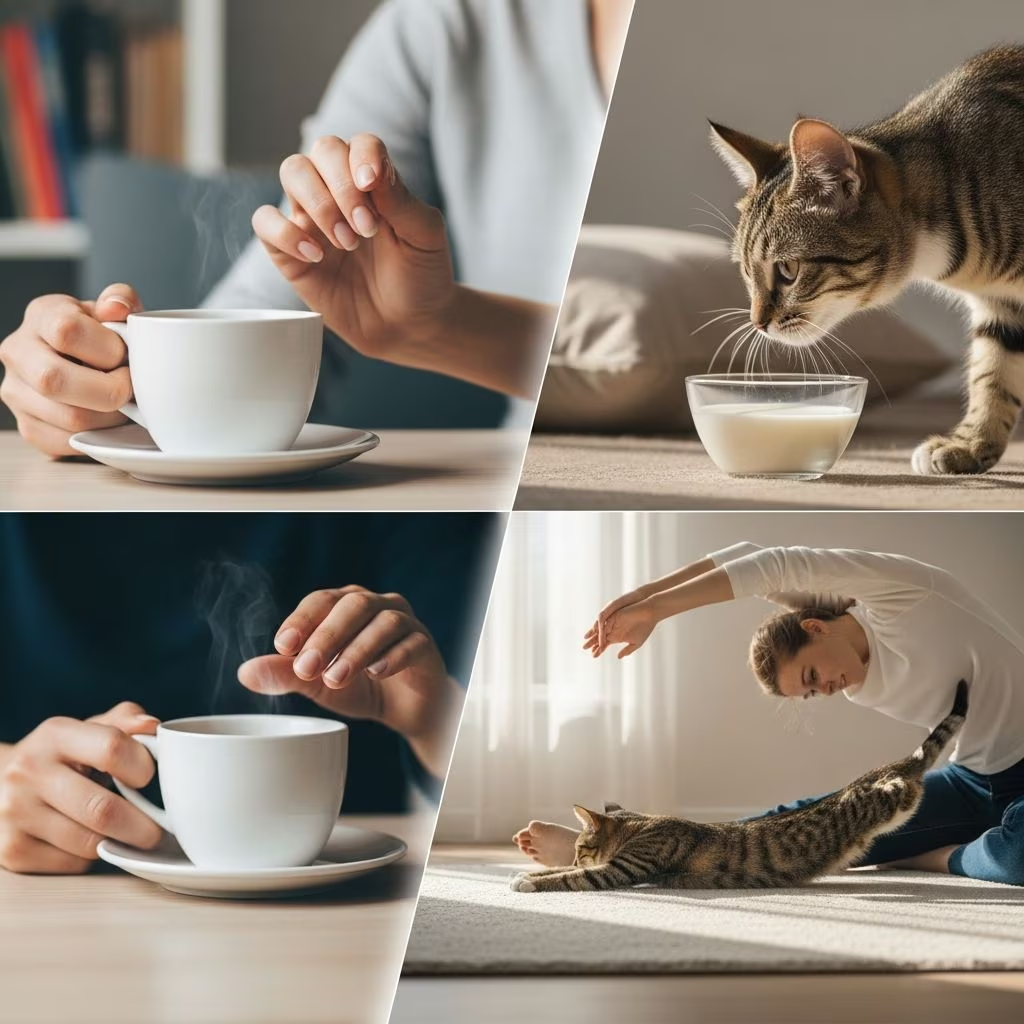
Cats and humans exhibit remarkable similarities in behavior, emotional responses, and social interactions that challenge the notion of cats as aloof companions. Research reveals how felines mirror our independence, sensitivity to emotions, and even grooming habits, creating profound connections.
The Independent Spirit Shared by Cats and People
Both cats and humans cherish moments of solitude, balancing social engagement with personal space. Cats often retreat to quiet corners for rest, much like individuals who recharge alone after social events. This autonomy fosters resilience and self-reliance in both species.
Studies on cat-human dynamics show cats dictate interaction lengths, deciding when to engage or withdraw, akin to humans setting boundaries in relationships. For instance, successful human initiations of contact lead to shorter sessions, underscoring the cat’s control—mirroring how people enforce personal limits to maintain well-being.
Emotional Sensitivity: Cats Picking Up on Our Feelings
Cats demonstrate acute awareness of human emotions through scent, visuals, and sounds, responding in ways that reflect empathy. Exposure to fear-scented odors prompts stress behaviors in cats, such as flattened ears and retreat, indicating they process our emotional states deeply.
- Cats show severe stress to fear scents more than neutral or physical stress odors.
- Right nostril usage increases during intense emotional responses, linking to brain areas handling arousal.
- Relaxed behaviors tie to left nostril activation, associated with positive processing.
Owners’ moods influence cats reciprocally; depressive individuals receive more vocalizations and rubbing from their cats, alleviating negative feelings comparable to human partner effects. This bidirectional empathy highlights cats’ emotional attunement, much like human friends sensing distress.
Communication Styles: Subtle Signals and Vocal Nuances
Humans and cats communicate via nuanced body language and vocalizations, often cross-modally matching emotions. Cats recognize happy or angry faces paired with voices from both felines and people, especially at high intensities.
| Communication Aspect | Human Trait | Cat Parallel |
|---|---|---|
| Body Language | Posture shifts for mood | Ear/tail positions signal stress |
| Vocal Cues | Tone varies by emotion | Meows adjust to owner feelings |
| Scent Signals | Pheromones in sweat | Detects emotional odors |
Women and children elicit more cat vocalizations due to their interactive styles, like getting low to the cat’s level, paralleling human preferences for empathetic communicators.
Grooming Rituals: Self-Care as a Daily Priority
Like humans who prioritize hygiene routines, cats dedicate hours to grooming, maintaining appearance and health. This meticulous self-care boosts mood and signals well-being to others, a shared trait enhancing social bonds.
Cats rub against owners, transferring scents akin to human hugs, reinforcing group identity. Depressed owners experience more such rubbing, illustrating grooming’s role in emotional support.
Playful Curiosity Driving Exploration and Learning
Curiosity propels both humans and cats to explore environments, solving problems through trial and error. Cats’ pattern recognition in play mirrors human conceptual learning, adapting to novel situations with agility.
Research indicates cats adjust behaviors to owner cues, showing modest sensitivity to emotions via posture and voice, particularly from familiar people. This exploratory drive fosters innovation and bonding.
Sleep Patterns: Masters of Naps and Downtime
Cats sleep 12-16 hours daily, favoring naps like many humans who thrive on segmented rest. Both species seek cozy spots, prioritizing recovery for peak performance.
Interaction data reveals cats initiate close contact bouts that last longer, emphasizing quality rest alongside play, similar to human work-life balance.
Territorial Instincts in Homes and Personal Spaces
Humans mark homes with decor; cats patrol and scent-mark territories. This protects resources and signals ownership, with cats responding defensively to intruders like people guard privacy.
Gender differences appear: men stay seated during interactions, prompting less cat positivity than women’s floor-level approaches.
Affection Displays: From Purring to Hugs
Cats purr during contentment or healing, akin to human comforting touches. Head-butts and slow blinks convey trust, paralleling hugs and eye contact in human affection.
Cats form secure attachments, preferring owners in tests, rivaling dog bonds. Positive experiences rebuild trust post-negatives, reflecting human relational resilience.
Food Preferences: Picky Eaters Unite
Both species develop strong tastes, rejecting unfamiliar foods. Cats’ neophobia echoes human food aversions, with socialization influencing acceptance.
Adaptability in Changing Environments
Cats adjust to new homes via routines, much like humans build stability amid change. Early human exposure enhances friendliness, per socialization models.
Health Consciousness: Monitoring Well-Being
Cats self-groom for health; humans exercise and diet similarly. Cats alter behaviors near ill owners, supporting recovery.
Building Stronger Human-Cat Bonds
Respect cat-led interactions, use consistent cues, and provide enrichment. Slow blinks and play mimic natural communication, deepening ties.
Frequently Asked Questions
Do cats really understand human emotions?
Yes, studies confirm cats detect emotions via scent, voice, and visuals, responding with stress or relaxation accordingly.
Why do cats seem aloof sometimes?
Cats control interactions, preferring self-paced engagement like independent humans.
Can cats help with human mental health?
Interactions reduce anxiety and depression, especially for women, comparable to partner effects.
How do cats communicate affection?
Through purring, rubbing, slow blinks, and proximity-seeking.
Are cats as attached as dogs?
Cats form secure bonds with owners, showing preference and emotional matching.
References
- Cats and human emotions: A stronger bond than we thought? — Noldus. 2025-04-02. https://noldus.com/blog/cats-react-to-human-emotional-scents
- The Mechanics of Social Interactions Between Cats and Their Owners — PMC (National Library of Medicine). 2021-04-19. https://pmc.ncbi.nlm.nih.gov/articles/PMC8044293/
- How They Are Different From People — Way of Cats. N/A. https://www.wayofcats.com/blog/how-they-are-different-from-people/36621
- Speaking of Psychology: What’s going on inside your cat’s head? — American Psychological Association. N/A. https://www.apa.org/news/podcasts/speaking-of-psychology/cat-human-bond



