Humane Pigeon Management: 7 Effective Strategies For Cities
Discover compassionate strategies to deter pigeons from urban spaces while protecting public health and preserving bird welfare.
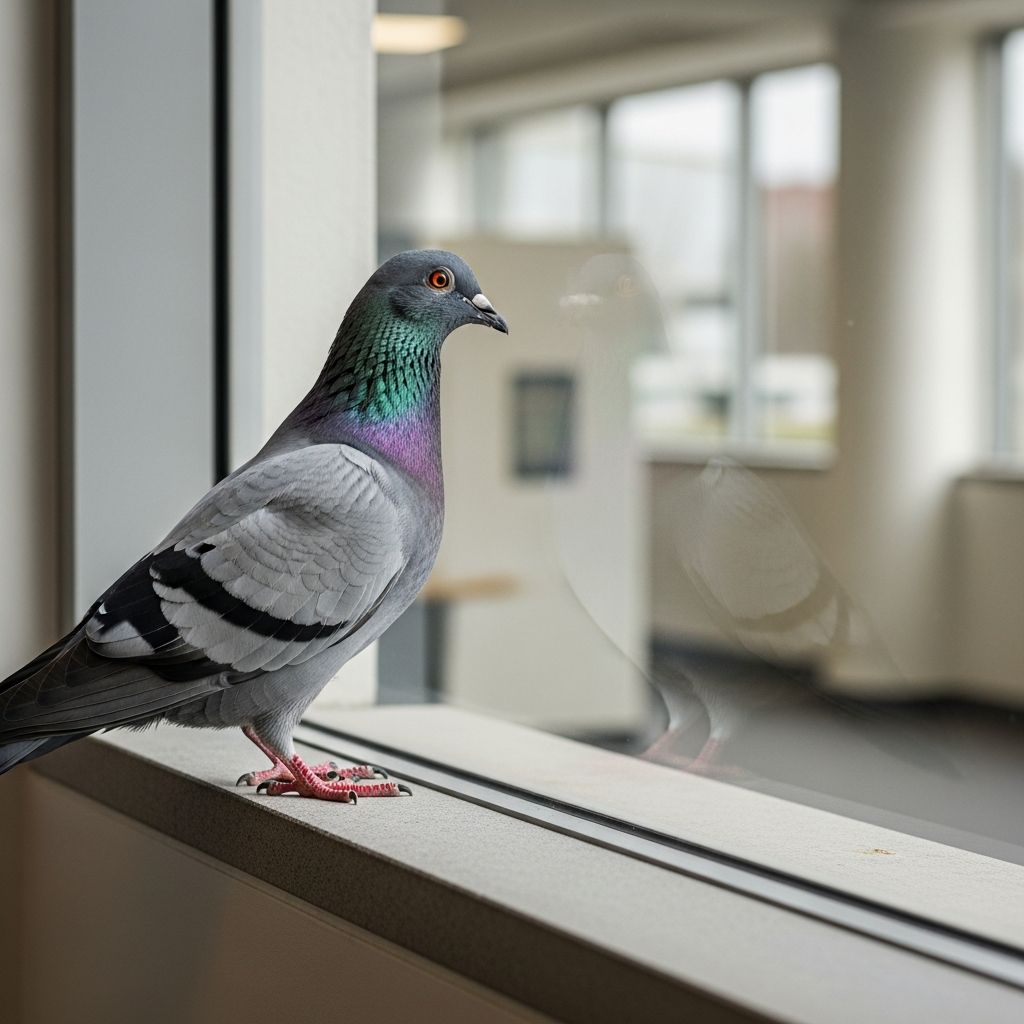
Humane Pigeon Management Guide
Pigeons thrive in urban settings due to abundant food, shelter, and minimal predators, leading to challenges like property damage and health risks from droppings. This guide outlines ethical, effective approaches to reduce their presence without causing harm, drawing on proven strategies for long-term success.
Understanding Urban Pigeon Challenges
City pigeons, often called rock doves, adapt remarkably to human environments. Their droppings corrode buildings and pose slip hazards, while large flocks spread diseases like histoplasmosis. Identifying high-activity zones—rooftops, ledges, bridges—is the first step in assessment. Experts evaluate these sites for nesting potential and damage risks from acidic waste.
Key issues include:
- Structural erosion from corrosive droppings.
- Health concerns from bacteria in feces.
- Air traffic disruptions near airports.
- Aesthetic degradation in public areas.
Addressing these requires integrated plans combining prevention, deterrence, and population control.
Prevention Through Environmental Changes
The foundation of humane management lies in making cities less inviting. Start by eliminating attractants.
Securing Food and Water Supplies
Pigeons flock to easy meals from trash, outdoor dining, or intentional feeding. Cities enforcing waste management see up to 30% fewer complaints. Secure bins with lids, sweep sidewalks daily, and educate against feeding. Public campaigns redirect feeders to designated sites, reducing central concentrations.
Modifying Habitats
Seal entry points to roofs and attics. Trim overhanging branches providing perches. In industrial zones, cover silos to block roosting. These tweaks disrupt nesting cycles without confrontation.
Physical Deterrents for Immediate Results
Non-invasive barriers prevent landing and nesting effectively.
| Method | Application Areas | Effectiveness | Pros | Cons |
|---|---|---|---|---|
| Bird Spikes | Ledges, signs, beams | High; 50%+ reduction | Humane, durable, low-maintenance | Visible on structures |
| Netting | Roofs, balconies, underpasses | Very high; excludes entirely | Invisible from ground, versatile | Requires professional install |
| Electrical Tracks | Flat surfaces, parapets | Moderate to high | Invisible, adjustable shock | Needs power source |
Spikes feature blunt prongs that discomfort without injury; install densely on uneven surfaces using adhesives or screws. Netting blocks access fully, ideal for large areas, with periodic checks for integrity.
Technological and Sensory Repellents
Modern tools leverage sound, light, or motion for broad coverage.
- Ultrasonic Devices: Emit inaudible high-frequency waves irritating pigeons. Best for enclosed spaces like parking garages; combine with visuals for amplified effect. Coverage varies by model—multiple units needed in noisy urban spots.
- Reflective and Laser Systems: Spinning reflectors or scanning lasers create disorientation. Automated lasers patrol large zones overnight, safe for humans and pets.
- Wind-Activated Scarecrows: Bobbing figures with noise mimic threats dynamically.
These humane options reduce reliance on constant human intervention, though efficacy drops if pigeons habituate—rotate methods regularly.
Natural Predation with Falconry
Reintroducing predator presence via trained raptors offers biological deterrence. Falcons or hawks patrol skies, triggering pigeons’ flight response through instinctual fear. Sessions last 30-60 minutes, several times weekly, yielding flock dispersal without kills.
Benefits include minimal environmental impact and psychological conditioning—pigeons learn to avoid the area long-term. Licensed falconers ensure safety in parks or near airports. Studies confirm superiority over static methods in open spaces.
Population Control via Contraceptives
For sustained reduction, target reproduction ethically. OvoControl bait, a registered contraceptive, sterilizes via treated feed resembling seeds. Pigeons consume voluntarily, leading to fewer viable eggs over months.
Administer in bait stations at feeding sites, monitored for uptake. Urban trials show flock sizes halving in 6-12 months without relocation stress. Pair with deterrents to accelerate results; safe for non-target species when managed properly.
Direct Removal Techniques
When flocks persist, humane capture relocates them.
- Trapping: Baited cages lure birds; transfer to sanctuaries. Easier but lower yield per effort.
- Mist-Netting: Fine nets deployed at roosts capture en masse overnight. Most efficient for large groups, per field tests.
Avoid poisons or culling—ineffective long-term, as survivors breed rapidly. Post-removal, apply preventives to bar return.
Building Community Support
Success hinges on collective action. Launch awareness drives highlighting feeding’s role in proliferation. Partner with businesses for waste protocols. Pigeon Control Action Systems (PiCAS) designate feeding zones while proofing key buildings citywide, saving cleanup costs.
Property owners retrofit collaboratively; incentives like grants boost participation. Track progress via complaint logs and flock counts.
Cost-Benefit Analysis of Methods
| Strategy | Initial Cost | Ongoing Cost | ROI Timeline | Durability |
|---|---|---|---|---|
| Spikes/Netting | Medium | Low | 3-6 months | 5+ years |
| Falconry | High | Medium | 1-3 months | Ongoing service |
| Contraceptives | Medium | Medium | 6-12 months | Continuous |
| Ultrasonic | Low | Low (electricity) | Immediate | 2-5 years |
Integrated approaches yield best value, cutting damages exceeding installation fees quickly.
Legal and Ethical Considerations
Regulations vary; consult local wildlife agencies. Humane methods align with welfare standards, avoiding fines from lethal tactics. Document efforts for compliance.
Frequently Asked Questions
Are pigeon spikes cruel?
No, they prevent landing without piercing skin, promoting relocation unharmed.
How long until deterrents work?
Physical barriers show results in weeks; population methods take months.
Can individuals handle pigeon issues?
DIY suits small sites; professionals excel for scale and safety.
Do pigeons carry diseases?
Droppings harbor pathogens; dry feces aerosolize risks indoors.
Is birth control safe for pets?
Yes, formulated to target pigeons specifically with low mammalian toxicity.
Implementing a Comprehensive Plan
Step 1: Survey sites. Step 2: Remove attractants. Step 3: Install deterrents. Step 4: Monitor and adapt. Long-term vigilance sustains gains, fostering harmonious urban coexistence.
References
- Strategies for Managing Pigeons in Urban Environments — Exterminatek. 2023. https://exterminatek.ca/en/mammals/strategies-for-pigeon-management-in-urban-areas/
- Pigeon Control Options in Urban Areas — Compliance Pest Control. 2024. https://www.compliancepestcontrol.com/post/pigeon-control-options-in-urban-areas
- 5 Effective Pigeon Control Solutions for Busy City Spaces — The Painted Hinge. 2023. https://www.thepaintedhinge.com/5-effective-pigeon-control-solutions-for-busy-city-spaces/
- Pigeon-Control Solutions — PETA. 2021-11. https://www.peta.org/wp-content/uploads/2021/11/pigeonreport.pdf
- Testing pigeon control efficiency by different methods — PubMed (Peer-reviewed). 2021-11-15. https://pubmed.ncbi.nlm.nih.gov/34784001/
- Pigeon Damage Control and Prevention Methods — ICWDM (.edu resource). 2023. https://icwdm.org/species/birds/pigeons/pigeon-damage-control-and-prevention-methods/
Similar Articles







Read full bio of medha deb