

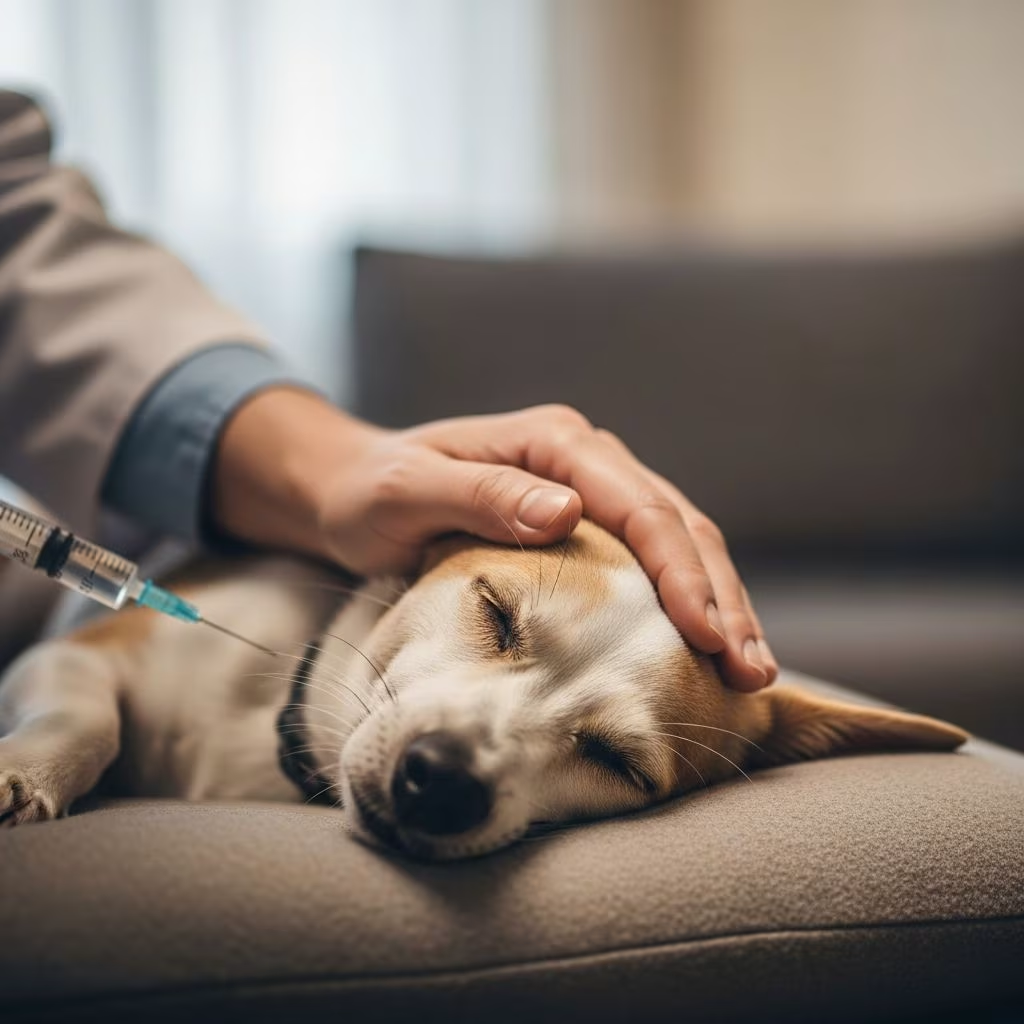
Humane euthanasia represents a critical veterinary practice aimed at ending animal suffering swiftly and painlessly when recovery is not feasible. This process requires careful selection of methods tailored to species, size, and context to ensure rapid unconsciousness and death while upholding ethical standards.
Core Principles of Ethical Euthanasia
The foundation of humane euthanasia rests on minimizing pain, fear, and distress. Key principles include achieving immediate loss of consciousness, ensuring irreversible cessation of vital functions, and safeguarding operator safety. Veterinary organizations emphasize methods that are reliable, verifiable, and backed by scientific evidence.
- Rapid onset: The animal should lose consciousness within seconds to avoid distress.
- Irreversibility: Confirm death through absence of reflexes, heartbeat, and respiration.
- Safety: Protect handlers from hazards like aggressive reactions or exposure to agents.
- Documentation: Record procedures for legal and welfare compliance.
These guidelines draw from authoritative sources like the AVMA, which categorize methods as acceptable, conditional, or unacceptable based on efficacy and humaneness.
Primary Euthanasia Agents and Their Applications
Injectable pharmaceuticals dominate as the gold standard due to their predictability and speed. Barbiturates, such as pentobarbital, induce deep anesthesia followed by cardiac and respiratory arrest when administered in overdose.
Common agents include:
- Sodium pentobarbital: Preferred for intravenous use in mammals; doses around 1 mL per 4.5 kg body weight for cats and dogs.
- Combination solutions: Barbiturates with phenytoin for rapid heart stoppage; avoid intraperitoneal routes due to regulatory limits.
- Dissociatives and anesthetics: Ketamine or tiletamine combinations for small animals, often with sedatives.
Alternative routes when IV access fails: intracardiac (under anesthesia), intrarenal (effective for cats at 3 mL/4.5 kg), or intraperitoneal. Sedation prior enhances comfort, especially for fearful animals.
Species-Specific Euthanasia Recommendations
Tailoring methods to biology ensures efficacy. The table below summarizes acceptable approaches per AVMA classifications.
| Species | Acceptable Methods | Conditional Methods |
|---|---|---|
| Amphibians | Injected barbiturates, topical tricaine methanesulfonate | Inhaled anesthetics, CO |
| Cats & Dogs | IV barbiturates, anesthetic overdose | Alternative barbiturate routes, inhaled overdose, CO |
| Cattle & Small Ruminants | IV barbiturates | Gunshot, captive bolt, CO |
| Fish | Immersion in MS-222, benzocaine, rapid chilling (small species) | Clove oil, CO |
| Birds & Poultry | IV barbiturates | Inhaled agents, cervical dislocation (small), CO |
| Rodents | Injected barbiturates, dissociatives | Inhaled anesthetics, CO, decapitation (post-anesthesia) |
| Equids | IV barbiturates | Captive bolt, gunshot |
For exotic species like reptiles or marine mammals, injected agents remain primary, with physical methods reserved for field conditions.
Physical and Inhalation Methods: When and How
Physical techniques suit large animals or research settings where chemicals are impractical. Gunshot targets the brain for instant insensibility in livestock; aim between eyes at a 45-degree angle for cattle. Penetrating captive bolts require precise placement and pithing/exsanguination to confirm death.
Inhalation methods involve gases like CO2, CO, or anesthetics. CO2 is conditional for rodents (<7 kg), starting at 40-70% displacement rate to avoid aversion. Anesthetics like isoflurane work for small animals but demand sealed chambers.
Unacceptable practices include drowning, hypothermia (except brief chilling for tiny fish), or household chemicals, as they cause prolonged suffering.
Special Considerations for Companion Animals
For pets like cats and dogs, client presence enhances dignity. Intrarenal injection allows holding during the process, with unconsciousness in under 10 seconds. Pre-euthanasia sedation (e.g., acepromazine, dexmedetomidine) calms without full anesthesia.
Aftercare: Verify death by checking corneal reflex, pulse, and lung sounds. Dispose of remains per local laws; barbiturate residues prohibit food animal use.
Research and Laboratory Animal Protocols
In labs, IACUC-approved methods prioritize two-step processes: anesthesia followed by decapitation, perfusion, or organ removal for rodents. CO2 requires gradual fill to minimize pain, verified humane only under controls. Exsanguination demands deep anesthesia.
Challenges and Operator Training
Errors arise from poor technique or inadequate dosing. Training is vital for physical methods like cervical dislocation (mice/rats) or guillotine use. Field euthanasia for wildlife may use blunt force or explosives, demanding proficiency.
Safety risks: Zoonoses, drug exposure (wear gloves), or recoil from firearms necessitate protocols.
Legal and Ethical Frameworks
Regulations vary; AVMA guidelines inform IACUCs and vets globally. Euthanasia must justify welfare benefits over prolonged suffering.
Frequently Asked Questions (FAQs)
What is the most humane way to euthanize a dog?
IV barbiturate injection is preferred, causing unconsciousness in seconds.
Can I euthanize my pet at home?
Only under veterinary guidance with approved agents; consult professionals.
Is CO2 euthanasia painful for rodents?
Conditional; use slow displacement to reduce distress.
How do I confirm an animal is deceased?
No heartbeat, respiration, reflexes, or response to stimuli.
What about euthanasia for livestock?
Barbiturates or captive bolt/gunshot per humane slaughter rules.
This comprehensive approach ensures euthanasia aligns with compassion and science, supporting animal welfare professionals in tough decisions.
References
- Agents and Methods of Euthanasia by Species — Merck Veterinary Manual. 2020. https://www.merckvetmanual.com/multimedia/table/agents-and-methods-of-euthanasia-by-species
- Euthanasia of Research Animals — University of California Irvine (UCI) Research. Accessed 2026. https://research.uci.edu/animal-care-and-use/policies-and-guidance/euthanasia-of-research-animals/
- Euthanasia Process – End-of-Life Toolkit — American Association of Feline Practitioners (catvets.com). Accessed 2026. https://catvets.com/resource/end-of-life-toolkit-euthanasia-process/
- Methods for the Euthanasia of Dogs and Cats — ICAM Coalition. 2017. https://www.icam-coalition.org/wp-content/uploads/2017/03/Methods-for-the-euthanasia-of-dogs-and-cats-English.pdf
- AVMA Guidelines for the Euthanasia of Animals: 2020 Edition — American Veterinary Medical Association (AVMA). 2020-02. https://www.avma.org/sites/default/files/2020-02/Guidelines-on-Euthanasia-2020.pdf
- Humane Euthanasia – Anatomical Landmarks — Iowa State University Veterinary Medicine. Accessed 2026. https://vetmed.iastate.edu/vdpam/about/focus-areas/animal-welfare/animal-welfare-focus/euthanasia-anatomical-landmarks/



