

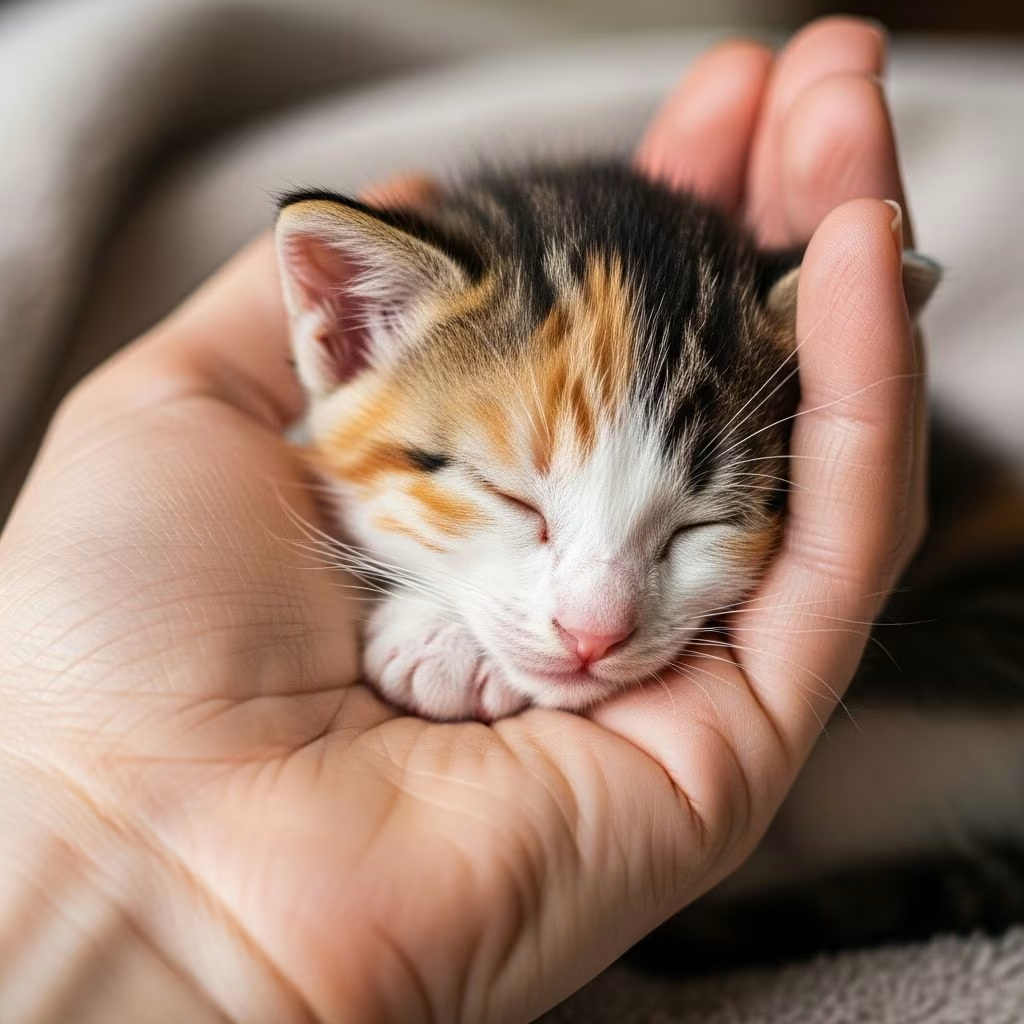
One of the most persistent myths about cat care involves the belief that human contact will cause a mother cat to abandon her kittens. This misconception has led well-meaning individuals to avoid handling newborn kittens, believing their touch will trigger maternal rejection. However, scientific understanding and practical experience reveal a more nuanced picture of feline maternal behavior and the actual factors that influence whether a mother cat will care for or reject her young.
The Persistent Myth of Human Contact and Abandonment
The idea that a mother cat will reject her kittens after human contact has persisted for generations, passed down through folklore and popular culture. This belief likely stems from observations of wild animals and a generalized assumption that human scent on offspring would trigger rejection. However, domestic cats have evolved alongside humans for thousands of years, developing behavioral patterns quite different from their wild relatives.
The reality is that most mother cats will not abandon their kittens simply because a human has touched them. Anecdotal evidence from cat owners and animal rescue professionals consistently supports this finding. Many people report handling newborn kittens while the mother cat remains present and continues to provide maternal care without any apparent distress or rejection.
Why Mother Cats Actually Reject or Abandon Kittens
Understanding the genuine reasons behind kitten abandonment helps pet owners and caregivers respond appropriately when they encounter seemingly abandoned litters. The actual causes are rooted in biology, health, and environmental circumstances rather than human interference.
Illness and Physical Abnormalities
When a mother cat detects that one of her kittens is ill or has a significant physical deformity, she may abandon that individual kitten or, in severe cases, the entire litter. From an evolutionary perspective, this behavior reflects the mother’s instinctive prioritization of her healthiest offspring. Without access to veterinary medicine, a mother cat cannot understand medical treatment, so she may interpret a sick kitten as one with poor survival prospects.
The mother may redirect her limited resources toward her healthy kittens, making the difficult biological choice to ensure the survival of the strongest members of her litter. This harsh reality reflects natural selection at work in the animal kingdom.
Mastitis and Nursing Complications
Mastitis, an infection of the mammary glands, represents a significant health issue that can cause a mother cat to cease nursing. This painful condition makes physical contact with kittens uncomfortable or impossible, effectively preventing the mother from fulfilling her nursing role. In such cases, the abandonment is not a choice but rather a consequence of the mother’s inability to continue providing milk and care.
Nutritional Stress and Litter Size
Mother cats have biological limits to the number of offspring they can effectively support. When a litter is unusually large, the mother may have insufficient milk production or nutrient reserves to adequately feed all her kittens. In these situations, some mother cats may nurse only the strongest kittens while abandoning weaker members of the litter, effectively concentrating her resources where they have the best chance of success.
Inexperience and Premature Motherhood
Young cats experiencing their first pregnancy may lack the maternal instincts necessary to properly care for kittens. First-time mothers, especially those who became pregnant before reaching full maturity, sometimes struggle with the demands of nursing and kitten care. This inexperience can manifest as rejection or neglect, particularly if the young mother feels overwhelmed or stressed.
Loss of the Mother Cat
Sometimes what appears to be abandonment is actually orphaning. A mother cat may be struck by a vehicle, succumb to illness, or be trapped and removed from her nesting area. In these cases, the kittens have not been abandoned by choice but have lost their mother to circumstances beyond anyone’s control. The distinction matters significantly when determining the appropriate intervention.
Displacement and Relocation
Stray and feral cats occasionally move their litters to different locations, which can create confusion about whether the kittens have been abandoned. A mother cat may relocate her kittens multiple times as she searches for a safer or more suitable nesting site. Additionally, if a mother cat is trapped for spaying or neutering programs, she may become displaced from her kittens and unable to locate them again.
Personality Variation Among Cats
Just as individual humans exhibit different levels of parental instinct, so too do individual cats. Some cats are naturally nurturing and devoted mothers, while others have less developed maternal instincts. A cat with naturally low maternal drive might abandon her kittens at a younger age than typical or show less attentive behavior overall. These personality differences are normal variations among the feline population.
The Crucial Distinction Between Abandonment and Temporary Absence
A key point often overlooked by well-meaning rescuers is that mother cats frequently leave their kittens for extended periods while they search for food or scout for better nesting locations. A mother cat may be absent for several hours while hunting or foraging, but this does not constitute abandonment. The mother remains the kitten’s primary caregiver and will return when the immediate need for sustenance is satisfied.
Free-roaming female cats that have not been spayed often disappear from their nests for hours each day as part of their normal maternal routine. An observer who discovers a litter of quiet, clean, warm kittens should not automatically assume they have been abandoned. Kittens with full bellies, a clean nest, and evidence of recent maternal care are likely being adequately maintained by a mother who is simply away temporarily.
Identifying Signs of Legitimate Abandonment
Determining whether kittens have truly been abandoned or simply left temporarily requires careful observation. Several indicators suggest that a mother cat is actively caring for her litter despite her absence:
- Firm, rounded bellies indicating recent feeding
- A clean nesting area free from excessive waste
- Warm kitten bodies suggesting recent maternal contact
- Kittens sleeping peacefully rather than continuously crying
- Responsive behavior when the kittens are disturbed
If these signs are present, the mother cat has likely been caring for the kittens and may return soon. The recommended action is to monitor from a distance rather than intervene immediately.
True abandonment becomes more evident if the mother cat has not returned for 24 hours or longer, if the kittens appear lethargic and refuse to eat, or if there are obvious signs of distress or illness. Only under these circumstances should intervention become a priority.
The Practical Reality: Testing the Touch Myth
Experience from animal rescue professionals consistently demonstrates that touching newborn kittens does not cause mothers to reject their offspring. Many rescue workers, veterinary professionals, and cat owners have handled kittens while mothers were present, and rejection due to human contact remains exceptionally rare.
However, this does not mean humans should carelessly handle every kitten they encounter. Several practical considerations apply:
- Feral or extremely fearful mother cats may avoid humans entirely, possibly relocating their litter
- Repeated human disturbance can cause unnecessary maternal stress
- Handling newborn kittens requires proper technique to avoid injury
- Excessive interference may disrupt the natural weaning and independence process
The key distinction is that rejection from human touch is not a concern, but minimizing unnecessary stress and disturbance remains important for the kittens’ wellbeing and the mother’s peace of mind.
When Intervention Becomes Necessary
Safe intervention requires distinguishing between situations where help is genuinely needed and situations where the best help is non-interference. If kittens are in immediate physical danger—such as exposure to traffic, extreme weather, or predators—moving them to a safer nearby location is appropriate. A mother cat will typically locate her relocated litter if they remain in proximity to their original location.
If kittens show signs of illness, malnutrition, or genuine abandonment after appropriate observation, contacting local animal services, rescue organizations, or veterinarians becomes important. These professionals can assess whether the kittens are truly orphaned and require hand-rearing or whether the mother can be located and supported in caring for her litter.
The Broader Context: Population Control and Prevention
Understanding kitten abandonment connects directly to the larger issue of feline overpopulation. When an orphaned or temporarily abandoned litter is removed from the environment, the mother cat will enter heat almost immediately, potentially resulting in another pregnancy. This cycle perpetuates the problem rather than solving it.
The most humane and effective long-term approach involves supporting mother cats until their kittens reach independence, then arranging for spaying and neutering services. This approach maintains the family unit while preventing future litters and reducing the burden on shelter systems.
Frequently Asked Questions About Mother Cats and Kitten Care
Will a mother cat really reject her kittens if I touch them?
No, this is largely a myth. Most mother cats will not reject their kittens due to human contact. Many owners and rescue professionals have handled kittens without causing maternal rejection. However, minimize unnecessary handling and stress.
How long can a mother cat leave her kittens alone?
Mother cats may leave their litters for several hours daily while searching for food. This is normal behavior and does not indicate abandonment. Extended absence beyond 24 hours may suggest a problem.
At what age do mother cats naturally stop caring for their kittens?
Mother cats typically begin reducing active parenting around 4 weeks of age as kittens start eating solid food. By 8 weeks, kittens are generally independent enough for separation, though weaning can continue beyond this point.
What should I do if I find a litter of kittens?
First, observe from a distance for an hour or two to confirm the mother’s absence. Ensure the kittens have full bellies, clean conditions, and warmth. Only remove them if the mother doesn’t return within 24 hours or if kittens show signs of distress or illness.
How can I tell if a mother cat is actually caring for her kittens?
Look for full bellies, clean nesting areas, warm kitten bodies, and evidence that the mother has been present. You might scatter flour around the nest to check for maternal paw prints.
Conclusion: Supporting Feline Families
The myth that human contact causes mother cats to abandon their kittens persists despite evidence to the contrary. The genuine reasons for kitten abandonment—illness, health complications, inexperience, and resource limitations—reflect biological realities rather than maternal rejection based on human interference. By understanding these actual causes, people can respond more appropriately when they encounter vulnerable kittens, distinguishing between situations requiring immediate intervention and those where observation and patience serve the kittens’ interests better.
References
- Six Reasons Why Cats Abandon Their Kittens — Tel-Aviv’s Feral Cats. 2019-12-06. https://telavivsferalcats.home.blog/2019/12/06/six-reasons-why-cats-abandon-their-kittens/
- 5 Reasons A Mother Cat Might Abandon Or Reject Her Young — Cat Time. https://cattime.com/cat-facts/kittens/1955-five-reasons-a-mother-cat-might-abandon-or-reject-her-young
- Don’t Kit-Nap Kittens — Tulare County Animal Services. https://tcanimalservices.org/animalservices/resources/dont-kit-nap-kittens
- What to do (and NOT do) if you find an abandoned kitten or litter — Care4Cats Ibiza. https://care4catsibiza.org/education/what-to-do-if-you-find-an-abandoned-kitten-or-litter/



