
HPP Technology in Raw Pet Nutrition: Safety Without Heat Processing
Discover how cold-pressure processing keeps raw pet food safe while preserving nutrients and enzymes.
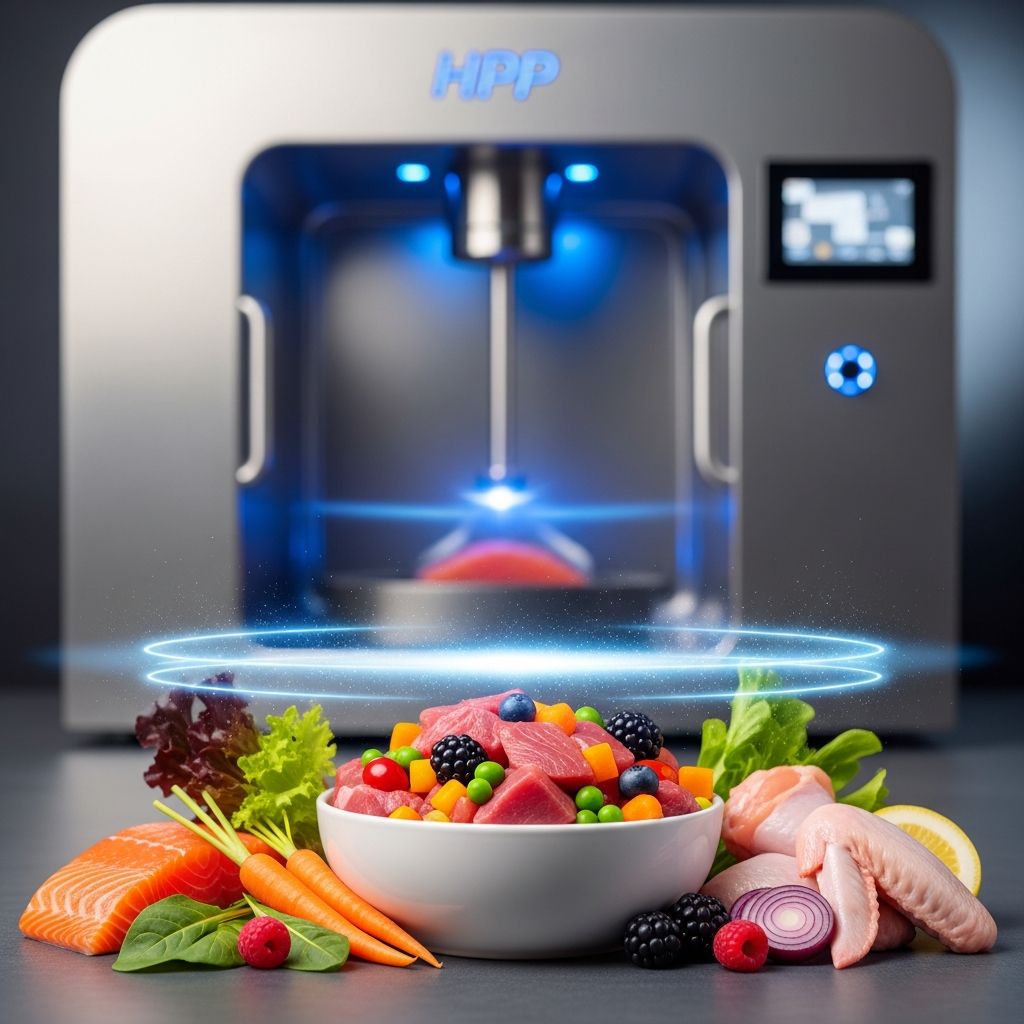
The safety of raw pet food has become an increasingly important concern for pet owners and manufacturers alike. One innovative technology that addresses these concerns is high-pressure processing (HPP), also known as cold-pressure technology. This non-thermal approach to food preservation offers a compelling alternative to traditional heat-based sterilization methods, particularly for raw diets where maintaining nutritional integrity is paramount.
The Fundamentals of Cold-Pressure Technology
High-pressure processing represents a significant advancement in food safety methodology. The technology operates by subjecting food products to extreme water pressure, reaching levels of up to 87,000 pounds per square inch (psi). This pressure is applied through water-filled chambers in which hermetically sealed food packages are placed. To contextualize the intensity of this process, the pressure applied during HPP is approximately five times greater than the pressure found at the Mariana Trench, the deepest location in Earth’s oceans.
Unlike traditional thermal processing methods that rely on heat to eliminate harmful microorganisms, HPP uses cold water maintained at temperatures between 4-25 degrees Celsius. This distinction is crucial for raw pet food manufacturers because it allows them to achieve pathogen reduction without compromising the nutritional qualities and enzymatic activity that make raw diets appealing to pet owners.
The Mechanics: How Pressure Eliminates Harmful Pathogens
The process begins when manufacturers package raw pet food ingredients in BPA-free sealed containers. These packages are then placed into a pressure vessel filled with cold water. The hydraulic system pressurizes the water, which transmits force uniformly to all surfaces of the sealed packages. This extreme pressure works at the cellular level, disrupting the cell membranes of pathogenic microorganisms such as Listeria, Salmonella, and E. coli.
The pressure is typically maintained for approximately three minutes, which food safety experts agree is sufficient to substantially impact bacterial populations. During this brief hold period, viable microbial cells cannot survive the mechanical stress imposed by the extreme pressure. After the pressurization cycle completes, the packages are moved to frozen storage and subsequently shipped to customers while maintaining their frozen state.
The effectiveness of this process has been demonstrated through scientific research. Studies conducted by institutions such as the Institute for Food Safety and Health have shown that standard processing conditions of 87,000 psi for three minutes can achieve a 5-log reduction of Salmonella across various beef, chicken, and lamb-based pet food formulations. This means the process reduces bacterial populations by 99.999 percent, bringing pathogen levels below detectable thresholds.
Comparing HPP to Traditional Heat-Based Processing
The distinction between cold-pressure technology and conventional thermal processing deserves careful consideration. Traditional heat pasteurization uses elevated temperatures to inactivate microorganisms, but this approach has significant drawbacks for raw pet food manufacturers. The high temperatures required for thermal processing can degrade heat-sensitive nutrients, destroy beneficial enzymes, and alter the organoleptic properties of raw ingredients.
High-pressure processing avoids these complications entirely. Because the process operates at cold temperatures, it preserves the chemical composition of pet food, including essential amino acids, proteins, carbohydrates, and moisture content. Research has demonstrated that pressurizing beef at 87,000 psi for ten minutes does not cause significant reductions in humidity, carbohydrate content, protein levels, or amino acid profiles. This preservation of nutritional integrity represents a fundamental advantage over thermal methods.
Food Safety Standards and Regulatory Compliance
In the United States, the Food and Drug Administration (FDA) maintains a zero-tolerance policy for pathogenic bacteria in pet food products. This stringent regulatory requirement has motivated many raw pet food manufacturers to incorporate HPP into their production protocols as a critical safety measure. By implementing this technology, manufacturers can demonstrate compliance with federal food safety standards while maintaining the characteristics that distinguish raw diets from conventional processed foods.
Beyond FDA regulations, many manufacturers also adhere to international food safety benchmarks such as BRC (Brand Reputation through Compliance) certification standards. These certifications require documented evidence of effective pathogen control measures throughout the production chain. HPP serves as a documented, scientifically-validated step within comprehensive food safety programs.
The Reality of Safety Effectiveness
While high-pressure processing represents a significant advancement in raw pet food safety, it is important to acknowledge its limitations. Food safety experts do not classify HPP as a complete “kill step” in the absolute sense. This distinction is important; the technology substantially reduces pathogenic microorganisms rather than eliminating them with 100 percent certainty under all conceivable conditions.
However, this limitation requires appropriate context. According to research and expert consensus, HPP effectively brings bacterial populations below detectable levels when applied to foods with appropriate moisture characteristics. Raw meat and fresh vegetables, which form the foundation of raw pet diets, have water activity levels higher than 0.98, making them particularly well-suited for high-pressure processing. This high water content maximizes the lethal effect of the pressure on pathogens.
The practical implication is that while absolute zero risk cannot be guaranteed in any food system, HPP substantially mitigates the health risks associated with pathogenic contamination for both pets and humans handling the food.
Potential Considerations and Questions for Manufacturers
Pet owners considering high-pressure processed raw foods may wish to understand potential concerns and ask informed questions of manufacturers:
- Packaging Material Safety: Are manufacturers using BPA-free packaging materials? Have they tested their finished products for any transfer of packaging chemicals after HPP processing? Research indicates that the pressures and hold times used for raw dog foods typically do not cause packaging chemicals to transfer into food, but verification is prudent.
- Enzyme Preservation: Live enzymes represent one of the primary nutritional advantages of raw diets. Studies show that enzyme inactivation increases with pressures exceeding 800 MPa, extended hold times beyond 45 minutes, and warmer processing temperatures. Manufacturers using lower pressures, shorter hold times, and cold temperatures preserve more enzymatic activity.
- Oxidation Prevention: Do manufacturers add antioxidants to prevent lipid oxidation? Is oxygen removed from packaging before sealing? Is the food vacuum-packed or stored in airtight packaging to prevent rancidity?
- Post-Processing Contamination: Some manufacturers open packages after HPP processing to regrind food before repackaging. This practice could introduce post-processing contamination risks. Pet owners should understand the complete manufacturing workflow.
Industry Adoption and Real-World Implementation
Numerous established raw pet food manufacturers have incorporated high-pressure processing into their production protocols. These companies recognize that while HPP involves additional manufacturing costs, the technology ensures product safety and regulatory compliance. The investment reflects a commitment to delivering raw pet food products that meet stringent safety standards without compromising the nutritional characteristics that distinguish raw diets from kibble and canned alternatives.
The adoption of HPP by reputable manufacturers has contributed to increased consumer confidence in raw pet food products as viable options for health-conscious pet owners seeking alternatives to conventional commercial pet foods.
The Broader Context of Raw Pet Food Safety
High-pressure processing operates as a single component within comprehensive food safety programs employed by responsible manufacturers. Complete safety protocols typically include additional measures such as:
- Quality sourcing of raw ingredients from trusted suppliers using USDA-certified meats
- Blending and packaging operations conducted in USDA-certified facilities
- Implementation of strict food safety protocols based on internationally recognized standards
- Frozen storage and distribution to maintain product integrity throughout the supply chain
These layered approaches to food safety recognize that no single intervention provides absolute protection; rather, multiple safeguards working together create robust systems that substantially reduce risks.
Scientific Evidence Supporting HPP Effectiveness
The efficacy of high-pressure processing has been documented through peer-reviewed research and independent scientific investigations. Multiple studies have confirmed that HPP can effectively inactivate pathogenic microorganisms while preserving nutritional components. This scientific foundation distinguishes HPP from speculative claims about food safety interventions. The evidence base continues to expand as researchers investigate HPP applications across different food categories and conditions.
Making Informed Decisions About Raw Pet Food
Pet owners considering raw diets for their animals should prioritize understanding the safety measures employed by manufacturers. High-pressure processing represents one scientifically-validated technology that addresses pathogenic contamination concerns. However, comprehensive knowledge about the entire production process, ingredient sourcing, facility certifications, and additional safety protocols should inform purchasing decisions.
The technology demonstrates that raw pet food can be manufactured safely without requiring heat-based processing that compromises nutritional integrity. For pet owners committed to raw feeding, HPP-processed options offer a middle ground that balances safety concerns with the nutritional philosophy underlying raw diet choices.
References
- High-Pressure Processing and Raw Pet Food Diets: What You Need to Know — PetMD. 2024. https://www.petmd.com/dog/nutrition/high-pressure-processing-and-raw-pet-food-diets-what-you-need-know
- Does High-Pressure Processing Make Raw Dog Food Safe? — Dog Food Advisor. 2024. https://www.dogfoodadvisor.com/dog-feeding-tips/raw-food-high-pressure/
- The Good And The Bad Of HPP Dog Food — Dogs Naturally Magazine. 2024. https://www.dogsnaturallymagazine.com/hpp-dog-food/
- The efficacy and safety of high-pressure processing of food — PMC/NIH. 2023. https://pmc.ncbi.nlm.nih.gov/articles/PMC8902661/
Similar Articles








Read full bio of medha deb


