

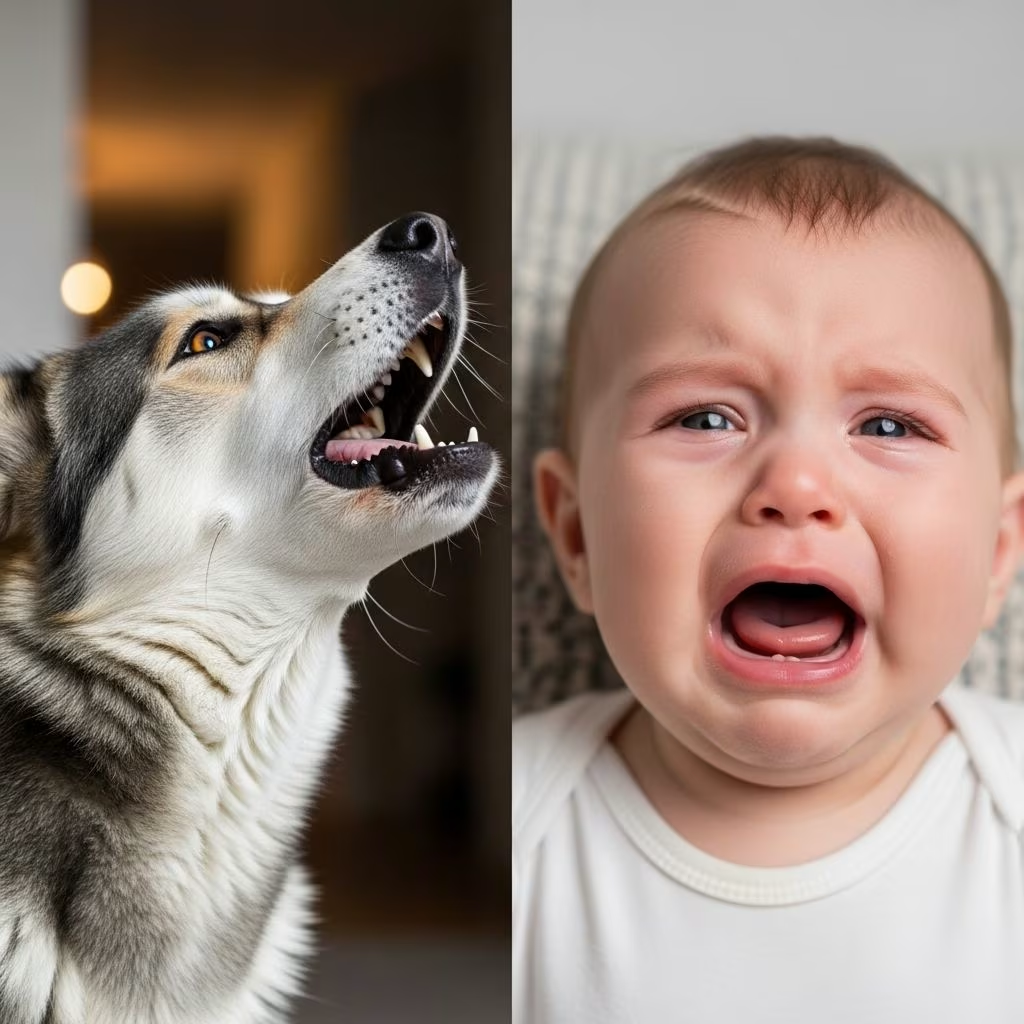
Dogs frequently howl, whine, or cry in response to a baby’s cries, a common challenge in households with newborns. This reaction stems from physiological stress, empathy, unfamiliar sounds, or shifts in family dynamics, affecting many pet owners.
Why Do Dogs Howl or Cry When Babies Cry?
The piercing sound of a human baby’s cry triggers strong reactions in dogs, often manifesting as howling, whining, or other vocalizations. Research shows that baby cries elevate cortisol levels—the stress hormone—in dogs, similar to humans. In a study by Min Hooi Yong under Professor Ted Ruffman at the University of Otago, 75 dogs exposed to baby cries, babbling, and white noise exhibited spiked cortisol, heightened attention, and submissive behaviors after hearing cries, indicating an empathetic response to the distress signal.
Beyond biology, dogs’ sensitive hearing amplifies the discomfort; baby cries reach 100-120 decibels, irritating ears tuned to higher frequencies. Some dogs howl as a ‘call and response’ instinct, perceiving the cry as another animal’s howl, announcing territory or alerting owners. Unfamiliarity plays a role too—dogs new to babies may feel overwhelmed, leading to anxiety-driven vocalizations like chewing or whining.
The Science Behind Dogs’ Reactions to Baby Cries
Empathy is a key factor. Dogs subconsciously mirror human distress, with cortisol spikes proving physiological upset. Professor Ruffman’s work confirms dogs show submissiveness and focus shifts, not just irritation. Canine experts note dogs absorb household energy; a crying baby’s chaos disrupts calm, prompting cries for reassurance.
Jealousy or resource guarding contributes when dogs, once the family center, compete for attention. Sudden routine changes—less walks, playtime—exacerbate this, with whining signaling neglect. Predatory instincts rarely trigger but can arise from erratic baby movements or stillness in sensitive breeds. Separation anxiety may intensify if owners are preoccupied, leading to howling when alone.
Is It Empathy, Stress, or Something Else?
Differentiating causes is crucial. True empathy involves cortisol-driven upset without aggression, per scientific tests. Stress from volume or novelty causes immediate whining. Jealousy shows as attention-seeking near the baby, while fear yields avoidance or aggression. Boredom or unmet needs, like exercise, amplify reactions—obese dogs like the Corgi in one case study benefited from more activity. Observers report breeds like Huskies howling at cries as instinctive responses.
Safety First: Protecting Your Baby and Dog
Never leave dogs unsupervised with babies, even gentle ones. Install physical barriers like baby gates for safe acclimation. Prioritize infant safety during desensitization; resource guarding or poor socialization heightens risks. Teach ‘leave it’ commands and maintain leadership to prevent protective aggression.
- Use crates or separate rooms for initial introductions.
- Supervise all interactions, rewarding calm behavior.
- Avoid forcing proximity if the dog shows fear.
How to Desensitize Your Dog to Baby Cries
Counterconditioning builds positive associations. Play baby cry recordings at low volumes, pairing with treats or play before reactions occur. Gradually increase volume over weeks. For on-demand practice, record your baby’s cries.
Daily routines matter: Boost exercise to burn energy, reducing anxiety. Structure enforces leadership—feed, walk dogs first, reinforcing humans as pack leaders. Distractions like stuffed Kongs occupy during real cries.
- Start with 10-second low-volume playbacks, treat immediately.
- Progress to full cries over 1-2 weeks with repetitions.
- Combine with focus exercises: ‘Watch me’ redirects attention.
Training Techniques That Work
Positive reinforcement trumps punishment. Reward non-reactivity; ignore whining to avoid reinforcing it. For jealousy, maintain pre-baby routines—dedicated play sessions rebuild bonds.
| Technique | Description | Expected Outcome |
|---|---|---|
| Counterconditioning | Pair cries with treats | Positive baby association |
| Desensitization | Gradual exposure | Reduced stress response |
| Focus Training | ‘Look’ command | Redirected attention |
| Exercise Increase | Daily walks/runs | Lower overall anxiety |
Consistency yields results in 1-2 weeks with practice.
Common Mistakes to Avoid
Punishing reactions heightens fear; comfort reinforces whining as attention-seeking. Rushing exposure overwhelms sensitive dogs. Neglecting exercise or structure invites regression. Assuming ‘jealousy’ oversimplifies—address all changes holistically.
- Don’t yell at howling dogs.
- Avoid baby-dog cuddles initially.
- Skip variable routines.
Breeds Prone to Strong Reactions
Huskies and hounds howl instinctively. Herding breeds like Corgis may ‘protect’ vocally. Sensitive or under-socialized dogs react worst; early puppy exposure (before 12 weeks) prevents issues.
Long-Term Harmony: Integrating Dog and Baby
Post-desensitization, supervised play fosters bonds. Maintain boundaries, rewarding calm. Professional trainers help persistent cases. With patience, most dogs adapt, enriching family life.
Frequently Asked Questions (FAQs)
Why does my dog howl at my baby’s cries?
Dogs howl due to stress hormone spikes, sensitive hearing, empathy, or instinctive responses to the cry’s pitch.
Is my dog jealous of the baby?
Possibly, but reactions often stem from routine changes and anxiety, not spite.
How long does desensitization take?
1-2 weeks with consistent daily practice using recordings and rewards.
Can all dogs learn to ignore baby cries?
Most can with positive training; severe cases may need pros.
Is it safe to have a dog with a newborn?
Yes, with supervision, barriers, and training prioritizing baby safety.
References
- Why Do Dogs Cry Around Babies — Wagwalking. Accessed 2026. https://wagwalking.com/behavior/why-do-dogs-cry-around-babies
- Dog Cries When Baby Cries: Tips for Reactive Dogs — Dog Gone Problems. 2024-06-13. https://www.doggoneproblems.com/harley-stop-reacting-to-baby/
- Baby Crying Phobia — Positively.com. Accessed 2026. https://positively.com/dog-training/article/stress-fear-phobia-baby-crying-phobia
- Why Does My Dog Howl? — The Farmer’s Dog. Accessed 2026. https://www.thefarmersdog.com/digest/why-does-my-dog-howl/
- My Normally Well-Behaved Dog is Suddenly Acting Out After Bringing Home My Newborn — Dog Meets Baby. Accessed 2026. https://www.dogmeetsbaby.expert/post/my-normally-well-behaved-dog-is-suddenly-acting-out-after-bringing-home-my-newborn



