

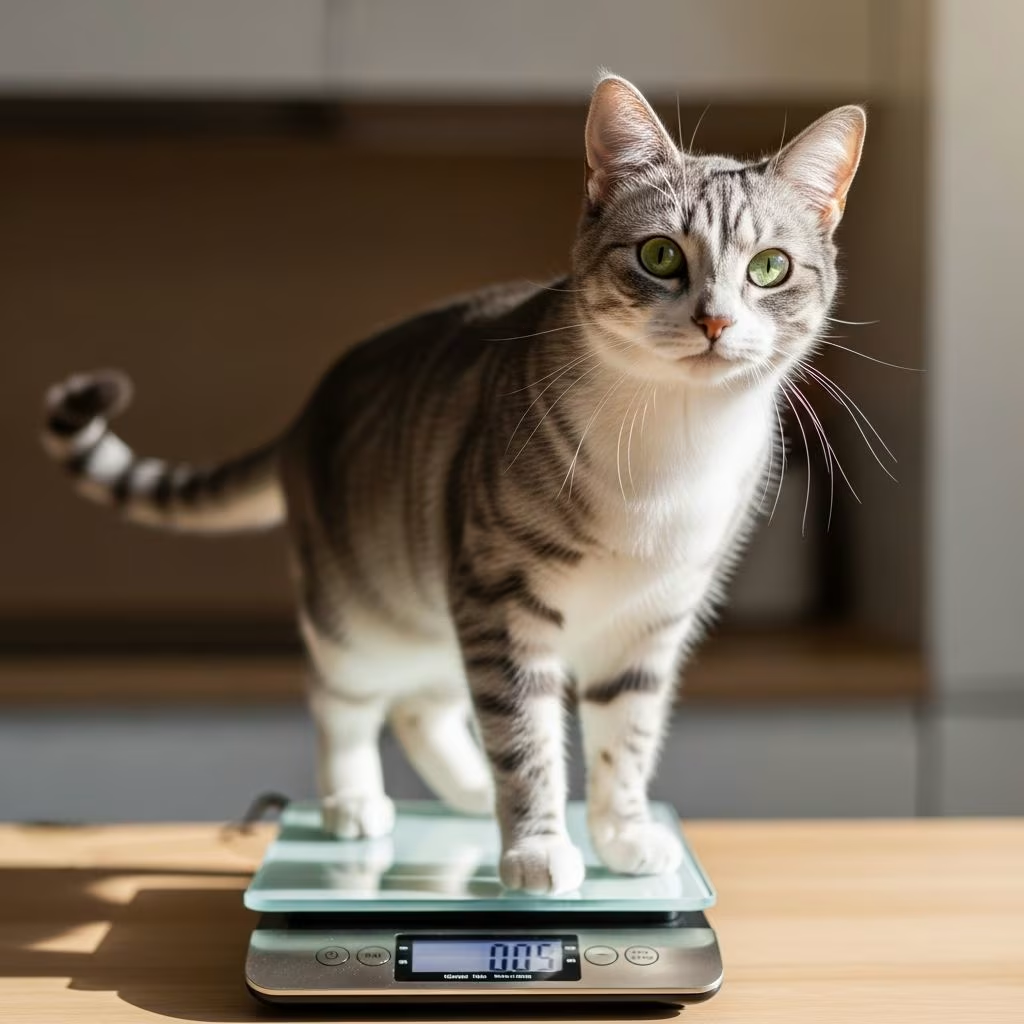
Monitoring your cat’s weight is crucial for maintaining their overall health and catching potential issues early, such as obesity or unintended weight loss. Cats often hide signs of illness, and regular weigh-ins at home allow you to track changes without stressful vet visits. This guide covers simple, accurate methods using everyday items like bathroom scales or carriers, tips for reluctant cats, ideal weight ranges, and body condition scoring.
Why Weigh Your Cat?
Weighing your cat regularly helps detect health problems promptly. Sudden weight loss can signal issues like hyperthyroidism, kidney disease, or diabetes, while gradual gain often indicates obesity, affecting 50-60% of cats in developed countries. Home weighing reduces stress compared to clinic visits, enabling weekly or monthly checks. Start establishing this habit with kittens for lifelong ease. Digital scales provide precision down to 0.1 pounds, essential for small changes in light cats.
Consistent monitoring supports dietary adjustments, medication dosing, and vet discussions. For seniors or those with conditions, tracking prevents complications. Aim for the same time daily, ideally mornings before eating, for reliable readings.
How Often Should You Weigh Your Cat?
Weigh kittens weekly until six months, then monthly for adults. Seniors or overweight cats need bi-weekly checks. Post-surgery or during illness, daily weigh-ins track recovery. Log weights in a notebook or app to spot trends over time. A 5-10% change warrants a vet call.
Tools You’ll Need
- Digital bathroom scales: Accurate to 0.1 lb (0.05 kg); standing models for hold method.
- Baby or kitchen scale: Ideal for kittens under 5 lbs.
- Digital luggage scale: Portable, hook-style for carriers (e.g., Odowalker models tare easily).
- Cat carrier or basket: Sturdy, familiar with bedding for comfort.
- Notebook or app for records.
- Treats: Low-calorie to encourage participation.
Ensure scales are on flat, stable surfaces. Calibrate periodically against known weights.
Method 1: Weigh Yourself and Your Cat (Hold Method)
This is the simplest no-extra-tools approach, perfect for calm, lightweight cats under 15 lbs.
- Step on digital scales alone; note weight (e.g., 150 lbs). This is Weight 1.
- Gently lift cat securely under chest and hindquarters; step on again. Note combined weight (e.g., 160.5 lbs). Weight 2.
- Subtract: 160.5 – 150 = 10.5 lbs (cat’s weight).
Tips for accuracy: Use same scales/time daily. Morning fasted weigh-ins minimize variables. Support cat fully to avoid squirming.
| Pros | Cons |
|---|---|
| Quick, no extra gear | Less accurate for heavy cats or if you move |
| Good for frequent checks | Not for uncooperative cats |
Method 2: Weigh the Carrier or Basket
Ideal for wiggly or scale-shy cats who relax in enclosed spaces.
- Weigh empty carrier/basket on scales; note weight (e.g., 3 lbs).
- Place cat inside (secure door), weigh again (e.g., 13.5 lbs).
- Subtract: 13.5 – 3 = 10.5 lbs.
Use familiar bedding or towels for comfort. Canvas bags, pillowcases, or paper bags work for some cats. Tare scales (zero with empty carrier) to skip math.
For floor scales, confine cat safely post-weighing to avoid escape.
Method 3: Direct on Scales
Best for trusting cats habituated young.
- Place digital scales on floor; lure cat with treats to step on.
- Hold treat above to keep still 5-10 seconds for reading.
- Repeat 2-3 times, average results.
Kittens suit kitchen scales. Non-slip mats or blankets help.
Method 4: Luggage Scale Method
Hang carrier from hook scale for portability.
- Tare with empty carrier.
- Secure cat inside; hook and lift gently.
- Read weight directly.
Stress-free for some; use for travel checks.
Tips for Cats That Hate Scales
Many cats fear scales due to instability or novelty. Build positive associations:
- Desensitize gradually: Leave scales out; reward proximity, then stepping on empty.
- Blanket comfort: Familiar fabric prevents slips.
- Treats strategically: Scatter low-cal treats on/near scales; reward staying.
- Quiet time: Weigh when relaxed, no distractions.
- Partner help: One distracts, one weighs.
- Swaddle if needed: Pillowcase calms some.
Patience yields results; avoid force to prevent aversion.
What’s a Healthy Weight for My Cat?
Ideal varies by breed/age:
- Average domestic shorthair: 8-11 lbs females, 10-15 lbs males.
- Maine Coon: Up to 25 lbs.
- Siamese: 5-10 lbs.
- Kittens: Double birth weight by 2 weeks; steady gain.
- Seniors: Slight loss common; monitor closely.
Mixed breeds: Estimate via dominant traits. Consult vet for personalized targets.
How to Tell if Your Cat is Overweight: Body Condition Score (BCS)
BCS visually assesses fat coverage (1-9 scale):
| BCS | Description | Ribs/Spine/Waist |
|---|---|---|
| 1-3 (Underweight) | Bony prominences visible | Ribs sharply felt, no fat; waist pronounced |
| 4-5 (Ideal) | Balanced | Ribs felt with slight fat; waist visible; tummy tucked |
| 6-7 (Overweight) | Soft layer | Ribs felt with thicker fat; waist subtle |
| 8-9 (Obese) | Hard to feel ribs | No waist; pendulous belly |
Run hands over ribs (like feeling knuckles under fat), view from above for waist, side for tummy tuck. Ideal: Hourglass shape.
Risks of Obesity in Cats
Excess weight shortens life by 2.8 years on average, raising diabetes (7x risk), arthritis, heart disease, urinary issues, and reduced grooming/play. Liver lipidosis from rapid dieting is fatal if unmanaged. Early intervention via diet/exercise prevents this.
What to Do if Your Cat is Overweight or Underweight
Overweight: Consult vet for calorie needs (e.g., 20 kcal/lb ideal weight daily). Switch to prescription food; portion control; increase play (laser toys, feeders). Aim 1-2% weekly loss.
Underweight: Rule out illness; high-protein diet, frequent small meals, vet supplements.
Track progress; recheck BCS monthly.
FAQs
What if my cat won’t stay still for weighing?
Use carrier method or treats; desensitize over days. Luggage scales minimize movement.
How accurate are home bathroom scales for cats?
Digital ones to 0.1 lb suffice for trends; vet scales more precise for meds.
Can I use a human baby scale for adult cats?
Yes for smaller adults; ensure capacity (often 44 lbs max).
What’s normal weight fluctuation?
±0.5 lb daily (hydration/food); >2 lbs monthly needs vet.
Should I fast my cat before weighing?
Yes, mornings ideal for consistency.
References
- How to weigh your dog or cat at home — ManyPets. 2023-05-15. https://manypets.com/us/blog/how-to-weigh-your-pet/
- How To Weigh Your Cat At Home: PDSA Petwise Pet Health Hub — PDSA (YouTube). 2022-10-20. https://www.youtube.com/watch?v=GcNfBCfgX4E
- How to Weigh Your Cat or Dog at Home — Protect My Pet. 2024-01-10. https://www.protect-mypet.com/blog/how-to-weigh-your-cat-or-dog/
- Cat Obesity — how to keep your cat at a healthy weight — Just Cats Veterinary Services. 2023-08-05. https://www.justcatsvet.com/blog/cat-obesity-how-to-keep-your-cat-at-a-healthy-weight
- How To Weigh Your Cat At Home — Hill’s Pet Nutrition. 2024-03-12. https://www.hillspet.co.uk/cat-care/healthcare/how-to-weigh-your-cat-at-home
- Weighing your cat at home — Exclusively Cats Veterinary Hospital. 2023-11-28. https://www.ecats.vet/troubleshooting-weighing-your-cat-at-home.pml



